Pioneers of Indian Industry: Founding Dates of Historic Firms
What Are the Early Indian Corporate History Milestones?
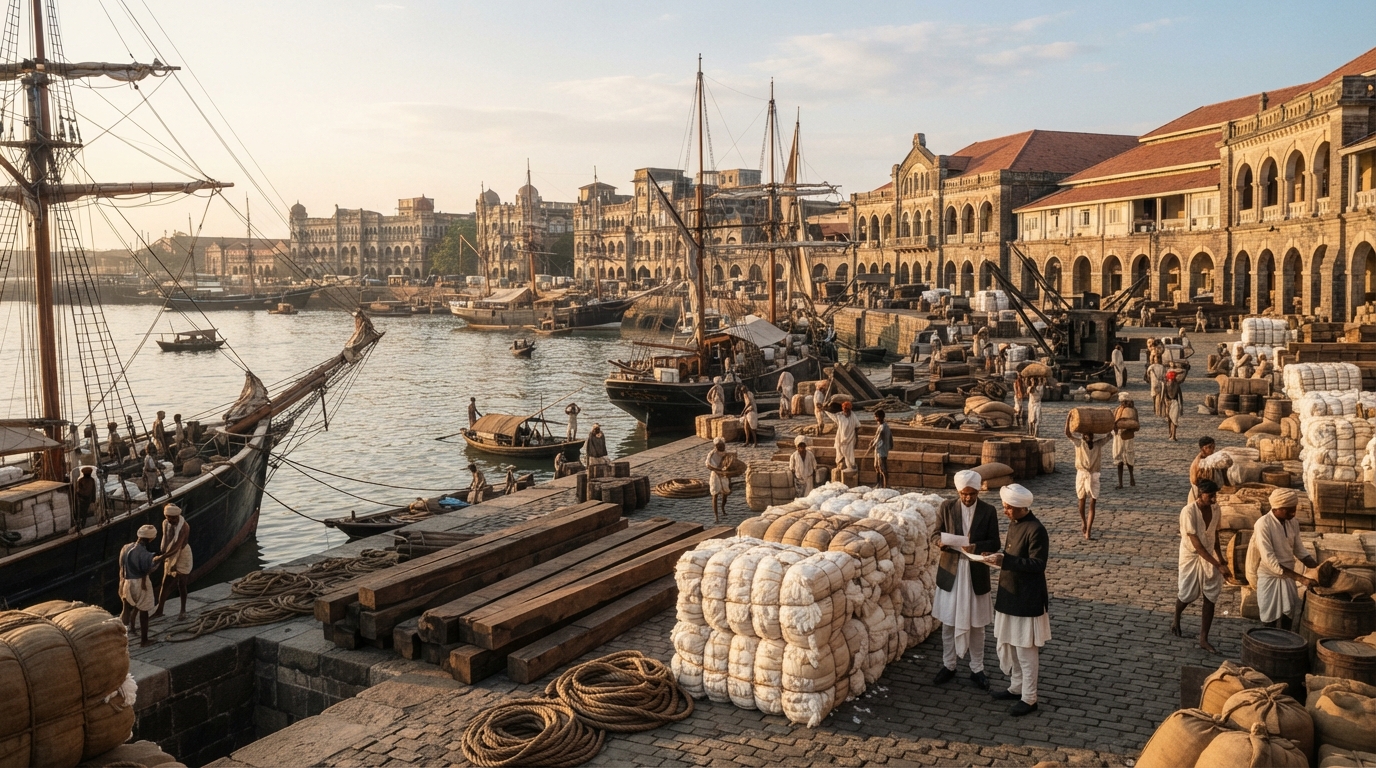
Indian corporate history is the record of commercial enterprises that transitioned from colonial-era commodity trading into heavy manufacturing and domestic banking. Starting with the Wadia Group in 1736 and expanding through pioneers like Tata, Godrej, and Dabur, these historic corporations built essential domestic supply chains that survived colonial monopolies, regulatory shifts, and economic liberalization.
Key Takeaways
- The Wadia Group is India's oldest continuously operating enterprise, founded in 1736.
- Bombay Stock Exchange opened in 1875 as Asia's first equity exchange.
- Merchant houses shifted raw commodity trading profits into domestic manufacturing during the 1870s.
- Managing agencies let early founders build vast corporate groups with limited capital.
- Historic firms survived Partition, post-independence nationalization, and the 1969 License Raj reforms.
In early 1897, Ardeshir Godrej walked away from a failed legal career in Bombay and borrowed money to rent a tiny shed in Lalbaug. He spent his days filing brass parts by hand, convinced that indigenous engineering could beat imported British locks. His quiet experiment challenged the colonial belief that Indian firms could not manufacture precision mechanical goods.
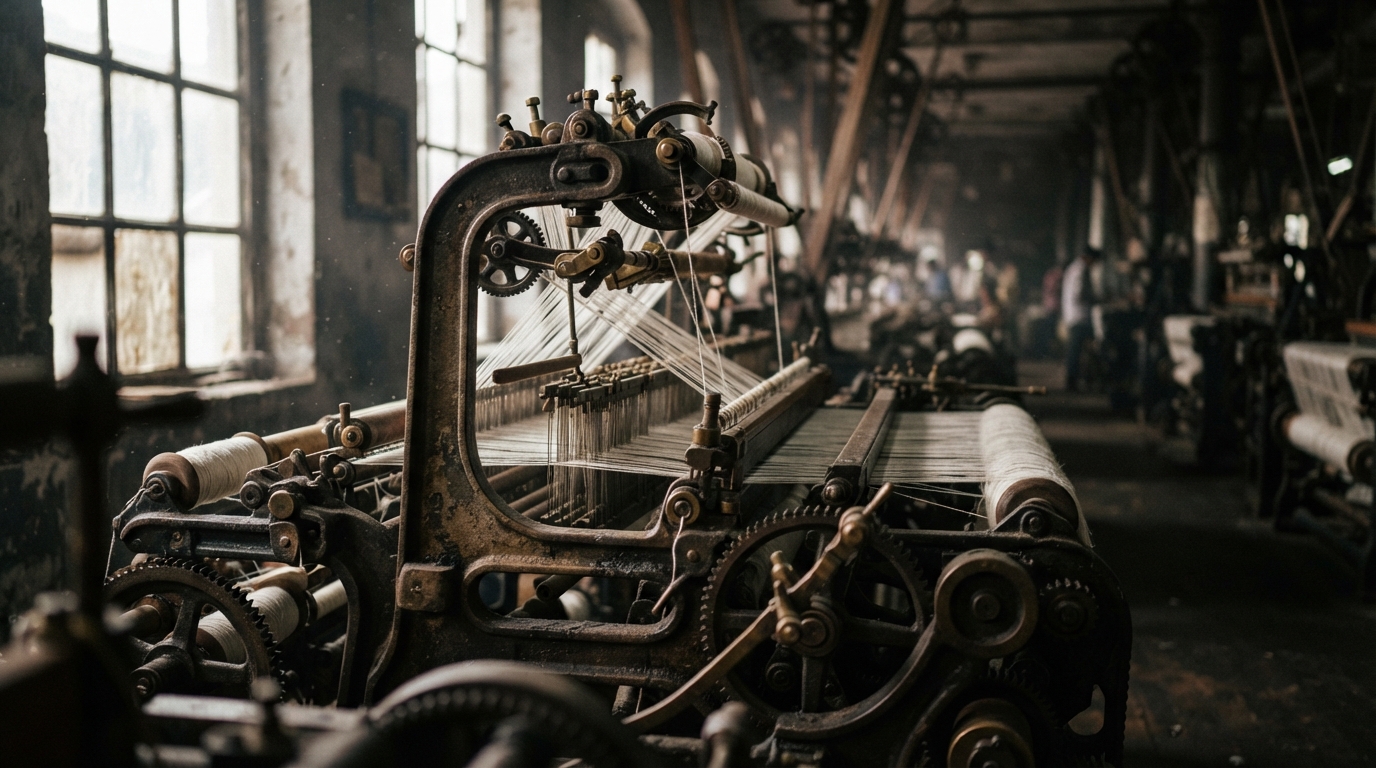
Understanding these early ventures provides context for modern economic milestones in Indian history from 1947 to present. The earliest Indian corporate history milestones emerged under severe structural disadvantages. British colonial policy favored raw material exports over domestic factories, and European trading agencies controlled shipping, insurance, and export credit.
Indian entrepreneurs found ways around these barriers. They pooled community capital, formed merchant networks, and reinvested trade earnings into heavy machinery. Tracing these founding dates shows how modern Indian enterprise grew out of colonial trading ports. You can review this progression across our Indian history timeline chart for a broad look at national developments.
Which Colonial-Era Enterprises Built Modern India?
Colonial-era enterprises built modern India by establishing indigenous marine construction, financial infrastructure, and raw material export houses. Firms like the Wadia Group in 1736, the Bank of Calcutta in 1806, and the Bombay Burmah Trading Corporation in 1863 created domestic industrial capacity decades before formal state industrial planning existed.
The Wadia Shipyards: Maritime Origins in 1736
The Wadia Group is India's oldest continuously operating corporate entity, founded in 1736 by Lovji Nusserwanjee Wadia. The company began when the British East India Company secured Wadia's expertise to build marine vessels and docks in Bombay. Wadia came from a Surat family of shipwrights with deep knowledge of Malabar teak.
The enterprise constructed Asia's first dry dock in Bombay in 1750. Wadia ships were known for superior durability compared to British oak vessels. Over the nineteenth century, the family channeled maritime capital into modern textile manufacturing by creating Bombay Dyeing in 1879. The firm adapted across three centuries by moving from marine construction into chemicals, textiles, and consumer goods.
Bank of Calcutta to SBI: Institutional Banking in 1806
Modern Indian banking traces its roots directly to June 2, 1806, with the founding of the Bank of Calcutta. The institution was created to finance British military campaigns and regional merchant trade. It was renamed the Bank of Bengal in 1809 and operated as one of three colonial presidency banks.
These presidency banks merged in 1921 to create the Imperial Bank of India. That institution functioned as both a commercial bank and an early central bank before the Reserve Bank of India formed in 1935. The Indian government nationalized the Imperial Bank on July 1, 1955, renaming it the State Bank of India. SBI remains India's largest public-sector commercial bank, operating over 22,000 domestic branches.
Bombay Burmah Trading Corporation: Public Markets in 1863
The Bombay Burmah Trading Corporation (BBTC) holds the title of the oldest publicly traded company listed on Indian stock exchanges. Established in 1863 by the Wallace Brothers, the firm began as a timber merchant focused on teak extraction in Burma.
Indian merchant capital took substantial ownership over time, and the Wadia Group acquired control in the mid-twentieth century. BBTC expanded past timber into tea plantations, auto components, and consumer food products. Its survival demonstrates how resource-extraction firms evolved into modern holding companies.
1736: Wadia Group founded (Marine Construction)
  │
1806: Bank of Calcutta established (Banking & Credit)
  │
1863: Bombay Burmah Trading Corp founded (Timber & Commodities)
  │
1868: Tata Group established (Trading & Manufacturing)
  │
1875: Native Share & Stock Brokers' Association / BSE formed
How Did Industrial Capital Emerge from Merchant Trade Networks?
Indian industrial capital is the reinvested wealth generated by domestic merchant networks from international commodity arbitrage in cotton, opium, and spices during the nineteenth century. Merchant families redirected trading profits into modern textile mills, coal mines, and equity exchanges like the Bombay Stock Exchange to establish domestic manufacturing capacity across the 1870s.
Jamsetji Tata and the Foundation of Empress Mills
Jamsetji Nusserwanjee Tata founded a private trading firm in Bombay in 1868 with capital from cotton trade contracts. Tata saw that exporting raw cotton to Lancashire mills cost Indian merchants high processing fees. He chose to process raw cotton inside India using modern machinery.
Tata established the Central India Spinning, Weaving and Manufacturing Company in Nagpur in 1874, known as the Empress Mills. Nagpur offered proximity to cotton fields, cheap fuel, and rail access. The success of Empress Mills funded Tata's later investments. His blueprint led to the Tata Iron and Steel Company (TISCO) in 1907 and Tata Power in 1910.
The 1875 Bombay Stock Exchange and Equity Capital
Indian equity investing formalized on July 9, 1875, when 318 brokers established the Native Share & Stock Brokers' Association. This association later became the Bombay Stock Exchange (BSE), making it Asia's first formal stock market. Trading had occurred informally for decades beneath banyan trees near Bombay Town Hall.
The American Civil War triggered a massive boom in Indian raw cotton exports between 1861 and 1865. The resulting speculative rush required a structured exchange to settle accounts, issue shares, and raise industrial equity. The BSE gave Indian mills access to domestic capital, reducing dependence on British merchant banks in London.
Moving Capital from Commodity Arbitrage to Factories
Transitioning from merchant trading to factory production required heavy capital and technical risk. Early Indian entrepreneurs earned trading capital through regional trade routes connecting Bombay, Calcutta, and Canton. Many faced severe competition from European trading houses that owned the shipping routes.
Indian capitalists overcame this challenge by reinvesting liquid trading profits into physical plant assets. Economic historian Tirthankar Roy (London School of Economics, 2019) noted that early Indian capitalism succeeded because founders used community networks to secure credit when formal banks refused loans. These family networks pooled risk across cotton mills, iron processing, and rail lines.
How Did the Swadeshi Movement Reshape Indian Corporate History Milestones?
The Swadeshi movement reshaped Indian corporate history milestones by turning domestic consumer products and engineering goods into tools for economic independence. Firms founded between 1880 and 1910 positioned their goods as Indian-made alternatives to British imports, building brand loyalty that lasted for generations.
       SWADESHI ENTERPRISE FORMATION (1884–1897)
┌─────────────────────────────────────────────────────────┐
│ 1884: Dabur (Dr. S.K. Burman)                           │
│       └─ Standardized Ayurvedic Remedies                │
│                                                         │
│ 1888: Kirloskar (Laxmanrao Kirloskar)                   │
│       └─ Modern Iron Ploughs & Farm Tools               │
│                                                         │
│ 1897: Godrej (Ardeshir Godrej)                          │
│       └─ Precision Locks & Vegetable-Oil Soaps (1918)   │
└─────────────────────────────────────────────────────────┘
How Did Dabur Pioneer Mass-Market Healthcare from 1884?
Dabur is an Indian consumer goods enterprise founded in Calcutta in 1884 by Dr. S.K. Burman to manufacture affordable, standardized Ayurvedic medicines. Dr. S.K. Burman formulated remedies for cholera, malaria, and digestive illnesses, establishing direct village distribution lines that evolved into a major manufacturer of consumer healthcare, personal goods, and processed foods.
Dabur built a large distribution network by combining traditional Indian medicine with modern manufacturing plants. The company expanded from small-scale remedies into processed foods, consumer healthcare, and personal goods. Dabur India recorded consolidated revenue of ₹13,113 crore in FY 2024–25 (Dabur Annual Report, 2025).
Kirloskar: Engineering Agricultural Self-Reliance in 1888
Laxmanrao Kirloskar opened a small bicycle repair shop in Belgaum in 1888 before moving his operations to Maharashtra. Kirloskar designed India's first iron plough to replace traditional wooden farming implements. Local farmers initially resisted the iron plough, believing it would poison their soil.
Kirloskar ran field demonstrations to show how iron ploughs improved crop yields and reduced labor. The firm expanded into diesel engines, pumps, and machine tools, creating an industrial township named Kirloskarvadi in 1910. The Kirloskar Group achieved 32,401% asset growth between 1950 and 1991 (StartupTalky / Business History Records, 2023).
Godrej: Precision Locks, Swadeshi Soaps, and State Infrastructure
Ardeshir Godrej launched the Godrej Group in 1897 after securing a patent for an unpickable lock. Godrej proved that Indian workshops could manufacture high-tolerance security hardware that matched European imports. In 1918, the company made the world's first commercial soap using vegetable oil instead of animal fat.
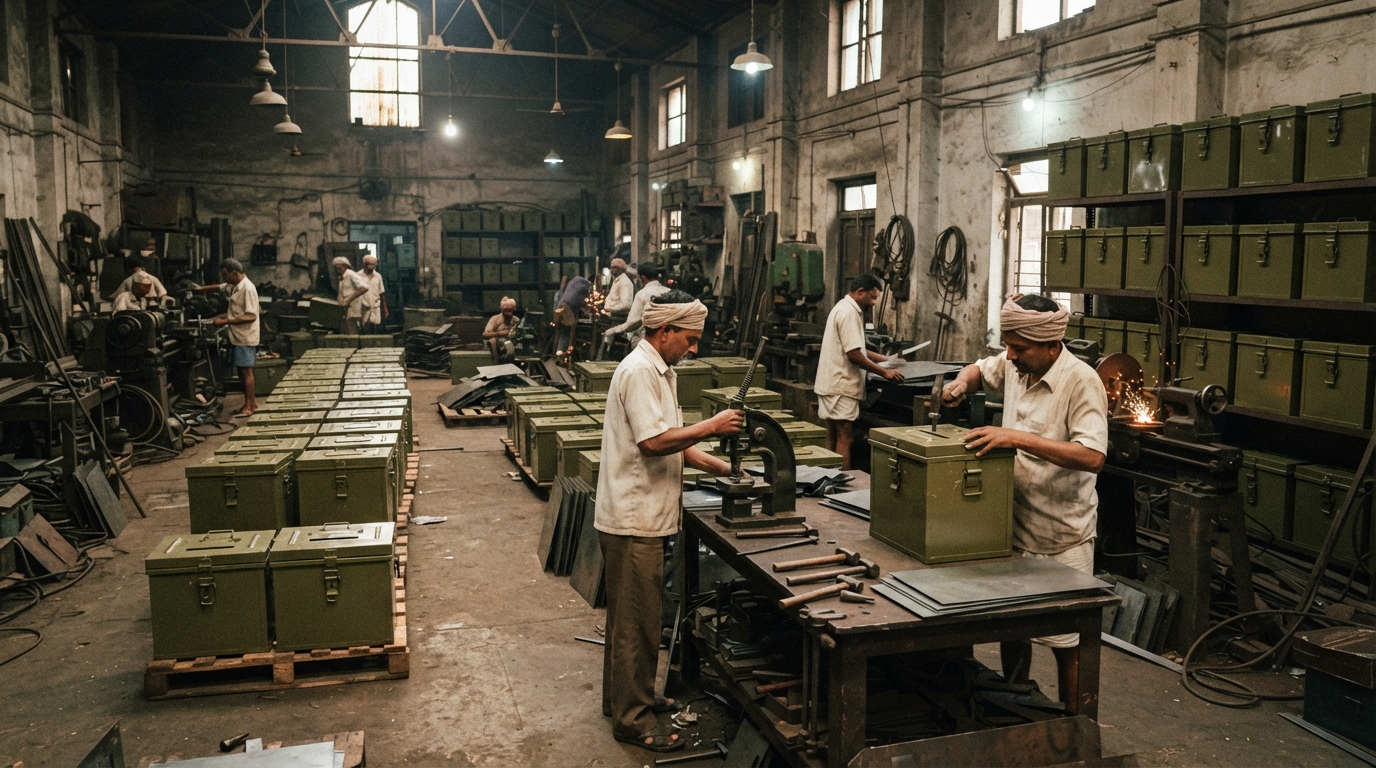
The firm's manufacturing capacity supported national administrative projects following independence. Godrej produced 1.7 million steel ballot boxes for India's first general election in 1951–52. Business historian Gita Piramal (2022) highlighted that Godrej survived early economic cycles because the family diversified across basic consumer goods before formal industrial planning existed.
You can learn how these periods connect using our guide on how to learn Indian history easily through chronological timelines.
What Was the Role of the Managing Agency System in Indian Corporate History?
The Managing Agency system is an institutional framework in colonial India that allowed a single controlling firm to operate multiple joint-stock companies across diverse sectors. Indian industrial families utilized managing agencies to pool limited capital, share technical management, and direct shipping lines, textile mills, and coal mines with minimal direct equity investments.
How Managing Agencies Concentrated Capital Across Sectors
The Managing Agency system was an organizational model developed in British India during the nineteenth century. Under this model, a central partnership managed multiple joint-stock companies across different industries. An agency might direct a jute mill, a tea plantation, and an electric utility under one roof.
Indian business families used this system to overcome capital shortages. Promoters pooled working capital from successful ventures to fund new, high-risk industrial units. A single management board handled legal compliance, engineering oversight, and commodity sourcing for ten to twenty operating firms at once.
| Feature | Managing Agency Model (Pre-1969) | Modern Holding Company (Post-1991) |
|---|---|---|
| Capital Allocation | Shared across diverse companies | Managed through direct subsidiaries |
| Portfolio Focus | Broad (Jute, Coal, Textiles, Power) | Core competencies and focused sectors |
| Regulatory Status | Abolished by Parliament in 1969 | Governed by modern Companies Act |
| Ownership Control | High control with minimal equity stakes | Direct equity ownership and board seats |
| Funding Sources | Community networks and agency credit | Public markets, institutional debt, PE |
Corporate Advocacy: The Indian Chamber of Commerce in 1925
As domestic industry expanded, Indian industrialists needed an organized voice to counter colonial trade lobbies. GD Birla and other prominent business leaders established the Indian Chamber of Commerce (ICC) in Calcutta in 1925. The chamber lobbied for tariffs against imported goods and fought discriminatory freight rates on colonial railways.
The ICC and Shri Ram College of Commerce (founded in 1926) launched national centenary initiatives between 2025 and 2026 to preserve this commercial history (ICC / Indian Express, 2025–2026). The centenary publication Never Taking No for an Answer (Rajiv Kumar / ICC, 2026) documents how indigenous businesses organized to challenge European monopoly chambers during the interwar period.
Surviving Partition and the 1969 Regulatory Disruption
Indian business houses faced major operational disruptions in the mid-twentieth century. The 1947 Partition severed raw material supplies overnight, cutting off jute fields in East Pakistan from processing mills around Calcutta. Corporate leaders had to rebuild broken logistics lines and find new domestic raw material sources.
Policy shifts brought more challenges in 1969. The Indian government abolished the Managing Agency system and enacted the Monopolies and Restrictive Trade Practices (MRTP) Act. These laws forced conglomerates to restructure their operational controls, split joint shareholdings, and operate under strict capacity licensing.
       CHRONOLOGY OF CORPORATE REGULATORY SHOCKS
┌────────────────────────────────────────────────────────┐
│ 1947: Partition splits raw material supply chains      │
│                                                        │
│ 1955: Nationalization forms State Bank of India        │
│                                                        │
│ 1969: Managing Agency System abolished by Parliament   │
│                                                        │
│ 1969: MRTP Act limits conglomerate capacity growth     │
│                                                        │
│ 1991: Industrial delicensing opens global competition  │
└────────────────────────────────────────────────────────┘
What Is the Timeline of Early Indian Corporate History Milestones?
The timeline of early Indian corporate history milestones is the chronological record of foundational enterprises established between 1736 and 1897 that built India's industrial base. Spanning from the Wadia Group's maritime shipyards to Godrej's security workshops, these pioneer corporations survived regional famines, British colonial trade barriers, world wars, and post-independence regulatory disruptions.
Comparative Table of Historic Indian Enterprises
The following table summarizes key operational details for India's earliest surviving industrial firms, showing their founding years, origins, and long-term industrial impact.
| Founding Year | Enterprise Name | Founder / Key Pioneer | Initial Sector | Enduring Modern Impact |
|---|---|---|---|---|
| 1736 | Wadia Group | Lovji Nusserwanjee Wadia | Marine Construction | Expanded into Bombay Dyeing (1879), chemicals, real estate |
| 1806 | Bank of Calcutta (SBI) | Government of Bengal | Commercial Banking | Evolved into State Bank of India, nationalized in 1955 |
| 1863 | Bombay Burmah Trading Corp | Wallace Brothers | Teak Timber Export | Oldest publicly traded company on Indian stock exchanges |
| 1868 | Tata Group | Jamsetji Tata | Commodity Trading | Built Empress Mills (1874), TISCO (1907), and Tata Power (1910) |
| 1875 | Bombay Stock Exchange | Premchand Roychand & Brokers | Capital Exchange | Asia's first stock exchange; formal equity market anchor |
| 1884 | Dabur India | Dr. S.K. Burman | Ayurvedic Formulations | Multi-category consumer healthcare and foods enterprise |
| 1888 | Kirloskar Group | Laxmanrao Kirloskar | Farm Equipment Repair | Pioneered domestic iron ploughs, pumps, and diesel engines |
| 1897 | Godrej Group | Ardeshir Godrej | Security Locks | Manufactured 1951 election ballot boxes; appliances and aerospace |
What Archival Records Reveal About Long-Term Survival
Legacy industrial groups have expanded public access to their historical records. The Godrej Archives and Tata Central Archives digitized extensive nineteenth-century records between 2024 and 2025 (Godrej Archives / Tata Central Archives, 2024–2025). These papers show how early enterprises managed cash shortages, patent protections, and supply disruptions.
Corporate archives show that early founders avoided relying on single product lines. When colonial textile import tariffs hurt fabric mills, these groups shifted capital into power generation, metal smelting, and banking. Long-term survival came from building multi-sector holdings before formal corporate planning models existed. You can review similar developments on our Swadeshi movement industrial origins resource page.
Related Reading
- Indian History Milestones: The Maurya and Gupta Empires
- Milestones in Indian Women's History: A Chronological Guide
- Economic Milestones in Indian History: From 1947 to Present
- Today in Indian History: March Events, Birthdays, and Milestones
FAQ
Q: What is the oldest surviving company in India?
The Wadia Group is India's oldest surviving enterprise, founded in 1736 by Lovji Nusserwanjee Wadia. It began with marine construction contracts in Bombay before expanding into modern textiles, chemicals, and real estate.
Q: Which company is the oldest publicly traded firm on Indian stock exchanges?
The Bombay Burmah Trading Corporation (BBTC), founded in 1863, is the oldest publicly traded company in India. It began as a timber trade enterprise and trades today on both the BSE and NSE.
Q: What was the Managing Agency system in Indian corporate history?
The Managing Agency system was an organizational framework that allowed one management firm to control multiple operating companies across different industries. Indian business houses used it to share management costs, pool capital, and expand rapidly until Parliament abolished the system in 1969.
Q: Why was the Bombay Stock Exchange founded in 1875?
The Bombay Stock Exchange was founded in 1875 as the Native Share & Stock Brokers' Association following an investment boom in raw cotton exports. Indian stockbrokers formed the exchange to formalize trading rules, settle contract debts, and raise equity for domestic textile mills.
Further Reading
- The Oxford History of Indian Business by Dwijendra Tripathi: A detailed academic study of Indian business networks and corporate evolution from the seventeenth century through modern times.
- Business Legends by Gita Piramal: An analysis of the operational strategies and survival mechanics behind the Tata, Birla, Mafatlal, and Walchand business empires.
- Never Taking No for an Answer by Rajiv Kumar and the Indian Chamber of Commerce (2026): A centenary volume tracing how Indian private enterprises navigated colonial monopolies and post-independence regulations.
- The Economic History of India 1857–2010 by Tirthankar Roy: A resource on how trade policy, capital scarcity, and labor markets shaped India's modern manufacturing sector.
Sources
- Evolution of SBI — State Bank of India, 2026. Supports: The founding of the Bank of Calcutta on June 2, 1806, its 1921 amalgamation into the Imperial Bank of India, and its July 1, 1955 nationalization to form the State Bank of India.
- Company Profile — The Bombay Burmah Trading Corporation, Limited, 2026. Supports: The establishment of BBTC in 1863 as a public teak enterprise and its enduring status as an early publicly quoted firm in India.
- Introduction to BSE — BSE Limited, 2024. Supports: The formation of the Native Share & Stock Brokers' Association in 1875 as Asia's first equity exchange.
- Through The Mill — Tata Sons, 2024. Supports: Jamsetji Tata's establishment of the Central India Spinning, Weaving and Manufacturing Company (Empress Mills) in Nagpur in 1874.
- Our Story — Godrej Consumer Products Limited, 2024. Supports: Ardeshir Godrej's 1897 venture into lockmaking and Godrej's production of 1.7 million steel ballot boxes for India's 1951–52 general election.
- Integrated Annual Report 2024-25 — Dabur India Limited, 2025. Supports: Dabur India's achievement of ₹13,113 crore in consolidated total income in FY 2024–25 following its 1884 founding as an Ayurvedic medicine manufacturer.