Pioneering Indian Women in Global Sports: A Timeline of Historic Firsts
In Short
Indian women have steadily broken barriers in international sports over the past century, moving from early track-and-field appearances in the 1920s to securing Olympic medals in weightlifting, boxing, and badminton. This timeline highlights the athletes who secured global championships, set world records, and reshaped athletic expectations for women in India.
Key Takeaways
- Karnam Malleswari secured India’s first female Olympic medal with her 2000 weightlifting bronze.
- Track and field athletes like P.T. Usha laid the groundwork for modern international competitors.
- Racket sports drove massive growth in the 2010s through Saina Nehwal and P.V. Sindhu.
- Accurate visual archives and digital entity definitions help preserve these athletic legacies.
- Grassroots infrastructure remains the primary hurdle for expanding future athletic opportunities.
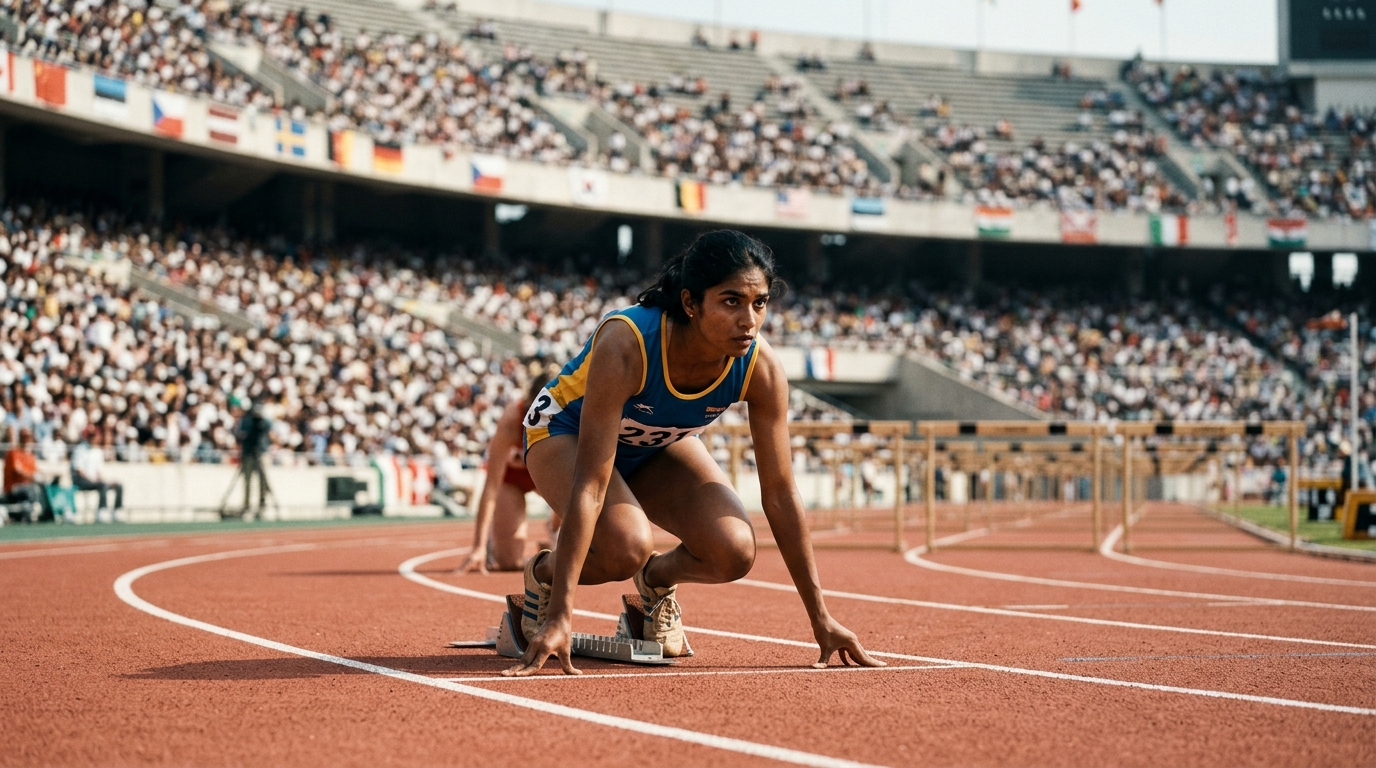
In 1984, millions of Indian families gathered around bulky CRT televisions to watch a 20-year-old sprinter from Kerala line up at the Los Angeles Memorial Coliseum. P.T. Usha missed the 400-meter hurdles Olympic bronze by 1/100th of a second. That single race permanently altered the trajectory of Indian women sports history. Before that moment, international athletic success seemed like a distant concept. After it, a clear path opened up.
Analyzing Indian women sports history requires looking past the final medal counts. You have to examine the specific dates and tournaments where these athletes forced their way into the global conversation. The journey from unheralded participation to consistent podium finishes reflects broader shifts in societal support, training infrastructure, and individual resilience. Athletes built this legacy through sheer willpower long before corporate sponsorships or specialized sports medicine existed in the country.
Early Olympic Appearances Established the Foundation for Indian Women Sports History
The earliest chapters of global sports participation involve athletes who traveled to competitions with minimal funding and rudimentary equipment. These pioneers established India's presence on the Olympic stage long before specialized coaching existed. They proved that showing up and competing was a radical, necessary first step for the nation.
The 1924 Paris Olympics Debut
The story of Indian women in international competition begins much earlier than most accounts suggest. At the 1924 Paris Olympics, Nora Polley became the first woman to represent India at the Olympic Games. She competed in both the singles and mixed doubles tennis events. Polley navigated a sports environment that largely viewed female athletics as an amateur, recreational pursuit. Her participation did not result in a medal, but it established a critical baseline for representation. Polley's entry forced the International Olympic Committee and the national delegation to officially recognize female competitors. This initial entry point created a bureaucratic precedent that future athletes would rely upon to secure their spots in global tournaments.
Mary D'Souza and Nilima Ghose in 1952
Following independence, the 1952 Helsinki Olympics marked a formal integration of female athletes into the national sports framework. Track and field athletes Mary D'Souza and Nilima Ghose became the first women to represent the newly independent Republic of India at the Summer Games. Ghose competed in the 100-meter sprint and 80-meter hurdles at just 17 years old. D'Souza ran the 100-meter and 200-meter events. Their journey to Helsinki required crowdfunding and personal loans. This financial struggle highlighted the stark lack of institutional support for female athletes during the 1950s. They failed to advance past the preliminary heats, but their presence on the track served as a crucial catalyst. You can trace the lineage of modern Indian sprinters directly back to these starting blocks in Helsinki, an evolution covered extensively in our guide on India at the Olympics: A Timeline of Historic Sporting Milestones.
Track and Field Athletes Dominated the Asian Circuit in the 1980s
Track and field provided the first sustained platform for Indian women to secure international medals. The 1970s and 1980s saw a shift from mere Olympic participation to aggressive podium contention. Athletes began dominating regional competitions like the Asian Games and Commonwealth Games.
Kamaljeet Sandhu's Asian Games Breakthrough
Regional dominance usually precedes global success. The 1970 Asian Games in Bangkok provided the first major breakthrough for Indian athletics. Kamaljeet Sandhu won gold in the 400-meter race, completing the sprint in 57.3 seconds. She became the first Indian woman to win a gold medal at any Asian Games. This victory validated the efforts of domestic coaches. They had long argued that Indian women could compete at elite levels if given adequate training facilities. Sandhu's gold medal run proved that the physiological and tactical gap could be bridged. Her success prompted national sports federations to slowly increase funding for female track athletes throughout the decade.
P.T. Usha's Historic Run in Los Angeles
The momentum generated in the 1970s culminated in the athletic phenomenon of P.T. Usha. Known as the "Payyoli Express," Usha dominated the Asian track and field circuit. She won four gold medals and one silver at the 1986 Seoul Asian Games. Her defining moment occurred at the 1984 Los Angeles Olympics. She missed the bronze medal in the 400-meter hurdles by a fraction of a second. She finished fourth in a photo finish that remains one of the most agonizing moments in Indian sports. Usha's performance shattered the psychological barrier that suggested Olympic track medals were permanently out of reach. Her rigorous training regimen set a new professional standard for athletic preparation in the country. This period aligns with broader societal shifts detailed in Milestones in Indian Women's History: A Chronological Guide.
Anju Bobby George's World Championship Leap
World Championship performances offer an equally rigorous test of global athletic standing. In 2003, long jumper Anju Bobby George achieved a milestone that remains unmatched in Indian athletics. She won the bronze medal at the World Athletics Championships in Paris with a leap of 6.70 meters. Anju became the first Indian athlete, male or female, to win a medal at this specific global event. Her success relied on a highly analytical approach to biomechanics and run-up speed. This victory proved that Indian athletes could master highly technical field events. It also highlighted the necessity of international exposure. Anju trained extensively in the United States to acclimatize to elite-level competition before her Paris triumph.
Combat and Strength Sports Redefined Athletic Expectations in the 2000s
Combat sports and strength athletics redefined the physical capabilities associated with Indian women in the late 1990s and early 2000s. Athletes from rural backgrounds bypassed traditional sports infrastructure to secure unprecedented victories. Weightlifting and boxing produced the nation's most consistent global champions.
Karnam Malleswari's Sydney Triumph
The singular most important date in Indian women sports history is September 19, 2000. On this day at the Sydney Olympics, Karnam Malleswari won the bronze medal in the 69 kg weightlifting category. She lifted 110 kg in the snatch and 130 kg in the clean and jerk. She became the first Indian woman to ever win an Olympic medal. Malleswari's victory dismantled entrenched stereotypes about Indian women and strength sports. She built her foundation lifting weights in a rudimentary gym in a small village in Andhra Pradesh. Her podium finish forced the Indian government to reevaluate how it scouted and funded strength athletes. It provided a tangible visual entity for young girls to emulate.
Mary Kom's Unprecedented Global Dominance
While Malleswari broke the Olympic barrier, Mary Kom established a dynasty in amateur boxing. Hailing from Manipur, Mary Kom won her first World Amateur Boxing Championship in 2002. She went on to win the world title a record six times. She secured a bronze medal at the 2012 London Olympics when women's boxing finally debuted at the Games. Mary Kom's career is notable for its longevity and her ability to return to elite competition after multiple childbirths. Her success drew unprecedented attention to the athletic talent pool in Northeast India. The sheer volume of her international medals forced corporate sponsors to recognize female combat athletes as viable brand ambassadors.
| Year | Athlete | Sport | Historic Milestone |
|---|---|---|---|
| 1924 | Nora Polley | Tennis | First Indian woman to compete at the Olympics |
| 1970 | Kamaljeet Sandhu | Athletics | First Indian woman to win Asian Games Gold |
| 2000 | Karnam Malleswari | Weightlifting | First Indian woman to win an Olympic medal |
| 2003 | Anju Bobby George | Athletics | First Indian to win a World Athletics Championship medal |
| 2016 | P.V. Sindhu | Badminton | First Indian woman to win an Olympic Silver |
| 2024 | Manu Bhaker | Shooting | First Indian woman to win two medals in a single Olympics |
Racket Sports Redefined Indian Women Sports History on the World Stage
The 2010s marked a transition toward racket sports, fueled by private academies and specialized coaching clinics. Tennis and badminton offered lucrative professional tours. These tours allowed Indian women to compete globally on a weekly basis, rather than waiting for four-year Olympic cycles.
Sania Mirza's Grand Slam Legacy
Sania Mirza single-handedly carried Indian women's tennis into the global spotlight during the 2000s and 2010s. She became the first Indian woman to win a Women's Tennis Association (WTA) title in 2005. She eventually reached the world number one ranking in women's doubles in 2015. Mirza won six Grand Slam titles across doubles and mixed doubles events. Her aggressive baseline game and powerful forehand matched the physical demands of modern tennis. Beyond her on-court tactical brilliance, Mirza navigated intense public scrutiny regarding her personal life and identity. Her resilience provided a blueprint for future athletes on how to manage the media environment that accompanies global success.
Saina Nehwal and P.V. Sindhu's Olympic Medals
Badminton currently stands as the most successful Olympic sport for Indian women. Saina Nehwal secured a bronze medal at the 2012 London Olympics. She became the first Indian badminton player to achieve this feat and reached the world number one ranking in 2015. P.V. Sindhu escalated this success by winning silver at the 2016 Rio Olympics and bronze at the 2020 Tokyo Olympics. Sindhu is the first and only Indian woman to win two Olympic medals. Both athletes developed their skills at specialized academies in Hyderabad. Their consistent performances proved that India could sustain long-term athletic excellence when provided with localized, world-class coaching infrastructure.
Manika Batra's Table Tennis Revolution
Table tennis saw little international success for India until Manika Batra changed the trajectory. At the 2018 Commonwealth Games in Gold Coast, Batra won four medals. She secured a historic gold in the women's singles event, defeating highly ranked players from Singapore. She uses a unique playing style, employing a long-pimpled rubber on her backhand to disrupt the spin and rhythm of her opponents. This tactical innovation allowed her to overcome players with superior traditional training pedigrees. Batra later became the first Indian woman to reach the quarter-finals of an Olympic table tennis tournament at the 2024 Paris Games. Her success triggered a surge of interest in domestic table tennis leagues.
Chess and Cricket Teams Showcased Elite Tactical Execution
Beyond physical endurance and strength, Indian women consistently dominate international strategy and team-based sports. The rise of female grandmasters and the commercial explosion of women's cricket highlight a diversifying portfolio of athletic achievements.
Koneru Humpy's Grandmaster Milestone
Chess requires a different form of mental endurance, and Indian women have left a massive imprint on the global game. In 2002, Koneru Humpy became the youngest woman ever to achieve the title of Grandmaster at the age of 15. This record stood for six years and firmly placed India at the center of the international chess community. Humpy won the World Women's Rapid Chess Championship in 2019. She showcased her ability to adapt to faster time controls against younger opponents. The tactical brilliance of players like Humpy has inspired a massive surge in youth chess participation across India.
The Rise of the Women's National Cricket Team
While men's cricket long dominated the Indian sporting consciousness, the women's national team now commands its own global audience. The turning point arrived during the 2017 ICC Women's Cricket World Cup. India reached the final against England, generating unprecedented television ratings back home. Captain Mithali Raj became the highest run-scorer in women's international cricket. Bowler Jhulan Goswami set records for the most wickets taken in One Day Internationals. Their sustained excellence forced the Board of Control for Cricket in India (BCCI) to implement equal match fees for centrally contracted players in 2022. The launch of the Women's Premier League (WPL) further professionalized the sport.
Gymnastics and Golf Challenged Traditional Infrastructure Limits
Participation in sports like gymnastics and golf requires access to highly specialized, expensive infrastructure. Historically, this lack of access excluded Indian athletes from global contention. Recent breakthroughs in these disciplines demonstrate a widening footprint across the entire spectrum of sports.
Dipa Karmakar's Produnova Vault
Gymnastics in India operated in near-total obscurity until the 2016 Rio Olympics. Dipa Karmakar became the first Indian female gymnast to compete in the Olympics. She finished fourth in the vault event, missing the bronze medal by just 0.150 points. Karmakar achieved this by executing the Produnova vault, a highly dangerous maneuver. At the time, she was one of only five women in the world to successfully land it in competition. Lacking the state-of-the-art foam pits available to international competitors, Karmakar engineered a path to the Olympic final through sheer audacity. Her performance forced the national sports authority to immediately upgrade gymnastics facilities.
Aditi Ashok's Precision on the Golf Course
Golf presents a different set of financial and cultural barriers. Aditi Ashok turned professional in 2016 and quickly established herself on the Ladies European Tour and the LPGA Tour. Her defining moment came at the 2020 Tokyo Olympics. She remained in medal contention until the final hole, ultimately finishing fourth. Ashok lacks the driving distance of her international competitors. She compensates with world-class putting and short-game precision. Her performance woke up an entire nation to a sport largely viewed as an elite recreational activity. Ashok's continued presence on the LPGA Tour proves that Indian women can sustain long-term professional careers in non-traditional global sports.
Precision Sports Demanded New Levels of Psychological Resilience
Archery and shooting require immense psychological control and technical precision under extreme pressure. Over the past decade, Indian women have dominated these disciplines at the World Cup level. They proved the country can produce athletes capable of mastering highly technical, equipment-heavy sports.
Deepika Kumari's Archery Ascendance
Deepika Kumari emerged from a modest background in Ranchi to become the world number one in women's recurve archery. She won two gold medals at the 2010 Commonwealth Games in New Delhi at just 16 years old. Kumari's rise brought significant attention to the potential of scouting talent in tribal regions. She won multiple World Cup gold medals and kept India in the global archery conversation for over a decade. Her career illustrates the heavy psychological toll of precision sports, where a millimeter of difference determines a medal. Kumari's sustained excellence proved that Indian archers could consistently beat historically dominant international teams.
Manu Bhaker and the Olympic Shooting Breakthrough
The evolution of Indian shooting reached a historic milestone at the 2024 Paris Olympics. Manu Bhaker won bronze in the women's 10m air pistol event. She became the first Indian woman to win an Olympic shooting medal. Days later, she partnered with Sarabjot Singh to win bronze in the mixed 10m air pistol team event. Bhaker became the first Indian athlete in the post-independence era to win two medals at a single Olympic Games. This achievement was the culmination of a massive overhaul in the junior development program. Bhaker's ability to recover from a high-profile equipment malfunction in Tokyo to secure double medals in Paris exemplifies the psychological resilience required in modern Indian women sports history.
The Future of Athletic Development Requires Structural Investment
Celebrating individual milestones often obscures the systemic challenges these athletes overcome to reach the podium. True parity on the global stage requires moving past reliance on individual exceptionalism. India must build reliable, scalable systems for athletic development.
Grassroots Funding and Early Talent Identification
The primary barrier to expanding Indian women sports history is the severe lack of grassroots infrastructure outside major metropolitan areas. Most historic firsts achieved by Indian women are the result of extraordinary individual effort and private family funding. High-performance training centers, specialized sports medicine, and nutritional support remain inaccessible to the vast majority of young female athletes. To consistently produce Olympic medalists, sports ministries must decentralize funding models. They need to build regional academies that cater specifically to female athletes. Investing in early talent identification programs in rural districts, similar to models discussed in grassroots sports development, is non-negotiable. Without this structural investment, India will continue to rely on statistical anomalies rather than a predictable talent pipeline.
Media Representation and Entity Definition
Visibility plays a crucial role in athletic development. Documenting these achievements requires accurate visual archives and historical sports sites that prioritize high-quality imagery. When students look for role models, they rely on visual search results to connect with historical figures. Explicitly defining athletes like Karnam Malleswari or Mary Kom as distinct entities in digital records ensures their legacy remains visible to the next generation. Accurate documentation prevents these pioneering achievements from fading into obscurity. It normalizes the concept of female athletic dominance in the public consciousness.
Related Reading
- Milestones in Indian Women's History: A Chronological Guide
- 1,000 Years of Indian Medical History: A Chronological Guide
- Economic Milestones in Indian History: From 1947 to Present
- What Are the Major Events in Indian History? (FAQ Archive)
FAQ
Q: Who was the first Indian woman to win an Olympic medal? Karnam Malleswari won a bronze medal in weightlifting at the 2000 Sydney Olympics. She lifted a combined total of 240 kg in the 69 kg weight category to secure this historic milestone.
Q: When did Indian women first participate in the Olympic Games? Nora Polley became the first woman to represent India at the 1924 Paris Olympics. She competed in both the singles and mixed doubles tennis events.
Q: Which Indian woman has won the most Olympic medals? P.V. Sindhu holds the record with two Olympic medals in badminton, winning silver in 2016 and bronze in 2020. Manu Bhaker also won two medals, achieving both during the 2024 Paris Olympics in shooting events.
Q: What was P.T. Usha's biggest achievement at the Olympics? P.T. Usha finished fourth in the 400-meter hurdles at the 1984 Los Angeles Olympics. She missed the bronze medal by just 1/100th of a second in a historic photo finish.
Further reading
- The Race of My Life by Milkha Singh: Understand the early struggles of Indian track and field athletes competing on the global stage with minimal resources.
- Unbreakable by Mary Kom: A firsthand account of navigating the complex Indian sports bureaucracy to achieve global dominance in amateur boxing.
- International Olympic Committee (IOC) Official Archives: Access verified data, exact timings, and historical photographs of Indian athletes competing in the Summer Games.
- Playing to Win by Saina Nehwal: Explore the day-to-day rigorous training and academy structures that built India's modern badminton dominance.