On This Day: March 29 Milestones and Anniversaries in Indian History
The Quick Read
March 29 Indian history is defined by Mangal Pandey's 1857 rebellion in Barrackpore, which ignited the first major uprising against British rule. The date also marks the 1943 execution of tribal leader Laxman Nayak and the devastating 1999 Chamoli earthquake, reflecting a complex mix of defiance, tragedy, and resilience.
Key Takeaways
- Mangal Pandey’s 1857 mutiny sparked the widespread Indian rebellion against the British East India Company.
- Tribal activist Laxman Nayak died for the freedom struggle on this date in 1943.
- The 1999 Chamoli earthquake reshaped disaster management protocols across northern India.
- March 29 marks the birth of legendary Indian playwright and actor Utpal Dutt.
- Historical records from this date highlight the shift from corporate to imperial British rule.
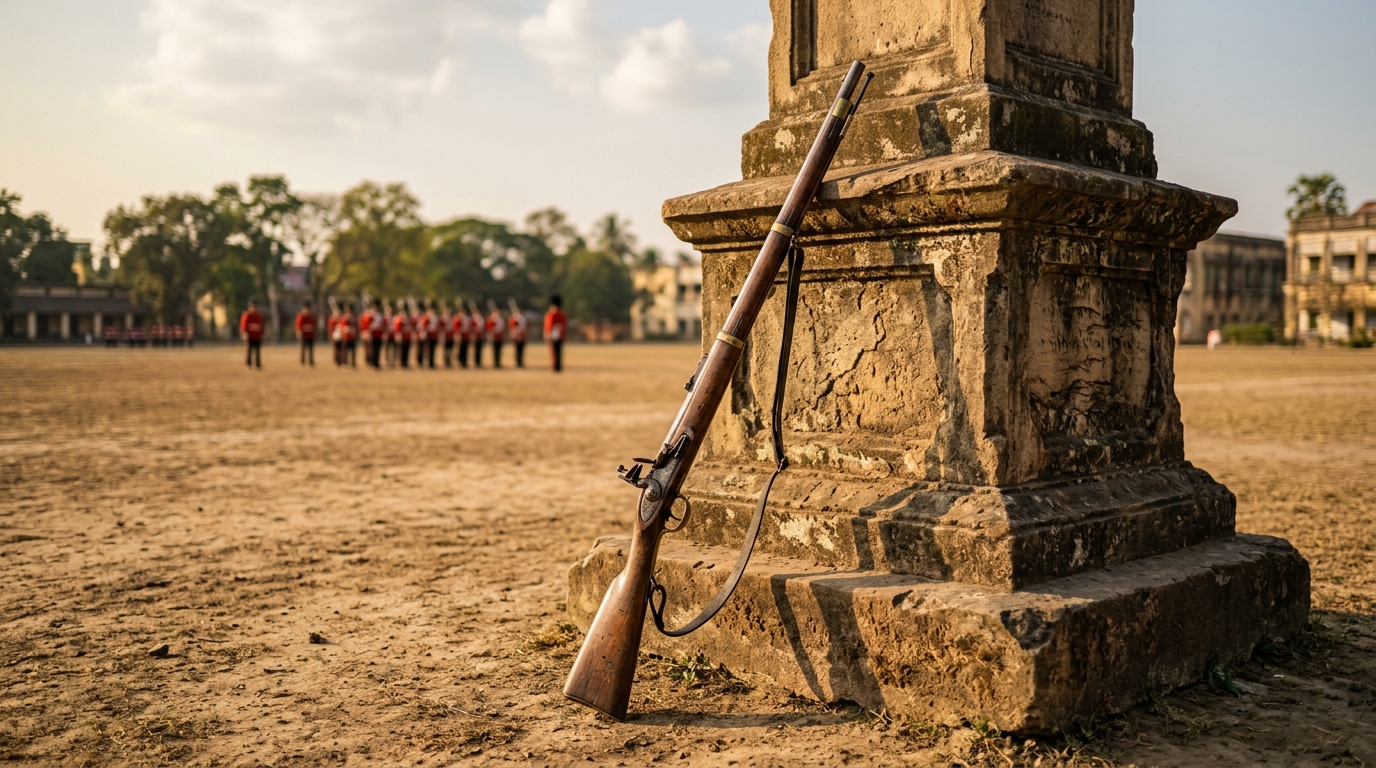
Walk through the old cantonment town of Barrackpore today, and you will see monuments quietly standing guard over a vast parade ground. The air is still, but the ground holds the memory of a single musket shot that changed the subcontinent forever. On a hot spring afternoon, a young sepoy refused his orders. He triggered a chain reaction that shook the British Empire to its absolute core. This single action forms the cornerstone of March 29 Indian history, but the date holds much more. From tribal uprisings in the dense forests of Odisha to the birth of cinematic legends in Bengal, the events of this day weave a complex tapestry of modern India.
Why is March 29 crucial to the 1857 rebellion?
March 29 is crucial because it marks the exact day Mangal Pandey openly revolted against British officers at Barrackpore. This defiance over greased cartridges served as the catalyst for the broader 1857 uprising. His actions transformed scattered resentment into an organized armed struggle against the East India Company.
The Spark at Barrackpore
Tensions had been brewing for months inside the 34th Bengal Native Infantry. The British had recently introduced the new Enfield P-53 rifle to the troops. To load the weapon, soldiers had to bite off the ends of lubricated paper cartridges. Rumors spread rapidly that the grease contained cow and pig fat. This deeply offended the religious beliefs of both Hindu and Muslim sepoys.
On the afternoon of March 29, 1857, a 29-year-old soldier named Mangal Pandey decided he had enough. He paced the parade ground in front of the quarter guard, armed with a loaded musket. He called out to his fellow sepoys to rise up against the European officers. When Sergeant-Major James Hewson arrived to investigate the commotion, Pandey fired.
He missed the shot, but the rebellion had officially begun. Lieutenant Henry Baugh then rode onto the ground on horseback. Pandey fired again, bringing down Baugh's horse and engaging the officer in hand-to-hand combat.
The Refusal to Interfere
The most telling moment of the afternoon was not the fight itself, but the reaction of the other soldiers. When ordered to arrest Pandey, nearly the entire quarter guard refused to move. Only one soldier, Shaikh Paltu, stepped forward to defend the British officers. The silent refusal of the other sepoys signaled a total breakdown of military discipline and loyalty.
Realizing he would soon be overpowered by arriving British reinforcements, Pandey turned his musket on himself. He pulled the trigger with his toe but only managed to wound himself in the shoulder. The British arrested him, treated his wounds, and quickly brought him to trial.
The Ripple Effect Across the Subcontinent
The military court sentenced Pandey to death by hanging. They executed him just days later on April 8, 1857. The British then disbanded the entire 34th Regiment, stripping the soldiers of their uniforms in a public humiliation.
They thought this would stamp out the rebellion. They were completely wrong.
News of Pandey's defiance spread from cantonment to cantonment. By May, the garrison at Meerut broke out into open revolt, marching on Delhi and declaring the Mughal Emperor their leader. Pandey's actions on March 29 effectively lit the fuse for a massive, bloody conflict. If you look at the 10 most searched dates in Indian history and why they matter, the timeline of 1857 consistently ranks at the top.
Who was Laxman Nayak and what happened on this day?
Laxman Nayak was a prominent tribal leader and freedom fighter from Odisha who was executed by the British on March 29, 1943. His death highlighted the vital, often overlooked contributions of indigenous communities to the Indian independence movement and the widespread impact of the Quit India agitation.
Mobilizing the Bhumiya Tribe
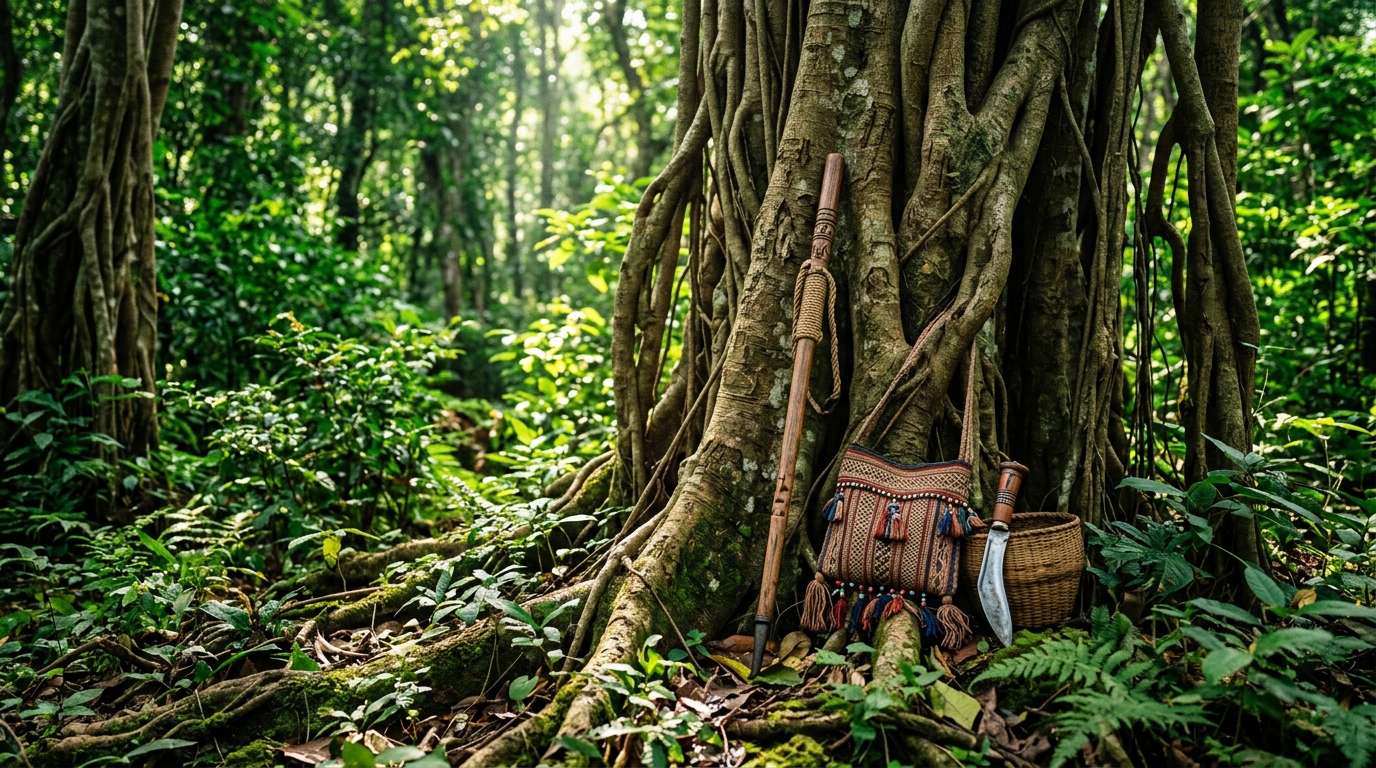
History books often center the independence struggle in big cities, but the rural forests saw equally fierce resistance. Laxman Nayak was born in Tentuliguma, a small village in the Koraput district of Odisha. He belonged to the Bhumiya tribe. As a local leader, he saw firsthand how British forest laws and harsh taxation crippled the indigenous way of life.
Nayak began organizing his people. He drew heavily on the principles of the timeline of Mahatma Gandhi's nonviolent movements in India. He promoted spinning khadi, gave up alcohol, and urged his community to reject oppressive colonial taxes. He became known locally as the "Gandhi of Malkangiri."
The Mathili Police Station Incident
When the Indian National Congress launched the Quit India Movement in August 1942, the call reached the deep forests of Koraput. Nayak led a massive, peaceful procession toward the Mathili police station. The demonstrators wanted to hoist the Indian tricolor flag on the station roof.
The local police panicked. They lathi-charged the crowd and eventually opened fire. Several tribal protesters died on the spot. In the ensuing chaos, a forest guard named G. Ramayya was killed.
The British authorities saw an opportunity to eliminate a troublesome leader. They falsely accused Laxman Nayak of murdering the forest guard.
A Legacy Cemented in Berhampur Jail
The colonial court held a swift trial. Despite a lack of evidence placing Nayak near the guard, the judge sentenced him to death. They transferred him to Berhampur Jail.
On March 29, 1943, Laxman Nayak walked to the gallows. According to historical records from the National Archives of India, his final wish was simple. He asked to see the dawn of an independent India. While he did not live to see 1947, his execution on this day remains a powerful symbol of tribal sacrifice in the fight for self-rule.
How did the 1999 Chamoli earthquake impact Indian history?
The March 29, 1999 Chamoli earthquake killed over 100 people and forced a massive overhaul of India's seismic readiness. Striking the Garhwal region with a magnitude of 6.8, the disaster exposed severe vulnerabilities in mountain infrastructure and accelerated the development of modern disaster management policies across northern India.
Tremors in the Night
The Himalayan region sits on one of the most active fault lines in the world. The Indian tectonic plate constantly pushes under the Eurasian plate, building immense pressure. On March 29, 1999, at exactly 00:35 IST, that pressure snapped.
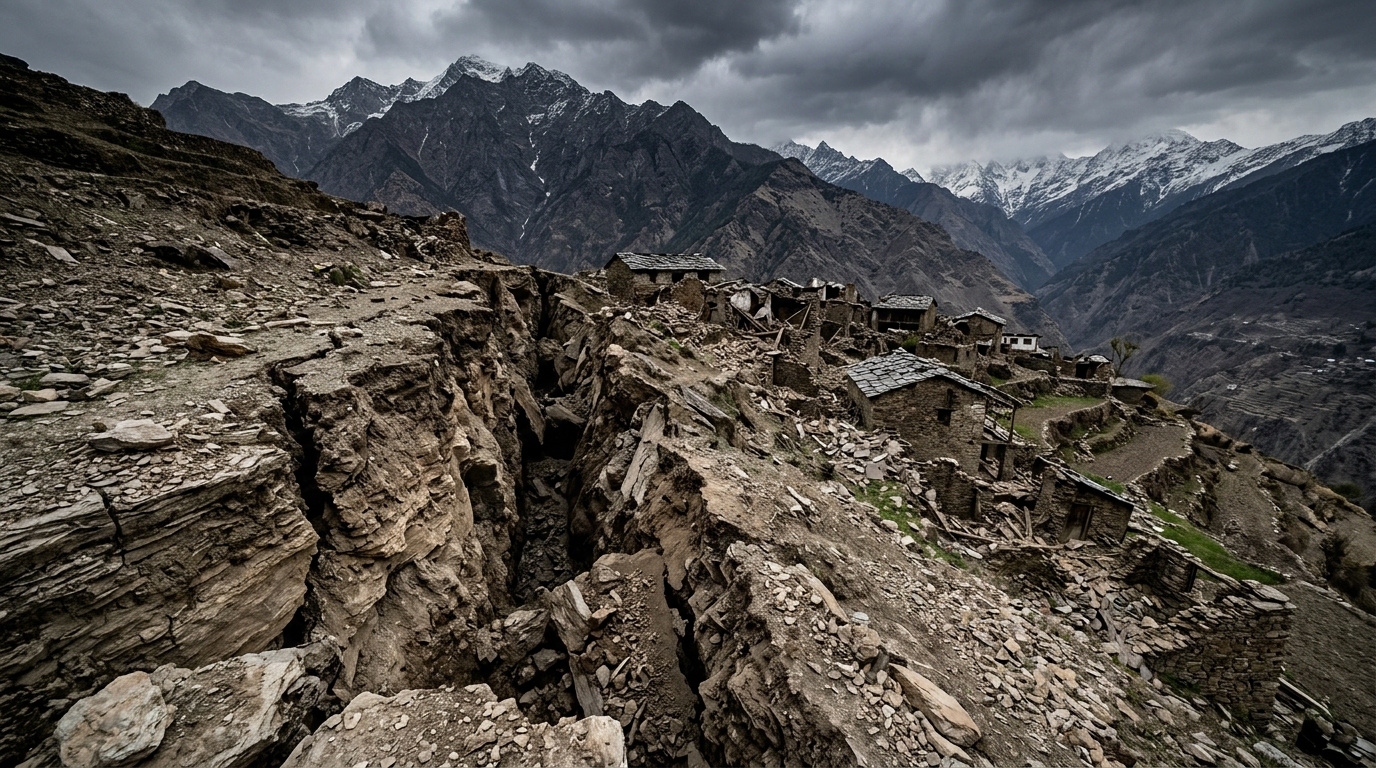
A magnitude 6.8 earthquake ripped through the Chamoli district in present-day Uttarakhand. The tremors were so violent they woke up residents in New Delhi, Kanpur, and even parts of Himachal Pradesh.
In the immediate epicenter, the destruction was absolute. Traditional stone and mud houses collapsed instantly. Landslides triggered by the shaking wiped out entire mountain roads. This cut off dozens of remote villages from any immediate rescue efforts.
Exposing Infrastructure Flaws
The death toll quickly climbed past 100, with hundreds more severely injured. When the Geological Survey of India and other scientific bodies arrived to assess the damage, they found a grim reality. The building practices in the region were entirely unsuited for a high-seismic zone.
Concrete structures built without proper reinforcement snapped at their bases. The earthquake highlighted the danger of the Main Central Thrust, a major geological fault line running directly under the populated valleys.
Shifting the Policy Landscape
Before 1999, disaster response in India was largely reactive. The government handed out relief money after an event occurred. The Chamoli earthquake helped change this approach.
The massive loss of life and property forced state and central governments to look at mitigation. Engineers updated the seismic zoning map of India. Local authorities in the Garhwal region started enforcing stricter building codes, requiring reinforced concrete and specific architectural designs to withstand future shocks. You can trace the roots of India's modern National Disaster Management Authority directly back to the lessons learned from tragedies like Chamoli.
Which cultural icons share a March 29 birthday?
March 29 marks the birth of Utpal Dutt, a towering figure in modern Indian theater and cinema, born in 1929. It is also the birthday of Bhavani Prasad Mishra, a celebrated Hindi poet who wove Gandhian philosophy into his highly influential literary works throughout the twentieth century.
The Theatrical Genius of Utpal Dutt
Utpal Dutt was a force of nature on the stage and the screen. Born in Barisal (now in Bangladesh) on March 29, 1929, he originally started his career in English theater. He soon realized that to reach the masses, he needed to perform in Bengali.
He founded the Little Theatre Group, which became a launchpad for radical, politically charged plays. Dutt used the stage to critique social inequality and political corruption. His plays like Angar and Kallol drew massive crowds and frequently angered the government. He was even jailed in 1965 for his seditious writings.
Yet, Dutt was incredibly versatile. To fund his theater work, he turned to mainstream cinema. He became one of the most recognizable faces in Indian comedy. His roles in Hrishikesh Mukherjee films like Gol Maal and Naram Garam showcased his impeccable comic timing. He seamlessly bridged the gap between serious Marxist theater and lighthearted commercial cinema, earning his place among the historic milestones of Indian cinema on the global stage.
The Simple Words of Bhavani Prasad Mishra
Born on the exact same day in 1913 in Madhya Pradesh, Bhavani Prasad Mishra took a different path to cultural prominence. He was a poet who believed that literature should be accessible to everyone.
Mishra actively participated in the freedom struggle and spent time in prison during the Quit India movement. His poetry reflected his deep commitment to Gandhian values. He avoided complex, Sanskritized Hindi. Instead, he wrote in a conversational tone that resonated with ordinary people. His collection Buni Hui Rassi won the Sahitya Akademi Award in 1972, cementing his legacy as a poet of the people.
How does March 29 Indian history connect to broader global events?
March 29 Indian history intersects with global timelines through colonial trade and military deployments. As the British Empire expanded, events like the 1857 rebellion forced London to transfer control directly to the Crown. This shifted global imperial strategy and influenced anti-colonial movements worldwide for the next century.
The End of Corporate Rule
Mangal Pandey's mutiny on March 29 did more than start a local war. It exposed the fatal flaws of letting a private corporation run a subcontinent. The British East India Company had built a massive private army to protect its trade interests. But their disregard for local customs and religious beliefs proved disastrous.
When the news of the 1857 rebellion reached London, the British Parliament realized the Company could no longer govern India. They passed the Government of India Act 1858. This dissolved the East India Company and transferred control directly to Queen Victoria.
This shift changed how the British managed their empire globally. They started relying more on indirect rule, partnering with local princes and monarchs rather than trying to manage every village directly.
A Snapshot of March 29 Events
To understand the scope of this date, look at how the events span different eras.
| Year | Historical Event | Category |
|---|---|---|
| 1857 | Mangal Pandey mutinies at Barrackpore | Freedom Struggle |
| 1913 | Birth of Hindi poet Bhavani Prasad Mishra | Arts & Culture |
| 1929 | Birth of actor and playwright Utpal Dutt | Arts & Culture |
| 1943 | Execution of tribal leader Laxman Nayak | Freedom Struggle |
| 1999 | Magnitude 6.8 earthquake strikes Chamoli | Natural Disaster |
You can explore more specific regional timelines by looking at resources like the 1857 rebellion timeline to see how these dates connect.
Related Reading
- Today in Indian History: March Events, Birthdays, and Milestones
- Milestones in Indian Women's History: A Chronological Guide
- 1,000 Years of Indian Medical History: A Chronological Guide
- Economic Milestones in Indian History: From 1947 to Present
FAQ
Q: What exactly did Mangal Pandey do on March 29, 1857? Mangal Pandey openly defied his British commanders at the Barrackpore parade ground by threatening to shoot the first European officer he saw. He fired upon Sergeant-Major Hewson and Lieutenant Baugh, an act of insubordination that triggered the broader Indian Rebellion of 1857.
Q: Where is Chamoli located and why is it prone to earthquakes? Chamoli is a district in the northern Indian state of Uttarakhand, located high in the Himalayas. It is prone to earthquakes because it sits near the Main Central Thrust, a major geological fault line where the Indian tectonic plate is actively pushing beneath the Eurasian plate.
Q: Why was Laxman Nayak sentenced to death? The British colonial government falsely accused Laxman Nayak of murdering a forest guard during a Quit India movement protest at the Mathili police station in 1942. Despite his lifelong commitment to non-violence, the court sentenced him to death, and he was hanged on March 29, 1943.
Q: How can I research specific historical records from March 29? You can access primary documents, such as court-martial records from 1857 or colonial police reports from 1943, through the National Archives of India. Many state-level gazetteers and archives also hold digitized records of regional events.
Bookmark the dates that matter to your local history and cross-reference them with national archives to uncover the forgotten stories in your own city.