On This Day in September: Key Historic Events in Modern India
The Quick Read
September historical events in India are a collection of foundational nation-building milestones spanning constitutional democracy, territorial defense, international diplomacy, and indigenous scientific research. Key occurrences include the September 24, 1932 Poona Pact, the September 13–17, 1948 integration of Hyderabad through Operation Polo, the September 8–10, 1965 Battle of Asal Uttar, and the September 24, 2014 Mars Orbiter Mission insertion.
Key Takeaways
- The Poona Pact of September 24, 1932 established modern reserved legislative seats in Indian democracy.
- Operation Polo unified Hyderabad with the Indian Union after five days in September 1948.
- The 1965 Battle of Asal Uttar halted an armored offensive near the Punjab border.
- ISRO placed the Mars Orbiter Mission into Martian orbit on September 24, 2014.
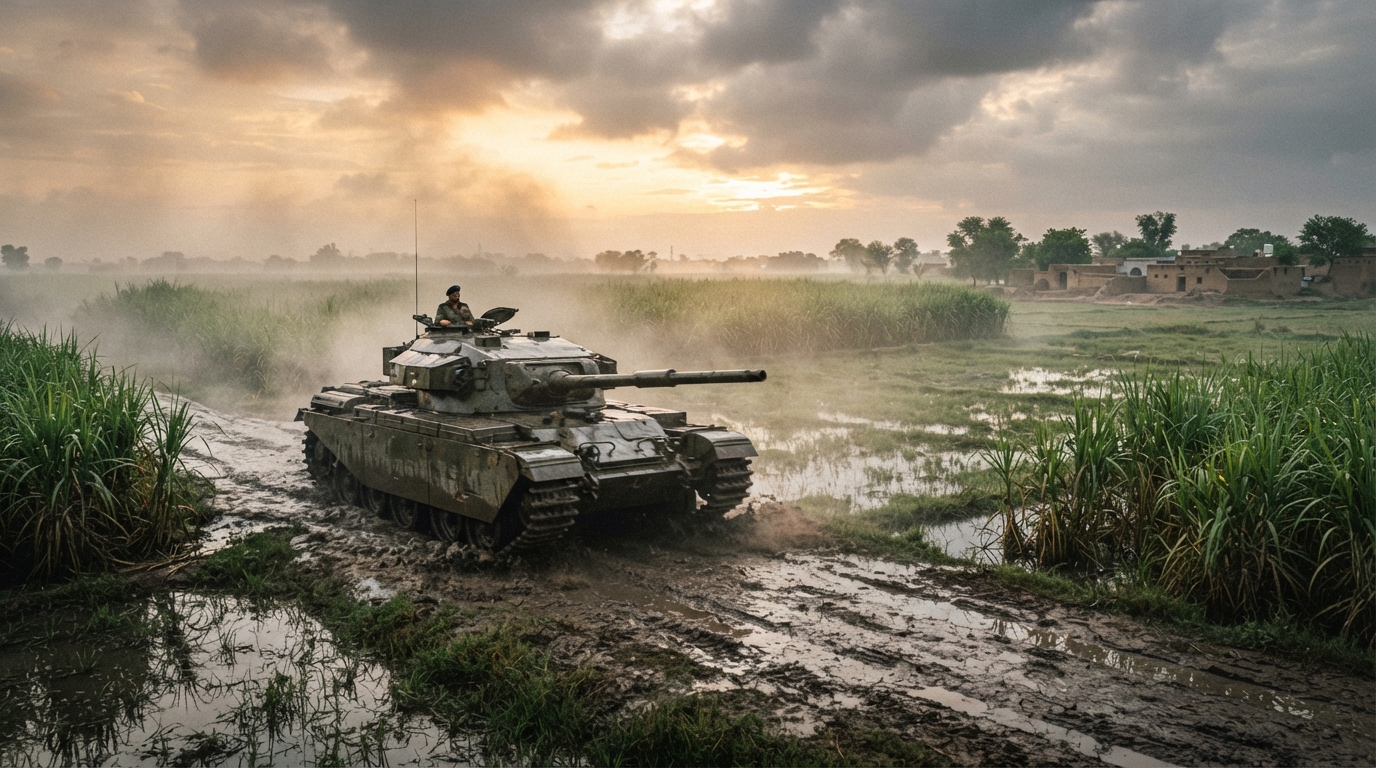
A desk officer in Lahore Central Jail logs the death of a fasting prisoner in 1929. Decades later, Indian Centurion tanks wait in muddy sugarcane fields near the Punjab border in 1965. In Bengaluru, flight controllers watch satellite telemetry turn green on a September morning in 2014.
Studying September historical events in India reveals how political agreements, military maneuvers, and laboratory breakthroughs shaped the modern republic. These calendar dates show how Indian leaders resolved crises and built lasting institutions. Exploring these events on a date-by-date basis provides clear context for students, researchers, and history readers. You can also explore our index of the most searched dates in Indian history to see how these moments fit into the broader national story.
Which September Historical Events in India Reshaped National Politics?
Political milestones in September transformed Indian representative governance and prisoner rights. Key events include the Poona Pact of September 24, 1932, the sacrifice of Jatindra Nath Das on September 13, 1929, and the Constituent Assembly language compromise on September 14, 1949. These decisions established core democratic systems.
1929 (Sept 13) ──► Jatindra Nath Das dies on Day 63 of Lahore jail hunger strike
1932 (Sept 24) ──► Poona Pact signed; reserved seats increase from 71 to 148
1949 (Sept 14) ──► Constituent Assembly adopts Hindi in Devanagari as official language
The Poona Pact of September 24, 1932
The Poona Pact of September 24, 1932 is an agreement between Dr. B.R. Ambedkar and Mahatma Gandhi negotiated at Yerwada Central Jail in Pune. The pact replaced separate electorates for the Depressed Classes with reserved legislative seats within a joint electorate, raising provincial reserved seats from 71 to 148 [Constitution of India Database, 2024].
Mahatma Gandhi had begun a fast unto death four days earlier on September 20, 1932. Gandhi opposed the British Communal Award, which granted separate electorates to the Depressed Classes, arguing that separate electorates would permanently divide Hindu society.
Dr. Ambedkar negotiated to secure direct political representation for oppressed castes. The resulting compromise replaced separate electorates with reserved seats within a joint electorate. Under this agreement, the number of provincial legislature seats reserved for Depressed Classes rose to 148, up from the 71 proposed in the British award [Constitution of India Database, 2024].
Political scientist Christophe Jaffrelot notes that the September 1932 Poona Pact structured Indian democratic representation by exchanging Dalit electoral autonomy for higher numerical seat quotas within general electorates. This political arrangement created the structural framework for legislative reservations that later entered the Constitution of India in 1950. You can read more about this period in our guide to Mahatma Gandhi's nonviolent movements.
The Martyrdom of Jatindra Nath Das on September 13, 1929
Jatindra Nath Das was a Bengal freedom activist and member of the Hindustan Socialist Republican Association. Das died on September 13, 1929, after a 63-day hunger strike in Lahore Central Jail [National Archives of India, 2024].
Das and fellow Hindustan Socialist Republican Association members, including Bhagat Singh, began the strike to demand basic human rights for political prisoners. British jail authorities treated Indian political prisoners worse than common British criminals. The prisoners demanded clean uniforms, edible food, books, daily newspapers, and sanitary cells.
Das refused forced feeding. The health of Das failed slowly under the watch of British medical officers. When Das died on September 13, over 500,000 people gathered at the railway stations between Lahore and Calcutta as his funeral train passed. His death drew nationwide attention to British prison conditions and deepened public support for total independence.
The Constituent Assembly Official Language Compromise on September 14, 1949
On September 14, 1949, the Constituent Assembly resolved a sharp debate regarding the official language of independent India. Delegates from northern provinces wanted Hindi as the sole national language. Representatives from southern and eastern provinces argued that Hindi gave an unfair administrative advantage to native speakers.
The Assembly resolved this deadlock by adopting the Munshi-Ayyangar formula. This compromise made Hindi in the Devanagari script the official language of the Union under Article 343. English remained in use for all official Union purposes for a transitional period of 15 years [Press Information Bureau, 2024].
India now marks September 14 as Hindi Diwas. In 2024, the country observed the 75th anniversary diamond jubilee of this constitutional agreement and inaugurated the Bharatiya Bhasha Anubhag to support all Indian languages [Press Information Bureau, 2024].
How Did Military Actions in September Defend Indian Sovereignty?
Military operations in September protected the borders and territorial integrity of modern India. Major actions include Operation Polo from September 13 to 17, 1948, the Battle of Asal Uttar from September 8 to 10, 1965, and the surgical strikes of September 29, 2016. These actions settled critical security challenges.
Operation Polo and the Integration of Hyderabad (September 13–17, 1948)
In September 1948, the princely state of Hyderabad remained independent under Nizam Mir Osman Ali Khan. The Nizam refused to sign the Instrument of Accession to India. He funded the Razakars, an armed paramilitary force led by Kasim Razvi that terrorized rural populations and targeted pro-accession civilians across the Deccan plateau.
Home Minister Sardar Vallabhbhai Patel ordered Indian armed forces to intervene on September 13, 1948. Major General J.N. Chaudhuri commanded a multi-front armored drive into the state. The military action lasted five days [Ministry of Home Affairs, 2024]. On September 17, the Nizam announced a ceasefire and surrendered his forces over state radio.
Operation Polo Timeline (September 1948):
Sept 13 ──► Indian 1st Armoured Division enters Hyderabad from Western & Eastern axes
Sept 15 ──► Indian troops secure major rail junctions; Razakar resistance collapses
Sept 17 ──► Nizam Mir Osman Ali Khan surrenders; signs accession to the Indian Union
Historian Ramachandra Guha observed that Operation Polo extinguished the possibility of a fractured subcontinent by resolving the largest and most hazardous princely state crisis.
In 2024, the Ministry of Home Affairs officially gazetted September 17 as annual "Hyderabad Liberation Day." The Telangana state government observes the same date as "Telangana Praja Palana Day" [Ministry of Home Affairs / Government of Telangana, 2024].
The Battle of Asal Uttar in the 1965 War (September 8–10, 1965)
The Battle of Asal Uttar was one of the largest tank battles fought in South Asia after World War II. Between September 8 and 10, 1965, the Pakistani 1st Armoured Division advanced toward Khem Karan in Punjab. They fielded American-built M47 and M48 Patton tanks.
The Indian 4th Mountain Division held defensive lines near the village of Asal Uttar. Indian forces breached local irrigation canals to flood surrounding sugarcane fields. The heavy Pakistani tanks drove into the mud and became stuck. Indian Centurion and Sherman tanks fired on the trapped armor from concealed defensive positions.
Key Metrics: Battle of Asal Uttar (Sept 8–10, 1965)
• Opposing Pakistani Armor : ~220 Patton and Sherman tanks
• Pakistani Tanks Lost/Captured : ~100 tanks destroyed or abandoned [Ministry of Defence, 2025]
• Tactical Outcome : Advance halted; area nicknamed "Patton Nagar"
• Key Honor : CQMH Abdul Hamid awarded Param Vir Chakra posthumously
Indian forces destroyed or captured roughly 100 Pakistani Patton tanks during the three-day battle [Indian Army / Ministry of Defence, 2025]. The battlefield was nicknamed "Patton Nagar." Company Quartermaster Havildar Abdul Hamid received the Param Vir Chakra posthumously for destroying multiple enemy tanks with a recoilless gun during the engagement.
The Counter-Terror Operations of September 29, 2016
On September 29, 2016, the Indian Army carried out targeted operations across the Line of Control in Jammu and Kashmir. Eleven days earlier, on September 18, four militants attacked an Indian Army brigade headquarters in Uri, killing 19 soldiers.
Indian Special Forces crossed the Line of Control during the early morning hours of September 29. They struck multiple staging camps where militants gathered before crossing into Indian territory. The operation altered India's established border management doctrine by demonstrating readiness to use targeted cross-border military strikes.
What Diplomatic and Global Pacts Defined September for India?
Diplomatic milestones in September connected India with the wider world. Crucial moments include Swami Vivekananda's address on September 11, 1893, the Indus Waters Treaty on September 19, 1960, and the Non-Aligned Movement conference in September 1961. These events shaped India's international standing and external relations.
Swami Vivekananda's Chicago Address on September 11, 1893
Swami Vivekananda's Chicago address on September 11, 1893 is a landmark speech delivered at the World's Parliament of Religions in Chicago representing Hinduism and Indian philosophy. Opening with the phrase "Sisters and brothers of America," the address introduced Vedanta and Yoga to Western audiences while advocating universal tolerance against sectarianism and fanaticism.
When Swami Vivekananda addressed the assembly on September 11, 1893, the audience gave the Indian delegate a standing ovation lasting two minutes. Swami Vivekananda presented Hindu philosophical traditions as an inclusive worldview grounded in acceptance. The speech systematically challenged colonial stereotypes that portrayed Indian thought as outdated or superstitious, establishing a durable framework for modern intercultural dialogue.
The Indus Waters Treaty on September 19, 1960
Prime Minister Jawaharlal Nehru and Pakistani President Ayub Khan signed the Indus Waters Treaty in Karachi on September 19, 1960. The World Bank helped negotiate the terms over nine years. The treaty established a clear mechanism for sharing the waters of the Indus river basin.
Indus Waters Treaty Allocation (September 19, 1960):
┌──────────────────────────────────────┬──────────────────────────────────────┐
│ Eastern Rivers (India)               │ Western Rivers (Pakistan)            │
├──────────────────────────────────────┼──────────────────────────────────────┤
│ • Ravi                               │ • Indus                              │
│ • Beas                               │ • Jhelum                             │
│ • Sutlej                             │ • Chenab                             │
│ (India received unrestricted usage)  │ (Pakistan received primary allocation│
│                                      │ with limited Indian run-of-river use)│
└──────────────────────────────────────┴──────────────────────────────────────┘
The treaty divided the river system between the two nations:
- India gained unrestricted rights over the three Eastern Rivers: the Ravi, the Beas, and the Sutlej.
- Pakistan received rights over the three Western Rivers: the Indus, the Jhelum, and the Chenab.
- India retained rights to use Western River waters for non-consumptive needs like run-of-the-river hydroelectric power.
The treaty created the Permanent Indus Commission. It remains one of the longest-lasting international water-sharing agreements, functioning through multiple military conflicts.
The Non-Aligned Movement Summit (September 1–6, 1961)
India joined 24 other nations in Belgrade from September 1 to September 6, 1961, for the first Conference of Heads of State or Government of Non-Aligned Countries. Prime Minister Jawaharlal Nehru organized the summit alongside Josip Broz Tito of Yugoslavia, Gamal Abdel Nasser of Egypt, Kwame Nkrumah of Ghana, and Sukarno of Indonesia.
The Belgrade Summit established the Non-Aligned Movement during the height of the Cold War. Nehru argued that newly independent nations in Asia and Africa should not become client states of either the United States or the Soviet Union. India's non-alignment policy focused on national autonomy, decolonization, and economic self-determination.
How Did Scientific and Institutional Milestones Shape September Historical Events in India?
September dates mark major institutional foundations and scientific successes in modern India. Highlights include the Mars Orbiter Mission on September 24, 2014, the creation of the Council of Scientific and Industrial Research on September 26, 1942, and the start of national broadcasting on September 15, 1959.
Mars Orbiter Mission Orbital Insertion (September 24, 2014)
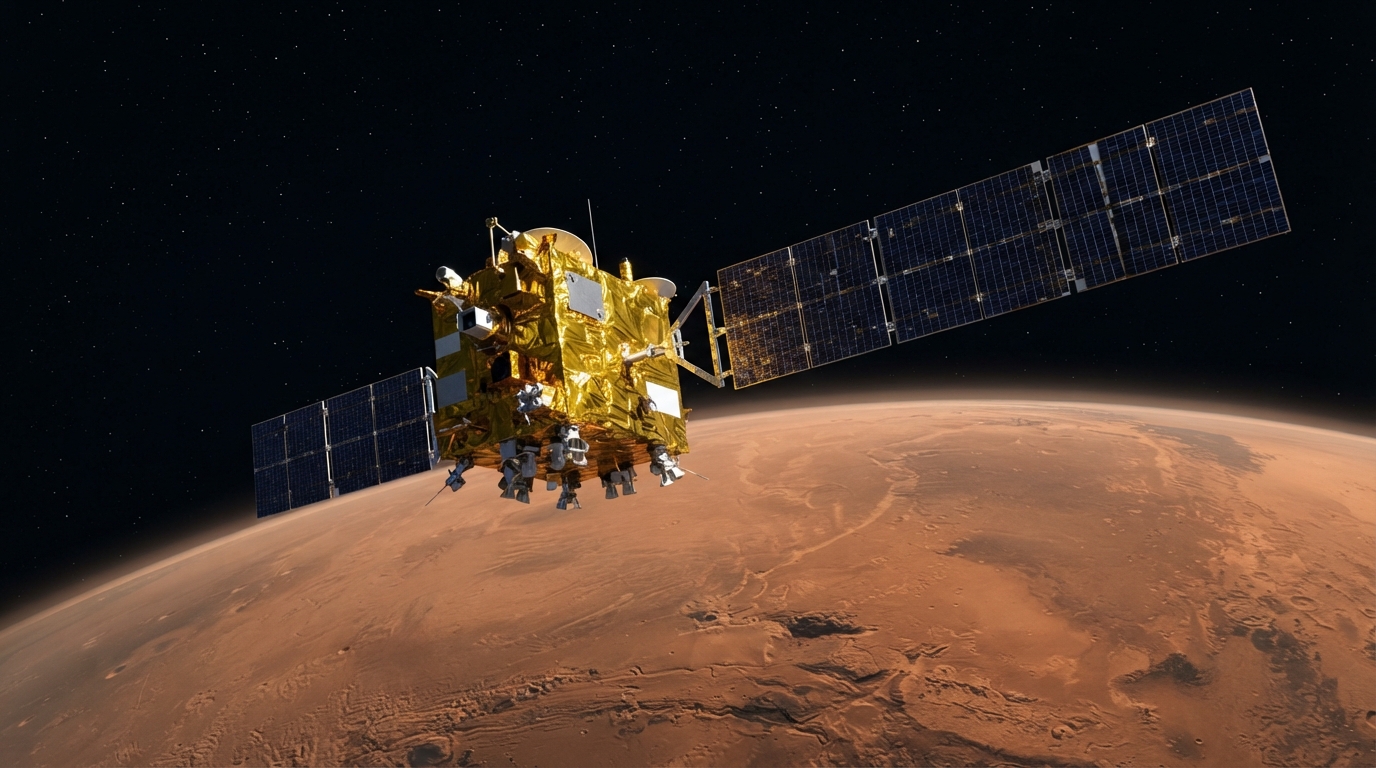
On September 24, 2014, the Indian Space Research Organisation (ISRO) placed the Mars Orbiter Mission (Mangalyaan) into Martian orbit. Spacecraft controllers fired the 440-Newton Liquid Apogee Motor for 1,388 seconds to slow the probe down so Mars could capture it in orbit.
Mars Orbiter Mission Key Facts:
• Insertion Date: September 24, 2014
• Total Mission Cost: ₹450 crore ($74 million) [ISRO, 2024]
• Global Record: First nation to reach Mars on its debut attempt
• Continental Record: First Asian nation to reach Martian orbit
• Primary Scientific Tool: Mars Colour Camera (MCC)
The mission cost ₹450 crore ($74 million), making it far less expensive than Mars missions conducted by other nations [ISRO, 2024]. India became the first Asian nation to reach Mars and the first country in the world to succeed on its first attempt. The orbiter operated for nearly eight years before losing communication in 2022. You can track this trajectory in our complete guide to economic and institutional milestones.
Foundation of the CSIR on September 26, 1942
The British Indian government established the Council of Scientific and Industrial Research (CSIR) on September 26, 1942. Sir Arcot Ramasamy Mudaliar and Dr. Shanti Swaroop Bhatnagar led its creation. Bhatnagar became the first Director-General and organized the country's national laboratory network.
CSIR built scientific infrastructure across India. After 1947, the agency set up premier research centers, including the National Physical Laboratory in New Delhi and the National Chemical Laboratory in Pune. CSIR research helped India develop generic pharmaceutical production, agrochemicals, and leather technologies.
Educational and Technical Observances in September
September includes several statutory observances that recognize educators, engineers, and public media institutions.
- September 5 (Teachers' Day): India marks the birth anniversary of Dr. Sarvepalli Radhakrishnan. He was a philosopher, India's first Vice President, and its second President. The country began celebrating Teachers' Day on his birthday in 1962.
- September 15 (Engineers' Day): This date honors Sir Mokshagundam Visvesvaraya, born on September 15, 1861. Visvesvaraya designed the Krishna Raja Sagara dam in Mysore and developed automatic floodgates for reservoirs.
- September 15, 1959 (Doordarshan Launch): Public television broadcasting began in New Delhi on September 15, 1959, using a small transmitter and a makeshift studio funded by UNESCO. This pilot grew into Doordarshan, India's national broadcaster.
How Do Major September Historical Events in India Compare by Date and Impact?
September historical events in India show clear patterns across defense, science, and politics. Major events cluster around the end of the monsoon season, when military campaigns and administrative reorganizations were historically carried out. The table below details these major milestones.
| Date | Historic Event | Domain | Key Actor or Institution | Long-Term Strategic Outcome |
|---|---|---|---|---|
| Sept 5 (1888) | Birth of Dr. S. Radhakrishnan | Education | Government of India | Established national Teachers' Day in 1962 |
| Sept 8–10 (1965) | Battle of Asal Uttar | Defense | Indian Army (4th Mtn Div) | Stopped enemy armored advance; captured ~100 tanks |
| Sept 11 (1893) | Chicago Parliament Address | Diplomacy | Swami Vivekananda | Introduced Indian philosophical traditions abroad |
| Sept 13 (1929) | Death of Jatindra Nath Das | Freedom Struggle | Lahore Central Jail Prisoners | Accelerated public protests for prisoner rights |
| Sept 13–17 (1948) | Operation Polo | Integration | Indian Armed Forces | Integrated Hyderabad state; ended Nizam rule |
| Sept 14 (1949) | Hindi Language Compromise | Constitutional | Constituent Assembly | Adopted Article 343; set Hindi Diwas observance |
| Sept 15 (1861) | Birth of M. Visvesvaraya | Infrastructure | Public Works Department | Established national Engineers' Day observance |
| Sept 15 (1959) | First Television Broadcast | Media | All India Radio / UNESCO | Created foundation for Doordarshan network |
| Sept 19 (1960) | Indus Waters Treaty Signed | Diplomacy | Jawaharlal Nehru / Ayub Khan | Created lasting cross-border water sharing rules |
| Sept 24 (1932) | Poona Pact Agreed | Politics | Dr. Ambedkar & M. Gandhi | Set 148 reserved seats for Depressed Classes |
| Sept 24 (2014) | Mangalyaan Enters Orbit | Science & Space | ISRO | First Asian space agency to reach Mars |
| Sept 26 (1942) | CSIR Founded | Science & Industry | Dr. S.S. Bhatnagar | Built India's industrial research network |
| Sept 29 (2016) | Surgical Strikes Conducted | Defense | Indian Army Special Forces | Shifted cross-border deterrence strategy |
Patterns in Late-Monsoon Events
Late-monsoon historical patterns in India are seasonal strategic alignments where post-monsoon weather and drying terrain historically determined the timing of major military, political, and institutional initiatives. September military campaigns such as Operation Polo in 1948 and the Battle of Asal Uttar in 1965 leveraged changing soil conditions during the transition out of the monsoon season.
During Operation Polo from September 13 to 17, 1948, Indian armored units utilized drying Deccan roads to advance rapidly on Hyderabad. Conversely, during the Battle of Asal Uttar from September 8 to 10, 1965, Indian forces exploited waterlogged soil by breaching irrigation canals, trapping approximately 100 Pakistani tanks in saturated Punjab fields.
Constitutional and scientific September milestones follow distinct technical and political timelines rather than weather cycles. The Poona Pact of September 24, 1932 resolved a fast unto death inside Yerwada Central Jail within four days. On September 24, 2014, ISRO executed the Mars Orbiter Mission insertion based on precise interplanetary orbital transfer windows.
Why Date-Based Archives Matter for Students
Examining history through calendar dates helps students see connections across different eras. A student preparing for civil service examinations can review September to study how constitutional compromises (the Poona Pact, the official language debate), military actions (Hyderabad, Asal Uttar), and scientific foundations (CSIR, ISRO) unfolded during the same month across different decades. Date-based indexes organize complex timelines into clear, memorable lessons. Readers interested in other months can review our timeline on late April in Indian history to continue building their chronological knowledge.
Related Reading
- Scientific Milestones in Indian History: A Date-Wise Guide
- The 1971 India-Pakistan War: Key Dates and Historical Summary
- Visual History of the Indian Independence Movement: Key Dates
- What Are the Major Events in Indian History? (FAQ Archive)
FAQ
Q: What is the most important political milestone among September historical events in India?
The Poona Pact of September 24, 1932 is widely considered the most consequential political event of the month. It replaced separate electorates for the Depressed Classes with reserved seats in joint electorates, establishing the legal framework for democratic reservations in post-independence India.
Q: Why is September 17 significant in Indian history?
September 17 marks the end of Operation Polo in 1948, when Nizam Mir Osman Ali Khan surrendered and integrated Hyderabad into the Indian Union. Today, the Union Government observes September 17 as Hyderabad Liberation Day, while Telangana observes it as Telangana Praja Palana Day.
Q: Which major scientific achievement occurred on September 24 in India?
On September 24, 2014, ISRO successfully inserted the Mars Orbiter Mission (Mangalyaan) into Mars orbit. India became the first Asian country to reach Mars and the first nation to succeed on its maiden attempt, completing the mission for ₹450 crore ($74 million).
Q: Why does India celebrate Engineers' Day on September 15?
India celebrates Engineers' Day on September 15 to honor the birth anniversary of Sir Mokshagundam Visvesvaraya. Born in 1861, Visvesvaraya was a pioneer in flood-control systems, reservoir design, and modern industrial planning across India.
Your Next Move
Primary source analysis of September historical events in India is a research method where students evaluate archival records from the National Archives of India and the Constitution of India database. Examining foundational documents like the September 24, 1932 Poona Pact or the September 1948 Hyderabad accession files demonstrates how historical milestones directly shaped modern Indian governance.
Select two September milestones from this historical index matching a specific research focus, such as constitutional law or territorial integration. Comparing primary archival texts from the National Archives of India provides verifiable insights into how twentieth-century political settlements and military defenses continue to inform contemporary public policy.
Sources
- Poona Pact — Encyclopaedia Britannica, 2024. Supports: The September 24, 1932 signing of the Poona Pact between Mahatma Gandhi and Dr. B.R. Ambedkar to establish reserved legislative seats rather than separate electorates for Dalits.
- From Bhagat Singh to Dallewal: 6 famous hunger strikes in Punjab — The Indian Express, 2024. Supports: Jatindra Nath Das's martyrdom on September 13, 1929, following a 63-day hunger strike in Lahore Central Jail over political prisoner rights.
- Union Home Minister and Minister of Cooperation, Shri Amit Shah to address inaugural session of Official language Diamond Jubilee celebrations and 4th Akhil Bharatiya Rajbhasha Sammelan on Saturday, 14th September, in New Delhi — Press Information Bureau, 2024. Supports: The Constituent Assembly's September 14, 1949 adoption of Hindi as an official language and the 75th-anniversary launch of the Bharatiya Bhasha Anubhag.
- Government of India approves year-long commemoration of the "Hyderabad Liberation Day" — Press Information Bureau, 2022. Supports: The integration of Hyderabad state into the Indian Union following Operation Polo on September 17, 1948.
- Mars Orbiter Mission (MOM) completes 4 years in its orbit — Indian Space Research Organisation, 2018. Supports: ISRO's Mars Orbiter Mission successfully entering Martian orbit on September 24, 2014, on its maiden attempt.
- PM visits 1965 war memorials in Punjab; spends Diwali with officers and jawans of the Indian Armed Forces — Press Information Bureau, 2015. Supports: The Indian Armed Forces' decisive victory in the tank engagement at the Battle of Asal Uttar during the September 1965 war.