Bottom Line
The major January historical events India remembers include the Battle of Koregaon (1 January 1818), Gandhi's return from South Africa (9 January 1915), Army Day (15 January 1949), and the founding of the Election Commission (25 January 1950). The month also holds Republic Day (26 January 1950) and Gandhi's assassination (30 January 1948). Together they cover war, diplomacy, and the birth of the republic.
Key Takeaways
- India's republic took shape in one week: 24, 25 and 26 January 1950.
- 26 January was chosen to honour the Purna Swaraj observance of 1930.
- Seven national observances in January each trace back to a specific historical date.
- Shastri signed the Tashkent Declaration on 10 January 1966 and died the next day.
- The 1818 Battle of Koregaon is often missing from January lists.
January in Indian history is Republic Day and nothing much else. That belief is common, and it's wrong. The month holds more than ten dated milestones. They run from a battle near Pune in 1818 to the founding of the Election Commission in 1950. Most of them sit behind the national holidays people already know. National Youth Day, Army Day, Parakram Diwas and Martyrs' Day each began with a single event on a single date. This guide covers the major January historical events India still marks. It shows how each date connects to the next and how it is observed now. Each section stands on its own, so you can read the one you need.
What are the most important January historical events in India?
The most important January events are the Constitution coming into force on 26 January 1950, Gandhi's assassination on 30 January 1948, and Army Day on 15 January 1949. Around them sit the Election Commission's founding, the national anthem's adoption, the Tashkent Declaration of 1966 and the 1818 Battle of Koregaon. Several of these became annual national observances.
The January timeline at a glance
The table below lists each milestone by date. It also shows the observance that grew from it, where one exists. The "year declared" column matters. Many observances were created decades after the original event.
| Date | Original event | Year of event | Observance today | Year declared |
|---|---|---|---|---|
| 1 January | Battle of Koregaon, Third Anglo-Maratha War | 1818 | Annual commemoration at Koregaon Bhima | — |
| 9 January | Gandhi returns from South Africa | 1915 | Pravasi Bharatiya Divas | 2003 |
| 10–11 January | Tashkent Declaration; Shastri dies in Tashkent | 1966 | Anniversary only | — |
| 12 January | Swami Vivekananda's birth | 1863 | National Youth Day | 1984 |
| 15 January | K.M. Cariappa becomes Commander-in-Chief | 1949 | Army Day | — |
| 23 January | Subhas Chandra Bose's birth | 1897 | Parakram Diwas | 2021 |
| 24 January | Jana Gana Mana adopted as national anthem | 1950 | Anniversary only | — |
| 25 January | Election Commission of India founded | 1950 | National Voters' Day | 2011 |
| 26 January | Constitution comes into force | 1950 | Republic Day | 1950 |
| 30 January | Gandhi assassinated at Birla House | 1948 | Martyrs' Day | — |
How the dates cluster
The events fall into three rough groups. The first is the freedom struggle and its leaders, including Gandhi, Vivekananda and Bose. The second is the founding of the republic, packed into the last week of January 1950. The third is military and diplomatic history, from Koregaon to Tashkent. Spotting these groups makes the month easier to remember. A student who knows that 24, 25 and 26 January 1950 belong together has three answers instead of one. For a wider view across all twelve months, our Indian history timeline chart places these dates in a longer sequence.
Why did India become a republic on 26 January 1950?
India became a republic on 26 January 1950 because that date honoured the Purna Swaraj ("Complete Self-Rule") observance of 26 January 1930. The Constituent Assembly adopted the Constitution on 26 November 1949. Its leaders then held back the start date by two months so the new republic would begin on a day already tied to the freedom struggle.
The Purna Swaraj link
Purna Swaraj ("Complete Self-Rule") is the resolution the Indian National Congress passed at its Lahore session in December 1929, which asked Indians to mark 26 January 1930 as Independence Day. The Purna Swaraj observance is the reason the Constitution came into force on 26 January 1950 rather than on its adoption date of 26 November 1949.
For the next 17 years, nationalists observed 26 January each year. Encyclopaedia Britannica notes that the date was picked to honour the Purna Swaraj resolution. The Press Information Bureau (PIB) describes the choice as deliberate, rooting the Constitution in the milestones of the freedom struggle. The link to Purna Swaraj explains the two-month gap between November 1949 and January 1950. The Constitution was ready. The leaders wanted the right date.
The week that built the republic
Few lists treat the last week of January 1950 as one story. They should. On 24 January 1950, the Constituent Assembly adopted the first stanza of Rabindranath Tagore's Jana Gana Mana as the national anthem, according to Britannica. Members signed the Constitution on the same day, and Rajendra Prasad was elected the first President. On 25 January, the Election Commission of India was founded. On 26 January, the Constitution came into force. In three days, India gained an anthem, a head of state, an election body and a working legal framework. That sequence is a useful way to teach the founding of the republic.
The first Republic Day parade
The first Republic Day parade was held on 26 January 1950. Indonesia's President Sukarno attended as chief guest, as Wikipedia records. That set a pattern India still follows. Each year, the government invites a foreign leader, and the choice is read as a signal of diplomatic priorities. The parade has grown since then. In 2026, India held its 77th Republic Day (Ketto/PIB, 2026). Reading about the key dates of the independence movement helps explain why 1930 and 1950 are so closely linked.
Which January days honour India's leaders and soldiers?
Four January observances honour India's leaders and soldiers: National Youth Day (12 January), Army Day (15 January), Parakram Diwas (23 January) and Martyrs' Day (30 January). Each is an annual national day tied to a specific person or event.
National Youth Day on 12 January marks Swami Vivekananda's birth and was declared in 1984. Army Day on 15 January marks the day in 1949 when General K.M. Cariappa became the first Indian Commander-in-Chief of the Indian Army. Parakram Diwas on 23 January marks Subhas Chandra Bose's birth and was declared in 2021. Martyrs' Day on 30 January marks Gandhi's assassination at Birla House in New Delhi in 1948 and honours all those who died for the country. The Press Information Bureau (PIB) publishes official details on national observances such as these each year. Two of the four days honour birthdays, one honours a transfer of military command, and one honours a death, so the month covers both the leaders of the freedom struggle and the soldiers who served the new nation.
Army Day on 15 January
Army Day is the annual observance on 15 January that marks the day in 1949 when General K.M. Cariappa took command of the Indian Army as its first Indian Commander-in-Chief. Army Day honours that handover of command from British officers, and in 2026 the day was marked for the 78th time (Vedantu, 2026).
Before General Cariappa, the post of Commander-in-Chief had stayed with British officers even after Independence in 1947. The 15 January 1949 handover shows that independence was a process, not a single moment. Control of key institutions such as the Indian Army passed to Indians over several years after 1947.
National Youth Day and Parakram Diwas
These two observances share a pattern. Each marks a birthday, and each was declared long after the person's lifetime. National Youth Day falls on 12 January, Vivekananda's birthday, and was declared in 1984. Parakram Diwas falls on 23 January, Netaji's birthday, and was declared in 2021. The main Parakram Diwas 2026 events took place at Sri Vijaya Puram, formerly Port Blair, and included a Netaji drone show (Vision IAS; NextIAS, 2026). The location links to Bose's connection with the Andaman and Nicobar Islands during the Second World War. For students, the useful lesson is simple. The birth date and the declaration year are two separate facts, and exams often test both.
Martyrs' Day on 30 January
Gandhi was assassinated at 5:17 PM on 30 January 1948 at Birla House in New Delhi, now Gandhi Smriti. He was 78. Nathuram Godse fired the shots. Each year on 30 January, India observes Martyrs' Day with a two-minute silence at 11 am. The day honours Gandhi and others who gave their lives for the nation. Birla House now serves as a museum, and visitors can see the spot where he fell.
Which January events in Indian history do most lists leave out?
Most January lists skip three events: the Battle of Koregaon on 1 January 1818, Gandhi's return to India on 9 January 1915, and the full Tashkent story of 10 and 11 January 1966. Each has a clear date and a lasting legacy. Leaving them out gives readers an incomplete picture of the month.
The Battle of Koregaon, 1 January 1818
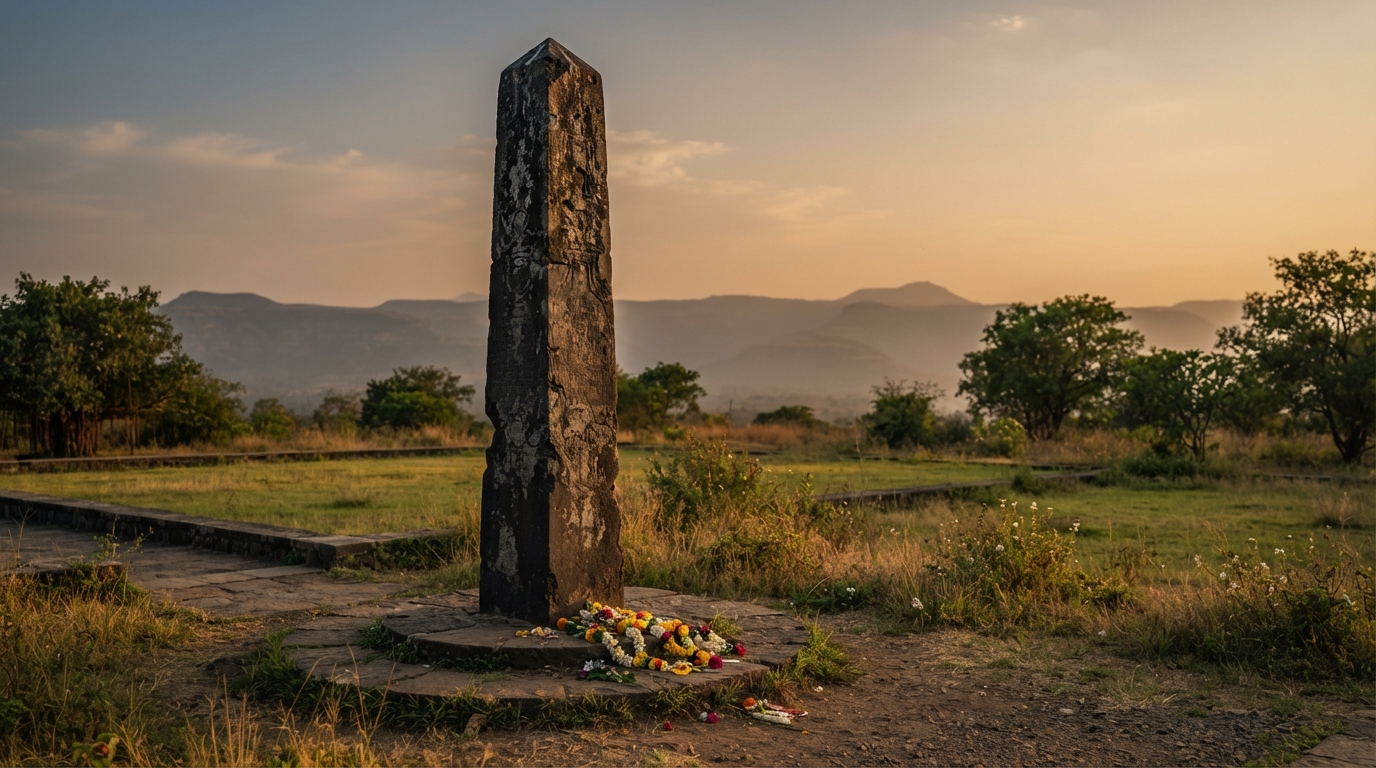
The Battle of Koregaon was fought on 1 January 1818 at Koregaon Bhima, near Pune. It was part of the Third Anglo-Maratha War. East India Company forces faced the army of the Peshwa, Baji Rao II. The war ended Peshwa rule and expanded Company control over western India. A memorial pillar stands at the site. Its annual commemoration on 1 January draws large gatherings, and the site carries deep meaning for many communities today. Lists aimed at exam prep often leave it out. It belongs in any honest account of January.
Gandhi's return from South Africa, 9 January 1915
Pravasi Bharatiya Divas is the observance held on 9 January that honours the Indian diaspora and marks the date in 1915 when Gandhi arrived back in India after about two decades in South Africa. Gandhi's arrival on 9 January 1915 began his role in the Indian freedom movement, which is why the date was chosen for the diaspora day.
The government started the Pravasi Bharatiya Divas (PBD) convention in 2003 under Prime Minister Atal Bihari Vajpayee. According to the PIB, the PBD convention is now held every two years. The link between the date and the diaspora is fitting, because Gandhi was himself a returning overseas Indian.
Tashkent, 10 and 11 January 1966
On 10 January 1966, Prime Minister Lal Bahadur Shastri and Pakistan's President Ayub Khan signed the Tashkent Declaration. The Soviet Union mediated the talks, and the agreement ended the 1965 war. Shastri died in Tashkent the next day, 11 January 1966 (Britannica). Most lists mention only one of these two events. Read together, they form one of the most dramatic 48-hour stretches in Indian diplomatic history. 10 January 2026 marked the 60th anniversary of the declaration.
How are January historical events in India marked today?
January historical events in India are marked through national parades, themed observances and large public gatherings. Republic Day features a parade with a foreign chief guest. National Voters' Day carries a yearly theme set by the Election Commission. Some years also bring major religious events, such as the 2025 Maha Kumbh, which began on 13 January.
Republic Day 2026
The 2026 Republic Day parade took "150 years of Vande Mataram" as its theme (PIB, 2026). The chief guests were European Union leaders António Costa and Ursula von der Leyen. The Army showed a "Battle Array Format" for the first time. About 10,000 people from different walks of life were invited as Special Guests, and 2,500 artists performed (PIB, Ministry of Defence, 2026). The Ministry of Culture's tableau was titled "Swatantrata Ka Mantra – Vande Mataram." These details show how an event from 1950 is reshaped each year around a new theme.
National Voters' Day
National Voters' Day falls on 25 January because the Election Commission was founded on that date in 1950. The 2025 edition was the 15th, and it fell in the Commission's 75th anniversary year (IMPRI, 2025). The 2026 theme was "My India, My Vote," with the tagline "Citizen at the Heart of Indian Democracy" (PIB, 2026). The day focuses on voter registration, especially among first-time voters. It ties a founding date directly to a civic action anyone of age can take.
The 2025 Maha Kumbh
The 2025 Maha Kumbh began on 13 January and ran until 26 February. Organisers reported 65 crore pilgrims and more than ₹3 lakh crore in economic impact (Goodreturns, 2025). Treat both figures as official claims rather than independent audits. Large estimates like these are hard to verify, and different sources may report different numbers. The event is still a clear example of January carrying cultural weight beyond state ceremonies.
How can you study Indian history one date at a time?
You can study Indian history one date at a time by building short date cards. Each card holds the event, the year, the people involved and the observance it created. This method works for January and for any other month. It turns scattered facts into a connected calendar you can review in minutes.
Build a January date card
A good date card has four lines. Use this format for each January entry:
- Date and year: 25 January 1950
- Event: Election Commission of India founded
- Key fact: First step toward India's first general elections
- Observance today: National Voters' Day, declared in 2011
Cards like this force you to separate the event year from the declaration year. That distinction trips up many students. Our guide on learning Indian history through chronological timelines explains how to link cards into longer sequences.
Apply the same method to other months
The card method works the same way in every month. Readers often search for a date like "18 November special day in India" or "17 November day." A date card answers these quickly. 17 November marks the death of Lala Lajpat Rai in 1928. 18 November marks the Battle of Rezang La in 1962. 23 November marks the death of scientist Jagadish Chandra Bose in 1937. Each of these can sit on a card next to its January equivalents. A planned guide to November in Indian history will collect these dates in one place.
Check facts against primary sources
Checking facts against primary sources is the practice of confirming a key date with an official or original record before repeating it. History pages frequently copy one another, so a single wrong date can spread from one page to the next. Checking the Press Information Bureau, Encyclopaedia Britannica or the Constituent Assembly debates stops that error from spreading.
The Press Information Bureau (PIB) publishes official details on national observances each year. Encyclopaedia Britannica is a reliable reference for dates such as the adoption of Jana Gana Mana as the national anthem on 24 January 1950 and the signing of the Tashkent Declaration on 10 January 1966. For constitutional history, the published Constituent Assembly debates are the original record. Checking one date takes a few minutes, and it saves you from repeating a mistake in an exam or a classroom.
Related Reading
- Scientific Milestones in Indian History: A Date-Wise Guide
- Visual History of the Indian Independence Movement: Key Dates
- The 1971 India-Pakistan War: Key Dates and Historical Summary
- The Aftermath of April 13: Historic Events Following Jallianwala Bagh
FAQ
Q: Why is Republic Day celebrated on 26 January and not 26 November? The Constitution was adopted on 26 November 1949 but came into force on 26 January 1950. Leaders chose 26 January to honour the Purna Swaraj observance of 1930. That date had been marked as Independence Day by nationalists for 17 years.
Q: What is the significance of 30 January in Indian history? Gandhi was assassinated at 5:17 PM on 30 January 1948 at Birla House in New Delhi. India observes the day as Martyrs' Day. A two-minute silence is held at 11 am.
Q: Which January historical events in India are linked to the Election Commission? The Election Commission of India was founded on 25 January 1950, one day before the Constitution took effect. That date is now National Voters' Day. The 2026 theme was "My India, My Vote."
Q: What happened on 10 January 1966? Lal Bahadur Shastri and Ayub Khan signed the Tashkent Declaration, ending the 1965 India–Pakistan war. The Soviet Union mediated the talks. Shastri died in Tashkent the next day, 11 January 1966.
Q: When is Army Day and what does it mark? Army Day falls on 15 January each year. It marks the day in 1949 when K.M. Cariappa became the first Indian Commander-in-Chief of the Indian Army. 2026 was the 78th Army Day.
Pick one date from this January timeline, such as 24, 25 or 26 January 1950. Write a four-line date card for it today: the date and year, the event, one key fact, and the observance it created. Then check that card against PIB or Britannica before you add it to your notes.
Sources
- Republic Day — Encyclopaedia Britannica, 2026. Supports: The date 26 January was chosen to honour the Purna Swaraj resolution of 26 January 1930.
- Jana Gana Mana — Encyclopaedia Britannica, 2025. Supports: Jana Gana Mana was adopted as the national anthem on 24 January 1950.
- Tashkent Declaration (1966) — Encyclopaedia Britannica, 2025. Supports: Shastri signed the Tashkent Declaration on 10 January 1966 and died in Tashkent the next day, 11 January 1966.
- Field Marshal Cariappa: Indian Army's first Commander-in-Chief — The Tribune, 2024. Supports: On 15 January 1949, K.M. Cariappa became the first Indian Commander-in-Chief of the Indian Army, which is the origin of Army Day.
- 150 years of Vande Mataram to be the theme of Republic Day Parade 2026 at Kartavya Path — Press Information Bureau, Ministry of Defence, 2026. Supports: The 2026 Republic Day parade theme was 150 years of Vande Mataram, with EU leaders António Costa and Ursula von der Leyen as chief guests.
- The Journey of India as a Republic — Republic Day: The Making of — Press Information Bureau, 2026. Supports: About 10,000 Special Guests were invited and about 2,500 artists performed at the 2026 Republic Day parade.
- ECI to celebrate 16th National Voters' Day tomorrow — Press Information Bureau, 2026. Supports: The 2026 National Voters' Day theme was "My India, My Vote," with the tagline "Citizen at the Heart of Indian Democracy."
- Battle of Koregaon — Wikipedia, 2026. Supports: The Battle of Koregaon was fought on 1 January 1818 between East India Company forces and the Peshwa's army during the Third Anglo-Maratha War.