On This Day: April 15 Milestones in Indian History
What Happened on April 15 in Indian History?
April 15 Indian history is a critical record of national governance, civil liberties, and imperial warfare spanning over three centuries across the subcontinent. On April 15, the Government of India nationalised six commercial banks in 1980, established Himachal Pradesh in 1948, recognized transgender rights in the 2014 NALSA verdict, and recorded British air strikes in Gujranwala in 1919.
Key Takeaways
- Six commercial banks entered public ownership on April 15, 1980, expanding state credit controls.
- The Supreme Court granted constitutional recognition to transgender individuals on April 15, 2014.
- Thirty hill states merged on April 15, 1948, establishing the province of Himachal Pradesh.
- British aircraft bombed civilian protestors in Gujranwala on April 15, 1919, under martial law.
Smoke drifted across the banks of the Gambhir River near Ujjain on the morning of April 15, 1658. Heavy artillery fire shattered the imperial Rajput lines, leaving more than 6,000 loyalist troops dead on the field. That battle cleared Prince Aurangzeb's route to Agra and the Mughal throne. The Battle of Dharmat stands as an early anchor in the record of April 15 Indian history.
The same calendar date brought profound structural changes across subsequent centuries. Colonial authorities tested modern military aircraft against unarmed townspeople in Punjab. Post-independence administrators merged dozens of fragmented mountain kingdoms into a single administrative unit. State planners took control of private financial capital to direct credit into rural farms. Decades later, constitutional judges expanded the boundaries of fundamental human dignity. Reviewing these events reveals how a single date intersects with political power, legal doctrine, and social development.
The 1980 Banking Ordinance Reshaped Modern Indian Finance
On April 15, 1980, the President of India promulgated the Banking Companies (Acquisition and Transfer of Undertakings) Ordinance. This executive decree nationalised six private commercial banks holding demand and time liabilities exceeding ₹200 crore. The acquisition raised the government's share of aggregate national banking deposits to approximately 91 percent, cementing state control over formal credit allocation.

+-------------------------------------------------------------------------------+
| 1980 BANK NATIONALISATION AT A GLANCE |
+------------------------------------+------------------------------------------+
| Total Commercial Banks Acquired | 6 Private Scheduled Banks |
| Deposit Eligibility Threshold | ₹200 Crore in Demand/Time Liabilities |
| Resulting Public Deposit Share | ~91% of Aggregate National Bank Deposits |
| Surviving Independent Entity Today | Punjab & Sind Bank |
+------------------------------------+------------------------------------------+
The Six Banks and the ₹200 Crore Criterion
The 1980 takeover marked the second major wave of bank nationalisation in post-independence India. Prime Minister Indira Gandhi had previously nationalised 14 major commercial banks in July 1969 using a ₹50 crore threshold. By 1980, state planners sought to bring remaining large private lenders under direct public supervision.
The government targeted institutions whose deposit base had expanded rapidly during the intervening decade. The six entities taken over were:
- Andhra Bank
- Corporation Bank
- New Bank of India
- Oriental Bank of Commerce
- Punjab & Sind Bank
- Vijaya Bank
Each institution held domestic deposits above the ₹200 crore threshold specified in the ordinance. According to research published by the Observer Research Foundation (2019), the acquisition brought nearly the entire organized credit market under direct public oversight. Private lending institutions were left with less than 10 percent of total banking sector assets.
Rural Credit Directives and Priority Sector Lending
The core policy objective behind the April 15 takeover was expanding banking infrastructure into under-served regions. Before 1980, commercial lenders concentrated their physical branch networks in urban commercial centers. Agricultural producers and small enterprises relied heavily on informal moneylenders charging steep interest rates.
State ownership forced these newly acquired institutions to adhere to strict Priority Sector Lending (PSL) quotas. The Reserve Bank of India mandated that public banks direct at least 40 percent of their net bank credit to priority areas. These sectors included smallholder agriculture, cottage industries, and rural artisans.
Between 1980 and 1990, the total number of rural bank branches across India grew at a rapid pace. This expansion lowered regional credit disparities, though it created operational challenges for bank balance sheets. For a broader view of these shifts, explore economic milestones in Indian history.
Modern Mega-Mergers and the Current Public Sector Landscape
The structural footprint of the 1980 nationalisation changed significantly following structural banking reforms in 2019 and 2020. The Ministry of Finance initiated a series of public sector bank consolidations to build institutions with larger balance sheets.
Five of the six banks nationalised on this date were absorbed into larger anchor institutions:
- Oriental Bank of Commerce merged into Punjab National Bank.
- Andhra Bank and Corporation Bank merged into Union Bank of India.
- Vijaya Bank merged into Bank of Baroda.
- New Bank of India had earlier merged into Punjab National Bank in 1993.
Today, Punjab & Sind Bank stands as the sole independent public sector bank remaining from the 1980 nationalisation cohort. The historical directive shifted from branch expansion to capital consolidation and digital service delivery.
The 1948 Merger of Princely States Created Himachal Pradesh
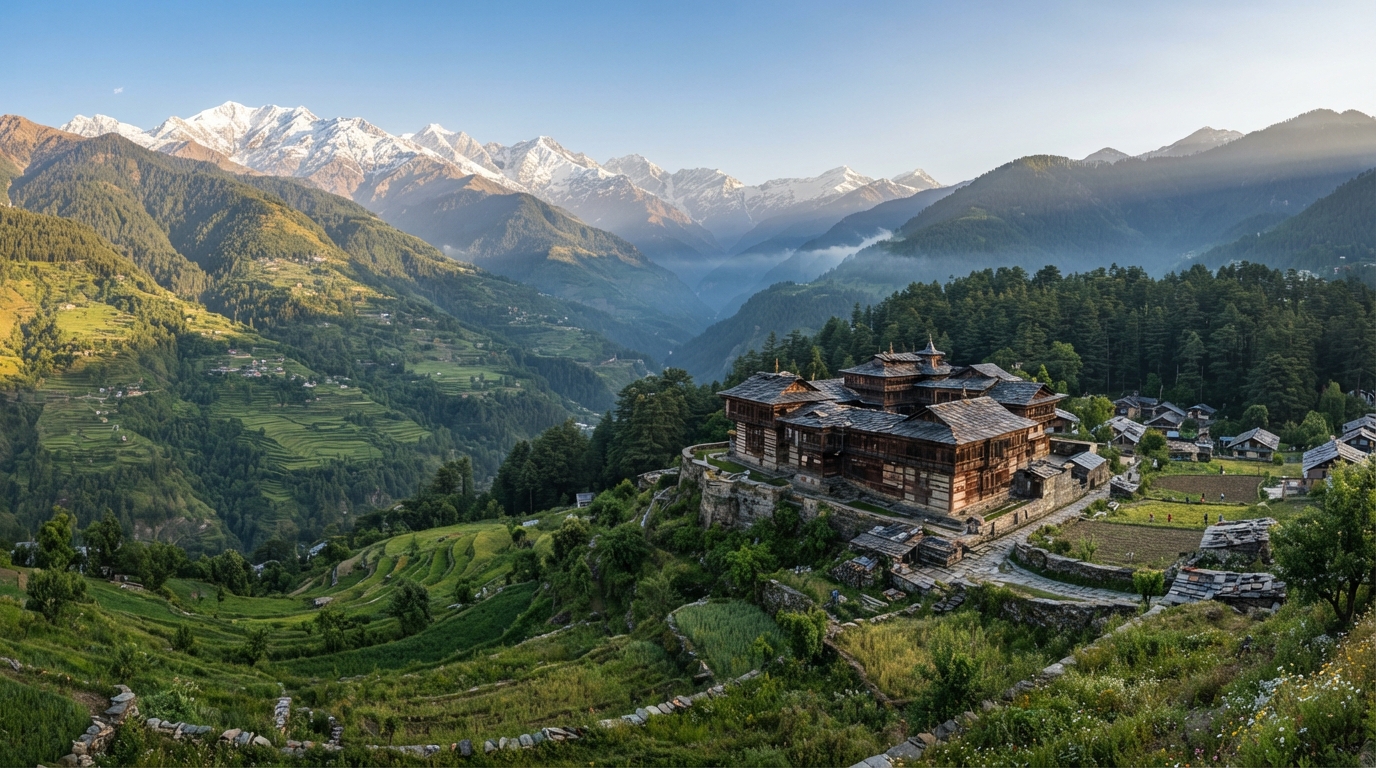
On April 15, 1948, thirty distinct West Himalayan princely states integrated to establish Himachal Pradesh as a centrally administered Chief Commissioner's Province. This administrative consolidation unified fragmented mountain kingdoms into four initial districts. The merger laid the institutional foundation for the region's eventual recognition as a full state of the Indian Union.
   +-------------------------------------------------------------------------+
   |            ADMINISTRATIVE EVOLUTION OF HIMACHAL PRADESH                 |
   +-------------------------------------------------------------------------+
   |  April 15, 1948    : Formed as Chief Commissioner's Province (30 states)|
   |  January 26, 1950  : Classified as a Part C State under the Constitution|
   |  November 1, 1956  : Reorganized as a Union Territory                   |
   |  January 25, 1971  : Inaugurated as the 18th State of the Indian Union  |
   +-------------------------------------------------------------------------+
Consolidating Thirty Hill States into Four Initial Districts
The integration of the western Himalayan hill states required complex negotiations between local rulers, regional political leaders, and the Ministry of States. Rulers signed Covenants of Merger following the transfer of power from British colonial rule.
As reported by The Indian Express (2026), the new Chief Commissioner's Province brought together 30 separate princely domains. These territories were grouped into four administrative districts:
- Mandi: Formed by merging the princely states of Mandi and Suket.
- Chamba: Comprising the mountainous territories of the former Chamba kingdom.
- Mahasu: Created by combining 26 smaller Shimla hill states, including Bushahr, Keonthal, and Jubbal.
- Sirmour: Encompassing the entire southern territory of the Sirmour princely domain.
The merger covered an initial land area of roughly 27,000 square kilometers. It established centralized revenue collection and unified law enforcement across previously divided valleys.
The Administrative Shift from Part C State to Full Statehood
The path from a centrally administered province to a full state required over two decades of legislative evolution. Political activists led by Dr. Yashwant Singh Parmar campaigned against direct central bureaucratic control, demanding elected legislative institutions.
Under the 1950 Constitution, Himachal Pradesh became a Part C State with a nominated Chief Minister and an elected Legislative Assembly. In 1956, the States Reorganisation Commission recommended converting the territory into a Union Territory under a Lieutenant Governor.
State leaders sustained legislative efforts to secure complete autonomy. Parliament passed the State of Himachal Pradesh Act in December 1970. On January 25, 1971, Prime Minister Indira Gandhi inaugurated Himachal Pradesh as the 18th state of the Indian Union.
Himachal Day and Modern Cultural Integration
April 15 is observed across northern India as Himachal Day to commemorate the initial 1948 administrative integration. State government agencies hold civic parades, honor civil servants, and organize local cultural exhibitions in Shimla and Dharamshala.
The date has gained broader national recognition through inter-state cultural programs. Under the central government's Ek Bharat Shreshtha Bharat initiative, states across India host regional exchange events on April 15 (UT Administration of Ladakh, 2026). These programs highlight the distinct music, craftsmanship, and administrative history of the Himalayan state.
How Did the 2014 NALSA Verdict Secure Gender Self-Identification?
The 2014 NALSA verdict is a landmark Supreme Court of India ruling delivered on April 15, 2014, by Justice K. S. Radhakrishnan and Justice A. K. Sikri in National Legal Services Authority v. Union of India. The Supreme Court legally recognized transgender persons as a third gender under the Constitution, establishing gender self-determination without requiring medical sex reassignment surgery.
De-linking Legal Recognition from Biological Determinism
Before the NALSA ruling, Indian administrative systems recognized only two gender identities: male and female. Transgender, intersex, and gender-diverse citizens were forced to register under biological sex markers assigned at birth.
The Supreme Court bench, comprising Justice K. S. Radhakrishnan and Justice A. K. Sikri, rejected biological determinism. The court established self-determination as the sole legal test for an individual's gender identity.
Justice Radhakrishnan ruled that self-identified gender falls within the sphere of personal autonomy. A person's legal status no longer depended on undergoing sex reassignment surgery or hormone therapy. The judgment required federal and state governments to provide equal legal recognition across passports, voter identification cards, and academic certificates. To track contemporary legal developments, read about 25 historic Indian events from 2000 to 2025.
Constitutional Safeguards under Articles 14, 19, and 21
The NALSA ruling grounded gender self-identification directly in Part III of the Indian Constitution:
- Article 14 (Equality Before Law): The court held that discrimination on grounds of gender identity violates fundamental equality, affirming that the word "person" includes all human beings.
- Article 19(1)(a) (Freedom of Expression): Gender expression through dress, speech, and mannerisms was recognized as protected speech.
- Article 21 (Right to Life and Personal Liberty): The right to live with dignity was interpreted to include the right to choose one's gender identity without state interference.
       +-------------------------------------------------------------------+
       |                 NALSA V. UNION OF INDIA (2014)                    |
       |                CONSTITUTIONAL PROTECTIONS TRIAD                   |
       +---------------------------------+---------------------------------+
                                         |
            +----------------------------+----------------------------+
            |                            |                            |
            v                            v                            v
     +--------------+             +--------------+             +--------------+
     |  ARTICLE 14  |             | ARTICLE 19(1)|             |  ARTICLE 21  |
     |   Equality   |             | Free Speech  |             | Dignity and  |
     |  Before Law  |             |  & Identity  |             |  Autonomy    |
     +--------------+             +--------------+             +--------------+
By connecting gender recognition to fundamental rights, the judgment created binding legal obligations for public institutions. It set a precedent that later supported the decriminalization of Section 377 in the 2018 Navtej Singh Johar verdict. To learn more about related social reform movements, see our guide on milestones in Indian women's history.
The Evolution of Horizontal Reservation Debates
The NALSA verdict directed central and state administrations to treat transgender citizens as socially and educationally backward classes. The court instructed governments to extend affirmative action quotas across public educational institutions and state employment.
The execution of these affirmative action measures has generated ongoing legal debates in Indian High Courts (Supreme Court of India, 2024). Transgender rights advocates argue for horizontal reservations across caste categories (SC, ST, OBC, and General). They argue that vertical quotas force candidates to choose between caste identity and gender identity.
Several High Courts, including the Madras and Bombay High Courts, have directed state agencies to formulate explicit horizontal quota frameworks. These continuing cases demonstrate how the 2014 verdict remains an active foundation for administrative law.
How Did the 1919 Gujranwala Air Attack Define Colonial Repression in Punjab?
The 1919 Gujranwala air attack is a colonial military operation conducted on April 15, 1919, when British authorities enforced martial law across Punjab following the Jallianwala Bagh massacre. Royal Air Force Captain D. H. M. Carberry bombed and machine-gunned civilian crowds in Gujranwala, killing 12 people and injuring 27 others under orders from Major General William Beynon.
The Formal Proclamation of Punjab Martial Law
Following the mass shootings in Amritsar on April 13, public anger spread across central Punjab. Rail lines were severed, telegraph lines cut, and colonial government buildings set on fire in Lahore, Kasur, and Gujranwala.
Lieutenant Governor Sir Michael O'Dwyer petitioned the Government of India for emergency powers. On April 15, the Governor-General in Council issued a formal martial law proclamation under Bengal Regulation X of 1804.
The proclamation suspended civil courts and replaced civil administrators with military officers. The regime banned public gatherings of more than three persons, confiscated private vehicles, and enforced strict nighttime curfews. To explore how the nationalist leadership responded, review the timeline of Mahatma Gandhi's nonviolent movements in India.
Royal Air Force Deployments over Civilian Districts
As communications between Lahore and surrounding districts broke down, colonial commanders turned to the Royal Air Force (RAF) based at Mianwali and Risalpur. Major General William Beynon ordered military pilots to conduct reconnaissance and disperse assemblies in Gujranwala.
Captain D. H. M. Carberry flew an RE8 biplane over Gujranwala on the afternoon of April 15. The aircraft dropped high-explosive bombs on several urban locations, including:
- A crowd gathered near the railway station.
- An open gathering outside a local school.
- Residential neighborhoods across the town center.
The pilot then used a mounted Lewis machine gun to strafe people moving through public streets. The official Hunter Committee Report (1920) confirmed that the air strikes killed at least 12 people and injured 27 others.
+-------------------------------------------------------------------------------+
|                       APRIL 15, 1919 AIR STRIKE AUDIT                         |
+------------------------------+------------------------------------------------+
| Aircraft Deployed            | Royal Air Force Royal Aircraft Factory R.E.8   |
| Primary Weaponry             | 20 lb High-Explosive Bombs & Lewis Machine Gun |
| Target Zone                  | Urban Civil Settlements in Gujranwala, Punjab  |
| Recorded Casualty Figures    | 12 Civilians Killed, 27 Injured                |
| Authorizing Body             | Punjab Colonial Military Command               |
+------------------------------+------------------------------------------------+
Evidence and Findings of the Hunter Committee
The deployment of air power against civilians drew immediate scrutiny during the Disorders Inquiry Committee hearings headed by Lord William Hunter. Nationalist legal teams challenged the military necessity of using aerial bombardment against domestic crowds.
RAF officers defended the operation during official witness testimony before the commission. Brigadier General N. D. K. MacEwen stated that military aircraft using Lewis guns were decisive in suppressing public gatherings across Punjab (Disorders Inquiry Committee, 1920).
The air strikes illustrated the harsh measures colonial administrators used during the crisis. The event unified public resistance across Punjab and accelerated the Non-Cooperation Movement launched in 1920. Learn more about regional civil resistance in our timeline of Punjab under martial law in 1919.
What Early Milestones in April 15 Indian History Spanned Empires and Resistance?
Early April 15 Indian history is a sequence of pivotal military and political milestones spanning the Mughal Empire and the Indian independence movement. On April 15, 1658, Prince Aurangzeb defeated Maharaja Jaswant Singh at the Battle of Dharmat near Ujjain, while on April 15, 1895, Bal Gangadhar Tilak inaugurated the Shivaji Coronation Festival at Raigad Fort.
What Was the 1658 Battle of Dharmat in the Mughal War of Succession?
The Battle of Dharmat is a major military conflict fought on April 15, 1658, during the Mughal War of Succession. Prince Aurangzeb and Prince Murad Baksh defeated the imperial army of Emperor Shah Jahan led by Maharaja Jaswant Singh and Qasim Khan near Ujjain, resulting in over 6,000 Rajput casualties and opening Aurangzeb's march to Agra.
The succession conflict began when the illness of Mughal Emperor Shah Jahan in late 1657 prompted his four sons—Dara Shikoh, Shah Shuja, Aurangzeb, and Murad Baksh—to contest the throne. Shah Jahan supported his eldest son, Dara Shikoh, dispatching a joint imperial army to central India to halt Aurangzeb's advance from the Deccan.
The opposing armies met at Dharmat, located roughly fourteen miles southwest of Ujjain. Maharaja Jaswant Singh of Marwar and Qasim Khan commanded the loyalist troops, while Aurangzeb deployed heavy field artillery and coordinated cavalry flanking maneuvers against the imperial front line. As documented by historian Sir Jadunath Sarkar in History of Aurangzib, Jaswant Singh's Rajput cavalry sustained severe losses under sustained musket and cannon fire.
       +-------------------------------------------------------------------+
       |                 BATTLE OF DHARMAT (APRIL 15, 1658)                |
       +---------------------------------+---------------------------------+
                                         |
            +----------------------------+----------------------------+
            |                                                         |
            v                                                         v
     +------------------------------+          +------------------------------+
     |    IMPERIAL LOYALIST ARMY    |          |     REBEL ALLIANCE FORCES    |
     |   Maharaja Jaswant Singh     |          |    Prince Aurangzeb & Murad  |
     |   6,000+ Rajput Casualties   |          |  Coordinated Artillery Win   |
     +------------------------------+          +------------------------------+
Over 6,000 Rajput soldiers fell during the engagement. Qasim Khan retreated from the battlefield, leaving Aurangzeb and his ally Murad Baksh in full control of central transit routes. The victory at Dharmat enabled Aurangzeb to march directly toward Agra, defeat Dara Shikoh at Samugarh six weeks later, and claim the Mughal throne.
Tilak and the 1895 Shivaji Coronation Festival at Raigad
On April 15, 1895, political leader Bal Gangadhar Tilak organized the first public Shivaji Coronation Festival at Raigad Fort in Maharashtra. The event transformed private historical commemoration into an organized vehicle for anti-colonial mobilization.
Tilak used the memory of the 17th-century Maratha king to cultivate regional pride and civic engagement across class and caste divisions. He argued that historical figures offered practical symbols for collective self-rule (Swaraj).
The Raigad gathering drew thousands of students, social reformers, and rural activists to the hill fortress. The festival established a template for public mobilization that Tilak later applied through public Ganeshotsav celebrations across urban Bombay Presidency.
Comparative Chronology of April 15 Milestones
The following table summarizes the key milestones that define April 15 across Indian history:
| Year | Event Name | Historical Domain | Primary Figures Involved | Key Historical Outcome |
|---|---|---|---|---|
| 1658 | Battle of Dharmat | Military History | Prince Aurangzeb, Jaswant Singh | Decisive rebel victory leading to Aurangzeb's accession |
| 1895 | Shivaji Festival at Raigad | Nationalist Movement | Bal Gangadhar Tilak | Public mobilization strategy establishing Swaraj networks |
| 1919 | Gujranwala Air Attack | Colonial History | Gen. William Beynon, Capt. Carberry | 12 civilians killed during enforcement of Punjab martial law |
| 1948 | Formation of Himachal Pradesh | Administrative History | Dr. Y. S. Parmar, Hill State Rulers | 30 princely states merged into a Chief Commissioner's Province |
| 1980 | Second Bank Nationalisation | Economic History | Indira Gandhi, RBI Officials | 6 commercial banks acquired; 91% of bank deposits state-controlled |
| 2014 | NALSA v. Union of India | Constitutional Law | Justice Radhakrishnan, Justice Sikri | Third gender recognized under Articles 14, 19, and 21 |
Frequently Asked Questions
Q: Why is April 15 celebrated as Himachal Day?
April 15 is observed as Himachal Day because thirty West Himalayan princely states merged on April 15, 1948, to form Himachal Pradesh as a Chief Commissioner’s Province. The annual holiday commemorates the administrative unification of these mountain regions before the territory gained full statehood in 1971.
Q: Which banks were nationalised on April 15, 1980?
The government nationalised six private scheduled commercial banks: Andhra Bank, Corporation Bank, New Bank of India, Oriental Bank of Commerce, Punjab & Sind Bank, and Vijaya Bank. Each lender met the statutory threshold of holding demand and time liabilities exceeding ₹200 crore.
Q: What was the primary legal ruling in the April 15, 2014 NALSA case?
The Supreme Court ruled that gender self-identification is a fundamental right protected under Articles 14, 19(1)(a), and 21 of the Indian Constitution. The judgment legally affirmed transgender persons as a third gender and mandated that state agencies recognize non-binary identities without requiring sex reassignment surgery.
Q: What happened in Gujranwala on April 15, 1919?
The British Royal Air Force dispatched military aircraft to drop bombs and fire machine guns at civilian crowds in Gujranwala, Punjab. The strikes coincided with the formal declaration of martial law following the Jallianwala Bagh massacre, killing at least 12 people.
Further Reading
- Sir Jadunath Sarkar, History of Aurangzib (5 Volumes): Provides thorough documentation and primary Persian source translations detailing the troop maneuvers and casualty figures at the 1658 Battle of Dharmat.
- Hunter Committee Report (1920), Disorders Inquiry Committee Evidence: Contains the official declassified testimonies of British civilian administrators and Royal Air Force officers regarding the April 15 aerial strikes in Punjab.
- Supreme Court of India, National Legal Services Authority v. Union of India (2014) 5 SCC 438: The complete constitutional text establishing legal protections and affirmative action mandates for transgender citizens.
- *Reserve Bank of India, History of the Reserve Bank of India (Volume 3: 1967–1981):* Offers detailed statistical tables on commercial deposit concentrations and credit shifts surrounding the 1980 bank nationalisation.
Explore primary source materials in the National Archives of India or your local state public library to study how these historical moments shaped modern governance. Tracking primary administrative records provides clear, unvarnished insight into the development of Indian law and civic life.
Related Reading
- Late April in Indian History: Key Dates, Birthdays, and Milestones
- Milestones in Indian Women's History: A Chronological Guide
- 1,000 Years of Indian Medical History: A Chronological Guide
- Economic Milestones in Indian History: From 1947 to Present
Sources
- The Banking Companies (Acquisition and Transfer of Undertakings) Act, 1980 — Legislative Department, Ministry of Law and Justice, Government of India, 1980. Supports: The nationalisation of six commercial private scheduled banks with deposit liabilities exceeding ₹200 crore on April 15, 1980.
- National Legal Services Authority v. Union of India & Ors. (Writ Petition (Civil) No. 400 of 2012) — Supreme Court of India, 2014. Supports: The Supreme Court judgment delivered on April 15, 2014, granting legal and constitutional recognition to transgender individuals as a third gender.
- On Himachal day, story of how the state nearly became part of Punjab — The Indian Express, 2023. Supports: The integration of 30 princely states to form Himachal Pradesh as a centrally administered Chief Commissioner's Province on April 15, 1948.
- The Chronicle of a Bloody Massacre in Saadat Hasan Manto's Ancestral Amritsar — The Wire, 2019. Supports: British colonial military aircraft carrying out bombing and machine-gun operations against civilian crowds in Gujranwala in April 1919.
- Amalgamation of Vijaya Bank and Dena Bank with Bank of Baroda Scheme, 2019 — Reserve Bank of India, 2019. Supports: The mega-merger and consolidation of public sector banks, including the absorption of Vijaya Bank into Bank of Baroda.
- Bank Mergers — Press Information Bureau, Government of India, 2020. Supports: The structural reforms and merger process of public sector banks to build larger balance sheets and expand priority sector lending.