Mid-April Milestones: A Daily Guide to Indian History from April 13-19
What Are the Key Indian History April Events from April 13 to 19? (The Quick Read)
Mid-April in Indian history is a critical seven-day corridor from April 13 to April 19 that encompasses defining shifts in civil rights, governance, transit, and aerospace. Key milestones include the 1699 Khalsa creation, the 1919 Jallianwala Bagh massacre, Dr. B.R. Ambedkar's 1891 birth, the 1853 passenger railway debut, the 1930 Chittagong armoury raid, and the 1975 Aryabhata satellite launch.
Key Takeaways
- April 13 and 14 anchor major shifts in Indian civil rights, sovereignty, and anti-colonial resistance.
- India opened its passenger railway era on April 16, 1853, covering 34 kilometers from Bombay.
- Surya Sen led the Chittagong Armoury Raid on April 18, 1930, defying British colonial authority.
- ISRO launched India's first satellite, Aryabhata, on April 19, 1975, starting native space exploration.
- Land reform began peacefully on April 18, 1951, through Vinoba Bhave's historic Bhoodan Movement.
Many people assume historical milestones distribute evenly across the calendar without distinct seasonal clusters. A close review of Indian history April events shows that the third week of the month concentrates an unusual volume of national turning points.

From the foothills of Anandpur Sahib to the launch pads of early space exploration, mid-April holds dates that altered Indian politics, technology, and civil rights. Examining these seven days provides a clear look at how modern India developed.
How Did April 13 and 14 Shape Modern Indian Constitutional and Military History?
April 13 and April 14 is a pivotal two-day window in Indian history anchoring fundamental developments in constitutional law, national defense, and civil rights. Historical records confirm these dates mark Guru Gobind Singh's 1699 founding of the Khalsa, the 1919 Jallianwala Bagh massacre, Dr. B.R. Ambedkar's 1891 birth, and the Indian military's 1984 launch of Operation Meghdoot.
The Khalsa and the Bloodshed at Jallianwala Bagh
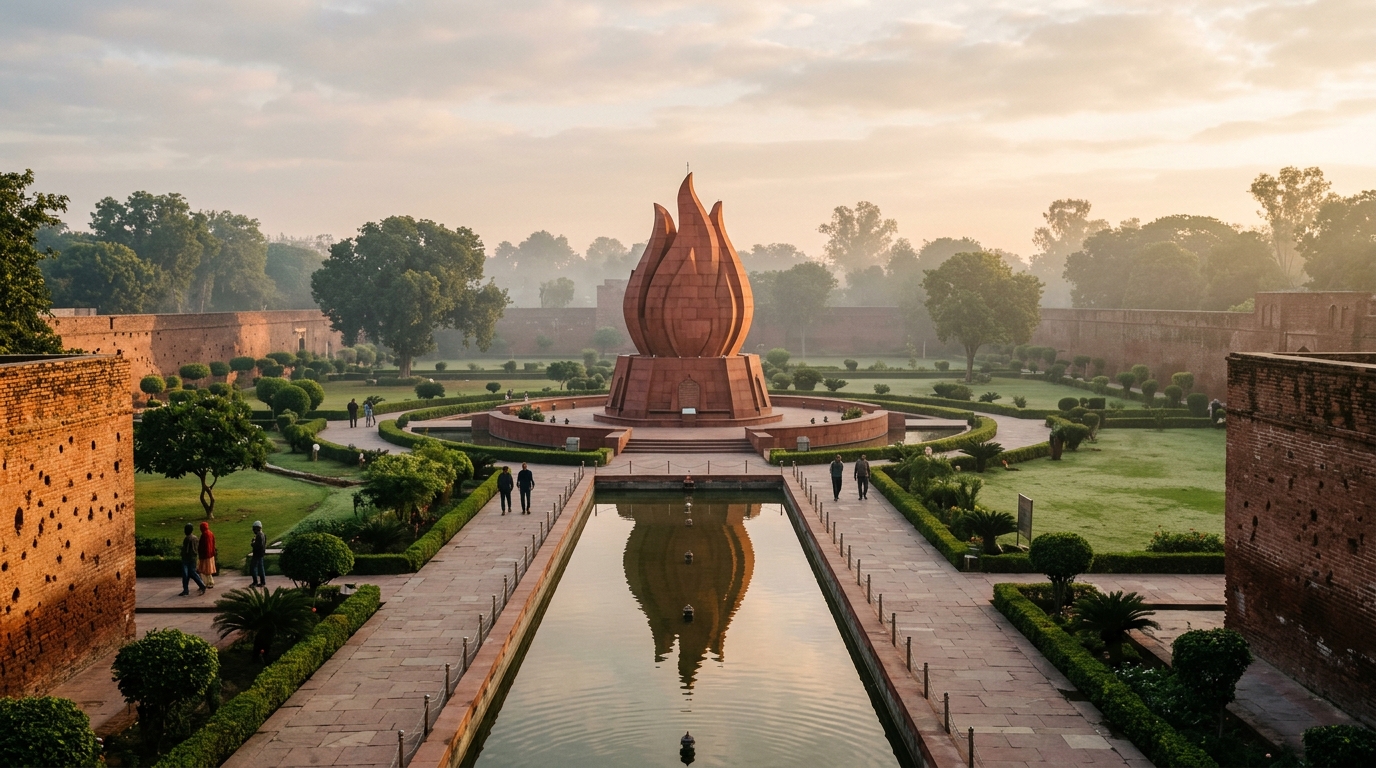
On April 13, 1699, Guru Gobind Singh assembled thousands of followers at Anandpur Sahib during the spring harvest festival of Baisakhi. He created the Khalsa Panth, an order of initiated Sikhs committed to discipline, equality, and protection of the oppressed.
He introduced the Amrit Sanchar ceremony and established the five sacred symbols known as the Five Ks: Kesh (uncut hair), Kangha (wooden comb), Kara (iron bracelet), Kachera (cotton undergarments), and Kirpan (curved sword). This event eliminated caste distinctions within the community and reshaped the social fabric of northern India.
Exactly 220 years later, on April 13, 1919, Baisakhi became the backdrop for one of the darkest crimes of the British Empire. A crowd of over 10,000 men, women, and children gathered at Jallianwala Bagh in Amritsar. They had arrived to celebrate the festival and peacefully protest the Rowlatt Act and the arrest of leaders Dr. Saifuddin Kitchlew and Dr. Satyapal.
Acting Brigadier-General Reginald Dyer sealed the narrow exit of the walled garden with troops and opened fire without warning. The troops fired 1,650 rounds over roughly ten minutes until their ammunition ran low. The Hunter Commission estimated hundreds of deaths, while local inquiries by the Indian National Congress showed over 1,000 casualties.
The tragedy pushed Rabindranath Tagore to renounce his British knighthood. It also turned Mahatma Gandhi from a moderate reformer into an uncompromising proponent of complete independence, which later fueled national demonstrations recorded on our list of the 10 most searched dates in Indian history and why they matter.
April 13, 1919: Jallianwala Bagh Timeline
---------------------------------------------------------------------------------
09:00 AM — Dyer issues prohibition proclamation across Amritsar.
12:30 PM — Dyer receives intelligence of the gathering at Jallianwala Bagh.
04:30 PM — Dyer arrives at the bagh with 90 Gurkha and Baluchi riflemen.
05:15 PM — Firing begins without dispersal order; 1,650 rounds discharged.
05:25 PM — Troops withdraw immediately, leaving the wounded without medical aid.
Operation Meghdoot Secures the Siachen Heights
On April 13, 1984, the Indian Armed Forces launched Operation Meghdoot. It remains the world's first military assault launched on the highest battlefield on Earth. Lieutenant General P.N. Hoon led the operation to secure the Siachen Glacier in the eastern Karakoram range.
Indian intelligence discovered that Pakistan had ordered extreme-cold weather gear from European suppliers to occupy the area under Operation Ababeel. The Indian Air Force used Mi-8, Mi-17, and Chetak helicopters to airlift troops from the Kumaon Regiment and Ladakh Scouts directly onto the strategic Bilafond La and Sia La passes.
Operating at altitudes above 18,000 feet in temperatures dropping below minus 50 degrees Celsius, Indian troops secured control over the entire 76-kilometer glacier. This operation permanently established India's control over the Saltoro Ridge.
B.R. Ambedkar's Birth and the 1944 Bombay Docks Disaster
April 14 marks the birth of Dr. Bhimrao Ramji Ambedkar in 1891 at the military cantonment of Mhow in Central India. Dr. Ambedkar overcame severe social discrimination to earn doctorates from Columbia University and the London School of Economics.
He served as the Chairman of the Drafting Committee for the Constitution of India and as independent India's first Law Minister. His work established constitutional safeguards for fundamental rights, abolished untouchability under Article 17, and created affirmative action frameworks that continue to guide Indian jurisprudence today.
On the same date in 1944, a massive disaster struck Bombay. The British freighter SS Fort Stikine, carrying a mixed cargo of cotton bales, timber, lubricating oil, and 1,400 tons of high explosives, caught fire at Victoria Dock.
Two successive explosions shook the city, sending debris miles away and causing tidal waves inside the harbour that sank eleven nearby ships. The explosions killed approximately 800 people, injured 3,000 others, and destroyed thousands of tons of grain during wartime rationing.
The Bombay Fire Brigade lost 66 officers while fighting the blaze. Because of their sacrifice, India observes April 14 every year as National Fire Service Day. These incidents highlight how Indian history April events combine legal milestones with crucial public safety lessons.
Which Groundbreaking Milestones Unfolded on April 15 and 16?
April 15 and April 16 brought major structural transformations in Indian statehood, human rights, and industrial transit. These dates mark the administrative birth of Himachal Pradesh in 1948, the Supreme Court's 2014 recognition of transgender equality, and the 1853 maiden run of India's commercial railway network.
Himachal Day and the Recognition of the Third Gender
On April 15, 1948, the province of Himachal Pradesh came into existence. The government integrated thirty distinct princely states, including Mandi, Chamba, Suket, and several small Punjab Hill States, into a single Chief Commissioner's Province.
This integration established administrative unity in the western Himalayas. Himachal Pradesh gained full statehood on January 25, 1971, but the state continues to celebrate April 15 as Himachal Day to honor its founding.
Sixty-six years later, on April 15, 2014, the Supreme Court of India delivered a historic judgment in National Legal Services Authority (NALSA) v. Union of India. A bench of Justices K.S. Radhakrishnan and A.K. Sikri formally recognized transgender individuals as a distinct "third gender."
The court affirmed that gender identity falls under fundamental freedoms guaranteed by Articles 14, 19, and 21 of the Indian Constitution. The ruling directed central and state governments to grant legal recognition to self-identified gender, provide social welfare packages, and treat transgender citizens as socially and educationally backward classes.
This judgment formed the legal base for subsequent civil rights advancements in the country.
NALSA v. Union of India (April 15, 2014) — Key Legal Protections
---------------------------------------------------------------------------------
Article 14  -> Equality before the law regardless of gender identity.
Article 19  -> Right to freedom of expression in clothing, speech, and mannerisms.
Article 21  -> Right to life, personal autonomy, and human dignity.
Directives  -> Mandated affirmative action in admissions and public employment.
The 1853 Bori Bunder to Thane Railway Run
On April 16, 1853, India operated its first commercial passenger train. Built by the Great Indian Peninsula Railway (GIPR), the train left Bori Bunder station in Bombay at 3:35 PM and arrived at Thane at 4:30 PM.
The train covered the 34-kilometer (21-mile) distance in 57 minutes. Three steam locomotives—named Sindh, Sultan, and Sahib—hauled fourteen carriages carrying 400 guests.
First Indian Passenger Train Specifications: April 16, 1853
- Route: Bori Bunder (now CSMT) to Thane
- Distance: 34 kilometers (21 miles)
- Travel Time: 57 minutes
- Motive Power: 3 steam locomotives (Sindh, Sultan, Sahib)
- Carriages: 14 railway carriages
- Passengers: 400 invited dignitaries
The success of that initial journey prompted the rapid expansion of rail networks across the subcontinent. By 1900, Indian rail lines covered more than 39,000 kilometers, changing trade, military mobility, and daily travel across the country.
Indigenous Aviation Takes Flight
On April 16, 1961, Indian aerospace manufacturing achieved a critical milestone when the prototype of the HF-24 Marut underwent its formal developmental checks in Bangalore. Designed by German aeronautical engineer Kurt Tank and built by Hindustan Aeronautics Limited (HAL), the Marut was Asia's first indigenous supersonic jet fighter-bomber.
The aircraft officially entered service with the Indian Air Force in the late 1960s and flew operational combat missions during the 1971 Indo-Pakistani War. Its development established the technical base for modern Indian aerospace projects like the Light Combat Aircraft (LCA) Tejas.
How Did April 17 and 18 Shape Armed Resistance and Political Shifts?
April 17 and 18 is a crucial two-day historical span defined by parliamentary crises, agrarian reform, and anti-colonial resistance across India. Documented milestones include the 1859 execution of Tatya Tope, Surya Sen's 1930 Chittagong Armoury Raid, Acharya Vinoba Bhave's 1951 founding of the Bhoodan Movement in Pochampally, and Prime Minister Atal Bihari Vajpayee's 1999 parliamentary confidence vote defeat.
The Passing of S. Radhakrishnan and Parliamentary Shakes
On April 17, 1975, Dr. Sarvepalli Radhakrishnan died in Madras (now Chennai) at the age of 86. He was an influential philosopher who held the Spalding Chair of Eastern Religion and Ethics at the University of Oxford.
He served as India's first Vice President (1952–1962) and second President (1962–1967). His birthday on September 5 is celebrated nationwide as Teachers' Day. Radhakrishnan built intellectual bridges between Indian philosophical traditions and Western thought, interpreting texts like the Upanishads and the Bhagavad Gita for global audiences.
Twenty-four years later, on April 17, 1999, the Indian Parliament experienced its closest political vote. Prime Minister Atal Bihari Vajpayee's coalition government faced a vote of confidence in the Lok Sabha after an alliance partner withdrew support.
The government lost the motion by a single vote: 269 votes in favor to 270 against. Vajpayee tendered his resignation to President K.R. Narayanan the following day. This event led to the 1999 general elections, where the National Democratic Alliance returned to power with a stable majority.
Surya Sen and the 1930 Chittagong Armoury Raid
On the night of April 18, 1930, a group of Indian freedom fighters led by Surya Sen (popularly known as Masterda) launched an armed assault in Chittagong, Bengal (now in Bangladesh). Operating under the banner of the Indian Republican Army, the anti-colonial fighters aimed to isolate the British administration by capturing major weapons depots.
Key Figures of the Chittagong Armoury Raid (April 18, 1930)
- Surya Sen (Masterda): Chief strategist and leader
- Ananta Singh: Masterminded the initial weapons depot breach
- Ganesh Ghosh: Led the assault team targeting the Police Lines
- Loknath Bal: Commanded insurgent forces at the Battle of Jalalabad
- Pritilata Waddedar: Anti-colonial coordinator who later led the Pahartali raid
- Kalpana Datta: Key operative responsible for intelligence and explosives
The freedom fighters attacked the Police Armoury in Dampara and the Auxiliary Forces Armoury in Pahartali simultaneously. They severed telephone lines, cut telegraph cables, and damaged rail tracks at Dhoom to cut off reinforcements from Calcutta and Dhaka.
Surya Sen hoisted the Indian National Flag and proclaimed a Provisional Free Government. When British troops responded, the fighters retreated to the nearby Jalalabad hills.
On April 22, 1930, they fought a fierce battle against British forces, losing 12 insurgent fighters while inflicting heavy casualties on the colonial army. This raid showed that armed Indian resistance could disrupt imperial administrative systems, inspiring youth movements across Bengal and Punjab. For readers tracking related liberation campaigns, our guide on Mahatma Gandhi's nonviolent movements in India details the parallel civil disobedience track that occurred during the same season.
Chittagong Raid vs. Standard Anti-Colonial Tactics
---------------------------------------------------------------------------------
Attribute        | Chittagong Raid (1930)      | Civil Disobedience (1930)
Target           | Arms depots, communications | Salt laws, foreign cloth
Strategy         | Coordinated armed assault   | Mass nonviolent civil resistance
Leadership       | Surya Sen, Indian Rep. Army | Mahatma Gandhi, Indian Nat. Congress
Direct Result    | Provisional Free Government | Mass arrests, national boycott
On the same date, April 18, in 1859, the British executed Tatya Tope at Shivpuri, Madhya Pradesh. He was a primary general of the 1857 uprising who used guerrilla tactics to evade British forces across Central India for months. His death marked the final suppression of the 1857 resistance.
Vinoba Bhave Launches the Bhoodan Movement in Pochampally
On April 18, 1951, Acharya Vinoba Bhave started the Bhoodan (Land Gift) movement in Pochampally village, located in the Nalgonda district of present-day Telangana. The region was gripped by agrarian unrest as landless Dalit families struggled for survival.
During an open prayer meeting, forty families asked for 80 acres of land to farm. Bhave asked if any landowner in the audience would step forward to help.
A local landowner named Vedre Ramachandra Reddy volunteered to donate 100 acres of his family's land on the spot.
Recognizing that peaceful land reform could ease rural poverty, Bhave spent the next thirteen years walking across India on foot (padayatra). He walked over 58,000 kilometers and collected more than four million acres of land from voluntary donations, redistributing the parcels directly to landless rural laborers.
The movement remains a distinct example of voluntary wealth redistribution in world history. These events show why researchers focus on Indian history April events when studying post-independence land reform.
How Did April 19 Mark India's Official Entry into Space Exploration?
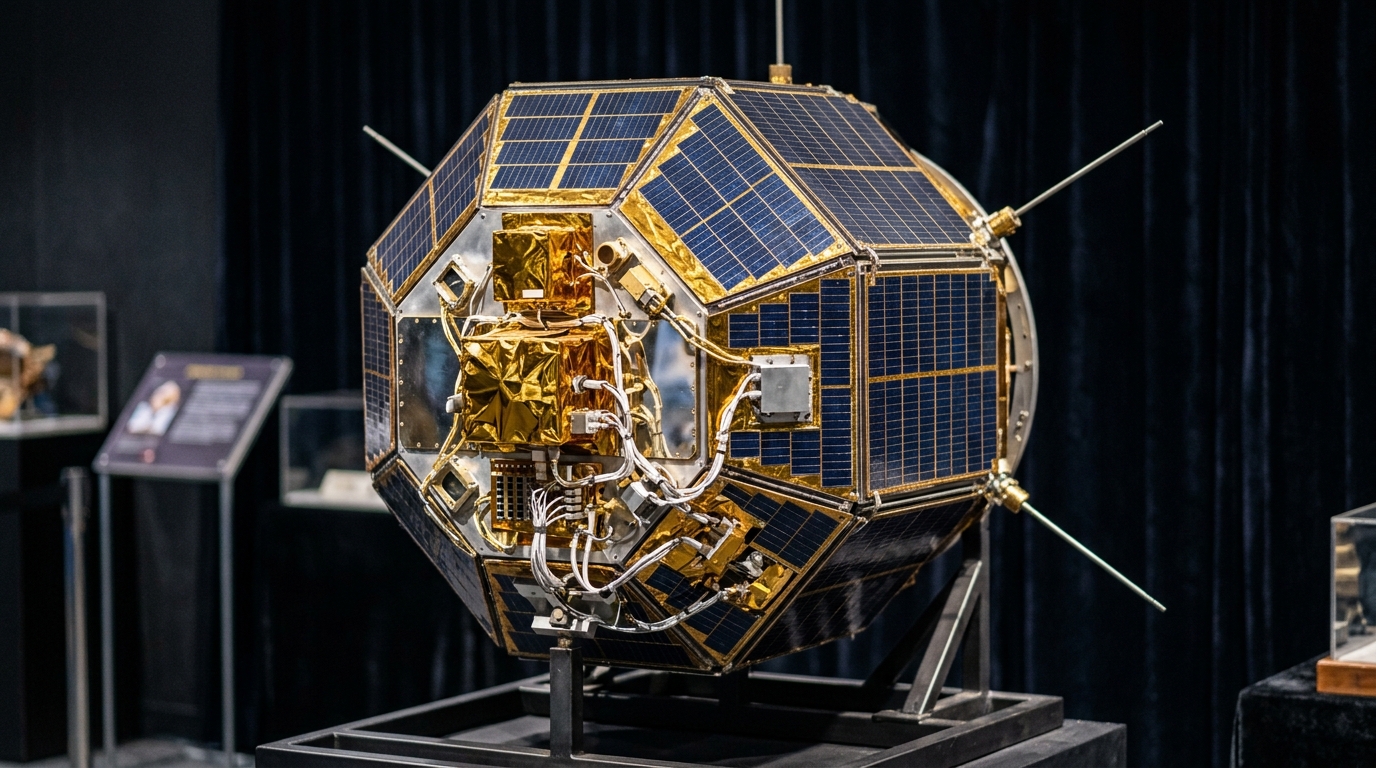
April 19 marks India's entry into the space age through the 1975 launch of Aryabhata. Built entirely by the Indian Space Research Organisation (ISRO) under Professor U.R. Rao and launched from the Soviet Union, this 360-kilogram satellite established India's satellite communication and scientific research capabilities.
Aryabhata Satellite Lifts Off from Kapustin Yar
On April 19, 1975, India's first indigenous satellite, named Aryabhata after the 5th-century Indian astronomer and mathematician, launched from the Kapustin Yar launch complex in Astrakhan Oblast, Russia.
The satellite rode into low Earth orbit atop a Soviet Kosmos-3M launch vehicle. The project grew from an agreement signed between ISRO Chairman Professor Satish Dhawan and the Soviet Academy of Sciences in 1972. Under the agreement, the Soviet Union provided the launch vehicle in exchange for tracking data and port access.
Aryabhata Satellite Technical Specifications (April 19, 1975)
- Mass: 360 kilograms (790 lbs)
- Shape: 26-sided polyhedron
- Diameter: 1.4 meters
- Solar Power: 46 watts generated by solar cells
- Orbital Altitude: 563 km apogee, 568 km perigee
- Orbital Inclination: 50.7 degrees
- Orbital Period: 96.4 minutes
- Launch Vehicle: Kosmos-3M (SL-8)
The satellite carried three scientific instruments: an X-ray astronomy payload, an instrument to measure solar neutrons and gamma rays, and an aeronomy package to study the ionosphere.
How Did ISRO Overcome Early Technical Challenges with Aryabhata?
The Aryabhata mission recovery is the Indian Space Research Organisation's (ISRO) foundational demonstration of orbital spacecraft resilience. Following an on-board power converter failure on April 24, 1975, that halted scientific payloads on day five, ISRO engineers successfully maintained core telemetry, attitude sensors, and thermal tracking systems until March 1981, providing five years of critical operational spaceflight data.
The satellite remained in orbit for seventeen years before atmospheric re-entry on February 11, 1992. The project cost roughly 50 million rupees, a modest budget that proved ISRO could build working satellite hardware.
Long-Term Scientific Repercussions of the 1975 Mission
The Aryabhata project trained the engineers and scientists who later built the Indian National Satellite System (INSAT) for telecommunications and the Indian Remote Sensing (IRS) constellation for resource mapping.
The technical facilities built at Peenya in Bangalore during this project formed the core of the U.R. Rao Satellite Centre (URSC). The mission laid the foundation for deep-space endeavors like Chandrayaan-1 and the Mars Orbiter Mission (Mangalyaan). For other late-spring milestones, see our guide on late April in Indian history key dates and milestones.
Key Indian History April Events from April 13 to April 19 at a Glance
A side-by-side analysis of April 13 to April 19 shows how varied historical domains intersect within this specific week. The events span seventeenth-century religious formations, nineteenth-century industrial transit, twentieth-century anti-colonial battles, and modern aerospace programs across the subcontinent.
| Date | Year | Key Milestone | Primary Figures or Entities | Significance / Domain |
|---|---|---|---|---|
| April 13 | 1699 | Creation of the Khalsa Panth | Guru Gobind Singh | Religious equality and defense |
| April 13 | 1919 | Jallianwala Bagh Massacre | General Dyer, Dr. Kitchlew | Anti-colonial freedom struggle |
| April 13 | 1984 | Operation Meghdoot | Indian Army, Indian Air Force | Siachen Glacier defense |
| April 14 | 1891 | Birth of Dr. B.R. Ambedkar | Dr. B.R. Ambedkar | Constitutional law and Dalit rights |
| April 14 | 1944 | Bombay Victoria Dock Explosion | SS Fort Stikine, Bombay Fire Brigade | Maritime safety and Fire Service Day |
| April 15 | 1948 | Formation of Himachal Pradesh | Ministry of States, Princely Rulers | Territorial administration |
| April 15 | 2014 | NALSA Third Gender Judgment | Supreme Court of India | Human rights and gender equality |
| April 16 | 1853 | First Passenger Train Journey | Great Indian Peninsula Railway | Transportation and industrialization |
| April 16 | 1961 | Flight of the HF-24 Marut Prototype | Kurt Tank, Hindustan Aeronautics Ltd | Indigenous defense manufacturing |
| April 17 | 1975 | Passing of Dr. S. Radhakrishnan | Dr. Sarvepalli Radhakrishnan | Philosophy and Indian diplomacy |
| April 17 | 1999 | Fall of the 12th Lok Sabha Ministry | Atal Bihari Vajpayee, Lok Sabha | Parliamentary coalition politics |
| April 18 | 1859 | Execution of Tatya Tope | Tatya Tope, British military court | 1857 First War of Independence |
| April 18 | 1930 | Chittagong Armoury Raid | Surya Sen, Pritilata Waddedar | Armed anti-colonial resistance |
| April 18 | 1951 | Launch of the Bhoodan Movement | Acharya Vinoba Bhave, V.R. Reddy | Agrarian land reform |
| April 19 | 1975 | Launch of Aryabhata Satellite | ISRO, Soviet Interkosmos Program | Space science and satellite technology |
What Patterns of Resistance and Governance Emerge from Mid-April Indian History?
Patterns of resistance and governance in mid-April Indian history are dual frameworks showing the nation's transition from anti-colonial opposition to constitutional state-building. Documented events span varied liberation tactics—including the 1919 post-Jallianwala nonviolent protests, the 1930 Chittagong raid, and Tatya Tope's 1859 campaign—alongside institutional milestones such as Himachal Pradesh's 1948 administrative formation and the Supreme Court's 2014 NALSA judgment.
Post-independence events during this week focus on institution-building. These include creating administrative units like Himachal Pradesh, expanding civil rights under the NALSA ruling, and pursuing scientific self-reliance through ISRO's early satellite program. To explore earlier freedom movements, you can review our historical guide on the Dandi March Salt Satyagraha.
Why Do These Mid-April Dates Still Influence Modern Indian Identity?
The historical occurrences between April 13 and April 19 continue to govern modern Indian jurisprudence, civic policies, and scientific strategies. From Ambedkar Jayanti celebrations and national fire safety protocols to space exploration goals, these dates provide continuous legal, cultural, and operational reference points.
Constitutional Foundations and Social Justice Policies
Dr. B.R. Ambedkar's birth on April 14 remains a central date for social justice in India. Ambedkar Jayanti is observed as a national public holiday, marking his contributions to the Indian Constitution and the ongoing campaign against caste discrimination.
Legal arguments in the Supreme Court often quote his speeches from the Constituent Assembly on constitutional morality and minority protections.
The NALSA ruling on April 15 extended these constitutional principles by recognizing transgender citizens. This judgment led directly to the Transgender Persons (Protection of Rights) Act of 2019 and enabled equal access to higher education and government identification documents.
Constitutional Lineage of Mid-April Events
---------------------------------------------------------------------------------
1891 (Ambedkar's Birth)   -> Drafted Constitution ensuring Articles 14, 15, 17, 21.
1951 (Bhoodan Movement)   -> Tested voluntary land reform alongside Ninth Schedule acts.
2014 (NALSA Judgment)     -> Expanded Article 21 protections to include gender identity.
Defense Readiness and High-Altitude Sovereignty
Operation Meghdoot on April 13, 1984, permanently changed how India defends its borders. The Indian Army established permanent logistics bases, helipads, and medical units at extreme altitudes along the Saltoro Ridge.
The lessons learned on the Siachen Glacier prompted improvements in extreme-weather equipment, high-altitude nutrition, and military aviation. These capabilities proved critical during the 1999 Kargil conflict and continue to support security deployments along India's northern borders.
Indigenous Technological Development
The launch of Aryabhata on April 19, 1975, initiated India's space program. What began as a satellite project dependent on a Soviet rocket grew into a sovereign launch program capable of deploying the Polar Satellite Launch Vehicle (PSLV) and the Geosynchronous Satellite Launch Vehicle (GSLV).
The early work on Aryabhata led directly to today's commercial satellite launches, weather forecasting systems, disaster alert networks, and the NavIC regional navigation system.
Evolution of ISRO Capabilities Since April 19, 1975
- 1975: Aryabhata built in India, launched on Soviet Kosmos-3M rocket.
- 1980: Rohini RS-1 launched successfully aboard India's own SLV-3.
- 1993: Maiden flight of the Polar Satellite Launch Vehicle (PSLV).
- 2008: Chandrayaan-1 discovers water molecules on the lunar surface.
- 2013: Mars Orbiter Mission (Mangalyaan) enters Martian orbit on first attempt.
- 2023: Chandrayaan-3 completes a successful soft landing near the lunar south pole.
The technical groundwork laid between April 13 and April 19 established institutional standards that continue to shape Indian progress in science, law, and national defense.
Frequently Asked Questions About Mid-April Indian History
Q: Why is April 14 celebrated across India?
April 14 is celebrated across India as Ambedkar Jayanti to commemorate the birth of Dr. Bhimrao Ramji Ambedkar, the chief architect of the Indian Constitution and a crusader for civil rights. The country also observes April 14 as National Fire Service Day to honor the 66 firefighters who died in the 1944 Bombay Victoria Dock explosion.
Q: What makes April 13 a major date in Sikh and national history?
Guru Gobind Singh established the Khalsa Panth on April 13, 1699, introducing the Five Ks and creating a community dedicated to equality and defense. On the same date in 1919, British troops under General Reginald Dyer opened fire on thousands of peaceful demonstrators at Jallianwala Bagh in Amritsar, accelerating the Indian independence movement.
Q: Which major transport milestone occurred on April 16 in India?
India's first commercial passenger train ran on April 16, 1853, from Bori Bunder to Thane in Bombay. Operated by the Great Indian Peninsula Railway, the train carried 400 passengers across 34 kilometers in 57 minutes, powered by three steam engines named Sindh, Sultan, and Sahib.
Q: When did India launch its first satellite, Aryabhata?
India launched its first satellite, Aryabhata, on April 19, 1975, from the Kapustin Yar base using a Soviet Kosmos-3M rocket. Built by the Indian Space Research Organisation under Professor U.R. Rao, the 360-kilogram satellite established India's satellite manufacturing, tracking, and operational capabilities.
Save this archive to your study bookmarks and choose one event from this mid-April timeline to research in depth using regional gazetteers and primary historical sources today.
Related Reading
- What Are the Major Events in Indian History? (FAQ Archive)
- Today in Indian History: March Events, Birthdays, and Milestones
- Late April in Indian History: Key Dates, Birthdays, and Milestones
- Milestones in Indian Women's History: A Chronological Guide