Legendary Military Strategists in Indian History: A Chronological Guide
In Short
Indian military strategists history reveals a timeline of commanders who shaped the subcontinent through innovative warfare. From Chanakya's ancient statecraft and Rajendra Chola's naval expeditions to Shivaji's guerrilla tactics and Babur's artillery, these leaders consistently adapted to new threats, securing vast empires and defending against foreign invasions.
Key Takeaways
- Adaptability to local geography remains the defining trait of successful historical Indian military commanders.
- Naval warfare played a critical role in expanding Indian influence across Southeast Asia.
- The introduction of gunpowder artillery fundamentally changed medieval battlefield power dynamics.
- Guerrilla tactics proved highly effective against much larger, conventionally armed imperial forces.
Most people assume Indian historical warfare relied entirely on massive, slow-moving elephant cavalries clashing on open plains. In reality, the subcontinent's battlefields were testing grounds for advanced naval logistics, rapid cavalry maneuvers, and the world's first iron-cased artillery rockets.
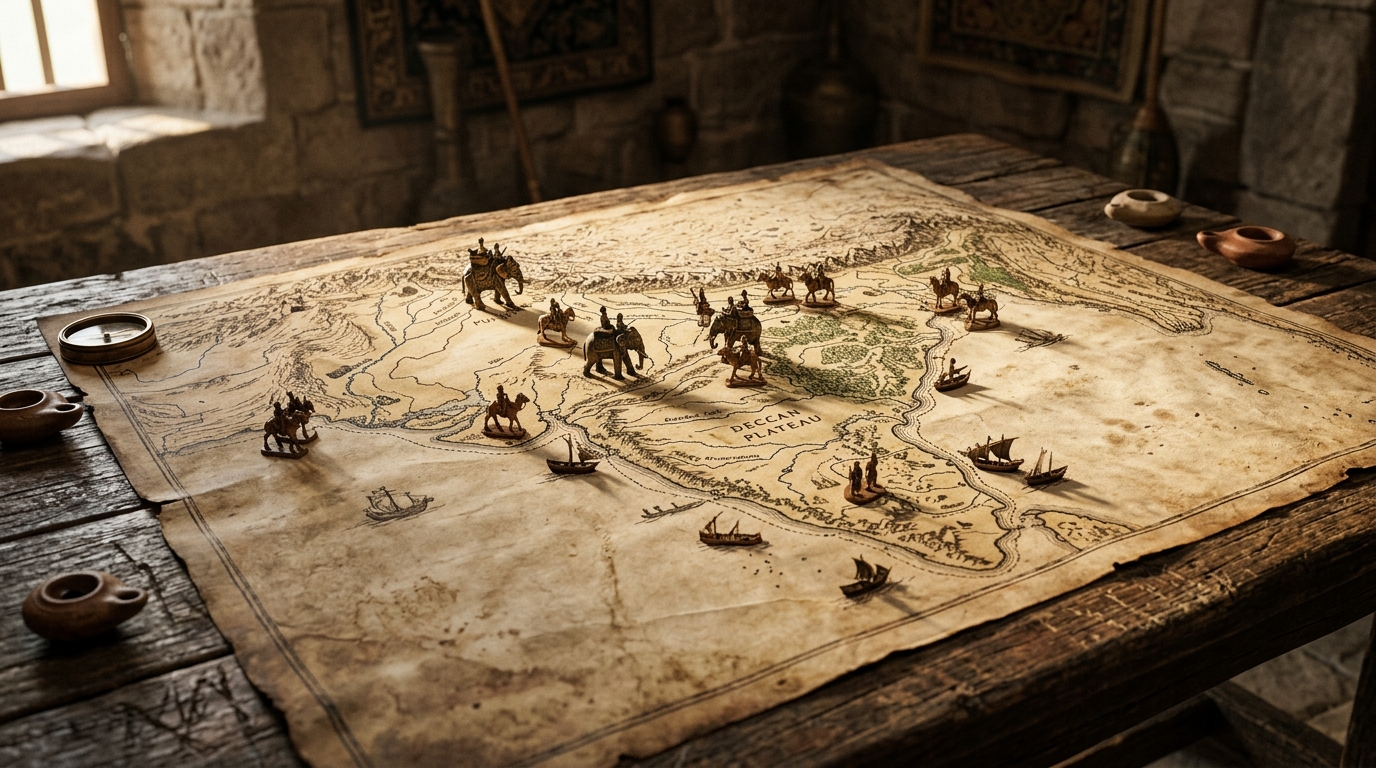
Studying Indian military strategists history reveals a continuous evolution of tactical thinking. Commanders constantly adapted to diverse geographies. They moved armies through the freezing Himalayan passes and navigated the dense river networks of Assam. Supplying a massive force across the arid Deccan Plateau required entirely different logistical frameworks than moving troops through the fertile Gangetic plains.
We see these shifts clearly when we trace the timeline of major conflicts. Each era brought new technologies and strategic doctrines to the forefront. The commanders who succeeded were those who discarded outdated traditions quickly. They integrated foreign military technologies, weaponized their local geography, and reorganized their command structures to maintain strict discipline under fire.
Who were the greatest strategists of ancient India?
Ancient Indian military strategists history is defined by the Maurya and Gupta empires, who pioneered organized statecraft and combined-arms warfare. Leaders like Chandragupta Maurya and Samudragupta utilized massive standing armies, integrating chariots, infantry, cavalry, and war elephants into cohesive units managed through sophisticated logistical networks.
Chandragupta Maurya and Chanakya
The foundation of early Indian military doctrine rests on the partnership between Emperor Chandragupta Maurya and his chief advisor, Chanakya. Operating in the 4th century BCE, they faced the remnants of Alexander the Great's Macedonian empire and the powerful Nanda Dynasty.
Chanakya authored the Arthashastra. This ancient text outlined a clear doctrine for espionage, psychological warfare, and the systematic administration of a standing army. Chandragupta executed these principles on the ground. He maintained a highly paid, professional military force rather than relying on seasonal conscripts. This financial commitment allowed him to conduct prolonged campaigns across the subcontinent. His army utilized a four-fold structure consisting of infantry, cavalry, chariots, and war elephants. The war elephants acted as mobile shock troops. They broke enemy lines and shattered defensive formations before the heavy infantry advanced.
Samudragupta's Rapid Expansion
Centuries later, Samudragupta transformed the Gupta Empire into a dominant military power during the 4th century CE. Historian R.C. Majumdar frequently noted Samudragupta's strategic brilliance in his detailed campaigns across the subcontinent.
Samudragupta did not just conquer territory. He understood the limits of his administrative reach. During his southern campaigns, he defeated rival kings but reinstated them as tributary vassals rather than attempting direct rule over distant lands. This approach secured vast wealth and political loyalty without stretching his military supply lines to the breaking point. His military campaigns utilized rapid cavalry movements. This marked a major shift from the heavy reliance on chariots seen in earlier eras. Mobility allowed him to strike quickly across the vast plains of northern India, establishing a political unification that lasted for generations.
How did medieval Indian military strategists history evolve?
Medieval Indian military strategists history shifted focus toward naval dominance in the south and defensive fortifications in the north. Commanders adapted to external pressures by building massive blue-water navies to control trade routes and reorganizing cavalry units to repel repeated nomadic invasions from Central Asia.
Rajendra Chola I's Naval Dominance
In the 11th century, Rajendra Chola I executed one of the most remarkable military campaigns in Indian history. While northern kings focused on securing their land borders, the Chola Empire looked to the sea.
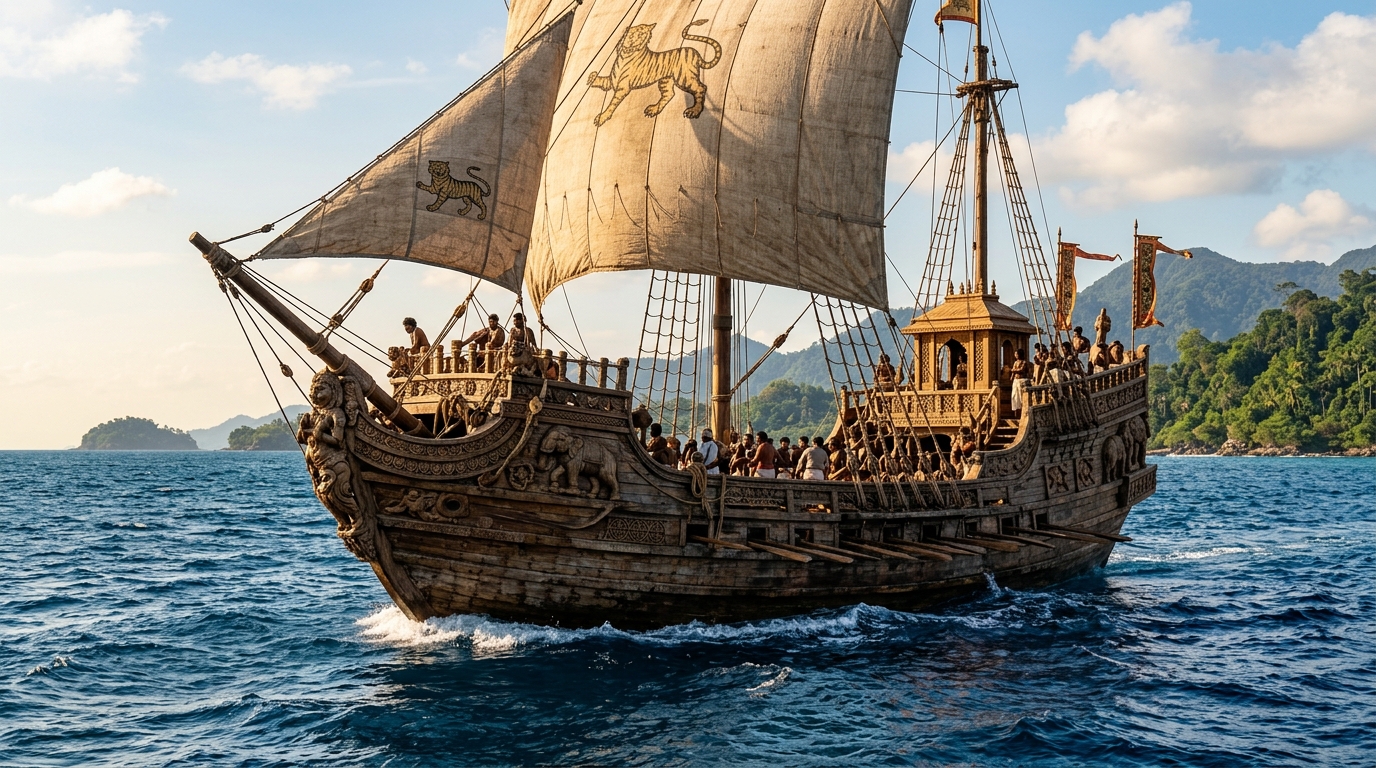
Rajendra Chola built a formidable blue-water navy. He recognized that controlling the Malacca Strait meant controlling the lucrative trade between China and the Middle East. In 1025 CE, he launched a massive naval expedition against the Srivijaya Empire in present-day Indonesia and Malaysia. This was not a simple coastal raid. It was a complex amphibious operation requiring precise logistical planning to transport thousands of troops, horses, and supplies across the Bay of Bengal. The Chola navy utilized specialized troop-carrying vessels and escort ships. They demonstrated an advanced understanding of naval warfare that remained unmatched in the region for centuries. You can explore more about regional maritime history in our guide to the evolution of Indian naval warfare.
Alauddin Khalji's Defense Against the Mongols
In the north, the Delhi Sultanate faced a very different threat. The Mongol Empire pushed relentlessly toward the subcontinent. During the late 13th and early 14th centuries, Alauddin Khalji successfully defended India against multiple large-scale Mongol invasions.
Khalji's military strategy relied heavily on economic reform and strict market price controls. By regulating the cost of basic goods, he could afford to maintain a massive standing army without bankrupting the state treasury. He implemented a branding system for horses and a descriptive roll for soldiers to prevent corruption. This ensured his cavalry was always battle-ready. When the Mongols attacked, Khalji avoided open-field battles against their superior horse archers initially. Instead, he fortified border defenses and used strategic retreats to stretch Mongol supply lines. Once the invaders were exhausted and overextended, Khalji launched decisive counter-attacks to crush them.
What tactics defined the Mughal and early modern era?
The early modern era of Indian military strategists history was defined by the introduction of gunpowder and the mastery of riverine warfare. Commanders integrated field artillery with traditional cavalry charges, while others used local geography and monsoon flooding to neutralize technologically superior invading forces.
Babur's Artillery at Panipat
The arrival of Babur in 1526 permanently altered Indian battlefield tactics. His forces were heavily outnumbered by the massive army of Ibrahim Lodi, yet Babur secured a decisive victory. You can read more about this exact timeline in our guide to the April 21, 1526: A Historical Timeline of the First Battle of Panipat.
Babur introduced field artillery and matchlocks to northern India. He employed the Tulughma tactic. This involved dividing his army into left, right, and center divisions, with rapid flanking units designed to encircle the enemy. At Panipat, he anchored his right flank against the city and used a line of tied-together carts to protect his front. This created a fortified firing line for his musketeers and cannons. When Lodi's massive force of war elephants charged, the noise and impact of the artillery panicked the animals. The elephants turned and trampled their own troops, breaking the Afghan lines.
Lachit Borphukan's Riverine Warfare
While the Mughals dominated the plains, they struggled in the complex geography of the northeast. In 1671, the Ahom Kingdom faced a massive Mughal invasion force. Lachit Borphukan, the Ahom commander, recognized he could not defeat the Mughals in a conventional land battle.
Borphukan utilized the Brahmaputra River and the heavy monsoon season as his primary weapons. He drew the Mughal forces into a naval battle at Saraighat, where the river was narrowest. The Ahom forces used small, highly maneuverable boats to outflank the larger, slower Mughal warships. Borphukan constructed a complex network of mud embankments at night to limit Mughal cavalry movements on land. By forcing the enemy to fight on his terms, in a terrain that neutralized their numerical and technological advantages, he secured a victory that halted Mughal expansion into Assam permanently.
How did Maratha commanders change Indian warfare?
Maratha commanders revolutionized Indian military strategists history by perfecting guerrilla warfare and rapid cavalry movement. They discarded slow-moving siege trains and heavy armor, opting instead for highly mobile, self-sufficient light cavalry units that harassed enemy supply lines and avoided pitched battles.
Shivaji Maharaj's Guerrilla Tactics
In the 17th century, Shivaji Maharaj established the Maratha Empire through the systematic application of Ganimi Kawa (guerrilla warfare). Facing the massive armies of the Mughal Empire and the Adil Shahi dynasty, Shivaji understood that conventional warfare would lead to certain defeat.
He weaponized the rugged terrain of the Western Ghats. Shivaji built and captured a vast network of hill forts that served as secure bases of operation. His soldiers carried minimal supplies. They relied on speed and local geographic knowledge to launch surprise attacks on enemy camps and supply convoys. If a Mughal army approached in force, the Marathas would retreat into the hills, refusing to engage in a set-piece battle. They struck only when they had overwhelming local superiority. This constant harassment exhausted the larger imperial armies, draining their treasuries and destroying their morale over time.
Baji Rao I's Cavalry Mobility
Under the leadership of Peshwa Baji Rao I in the 18th century, the Maratha military machine expanded rapidly across the subcontinent. Baji Rao never lost a battle in his 20-year military career.
His primary innovation was strategic mobility. Baji Rao commanded a massive force of light cavalry that could cover incredible distances in a single day. He bypassed heavily fortified enemy cities entirely. Instead, he struck deep into enemy territory to cut off their financial resources and agricultural supply lines. During his campaign against the Nizam of Hyderabad in 1727, Baji Rao led the Nizam's heavy, slow-moving army on an exhausting chase across the Deccan. He finally trapped the exhausted enemy at Palkhed in a waterless terrain. This forced a complete surrender without fighting a major pitched battle.
Why do European colonial conflicts matter in Indian military strategists history?
The arrival of European powers forced a rapid adaptation in Indian military strategists history. Regional commanders had to quickly reverse-engineer European infantry tactics, integrate modern firearms, and reorganize their traditional armies to counter the disciplined, flintlock-armed battalions deployed by foreign trading companies.
Martanda Varma's Victory at Colachel
The Dutch East India Company maintained a powerful presence in southern India until they encountered King Martanda Varma of Travancore in 1741. This conflict culminated in the Battle of Colachel. To understand the broader context of European coastal presence, consider reviewing the Portuguese Era in Goa: Key Dates and Architectural Milestones.
Martanda Varma recognized the threat posed by European naval artillery and disciplined infantry. When the Dutch landed a force at Colachel, Varma did not rely solely on traditional levies. He used his reorganized standing army, equipped with locally manufactured firearms, to pin down the Dutch forces. He effectively cut off their resupply lines from the sea using his own small coastal patrol boats. The Travancore forces besieged the Dutch garrison, forcing their surrender. Varma then integrated the captured European officers into his own military. He used them to train his troops in modern drill and tactics.
Tipu Sultan's Rocket Artillery
During the late 18th century, the Kingdom of Mysore emerged as the most formidable opponent to British expansion. Tipu Sultan and his father, Hyder Ali, modernized their military infrastructure at an unprecedented pace.
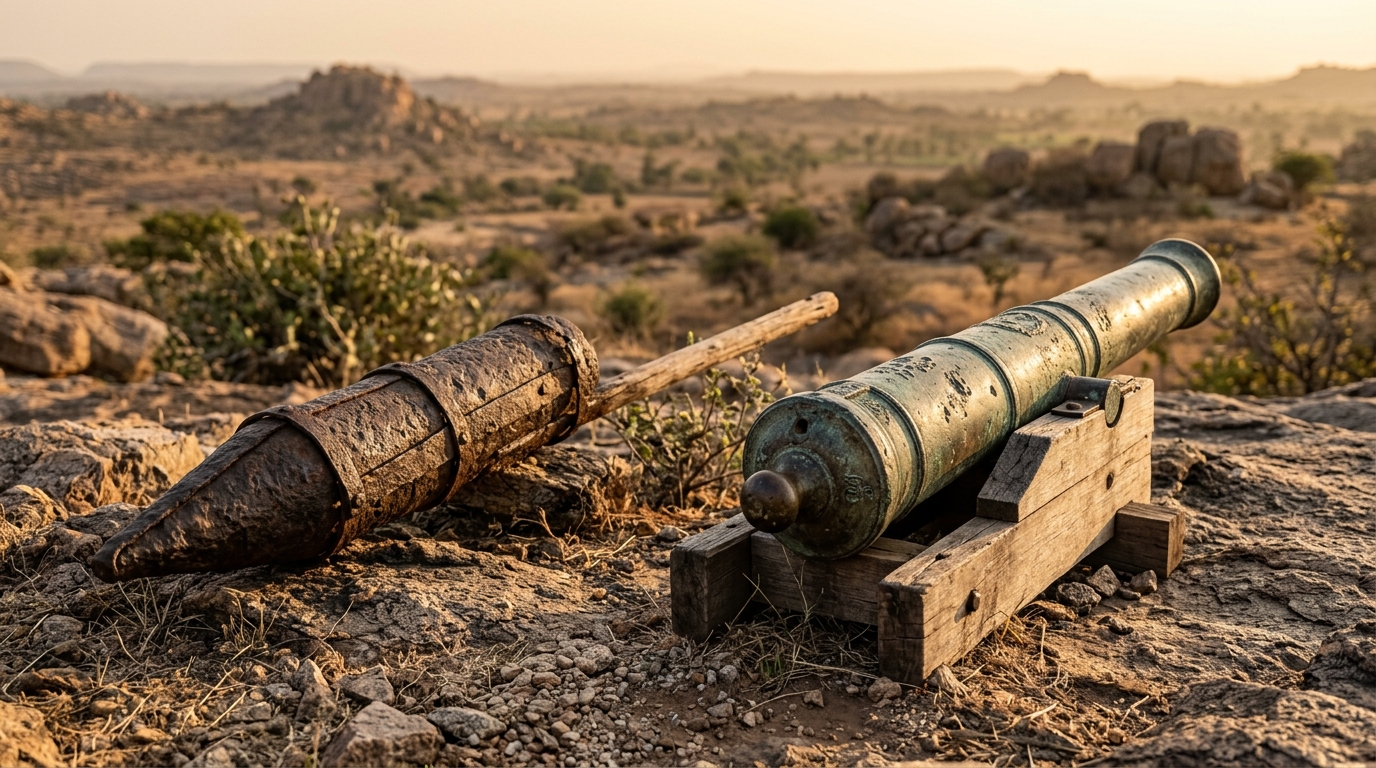
Tipu Sultan's most famous contribution to military strategy was the mass deployment of iron-cased Mysorean rockets. While rockets had been used in India before, Tipu's engineers encased the combustible powder in iron tubes. This dramatically increased their range, stability, and explosive power. He organized dedicated rocket brigades within his army. During the Anglo-Mysore wars, these rocket barrages caused massive panic among British cavalry and infantry lines. The technology was so effective that the British captured the remaining rockets after the fall of Srirangapatna in 1799. They reverse-engineered them and developed the Congreve rockets used in the Napoleonic Wars.
Related Reading
- Milestones in Indian Women's History: A Chronological Guide
- 1,000 Years of Indian Medical History: A Chronological Guide
- Economic Milestones in Indian History: From 1947 to Present
- What Are the Major Events in Indian History? (FAQ Archive)
FAQ
Q: Who is considered the first great military strategist in Indian history? Chanakya is widely regarded as the first great strategist due to his authorship of the Arthashastra in the 4th century BCE. This text provided a comprehensive framework for espionage, military organization, and statecraft that guided the Maurya Empire to dominance.
Q: How did geography influence historical Indian military tactics? Geography dictated the choice of military units and strategies across different regions. Commanders in the northern plains relied heavily on cavalry and elephants, while leaders in the Western Ghats and the northeast utilized guerrilla tactics and riverine naval warfare to defeat larger armies.
Q: What role did war elephants play in ancient battles? War elephants functioned as ancient shock cavalry designed to break enemy infantry lines and induce panic. They were heavily armored and carried archers or spearmen, but they became vulnerable liabilities once field artillery and gunpowder were introduced to the battlefield.
Q: Did Indian armies use naval warfare effectively? Yes, particularly in the southern regions. The Chola dynasty built a massive blue-water navy to conquer territories in Southeast Asia, while Maratha commanders successfully defended the western coastline against European naval powers for decades using small, fast coastal vessels.
Apply the core lesson of these historical commanders to your own strategic planning today by identifying and utilizing your local advantages. Map out the specific resources, terrain, or unique skills available exclusively to your team, and build your primary strategy around those elements rather than trying to replicate a competitor's conventional approach.