Key Dates in the Evolution of India's National Defense Apparatus
Bottom Line
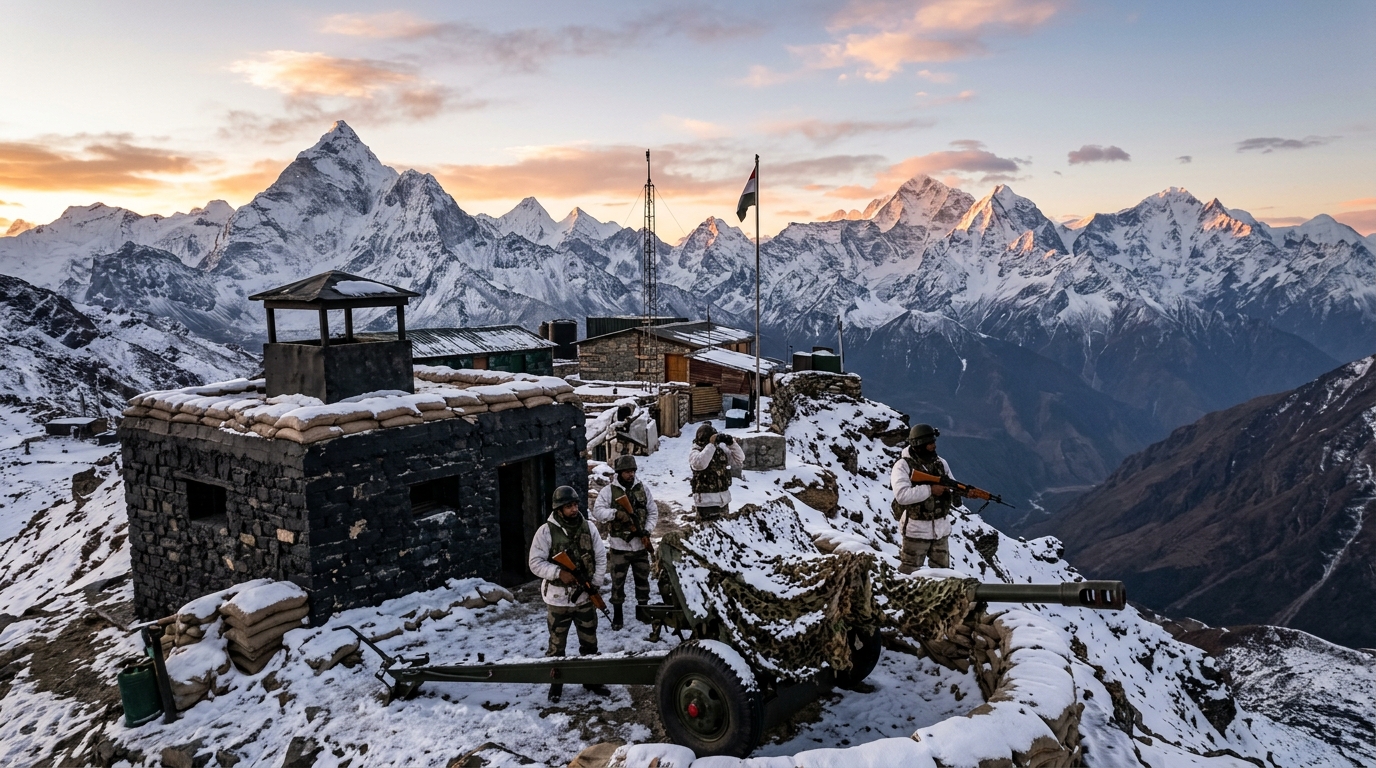
India's national defense apparatus evolved from a partitioned colonial military in 1947 into a nuclear-armed, multi-domain security structure. Key milestones include the 1968 formation of R&AW, the 1974 and 1998 nuclear tests, and post-Kargil structural reforms that centralized command under a Chief of Defence Staff.
Key Takeaways
- The 1947 partition forced a rapid, complex division of military assets and personnel.
- The 1962 Sino-Indian War triggered massive modernization and border security restructuring.
- R&AW emerged in 1968 to handle external intelligence after early intelligence failures.
- Pokhran-II in 1998 officially established India as a nuclear weapons state.
- The 1999 Kargil conflict exposed coordination gaps, leading to the CDS role.
On August 15, 1947, Prime Minister Jawaharlal Nehru stood at the Red Fort knowing the military protecting the new nation was fractured. The British Indian Army had just been cleaved in two, leaving commanders scrambling to assign regiments, divide equipment, and secure porous new borders. This raw vulnerability forced the immediate rebuilding of a sovereign defense structure.
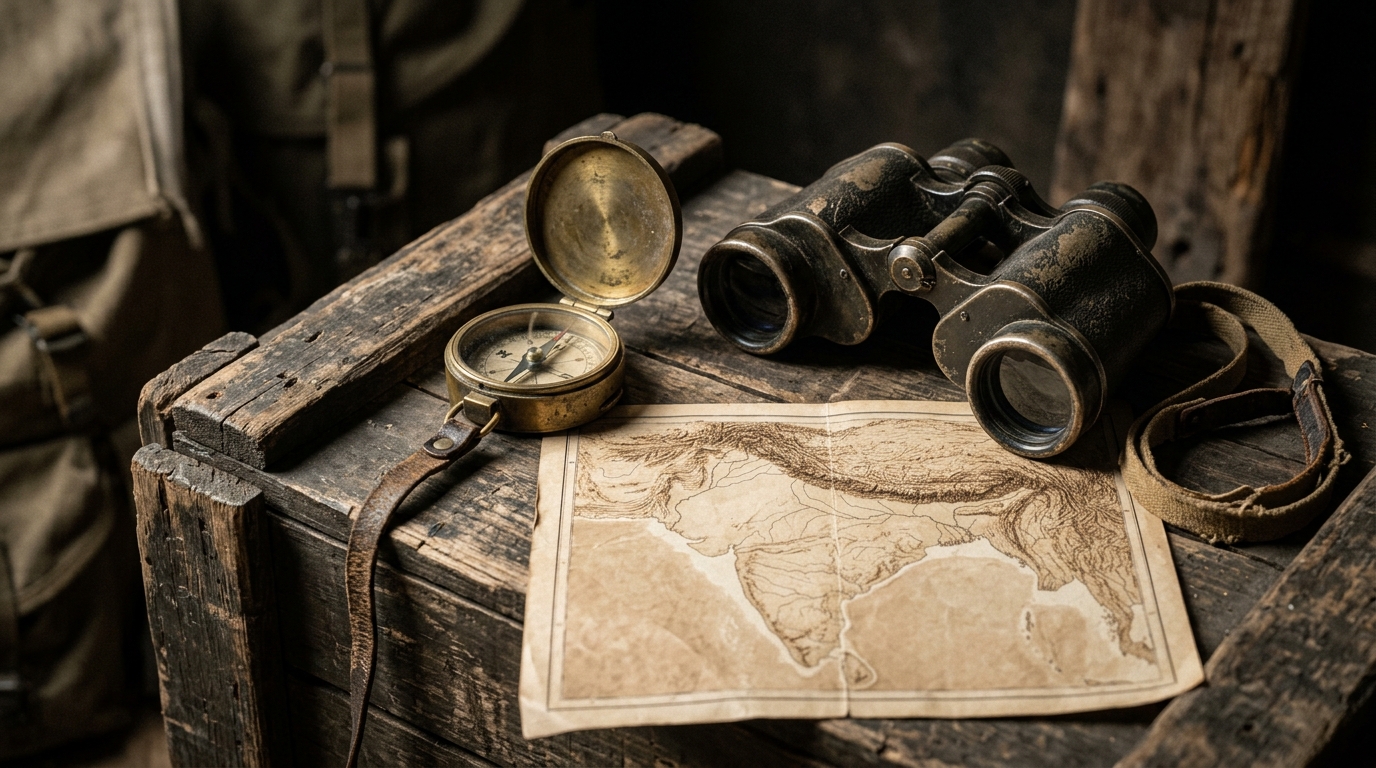
Understanding India national security history requires tracking how specific crises forced structural changes. The modern defense apparatus did not emerge from a single master plan. It grew through wartime necessity, intelligence failures, and technological arms races. Long before modern border disputes, the subcontinent faced constant external pressures, as seen in the April 21, 1526: A Historical Timeline of the First Battle of Panipat. Modern threats required modern institutions. From the formation of border patrols to the establishment of nuclear deterrence, every major agency and command structure traces its origin to a specific historical pressure point.
How did partition shape early India national security history?
The 1947 partition forced the immediate division of the 400,000-strong British Indian Army, allocating roughly two-thirds of the personnel and assets to India. This rapid split created massive logistical gaps and required a complete restructuring of the military command hierarchy under sovereign Indian control.
The division of the British Indian Army
The Armed Forces Reconstitution Committee managed the monumental task of dividing the military. British Field Marshal Sir Claude Auchinleck oversaw the process. Regiments were split based on religious demographics, leading to the transfer of entire units across the newly drawn borders. India retained 15 infantry regiments, 12 armored regiments, and the bulk of the training infrastructure.
This division was chaotic. Trains carrying military stores were delayed or diverted. The new Indian Army had to build a cohesive officer corps almost overnight, as departing British officers left senior command vacuums. Many of the most searched historical dates from this era revolve around these frantic months of reorganization, a topic explored in our guide to the 10 Most Searched Dates in Indian History and Why They Matter.
The integration of princely states
The newly formed army faced its first test immediately. Over 500 princely states had the option to join India or Pakistan. While most acceded peacefully, a few required military intervention. Operation Polo in September 1948 integrated the state of Hyderabad into the Indian Union.
State Forces belonging to these princely states also had to be absorbed into the regular Indian Army. This required standardizing training, equipment, and pay scales across dozens of disparate regional militias. The successful integration of these forces established the foundational strength of the post-independence military.
When did India establish its core intelligence agencies?
India inherited the colonial-era Intelligence Bureau in 1947 for domestic security, but external intelligence remained a weak point. The government established the Research and Analysis Wing (R&AW) on September 21, 1968, specifically to gather foreign intelligence and prevent future strategic surprises.
The origins of the Intelligence Bureau (IB)
The Intelligence Bureau is the oldest surviving intelligence organization in the world, founded in 1887. After independence, the Indian government repurposed the IB to handle both domestic counter-intelligence and foreign intelligence gathering. It relied heavily on colonial-era policing tactics.
The dual mandate proved too broad. The IB struggled to build deep foreign espionage networks. This systemic weakness became glaringly obvious during the 1962 Sino-Indian War. The military lacked actionable intelligence on Chinese troop movements and infrastructure build-ups. A change was necessary.
The 1968 formation of the Research and Analysis Wing (R&AW)
Following the intelligence shortfalls of 1962 and the subsequent 1965 Indo-Pakistani War, Prime Minister Indira Gandhi separated external intelligence from the IB. Rameshwar Nath Kao, a veteran intelligence officer, became the first chief of the newly formed R&AW in 1968.
Defining Kao as a central entity in India national security history is crucial. He built R&AW from the ground up, focusing heavily on neighboring countries. The agency proved its worth quickly. R&AW provided critical intelligence and operational support during the 1971 war, cementing its role as the premier external intelligence agency.
| Organization | Founding Year | Primary Mandate | Historical Catalyst |
|---|---|---|---|
| Intelligence Bureau (IB) | 1887 (repurposed 1947) | Domestic intelligence | Colonial administration |
| Border Security Force (BSF) | 1965 | Border guarding | 1965 Indo-Pak War |
| R&AW | 1968 | External intelligence | 1962 & 1965 Wars |
| Coast Guard | 1977 | Maritime law enforcement | Smuggling & sea defense |
| NSG | 1984 | Counter-terrorism | Internal security crises |
What structural changes followed the major wars of 1962 and 1965?
The 1962 conflict exposed severe shortages in high-altitude equipment and border infrastructure, prompting a massive defense budget increase. Following the 1965 war, India recognized the need for a dedicated border protection force, leading directly to the creation of the Border Security Force.
The post-1962 defense modernization
The 1962 border war with China was a severe wake-up call. Indian troops fought bravely but lacked winter clothing, modern rifles, and high-altitude artillery. The government immediately initiated a massive expansion of the armed forces. Defense spending doubled within a year.
The army raised specialized mountain divisions trained specifically for high-altitude warfare. The Defence Research and Development Organisation (DRDO), established in 1958, received major funding boosts to indigenize weapons production. This era marked the shift from a purely defensive posture to building credible deterrence capabilities along the northern borders.
The creation of the Border Security Force (BSF)
Before 1965, the international border with Pakistan was guarded by the armed police forces of individual Indian states. During the 1965 war, these state police units were heavily outgunned by regular military forces. The lack of a unified command structure hindered defensive operations.
On December 1, 1965, the government established the Border Security Force. K.F. Rustamji, a visionary police officer, served as its first Director General. The BSF was designed as an armed force of the Union, trained to military standards but tasked with peacetime border guarding. It remains the world's largest border guarding force today.
How did nuclear capabilities alter India national security history?
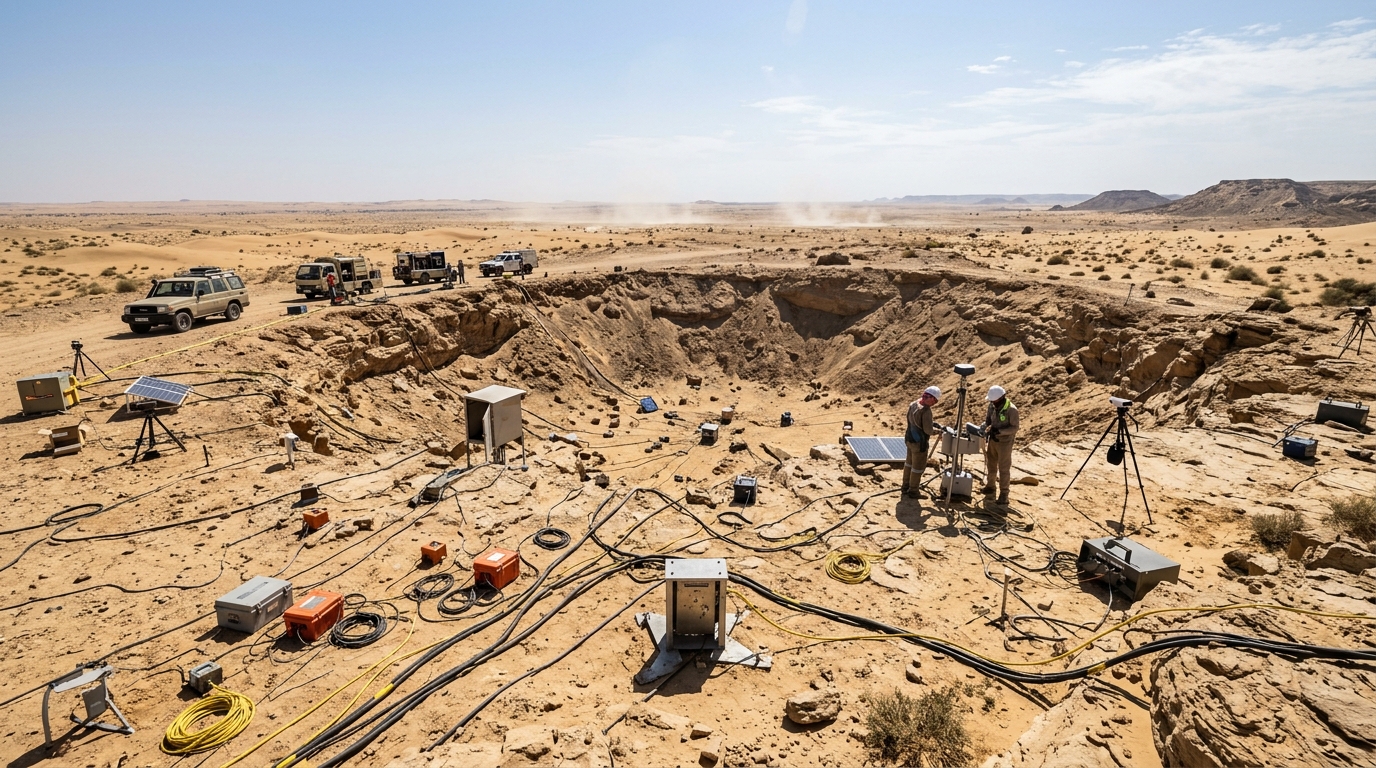
Nuclear tests shifted India's defense posture from conventional territorial defense to strategic deterrence. The 1974 test demonstrated capability, but the 1998 tests forced a complete overhaul of military doctrine, leading to the creation of the Nuclear Command Authority to manage the new arsenal.
The 1974 Smiling Buddha test
On May 18, 1974, India conducted its first nuclear test at the Pokhran test range in Rajasthan. Codenamed "Smiling Buddha," the government characterized it as a "peaceful nuclear explosion." This event placed India on the global nuclear map.
The test triggered immediate international backlash. Technology denial regimes, such as the Nuclear Suppliers Group, were formed specifically to restrict India's access to nuclear materials. Despite the sanctions, the scientific establishment continued to develop the technology in secret, laying the groundwork for a weaponized arsenal.
The 1998 Pokhran-II tests and doctrine shift
May 1998 changed the strategic calculus of the subcontinent. India conducted five underground nuclear tests under Operation Shakti. Prime Minister Atal Bihari Vajpayee formally declared India a nuclear weapons state.
This required a new strategic doctrine. India adopted a "No First Use" policy, promising never to use nuclear weapons first, but guaranteeing massive retaliation if attacked. The international sanctions that followed temporarily disrupted the economy, a period analyzed in our timeline of Economic Milestones in Indian History: From 1947 to Present. However, the tests permanently established a nuclear deterrent, fundamentally altering the region's balance of power.
Why did the 1999 Kargil conflict trigger defense reforms?
The Kargil conflict revealed critical flaws in intelligence sharing and joint operational planning between the army and air force. The subsequent government review mandated the most sweeping structural reforms in Indian military history, aiming to integrate the armed forces and intelligence agencies.
The Kargil Review Committee findings
In the summer of 1999, Pakistani forces infiltrated across the Line of Control into the Kargil sector. The initial failure to detect this massive intrusion highlighted severe gaps in high-altitude surveillance and inter-agency intelligence sharing.
The government appointed the Kargil Review Committee, headed by strategic affairs expert K. Subrahmanyam. The committee's report was blunt. It pointed out that the army, navy, and air force operated in silos. Intelligence agencies hoarded information rather than sharing it. The report called for immediate integration of the armed forces headquarters and the creation of a unified command structure.
The eventual creation of the Chief of Defence Staff (CDS)
The most significant recommendation of the Kargil Review Committee was the creation of a Chief of Defence Staff. This officer would serve as the single-point military advisor to the government and foster jointness among the three services.
Bureaucratic resistance delayed this reform for two decades. The government finally established the CDS position on December 31, 2019, appointing General Bipin Rawat to the role. Alongside the CDS, the government created the Department of Military Affairs. This restructuring represents the most significant shift in India national security history since independence, moving the military toward integrated theater commands.
What role do modern specialized forces play today?
Modern threats shifted from conventional border wars to terrorism and cyber attacks. This required specialized units operating outside traditional military structures, leading to the formation of elite counter-terrorism teams and dedicated technical intelligence organizations in the late 20th and early 21st centuries.
The National Security Guard (NSG) formation
Internal security crises in the early 1980s exposed the limitations of using regular army troops for domestic counter-terrorism. The 1984 hijacking incidents and the complex operations in Punjab showed the need for a dedicated, highly trained strike force.
The government established the National Security Guard (NSG) in 1984. Modeled on elite units like the British SAS and Germany's GSG 9, the NSG is a federal contingency force. They handle hostage rescue, counter-hijacking, and specialized terror response. Their presence allows the regular military to remain focused on external threats.
The National Technical Research Organisation (NTRO)
As technology advanced, the nature of intelligence gathering changed. The Kargil Review Committee identified a severe lack of dedicated technical intelligence capabilities. In response, the government established the National Technical Research Organisation (NTRO) in 2004.
The NTRO acts as the premier technical intelligence agency. It handles geospatial intelligence, satellite imagery analysis, and cyber security. As warfare moves into the digital realm, agencies like the NTRO form the first line of defense. The rise of these digital threats is a growing field of study, often covered in discussions about the evolution of Indian cyber security. Technical dominance is now as critical as territorial control.
Related Reading
- India at the Olympics: A Timeline of Historic Sporting Milestones
- Milestones in Indian Women's History: A Chronological Guide
- 1,000 Years of Indian Medical History: A Chronological Guide
- Economic Milestones in Indian History: From 1947 to Present
FAQ
Q: When was the modern Indian Army officially formed? The modern Indian Army traces its immediate origin to the division of the British Indian Army following independence on August 15, 1947. However, its historical roots go back to the forces of the East India Company. Army Day is celebrated on January 15, marking the day in 1949 when Field Marshal K.M. Cariappa took over as the first Indian Commander-in-Chief.
Q: What is the highest defense command in India? The President of India serves as the Supreme Commander of the Indian Armed Forces. Executive authority and operational control rest with the Prime Minister and the Cabinet Committee on Security. The Chief of Defence Staff acts as the principal military advisor to the Defence Minister.
Q: How does India manage its nuclear weapons? India's nuclear arsenal is managed by the Nuclear Command Authority (NCA), created in 2003. The NCA consists of a Political Council, chaired by the Prime Minister, which holds the sole authority to authorize a nuclear strike. An Executive Council, chaired by the National Security Advisor, provides inputs and executes the directives.
Q: When did India start modernizing its navy? Naval modernization began slowly in the 1950s but accelerated significantly after the 1971 war, where naval blockades proved decisive. The focus shifted from a coastal defense force to a blue-water navy. The induction of aircraft carriers and nuclear-powered submarines in subsequent decades marked major milestones in this expansion.
Take a look at the calendar dates associated with the military formations mentioned above. Pick one specific date—like the founding of R&AW in 1968 or the Kargil Review Committee report submission—and search our archives for what else happened in India on that exact day. Contextualizing these defense milestones against the political and economic events of the same week reveals exactly why these decisions were made.