India's Electronics Evolution: A History of Hardware and Tech Milestones
Bottom Line
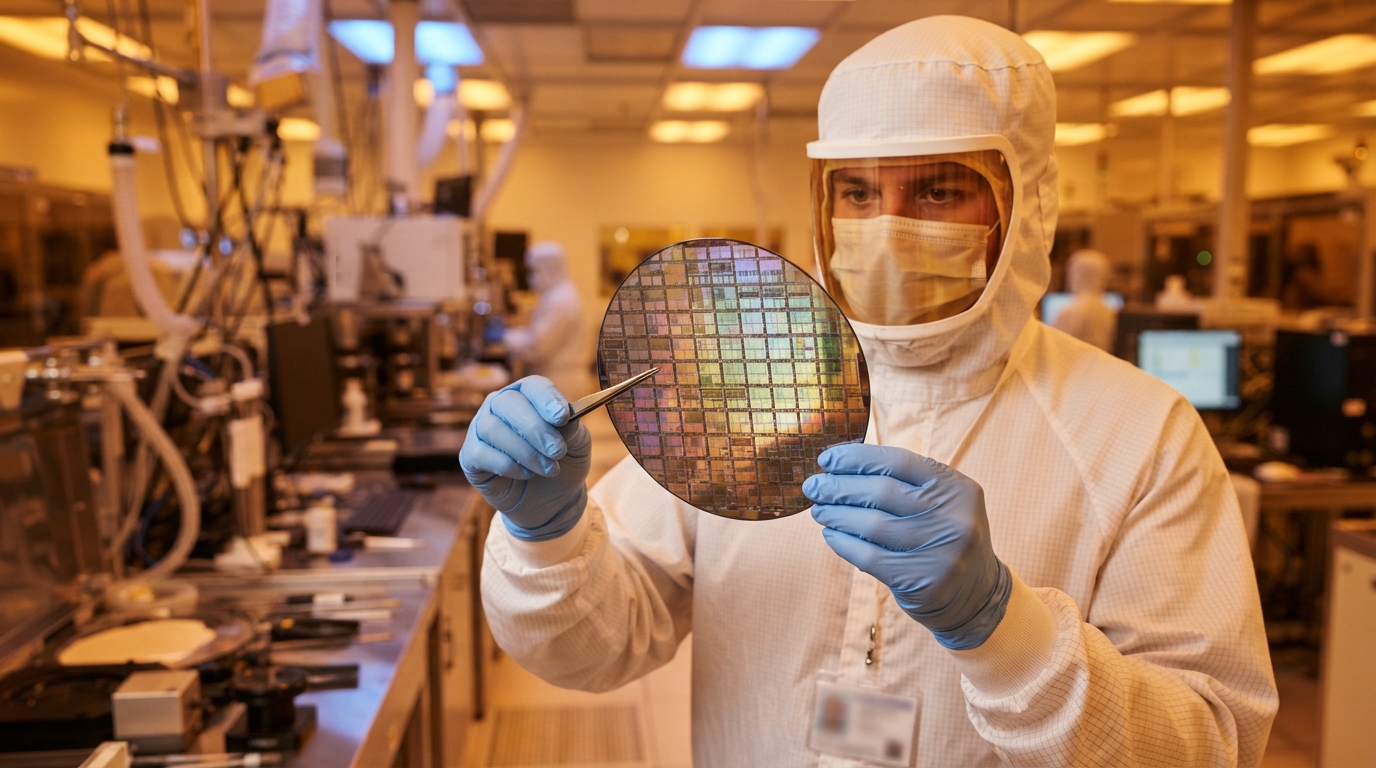
The history of Indian technology sector is a six-decade transition from state-run research laboratories in the 1950s to a $155 billion manufacturing power by 2026. According to the Ministry of Electronics and Information Technology (MeitY, 2026), production incentives, high-volume smartphone assembly, and commercial wafer fabrication have rebuilt the domestic hardware foundation following late-twentieth-century industrial setbacks.
Key Takeaways
- Domestic electronics output expanded sevenfold between 2014 and 2026, reaching ₹13.11 lakh crore.
- Local mobile phone assembly rose from 26% in 2014 to 99.2% by 2026.
- A 1989 cleanroom fire at Mohali derailed early indigenous silicon chip manufacturing.
- The 1997 WTO Information Technology Agreement exposed unprotected domestic hardware makers to cheap imports.
- Commercial wafer fabrication returned through multi-billion-dollar facilities in Gujarat and Assam.
Popular memory treats Indian technology history solely as a 1990s software outsourcing boom. In reality, Indian engineers designed indigenous mainframes, automated telephone exchanges, and silicon wafers decades before writing commercial code for overseas clients. The full history of Indian technology sector covers six decades of ambitious hardware experiments, painful policy setbacks, and a recent high-volume manufacturing recovery. Understanding this trajectory explains why the country spent decades importing physical devices while writing the world's software. It also highlights how industrial planning shaped modern manufacturing alongside broader economic milestones in Indian history.
How Did Early State Labs Shape the History of Indian Technology Sector?
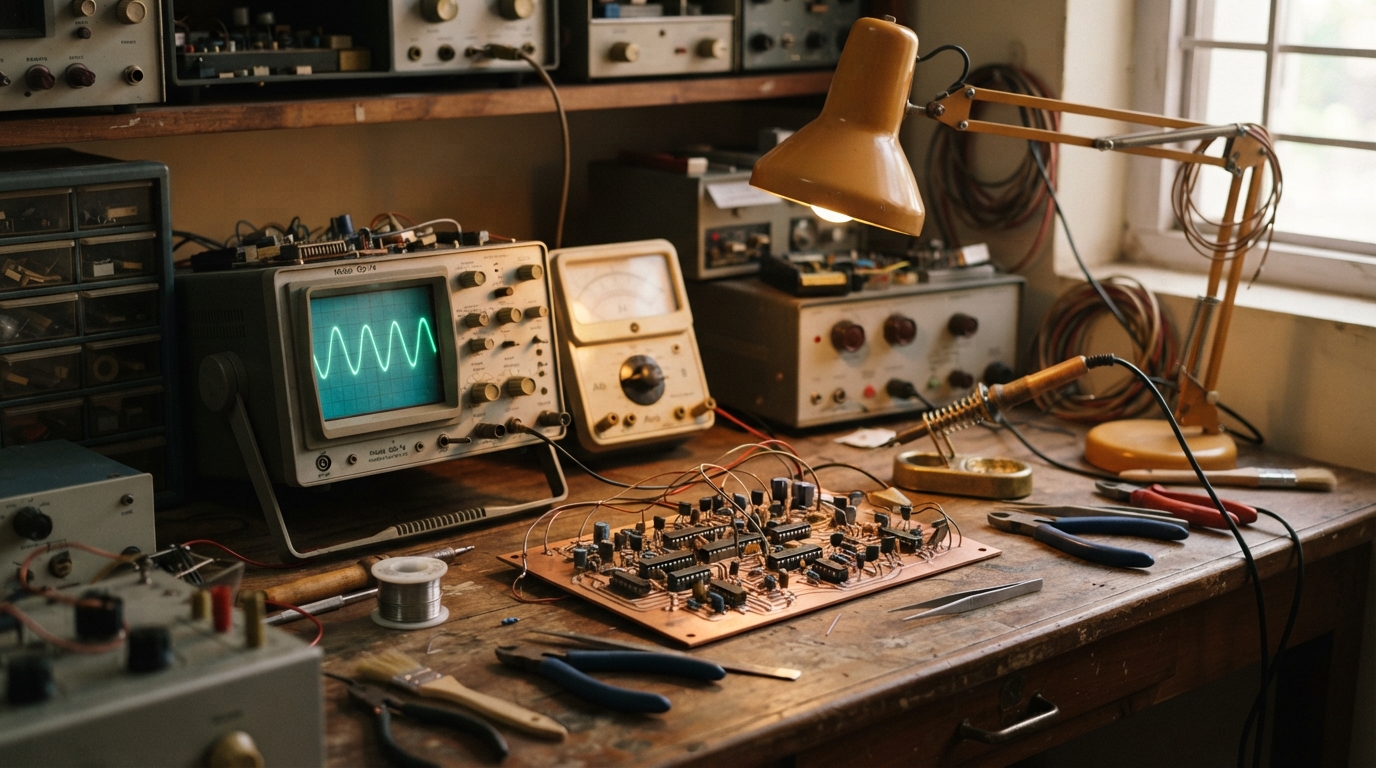
The history of Indian technology sector is an industrial evolution rooted in post-independence state laboratories and public sector enterprises established during the 1950s and 1960s. Facing severe foreign exchange shortages and strict import controls, the Indian government treated indigenous hardware development as a strategic necessity for national defense, communications, and industrial self-reliance. Public institutions, led by the Tata Institute of Fundamental Research (TIFR) and Bharat Electronics Limited (BEL), designed India's first digital computers, radar equipment, and telecommunications switches from scratch. According to early Department of Electronics historical records, these state laboratories laid the foundation for domestic computing by training the nation's first technical workforce and establishing local component supply chains. By developing hardware like the TIFRAC computer and ECIL minicomputers, public institutions proved that Indian engineers could design advanced electronic hardware decades before the country established its international reputation in commercial software exports.
The Bhabha Report and Institutional Foundations
Modern Indian electronics policy began with the 1966 Electronics Committee Report, chaired by nuclear physicist Homi J. Bhabha. The report warned that dependence on imported hardware posed severe economic and security vulnerabilities. It urged the central government to build domestic capacity across basic components, instruments, and computing machinery.
This assessment led directly to the creation of the Department of Electronics in 1970 and the Electronics Commission in 1971. These bodies coordinated public research spending and managed import permits.
Early research centered on the Tata Institute of Fundamental Research (TIFR) in Mumbai. TIFR engineers began constructing the TIFR Automatic Computer (TIFRAC) in 1956. Operational by 1960, TIFRAC used 2,700 vacuum tubes, 1,700 germanium diodes, and a ferrite core memory. It served Indian scientists for five years. This single machine trained the first generation of Indian computer scientists.
+-------------------------------------------------------------------+
|               Early Indian Computing Milestones                   |
|                                                                   |
|   1956: TIFRAC Development Begins at TIFR Mumbai                  |
|   1966: Homi Bhabha Electronics Committee Report Published        |
|   1967: Electronics Corporation of India Limited (ECIL) Founded   |
|   1970: Department of Electronics (DoE) Formed                    |
|   1971: ECIL Unveils TDC-12 Commercial Transistor Minicomputer    |
|   1984: Centre for Development of Telematics (C-DOT) Established  |
+-------------------------------------------------------------------+
Public Sector Giants and Early Computing
Manufacturing duty fell to public sector undertakings. Bharat Electronics Limited (BEL), established in Bangalore in 1954, produced vacuum tubes, quartz crystals, and military radar equipment. BEL provided the physical hardware needed by the armed forces and state broadcasters.
In 1967, atomic energy pioneer A.S. Rao founded the Electronics Corporation of India Limited (ECIL) in Hyderabad. ECIL commercialized technologies developed at the Bhabha Atomic Research Centre.
By 1971, ECIL unveiled the TDC-12, the first commercial computer designed and built in India. The 12-bit transistorized minicomputer found applications in scientific laboratories, power plants, and defense installations. ECIL followed this success with the 16-bit TDC-316 and TDC-312 systems during the late 1970s. These machines ran real-time tracking for Indian Railways and seismic monitoring systems across the country.
Telecommunications and the C-DOT Experiment
Telecommunications hardware formed the third leg of India's early technical base. By the early 1980s, imported electromechanical switches frequently broke down in high heat and humidity. The Department of Telecommunications struggled to serve rural subscribers.
In August 1984, the government created the Centre for Development of Telematics (C-DOT), directed by Sam Pitroda. C-DOT aimed to build an indigenous digital switching system suited to India's climate.
Engineers at C-DOT designed the Rural Automatic Exchange (RAX). The RAX operated without air conditioning, consumed minimal power, and ran on 24-volt batteries. By deploying tens of thousands of RAX units across small towns and villages, C-DOT enabled the nationwide Public Call Office (PCO) boom. This hardware effort connected rural India to national telephone networks years ahead of market projections, as detailed in our guide to the history of Indian telecom sector.
Why Did India's Early Semiconductor Ambitions Collapse in the Late 20th Century?
The collapse of India's early semiconductor ambitions is the result of a catastrophic cleanroom fire combined with sudden international trade liberalization during the late twentieth century. In 1984, India established Semiconductor Complex Limited (SCL) in Mohali, operating commercial 5-micron and 3-micron CMOS fabrication lines that placed the country ahead of several emerging East Asian economies. However, as documented by the Department of Electronics, a devastating February 1989 fire destroyed SCL's fabrication lines, halting domestic wafer production for eight critical years. When SCL resumed operations in 1997, global foundries had already transitioned to sub-micron lithography. Simultaneously, India signed the 1997 WTO Information Technology Agreement (ITA-1), eliminating import tariffs across 217 hardware categories. This policy exposed domestic manufacturers to low-cost Asian imports, forcing Indian technology firms to shut down hardware assembly lines and pivot capital toward software services.
The Rise and Fall of SCL Mohali
In 1984, the central government opened Semiconductor Complex Limited (SCL) in Mohali, Punjab. SCL operated as a commercial silicon foundry engineered to match international fabrication standards. SCL licensed 5-micron and 3-micron CMOS fabrication technology from American Microsystems International and Rockwell International. SCL manufactured processors, clock chips, and specialized integrated circuits for telecommunications and space missions.
At its launch, SCL sat only a few years behind leading global chipmakers. Taiwan Semiconductor Manufacturing Company (TSMC) was not founded until 1987. India possessed an operational semiconductor foundry before many of its East Asian neighbors.
In February 1989, a devastating fire ripped through the Mohali facility. The blaze destroyed the cleanrooms, testing labs, and silicon processing equipment. Reconstruction took eight years due to funding delays and bureaucratic inertia. By the time SCL resumed limited fabrication in 1997, international semiconductor foundries had advanced to sub-micron lithography. SCL could no longer compete commercially. The facility shifted toward specialized defense and aerospace components.
The WTO ITA-1 Pact and Hardware Deindustrialization
The second blow to domestic electronics occurred in Geneva. In March 1997, India signed the World Trade Organization's Information Technology Agreement (ITA-1). The agreement required signatories to eliminate customs duties on 217 categories of IT hardware, including:
- Assembled computers and workstations
- Integrated circuits and discrete components
- Telecommunications switching equipment
- Semiconductor manufacturing gear
The tariff cuts took effect between 1997 and 2005. The policy intended to make computers cheap for Indian consumers and software developers.
The zero-duty regime exposed domestic hardware makers to severe foreign competition. East Asian economies had already built deep component ecosystems, reliable power grids, and cheap capital markets. Indian hardware assemblers paid local taxes and high interest rates on factory loans. They could not compete with duty-free assembled hardware imports from China, Taiwan, and South Korea. Domestic computer brands like HCL, DCM, and Wipro stopped assembling their own hardware. They pivoted to distribution or software engineering.
The Strategic Pivot to Software Services
The strategic pivot to software services is the economic reallocation of Indian engineering talent and private capital from physical hardware manufacturing to overseas IT services between 1990 and 2010. Facing high capital costs and duty-free hardware imports, Indian technology enterprises focused on customized enterprise software that avoided physical logistics bottlenecks and component import tariffs.
Entrepreneurs scaled software export firms such as Tata Consultancy Services, Infosys, and Wipro to deliver programming and systems integration for global corporations. According to industry analyses by NASSCOM, software services delivered higher profit margins and required lower capital expenditure than physical manufacturing. As university engineering graduates joined the IT export sector, private investment in domestic hardware design and component fabrication declined sharply. For over two decades, the history of Indian technology sector became synonymous with software services, while domestic demand for consumer electronics and telecommunications hardware was met through foreign imports.
What Sparked the Modern Revival of Electronics Manufacturing?
India revived domestic electronics through targeted production incentives, graded tariff structures, and global supply chain realignments after 2014. The central government raised import duties on finished mobile phones while lowering duties on raw parts. This policy shifted foreign and domestic brands from importing finished products to assembling devices locally.
+-------------------------------------------------------------------+
|               Indian Electronics Scale: 2014 vs 2026              |
|                                                                   |
|   Domestic Output:                                                |
|   2014:  ₹1.90 Lakh Crore                                         |
|   2026:  ████████████████████████████ ₹13.11 Lakh Crore           |
|                                                                   |
|   Electronics Exports:                                            |
|   2014:  $6.2 Billion                                             |
|   2026:  ██████████████████████ $48 Billion                       |
|                                                                   |
|   Domestic Mobile Phone Assembly Share:                           |
|   2014:  26%                                                      |
|   2026:  ████████████████████████████████ 99.2%                   |
+-------------------------------------------------------------------+
Policy Architecture: From Phased Manufacturing to PLI
The turnaround relied on industrial policy tools. In 2016, the Ministry of Electronics and Information Technology (MeitY) introduced the Phased Manufacturing Programme (PMP). PMP placed customs duties on completely built mobile units. At the same time, it kept knock-down component kits tax-free. Global brands had to set up domestic assembly plants to maintain competitive retail prices in India.
In 2020, the government introduced the Production Linked Incentive (PLI) scheme for Large-Scale Electronics Manufacturing. The PLI offered a 4% to 6% cash incentive on incremental sales of goods manufactured in India. This scheme offset the 8% to 10% structural cost disability Indian factories faced against East Asian competitors. It attracted contract manufacturers like Foxconn, Pegatron, and Wistron to expand their factory footprint across Tamil Nadu, Karnataka, and Andhra Pradesh.
The Smartphone Assembly Expansion
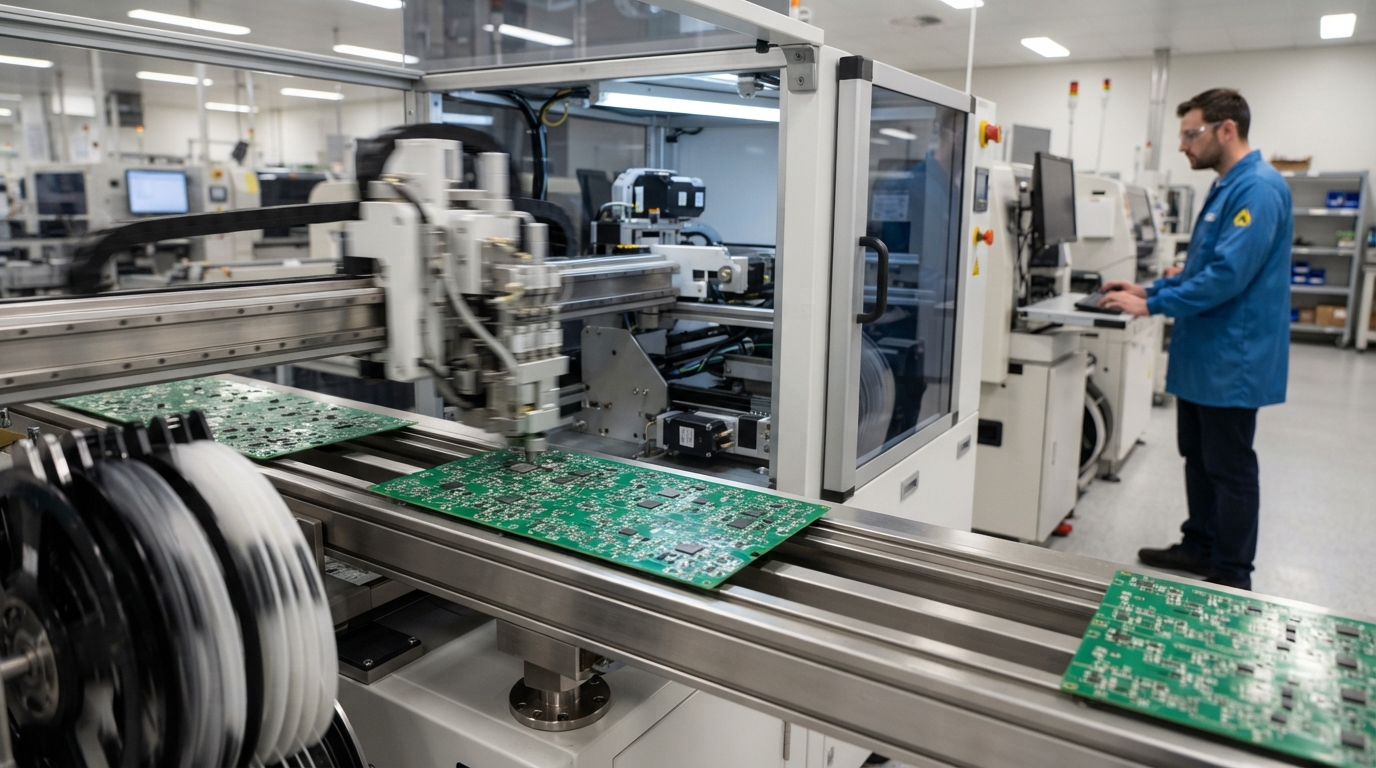
The policy changes delivered immediate volume. Total domestic electronics production expanded from ₹1.90 lakh crore in FY2014–15 to ₹13.11 lakh crore in FY2025–26, according to the Ministry of Electronics and Information Technology (MeitY, 2026). Electronics exports reached $48 billion in FY2025–26, rising from $6.2 billion a decade earlier, as reported by the India Brand Equity Foundation (IBEF, 2026).
Mobile phones drove this growth. Press Information Bureau data shows that 99.2% of all mobile phones sold in India are assembled locally across 300 manufacturing units, compared to only 26% in 2014 (PIB, 2026).
Exports grew alongside local sales. India-assembled iPhone exports reached $23 billion (₹2.03 trillion) in calendar year 2025, accounting for over 75% of all Indian smartphone exports (Counterpoint Research, 2026). Domestic Electronic Manufacturing Services (EMS) firms also expanded. Dixon Technologies grew under the PLI scheme to handle roughly 19% of all mobile phone assembly in India.
Hardware Milestones Across Different Eras
The table below traces the three distinct phases of India's hardware and electronics journey:
| Era | Core Objective | Key Hardware Milestones | Primary Bottleneck | Output / Trade Scale |
|---|---|---|---|---|
| State Lab Era (1950–1980) |
Strategic self-reliance; import substitution | TIFRAC computer (1960); ECIL TDC-12 minicomputer (1971); BEL defense radar | Small domestic market; rigid import permits | Output below ₹1,000 crore; minimal exports |
| Stagnation & IT Pivot (1981–2013) |
Telecommunications rollout; software services | C-DOT RAX telephone exchange (1984); SCL 3-micron chip lines (1984) | 1989 SCL fire; zero-duty imports under WTO ITA-1 | Electronics imports exceeded $30B annually |
| PLI & Silicon Mission (2014–Present) |
High-volume assembly; commercial silicon fabs | PLI smartphone output; Micron Sanand ATMP (2026); Tata Dholera Fab | Low local value addition (15–20%); component imports | ₹13.11 lakh crore output; $48B exports (2026) |
How Is India Building a Silicon and Component Ecosystem?
India is shifting industrial policy from surface-level device assembly to complex component fabrication and semiconductor manufacturing. While assembling mobile phones creates employment, domestic value addition in finished smartphones remains between 15% and 20%. To retain more economic value, state programs fund the domestic production of printed circuit boards, display modules, and commercial silicon chips.
+-------------------------------------------------------------------+
|               Semiconductor Supply Chain Structure                |
|                                                                   |
|   1. Fabless Design:     IIT Madras (Shakti), Mindgrove, Ineda    |
|   2. Wafer Fabrication:  Tata-PSMC Dholera Fab (28nm/40nm/90nm)   |
|   3. ATMP / OSAT:        Micron Sanand, Tata Jagiroad             |
|   4. Deep Components:    Bare PCBs, Camera Modules, ECMS Units    |
|   5. Final Assembly:     EMS Providers (Foxconn, Dixon, Pegatron) |
+-------------------------------------------------------------------+
The India Semiconductor Mission Pipeline
In December 2021, the Union Cabinet approved the ₹76,000-crore ($10 billion) India Semiconductor Mission (ISM). The scheme offers 50% capital subsidies for building commercial wafer fabs, packaging units, and compound semiconductor plants. By early 2026, cumulative approvals under the ISM reached 12 projects across six states, with combined investments exceeding ₹1.64 lakh crore (Prime Minister's Office, 2026).
These investments opened India's first modern commercial silicon facilities:
- Tata Electronics Commercial Wafer Fab (Dholera, Gujarat): Built in partnership with Taiwan's Powerchip Semiconductor Manufacturing Corporation (PSMC), this ₹91,000-crore facility secured approvals to expand capacity to 70,000 wafer starts per month. The fab produces 28nm, 40nm, and 90nm chips for automotive, power, and computing markets, supported by an equipment agreement with ASML (Tata Electronics / ASML, 2026).
- Micron Technology ATMP Facility (Sanand, Gujarat): Micron opened India's first operational semiconductor Assembly, Test, Marking, and Packaging (ATMP) plant in Sanand to package DRAM and NAND flash memory products (India Semiconductor Mission, 2026).
- Tata Electronics OSAT Facility (Jagiroad, Assam): A ₹27,000-crore semiconductor assembly and test unit providing high-volume packaging for global chip designers.
Solving the Domestic Value Addition Challenge
Assembly lines yield thin profit margins when microchips, memory modules, and sensors come from abroad. Surface-mount assembly captures low economic value if the underlying components are imported.
To solve this imbalance, MeitY notified a ₹62,500-crore package containing the Mobile Phone Manufacturing Scheme and the Electronics Component Manufacturing Scheme (ECMS) through 2031 (MeitY / The Times of India, 2026).
The ECMS subsidizes domestic production of bare printed circuit boards (PCBs), multi-layer ceramic capacitors (MLCCs), camera sensors, and cover glass. By manufacturing passive and active components locally, India aims to increase domestic value addition in smartphones from 18% to over 40% by 2030.
+-------------------------------------------------------------------+
|               Domestic Value Addition in Indian Tech              |
|                                                                   |
|   Imported Silicon / Raw Substrates:      ~50% Value              |
|   Imported Camera & Display Sub-modules:  ~30% Value              |
|   Local Mechanicals, Packaging & Labor:   ~20% Value (Current)    |
|                                                                   |
|   Target with ECMS & Domestic Fabs:       ~45% Value (By 2030)    |
+-------------------------------------------------------------------+
Long-Term Hardware Milestones and Export Targets
The history of Indian technology sector is moving from local consumption to global supply integration. Union Minister for Electronics and IT Ashwini Vaishnaw stated that India's strategy focuses on component depth and commercial silicon fabrication, targeting $500 billion in total electronics output by 2030 (PIB, 2025).
Large industrial estates in Sriperumbudur, Dholera, and Noida operate as export-oriented clusters. These modern investments reflect the broader industrial transformation recorded across 25 historic Indian events from 2000 to 2025.
What Lessons Does the History of Indian Technology Sector Offer for Modern Policy?
The history of Indian technology sector is an instructive case study demonstrating that sustainable hardware manufacturing requires coordinated capital subsidies, phased tariff protection, and robust physical infrastructure rather than isolated trade barriers. Early post-independence industrial planning relied on public sector monopolies that lacked commercial scale, global supply chain integration, and adequate private capital investment. When the 1997 WTO Information Technology Agreement removed protective import tariffs, uncompetitive domestic hardware manufacturers collapsed against subsidized East Asian competition. Modern industrial policy, overseen by the Ministry of Electronics and Information Technology (MeitY), applies these historical lessons through the Production Linked Incentive scheme and the India Semiconductor Mission. According to policy analyses by MeitY, contemporary state interventions successfully combine capital expenditure subsidies with domestic component requirements, reliable industrial utility corridors, and indigenous intellectual property development to ensure long-term manufacturing competitiveness.
The Perils of Unprepared Trade Liberalization
The 1997 WTO ITA-1 agreement damaged Indian hardware manufacturing because tariff cuts happened before local factories were competitive. India dismantled protective customs duties while domestic firms still paid high corporate taxes, faced expensive industrial loans, and struggled with daily power outages.
Modern trade policies avoid blanket zero-tariff commitments on intermediate parts. Instead, policymakers use phased tariff schedules. These duties stay active until local component suppliers reach sufficient production scale to compete globally.
+-------------------------------------------------------------------+
|                   Core Lessons from Indian Tech Policy            |
|                                                                   |
|   1. Protect Supply Chains:  Phased tariffs beat sudden cuts.     |
|   2. Fund Capital Upfront:   Semiconductors need cash subsidies.  |
|   3. Build Infrastructure:   Fabs need stable power and water.    |
|   4. Own Chip Architecture:  Fabless IP builds long-term value.   |
+-------------------------------------------------------------------+
Shifting from Assembly to Intellectual Property
Factory assembly jobs remain vulnerable to wage competition from lower-cost nations like Vietnam, Indonesia, and Bangladesh. Long-term leadership requires owning the intellectual property inside the devices.
India has a strong foundation in fabless semiconductor design. Over 20% of the world's semiconductor design engineers work in Indian design centers in Bengaluru, Hyderabad, and Noida.
Public research initiatives now focus on open-source chip architectures. The Digital India RISC-V (DIR-V) program, developed by IIT Madras (the Shakti processor) and C-DAC (the Vega processor), creates commercial microprocessors for automobiles, consumer electronics, and strategic defense systems.
Infrastructure Demands for Advanced Fabrication
Semiconductor foundries require complex municipal infrastructure:
- Uninterrupted Power: A commercial wafer fab consumes 30 to 50 megawatts of electricity without millisecond voltage fluctuations.
- Ultra-Pure Water: Silicon wafer processing requires millions of liters of treated, ultra-pure water daily.
- Chemical Logistics: Foundries require specialized supply networks for hazardous gases, high-purity acids, and raw silicon substrates.
State governments in Gujarat, Assam, and Tamil Nadu now build dedicated industrial corridors with integrated water recycling plants and dedicated electrical substations. These industrial investments ensure modern fabrication facilities avoid the logistical bottlenecks that stalled early public sector projects.
Frequently Asked Questions
Q: What was India's first indigenous digital computer?
The TIFR Automatic Computer (TIFRAC), built at the Tata Institute of Fundamental Research in Mumbai, was India's first indigenous computer. It began pilot operation in 1956 and reached full deployment in 1960. TIFRAC used thousands of vacuum tubes and custom core memory before being replaced by imported mainframes in 1965.
Q: Why did the 1989 Mohali SCL fire derail Indian chipmaking?
The February 1989 fire destroyed the cleanrooms and production machinery of Semiconductor Complex Limited in Mohali, which was fabricating commercial 3-micron silicon wafers. Rebuilding the state-owned plant took eight years. By the time it reopened in 1997, international competitors had advanced to sub-micron lithography, leaving India decades behind in microelectronics manufacturing.
Q: What is the India Semiconductor Mission?
The India Semiconductor Mission (ISM) is a ₹76,000-crore central government program launched in 2021 to fund domestic silicon foundries, display manufacturing, and chip packaging plants. The program provides up to 50% capital subsidies for approved projects, funding major facilities built by Tata Electronics, Micron Technology, and international technology partners.
Q: How much value addition happens during smartphone assembly in India?
Domestic value addition in Indian smartphone manufacturing currently averages between 15% and 20%. Most high-value components, including microprocessors, memory chips, and camera sensors, are imported from East Asia. New subsidy schemes like the ECMS target 40% local value addition by subsidizing printed circuit board fabrication and discrete component assembly within India.
Explore the hardware specifications of the open-source Shakti and Vega processor projects on the Digital India RISC-V portal today to see how Indian engineers are developing indigenous silicon designs.
Related Reading
- Milestones in Indian Women's History: A Chronological Guide
- 1,000 Years of Indian Medical History: A Chronological Guide
- Economic Milestones in Indian History: From 1947 to Present
- What Are the Major Events in Indian History? (FAQ Archive)
Sources
- The first big byte — The Hindu, 2021. Supports: Development of the TIFRAC computer in 1960 and the commercial launch of the TDC-12 minicomputer by ECIL in 1971.
- 1966-1975: Of Committees & Bodies — Dataquest, 2006. Supports: The publication of the 1966 Bhabha Electronics Committee Report leading to the creation of the Department of Electronics in 1970 and the Electronics Commission in 1971.
- Sam Pitroda: The big dreamer — Mint, 2016. Supports: The founding of the Centre for Development of Telematics (C-DOT) in 1984 under Sam Pitroda and its development of the Rural Automatic Exchange (RAX).
- When India lost its chips — The Economic Times, 2022. Supports: The 1989 cleanroom fire at Semiconductor Complex Limited (SCL) in Mohali that halted India's early semiconductor manufacturing operations.
- Process of Trade Liberalisation under the Information Technology Agreement (ITA): The Indian Experience — Centre for WTO Studies, 2012. Supports: India joining the WTO Information Technology Agreement (ITA-1) and eliminating import tariffs across 217 hardware tariff lines.
- Production Linked Incentive Schemes Strengthen India's Electronics Manufacturing Ecosystem — Press Information Bureau, Government of India, 2026. Supports: The expansion of domestic mobile phone production from 26% in 2014 to 99.2% of phones used in India.