Indian Golf History: Milestones at the Indian Open
TL;DR
The Indian Open is the national open golf championship of India, established in 1964 by Australian golfer Peter Thomson. Originally a domestic event, it grew into a premier Asian Tour and DP World Tour co-sanctioned tournament. It highlights major sporting milestones, from Ali Sher’s historic 1991 home victory to Alex Fitzpatrick’s recent maiden triumph.
Key Takeaways
- Peter Thomson founded the tournament in 1964 and secured three victories himself.
- Ali Sher became the first Indian professional to win the title in 1991.
- Jyoti Randhawa holds the record for the most victories by an Indian player.
- Delhi Golf Club hosted the majority of the tournaments before DLF Golf Club took over.
- The event now serves as a crucial pathway to the DP World Tour.
Most people assume golf in India is a recent corporate import, popularized only in the last two decades. In reality, India's golfing heritage is among the oldest in the world outside Great Britain, and the Indian Open has been a fixture of professional sports since 1964. The tournament has transformed from a modest regional gathering into a globally recognized event with millions of dollars in prize money. Following Alex Fitzpatrick's maiden victory, looking back at Indian Open golf history reveals a fascinating timeline of athletic achievement. We maintain a broader timeline of India at the Olympics: A Timeline of Historic Sporting Milestones, but the story of this specific tournament deserves its own chronological index.
When did the Indian Open begin and how has it evolved?
The Indian Open began in 1964 as a modest national championship driven by Australian golfer Peter Thomson. It evolved through the decades, joining the Asian Golf Circuit in 1970, becoming an official Asian Tour event in 2000, and finally securing European Tour (now DP World Tour) co-sanctioning status in 2015.
The Inaugural Tournament in 1964
Peter Thomson visited India in the early 1960s and recognized a deep, untapped potential for professional golf. He convinced local authorities and sponsors to back a national open. The first tournament took place in 1964 at the Delhi Golf Club. Thomson did not just organize the event; he won it. The prize purse was a modest sum, yet it attracted top regional talent.
The early years were dominated by foreign players. Australians, Americans, and Japanese golfers frequently took home the trophy. The tournament established a standard for competitive play in South Asia. Local professionals had a chance to test their skills against international veterans. This exposure laid the groundwork for future generations of Indian golfers to develop their games.
Transition to the Asian Tour
The tournament joined the Asian Golf Circuit in 1970. This move integrated India into the broader regional golf ecosystem. Players traveling to Japan, Thailand, and Singapore added New Delhi to their schedules. The competition grew stiffer.
In 2000, the event became fully sanctioned by the modern Asian Tour. This brought standardized rules, better television coverage, and higher prize money. The evolution of sports broadcasting in India helped bring the tournament to living rooms across the country. Fans could watch local heroes compete live. The tournament's prestige grew, attracting sponsors willing to invest in the sport's infrastructure.
European Tour Co-Sanctioning
The most significant structural shift in Indian Open golf history occurred in 2015. The European Tour, now known as the DP World Tour, stepped in to co-sanction the event alongside the Asian Tour. This elevated the tournament to a new tier of global importance.
Hero MotoCorp took over as the title sponsor. The prize purse jumped past the $1.5 million mark, eventually reaching $2 million. Co-sanctioning meant the tournament offered heavily weighted points for the Official World Golf Ranking (OWGR) database. European players began treating the Indian Open as a mandatory stop. The field became deeper, the courses became tougher, and the global audience expanded.
Who are the most successful champions in Indian Open golf history?
Peter Thomson and Jyoti Randhawa share the record for the most victories in Indian Open golf history, with three titles each. Thomson dominated the early years of the tournament, while Randhawa ruled the 2000s. Recent years have seen international rising stars like Alex Fitzpatrick claim their maiden victories on this historic stage.
Peter Thomson's Early Dominance
Peter Thomson is a central figure in this story. He won the Open Championship (British Open) five times, but he held a special affection for India. After winning the inaugural Indian Open in 1964, he returned to win again in 1966.
His final victory came a decade later in 1976. Thomson's presence lent immediate credibility to the tournament. He showed local players what world-class ball-striking looked like. He also advocated for better course maintenance and stronger junior programs. His legacy is permanently tied to the foundation of professional golf in the country.
Jyoti Randhawa and the Home Turf Advantage
For decades, foreign players took the trophy home. Jyoti Randhawa helped change that narrative permanently. He won his first Indian Open in 2000. This victory marked a power shift in Asian golf.
Randhawa won again in 2006. He secured his record-tying third victory in 2007. His ability to navigate the tight fairways of the Delhi Golf Club was unmatched. He played with a calm demeanor that suited the high-pressure environment of a home championship. Randhawa's three victories proved that Indian players could consistently beat international fields on their home soil.
Modern Era Winners and Alex Fitzpatrick
The modern era of the tournament features a mix of local dominance and international breakthroughs. S.S.P. Chawrasia carved out his own legacy with multiple wins. However, the tournament also serves as a proving ground for young global talent.
Alex Fitzpatrick's recent maiden victory highlights this trend. Younger brother to US Open champion Matt Fitzpatrick, Alex arrived in India looking for a signature win. He navigated a grueling course setup to claim the title. His victory adds a new chapter to Indian Open golf history, showing that the tournament remains a launchpad for future global stars. The DP World Tour archives frequently list the Indian Open as the site where future Ryder Cup players first test their mettle.
Which golf courses have hosted the most historic moments?
The Delhi Golf Club stands as the historic spiritual home of the tournament, hosting the event 30 times. Recently, the DLF Golf and Country Club in Gurugram became the primary venue, offering a notoriously difficult modern layout. The Royal Calcutta Golf Club also hosted several early editions.
Delhi Golf Club: The Traditional Home
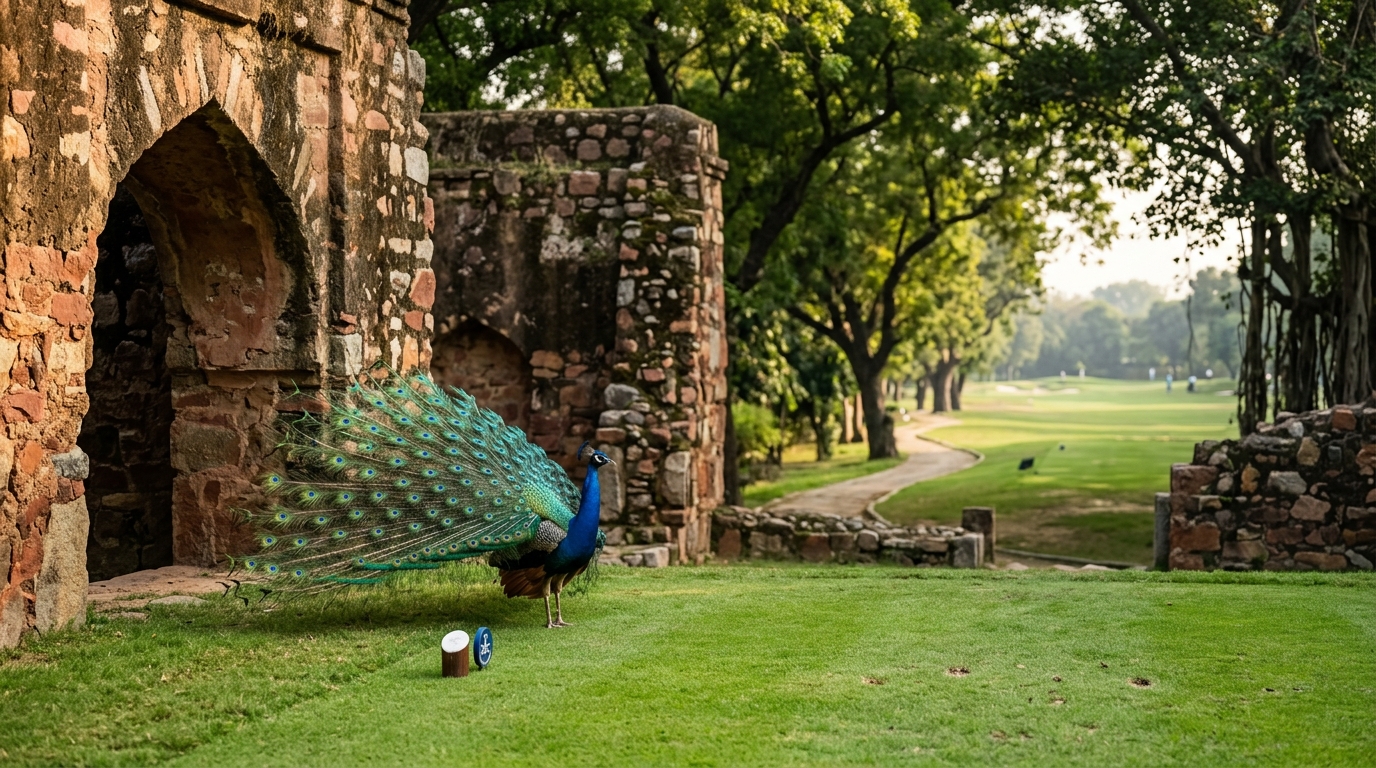
You cannot discuss this tournament without talking about the Delhi Golf Club (DGC). Built among the tombs and ruins of the Lodi dynasty, the course is a visual marvel. It is also incredibly unforgiving. DGC hosted 30 editions of the Indian Open.
The fairways are notoriously narrow. Dense, thorny bushes line almost every hole. Players who miss the fairway often have to pitch out sideways. Distance matters less here than precision. DGC rewards accuracy off the tee and sharp short-game skills. For decades, Indian players who grew up playing on similar tight courses held a distinct advantage over long-hitting foreigners.
DLF Golf and Country Club: The Modern Challenge
In 2017, the tournament moved to the Gary Player-designed course at the DLF Golf and Country Club in Gurugram. This marked a stark departure from tradition. DLF is a modern, stadium-style course. It features dramatic elevation changes, deep bunkers, and massive water hazards.
The course is widely considered one of the hardest on the DP World Tour. Players frequently shoot over par. The dramatic 18th hole, featuring a peninsula green, has ruined many final-round leads. DLF tests every aspect of a player's game. It requires both length off the tee and precise iron play into heavily undulated greens.
Royal Calcutta Golf Club's Legacy
Before DGC monopolized hosting duties, the Royal Calcutta Golf Club (RCGC) shared the spotlight. Founded in 1829, RCGC is the oldest golf club in the world outside the British Isles. It hosted the second edition of the Indian Open in 1965.
RCGC provided a flatter, more traditional parkland test. The course features large water tanks and strategic bunkering. While the tournament rarely visits Kolkata today, RCGC's early involvement was crucial. It connected the modern professional era to India's deep colonial golfing roots.
| Venue Name | City | Notable Features | Hosting Era |
|---|---|---|---|
| Delhi Golf Club | New Delhi | Narrow fairways, historic tombs, dense bushes | 1964–2016 (Majority) |
| DLF Golf & Country Club | Gurugram | Gary Player design, severe undulations, water | 2017–Present |
| Royal Calcutta Golf Club | Kolkata | Parkland style, historic pedigree, water tanks | Early years (1960s-1990s) |
| Karnataka Golf Association | Bengaluru | Wind exposure, modern layout | 2012 |
How did Indian players establish dominance in their home tournament?
Indian players struggled to win their national open for the first 26 years. Ali Sher broke this barrier in 1991, sparking a surge of local confidence. By the 2000s and 2010s, players like Arjun Atwal, Anirban Lahiri, and S.S.P. Chawrasia established an era of near-total domestic dominance.
Ali Sher's Breakthrough in 1991
For 26 years, no Indian professional could win the national open. Amateurs had come close, but the professionals fell short. Ali Sher changed everything in 1991. He was a former caddie at the Delhi Golf Club who learned the game using borrowed clubs.
Sher's victory was a cultural milestone. He beat a strong international field on his home course. The win proved that local talent, even without elite financial backing, could compete at the highest level. Sher won the tournament again in 1993. His success opened the floodgates. He showed an entire generation of young Indian golfers that winning the national open was possible.
The Golden Generation of the 2000s
Following Sher's breakthrough, a "Golden Generation" of Indian golfers emerged. Feroz Ali won in 1998. Arjun Atwal claimed the title in 1999. Then came the era of Jyoti Randhawa, who won in 2000, 2006, and 2007.
Vijay Kumar added his name to the trophy in 2002. C. Muniyappa, another former caddie, won a dramatic playoff in 2009. During this decade, foreign winners became the exception rather than the rule. Indian players understood the local grass types. They knew how to read the grain on the greens. They embraced the pressure of the home crowds rather than shrinking from it.
Chawrasia's Back-to-Back Victories
S.S.P. Chawrasia cemented the era of Indian dominance with a remarkable run in the 2010s. Chawrasia grew up in Kolkata, learning the game at RCGC. He brought a brilliant short game and immense mental toughness to the national open.
He finished as a runner-up four times before finally breaking through. Chawrasia won the event in 2016 at the Delhi Golf Club. He then achieved something even more impressive. He successfully defended his title in 2017. The 2017 victory happened at the DLF Golf and Country Club. Winning back-to-back titles on two completely different styles of golf courses proved his versatility. His wins remain a high point in recent Indian Open golf history.
What role does the Indian Open play in global golf today?
Today, the Indian Open is a pivotal stop on the DP World Tour, offering substantial prize money and crucial ranking points. It acts as a launchpad for Asian players seeking global recognition and provides international professionals a rigorous test of skill in unique subcontinent conditions.
Pathway to the DP World Tour
The tournament offers a direct pathway to Europe. The winner receives a two-year exemption on the DP World Tour. For a young Asian or Indian player, this is life-changing. It guarantees starts in major European events and opens doors to co-sanctioned PGA Tour events.
Anirban Lahiri used his 2015 Indian Open victory to vault up the world rankings. He eventually secured his PGA Tour card and competed in the Presidents Cup. The tournament is no longer just a local championship. It is a critical stepping stone in the global golf ecosystem. Players plan their entire seasons around peaking for this event.
Economic and Sponsorship Impact
The financial footprint of the tournament has grown exponentially. When looking at Economic Milestones in Indian History: From 1947 to Present, the commercialization of sports plays a notable role. Hero MotoCorp's long-term sponsorship provides stability.
The $2 million prize purse attracts strong fields. This economic engine supports hundreds of local jobs, from caddies and course superintendents to hospitality workers and event managers. The tournament also drives golf tourism. International visitors travel to India to play the courses they see on television. The event serves as a high-profile advertisement for India's growing sports infrastructure.
Future Prospects for Indian Golf History
The future of the tournament looks secure. The DP World Tour continues to prioritize its Asian swing. Young Indian players like Shubhankar Sharma and Gaganjeet Bhullar are competing globally, raising the profile of Indian golf.
The challenge now is maintaining the tournament's unique identity while meeting modern professional standards. DLF Golf and Country Club provides the necessary length and difficulty to test modern equipment. However, fans still long for the historic charm of the Delhi Golf Club. Balancing these two elements will define the next decade of Indian Open golf history. The event will continue to test the world's best while giving local talent a stage to shine.
Related Reading
- Milestones in Indian Women's History: A Chronological Guide
- 1,000 Years of Indian Medical History: A Chronological Guide
- Economic Milestones in Indian History: From 1947 to Present
- What Are the Major Events in Indian History? (FAQ Archive)
FAQ
Q: When was the first Indian Open golf tournament held? The first tournament took place in 1964. It was held at the Delhi Golf Club and was won by Australian golfer Peter Thomson.
Q: Who was the first Indian player to win the Indian Open? Ali Sher became the first Indian professional to win the title in 1991. His victory at the Delhi Golf Club was a turning point for the sport in the country.
Q: Which player has won the Indian Open the most times? Peter Thomson and Jyoti Randhawa share the record for the most victories. Both players have won the tournament three times.
Q: Where is the Indian Open currently played? In recent years, the tournament has been hosted at the DLF Golf and Country Club in Gurugram. It features a highly challenging Gary Player-designed course.
Q: Is the Indian Open part of any major golf tour? Yes. The tournament is currently co-sanctioned by the DP World Tour (formerly the European Tour) and the Asian Tour.
Check the tournament schedule for the upcoming season and identify which local Indian players are in the field. Following their progress round-by-round offers the best way to understand the pressure and prestige associated with this historic national championship.