Indian Football History: Historic Wins at the Asian Cup
Bottom Line
India's Asian Cup journey peaked in 1964 with a runners-up finish, followed by decades of absence. Recent campaigns in 2011, 2019, and 2023 mark a modern revival. Understanding Indian football Asian Cup history reveals a cycle of early dominance, structural decline, and a contemporary push to reclaim continental relevance.
Key Takeaways
- The 1964 runners-up finish stands as India's highest achievement in the Asian Cup.
- A 27-year qualification drought highlighted systemic issues in domestic football infrastructure.
- Sunil Chhetri’s leadership drove India’s return to consecutive continental tournaments.
- The 4-1 victory over Thailand in 2019 marked India’s first modern tournament win.
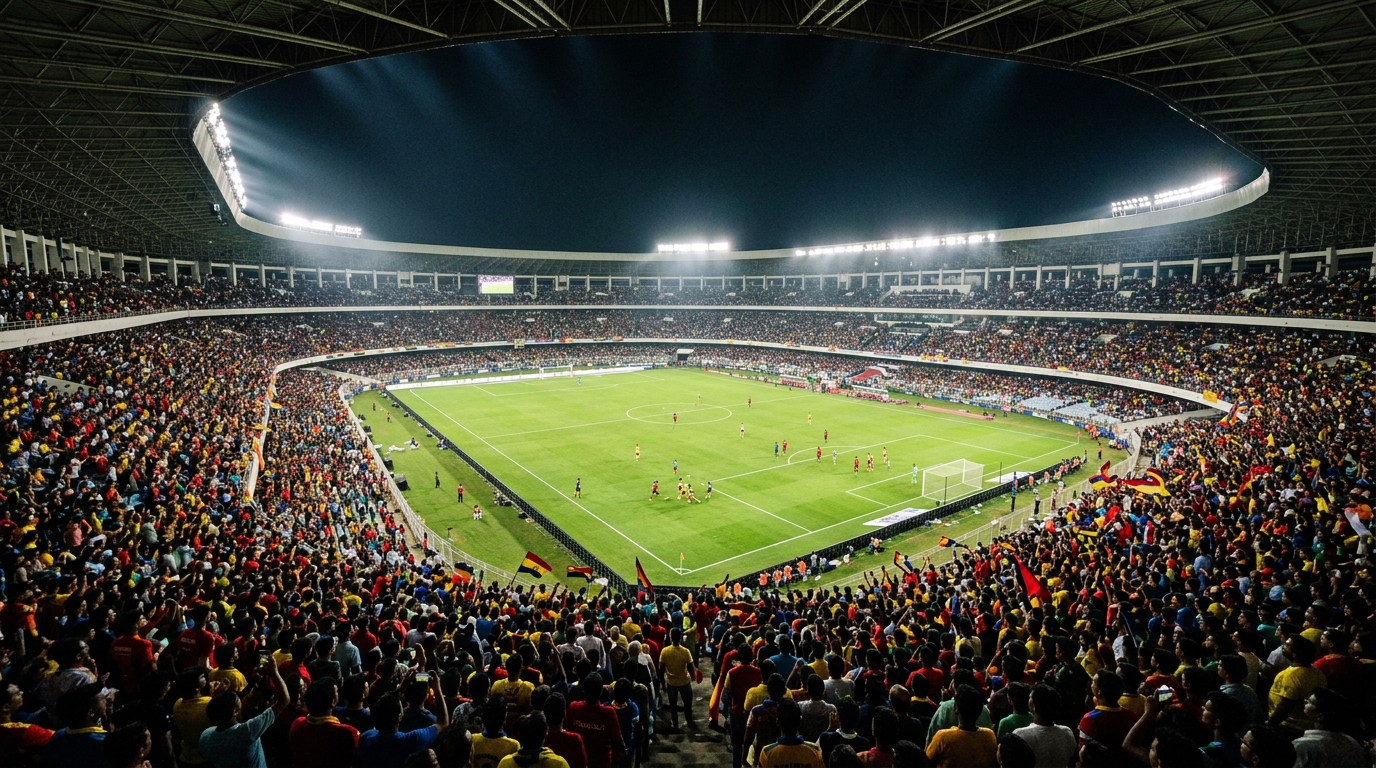
Eighty thousand fans packed into Kolkata’s Salt Lake Stadium create a wall of sound that shakes the concrete. When the Indian national team secures a crucial Asian Cup qualifying victory under the floodlights, the roar carries decades of pent-up continental ambition. The pitch tells a story of sweat, tactical discipline, and a desperate hunger to belong among Asia's elite. Tracing Indian football Asian Cup history requires looking past the modern spectacle. You have to look back to a time when Indian players dominated the continent. The trajectory of the national team mirrors broader shifts in the country's sporting infrastructure. Just as we track India at the Olympics: A Timeline of Historic Sporting Milestones, the Asian Cup timeline offers a clear window into the highs and lows of Indian athletics.

The 1964 Tournament Represents the Pinnacle of Indian Success
The 1964 AFC Asian Cup in Israel remains India's most successful continental campaign. Playing in a round-robin format, the Indian team secured victories against South Korea and Hong Kong to finish second overall. This achievement cemented the status of a golden generation of players.
Securing the Runners-Up Spot
The tournament format in 1964 looked very different from today. Only four teams participated in the final stage. India opened their campaign on May 27, 1964, against South Korea. The team secured a decisive 2-0 victory. Appalaraju and Inder Singh found the back of the net. This win set a dominant tone.

Two days later, India faced the host nation, Israel. The hosts proved too strong, defeating India 2-0. However, the Indian squad bounced back in their final match. They beat Hong Kong 3-1 on June 2. Inder Singh, Samajapati, and Chuni Goswami scored the crucial goals. Goswami, an iconic entity in Indian sports history, captained the side with exceptional vision. The team finished with four points, earning the silver medal.
The Golden Generation of Players
This 1964 squad represented the tail end of what many consider the golden era of Indian football. Players like Peter Thangaraj in goal and Jarnail Singh in defense struck fear into opposing attackers. These men played purely for passion. Corporate sponsorships did not exist. Football boots were basic. Yet, their technical ability rivaled the best in Asia.
English manager Harry Wright coached the team during this tournament. He implemented a structured, disciplined style of play. Wright maximized the natural flair of his forwards while ensuring defensive solidity. The players executed his plans perfectly. They proved that Indian football could stand toe-to-toe with international competition.
Geopolitical Factors in 1964
You cannot discuss the 1964 tournament without noting the geopolitical context. Several prominent Asian nations withdrew from the qualification process due to political tensions regarding the host nation, Israel.
This resulted in a smaller final tournament. Critics sometimes use this fact to diminish India's achievement. However, the teams that did compete were formidable. South Korea had won the previous two Asian Cups. Beating them 2-0 was a massive statement. The medals earned by the Indian team were hard-fought and entirely deserved.
A 27-Year Absence Altered Indian Football Asian Cup History
Following a group stage exit in 1984, India failed to qualify for the Asian Cup for 27 years. A lack of professional league structures, poor grassroots development, and inadequate funding caused the national team to fall behind rapidly professionalizing Asian rivals like Japan and South Korea.
The 1984 Campaign in Singapore
India returned to the Asian Cup in December 1984. The tournament took place in Singapore. Interestingly, while the national team competed abroad, the country faced a massive domestic crisis. This was the exact same month we document in December 1984: A Historical Timeline of the Bhopal Gas Tragedy. The contrast between sporting ambition and national tragedy was stark.
On the pitch, India struggled. The tournament had expanded to ten teams. India drew 0-0 with Iran in their opening match. This gave fans false hope. Subsequent matches brought harsh reality checks. India lost 2-0 to China, 2-0 to the UAE, and 2-0 to host nation Singapore. The team finished at the bottom of their group. They failed to score a single goal in the tournament.
The Structural Decline of the Domestic Game
The failure in 1984 signaled a deeper rot. While the Indian economy slowly modernized, the footballing structure remained stagnant. You can trace the nation's financial shifts in Economic Milestones in Indian History: From 1947 to Present. Unfortunately, football did not share in this economic progress.
The domestic league operated on an amateur basis. State associations lacked funding. Clubs focused entirely on short-term local tournaments like the Calcutta Football League or the Rovers Cup. Long-term player development simply did not happen. Nutrition, sports science, and tactical coaching fell decades behind global standards.
Falling Behind the Asian Curve
While India stood still, the rest of Asia sprinted forward. Japan launched the fully professional J-League. South Korea established the K-League. Middle Eastern nations poured oil wealth into football academies.
The gap widened rapidly. India repeatedly failed to qualify for the Asian Cup throughout the 1990s and 2000s. The national team often suffered heavy defeats in the qualifying rounds. The 1964 glory days felt like ancient history. Indian football Asian Cup history became a story of watching from the sidelines.
The 2011 Qualification Sparked a Systemic Revival
Winning the 2008 AFC Challenge Cup granted India automatic qualification to the 2011 Asian Cup in Qatar. This return ended a nearly three-decade drought. Facing heavyweights like Australia, South Korea, and Bahrain exposed the massive gap in quality but provided crucial high-level tournament experience.
Bob Houghton and the Challenge Cup Route
The Asian Football Confederation (AFC) created the Challenge Cup to help lower-ranked nations. The winner received a direct ticket to the Asian Cup. India hosted the 2008 edition in Hyderabad and New Delhi. English manager Bob Houghton led the Indian side.
Houghton instilled a rigid 4-4-2 system. He demanded physical fitness and direct play. It worked. India defeated Tajikistan 4-1 in the final at the Ambedkar Stadium. Sunil Chhetri scored a brilliant hat-trick. This victory secured India's spot in the 2011 Asian Cup. The 27-year wait was finally over.
Lessons Learned in Doha
The 2011 tournament took place in Qatar. India drew a brutal group. They faced Australia, South Korea, and Bahrain. The gulf in class was immediately apparent.
Australia defeated India 4-0 in the opener. Bahrain won the second match 5-2. South Korea closed the group stage with a 4-1 victory over India. Despite the heavy losses, the team showed immense fighting spirit. Goalkeeper Subrata Paul earned the nickname "Spiderman" for his spectacular saves against South Korea. Sunil Chhetri and Gouramangi Singh scored memorable goals. The tournament proved that Indian players had the heart for the big stage, even if they lacked the tactical refinement.
The Catalyst for Domestic Reform
The 2011 campaign served as a massive wake-up call. The All India Football Federation (AIFF) realized that passion alone could not win football matches.
The heavy defeats forced administrators to rethink domestic football. This realization eventually paved the way for the creation of the Indian Super League (ISL). The goal was to expose Indian players to better coaching, longer seasons, and higher-quality foreign teammates. The Doha experience was painful, but it was necessary for growth.
Sunil Chhetri Redefined Modern Indian Football Asian Cup History
Sunil Chhetri scored four goals across the 2011 and 2019 Asian Cup tournaments, becoming the face of India's continental ambitions. His leadership guided the team to a historic 4-1 victory over Thailand in 2019, proving India could compete and win matches on the modern Asian stage.
The Historic Victory Over Thailand
India returned to the Asian Cup in 2019. The tournament was held in the United Arab Emirates. English coach Stephen Constantine managed the squad. On January 6, 2019, India faced Thailand in Abu Dhabi.
Nobody expected a blowout. Thailand had a strong squad. Yet, India played with ruthless efficiency. Sunil Chhetri scored twice. Anirudh Thapa and Jeje Lalpekhlua added two more. India won 4-1. This was India's first victory in an Asian Cup match in 55 years. The result sent shockwaves through the tournament. It remains the absolute highlight of modern Indian football Asian Cup history.
Heartbreak Against Bahrain
The joy of the Thailand win was short-lived. India lost their second match 2-0 to the host nation, UAE, despite hitting the woodwork twice and dominating early stretches.
Everything came down to the final group match against Bahrain. India only needed a draw to advance to the knockout stages for the first time in modern history. The team defended heroically for 90 minutes. Then, disaster struck. In the 91st minute, India conceded a penalty. Jamal Rashid converted it for Bahrain. India lost 1-0 and was eliminated. The heartbreak was immense. Players collapsed on the pitch in tears.
Establishing a Culture of Qualification
Despite the bitter end to 2019, the narrative had shifted. Qualifying for the Asian Cup was no longer a once-in-a-generation miracle. It became the baseline expectation.
India successfully qualified for the 2023 Asian Cup (played in early 2024 in Qatar). Manager Igor Stimac guided the team through a flawless qualifying campaign in Kolkata. While the 2023 tournament itself proved difficult—with losses to Australia, Uzbekistan, and Syria—the fact that India achieved back-to-back qualifications for the first time showed structural progress. Just as we analyze cultural shifts in 10 Most Searched Dates in Indian History and Why They Matter, the date of that Thailand victory marks a permanent shift in footballing expectations.
Infrastructure Upgrades Support Future Continental Ambitions
Sustained Asian Cup success now relies on domestic football infrastructure rather than isolated golden generations. The growth of the Indian Super League and improved sports science facilities have raised the baseline physical and tactical standards required to compete at the highest levels of Asian football.
The Role of the Indian Super League
The Indian Super League launched in 2014. It completely changed the domestic calendar. Players now play on better pitches under floodlights. They train with Spanish, English, and Brazilian coaches.
This exposure translates directly to the national team. Players are tactically smarter. They understand complex pressing triggers and defensive shapes. The ISL has created a larger pool of talent. The national coach no longer has to rely on a core group of just 15 players. Competition for national team spots is fierce.
Sports Science and Physical Conditioning
Look at footage from the 1984 Asian Cup. Then look at the 2023 squad. The physical difference is staggering.
Modern Indian players are elite athletes. Clubs employ dedicated nutritionists, strength and conditioning coaches, and sports psychologists. GPS trackers monitor every sprint in training. This data-driven approach allows India to compete physically with powerhouses like Australia and Iran. They no longer lose matches simply because they run out of breath in the 70th minute.
Comparing Eras in the Asian Cup
| Tournament Year | Host Nation | India's Result | Matches Played | Goals Scored |
|---|---|---|---|---|
| 1964 | Israel | Runners-Up | 3 | 5 |
| 1984 | Singapore | Group Stage | 4 | 0 |
| 2011 | Qatar | Group Stage | 3 | 3 |
| 2019 | UAE | Group Stage | 3 | 4 |
| 2023 | Qatar | Group Stage | 3 | 0 |
This table illustrates the long gaps and the modern consistency. The focus now is on turning group-stage appearances into knockout-round runs. The infrastructure is finally catching up to the ambition.
Related Reading
- Milestones in Indian Women's History: A Chronological Guide
- 1,000 Years of Indian Medical History: A Chronological Guide
- Economic Milestones in Indian History: From 1947 to Present
- What Are the Major Events in Indian History? (FAQ Archive)
FAQ
Q: When did India achieve its best Asian Cup result? India secured its best result in 1964. The team finished as runners-up in the tournament hosted by Israel.
Q: Who is India's top scorer in Asian Cup history? Sunil Chhetri holds this record. He scored four goals across the 2011 and 2019 tournaments.
Q: How many times has India qualified for the Asian Cup? India has qualified for the final tournament five times. These appearances occurred in 1964, 1984, 2011, 2019, and 2023.
Q: How does India qualify for the Asian Cup today? Qualification involves a multi-round group stage process managed by the AFC. Teams play home and away matches against regional opponents to secure points and advance.
Further reading
- Barefoot to Boots by Novy Kapadia: An essential book detailing the entire history of Indian football, including deep dives into early Asian Cup squads.
- AIFF Official Archives: The governing body's website provides raw match data and historical rosters for past Asian Cup qualifiers.
- India at the Olympics: A Timeline of Historic Sporting Milestones: Read this to understand how India's football journey compares to its achievements in other global sporting arenas.