Indian Diaspora in Global Athletics: A Historical Timeline
What Is the History of the Indian Sports Diaspora?
Indian sports pioneers history is the century-long record of athletes of Indian origin competing across international Olympic disciplines and professional leagues since 1900. According to historical records from the International Olympic Committee and international sports federations, diaspora competitors have secured Olympic medals, won major golf championships, and gained roster spots across European and North American leagues.
From colonial-era track medalists and Caribbean cricket pioneers to modern Grand Slam winners and North American professionals, the Indian diaspora has shaped international athletic competition. This chronological guide tracks key competitors, national policy shifts, and representation metrics across world leagues over the past century.
Key Takeaways
- Over 35 million diaspora members across 130 countries drive global athletic representation.
- Early pioneers established presence through colonial track, cycling, and indentured cricket history.
- Modern stars hold Olympic medals and top spots in North American leagues.
- English football representation remains low at 0.25 percent despite community growth.
- Indian citizenship laws currently restrict dual-national athletes from representing India internationally.
In June 2024, software engineer Saurabh Netravalkar stood on a cricket pitch in Dallas, Texas. He held a cricket ball, ready to bowl a deciding Super Over against Pakistan during the ICC Men's T20 World Cup. Between daily coding duties and elite match preparation, Netravalkar represented a growing movement of global competitors. His performance spotlighted how Indian sports pioneers history connects cross-border migration with elite athletic performance.
Over 35 million people of Indian origin now live across 130 countries, according to the Ministry of External Affairs in 2024. This vast population has produced champions in track and field, tennis, cycling, gymnastics, and professional team sports. Sports historian Boria Majumdar observed in 2024 that athletics evolved from a tool of colonial assimilation into a primary vehicle for cultural soft power. Understanding these historical shifts shows how diaspora athletes overcame systemic barriers to succeed on the world stage.
How Did Early Diaspora Athletes Shape Global Competition?
Early diaspora athletes established a competitive presence at the turn of the twentieth century. Colonial trade routes, university exchanges, and indentured labor systems placed Indian competitors in Europe, Africa, and the Caribbean. These athletes broke racial barriers and proved their ability against established international competitors across several sports.
What Were the Colonial Era and Early Olympic Milestones (1900–1940s)?
The colonial era of Indian sports pioneers history is the foundational period between 1900 and the 1940s when South Asian competitors first secured Olympic podium finishes and excelled in international leagues. According to the International Olympic Committee in 2024, Norman Pritchard established this milestone at the 1900 Paris Games by winning silver medals in the 200-meter dash and 200-meter hurdles.
Pritchard earned the first individual Olympic medals for any Asian nation before moving to Britain and the United States, where Pritchard transitioned from track sports to Broadway acting.
During the late Victorian era, athletes of Indian heritage made significant technical contributions to English county cricket. K.S. Ranjitsinhji played for Sussex and the English national cricket team, developing the leg glance to revolutionize batting against fast bowling. His nephew, K.S. Duleepsinhji, continued this tradition during the 1920s and 1930s by scoring heavily for England. These early pioneers demonstrated that South Asian athletes could excel at the highest levels of international sport. For context on early athletic records, explore track and field records from this period.
Colonial teams also showcased Indian athletic dominance through international field hockey tours. The Indian field hockey squad secured six consecutive Olympic gold medals starting at the 1928 Amsterdam Games, as detailed in our timeline of historic Olympic milestones. These tours inspired diaspora communities in East Africa and Southeast Asia to build local sporting clubs. Migrant workers in Kenya, Uganda, and Malaysia established regional leagues that preserved competitive traditions.
Indentured Migration and the Rise of Caribbean and African Cricket
Indentured labor systems between 1838 and 1917 moved over a million Indians to sugar colonies in the Caribbean, South Africa, and Fiji. In the West Indies, descendants of these laborers turned to cricket to claim civic space and push back against discrimination. Sonny Ramadhin emerged from Trinidad in 1950 as a spin bowler. Alongside Alf Valentine, Ramadhin helped the West Indies secure their historic first Test series victory on English soil.
Later generations built on Ramadhin's success. Alvin Kallicharran became a pillar of the West Indian middle order during the 1970s, facing hostile fast bowling without modern helmets. Rohan Kanhai produced attacking innings that influenced modern stroke play. Decades later, Shivnarine Chanderpaul established himself as one of the most durable batsmen in Test history, scoring over 11,000 runs with an unorthodox batting stance.
In South Africa, apartheid laws segregated sports for decades, suppressing talented Indian-origin athletes. Despite these restrictions, cricketers like Baboo Ebrahim played top-level matches in non-racial boards. Following the fall of apartheid, Hashim Amla broke through to become South Africa's first player of Indian descent. Amla scored the country's first individual Test triple century against England in 2012, setting standard benchmarks for batting concentration.
+-------------------+--------------------+------------------------+---------------------------------------+
| Athlete           | Era / Active Years | Region / Team          | Major Milestone                       |
+-------------------+--------------------+------------------------+---------------------------------------+
| Norman Pritchard  | 1900               | British India / Global | First Asian individual Olympic medals |
| Sonny Ramadhin    | 1950–1961          | West Indies            | First major diaspora cricket star     |
| Alexi Grewal      | 1984               | United States          | Olympic road cycling gold medalist    |
| Vijay Singh       | 1982–2020          | Fiji / PGA Tour        | Three-time major winner, World No. 1  |
| Mohini Bhardwaj   | 2004               | United States          | Olympic gymnastics team silver        |
| Saurabh Netravalkar| 2019–Present      | United States          | Super 8 qualification at T20 World Cup|
+-------------------+--------------------+------------------------+---------------------------------------+
How Did the Post-War Era Establish Indian Sports Pioneers History Across Western Leagues?
Post-war diaspora sports history is the period of athletic expansion following World War II when second-generation Indian migrants integrated into elite North American and European professional leagues. According to international sports federations and Olympic records, diaspora athletes achieved historic breakthroughs across Olympic road cycling, Major Championship golf, NBA basketball, and elite international gymnastics programs between 1984 and 2024.
Examining this era clarifies how Indian sports pioneers history expanded beyond British imperial territories into North American Olympic programs and professional sports circuits. Athletes of Indian descent overcame institutional hurdles to claim national championships and Olympic podium placements across the United States, Canada, and the United Kingdom.
Breaking Barriers in North American Pro Sports and Olympic Podiums
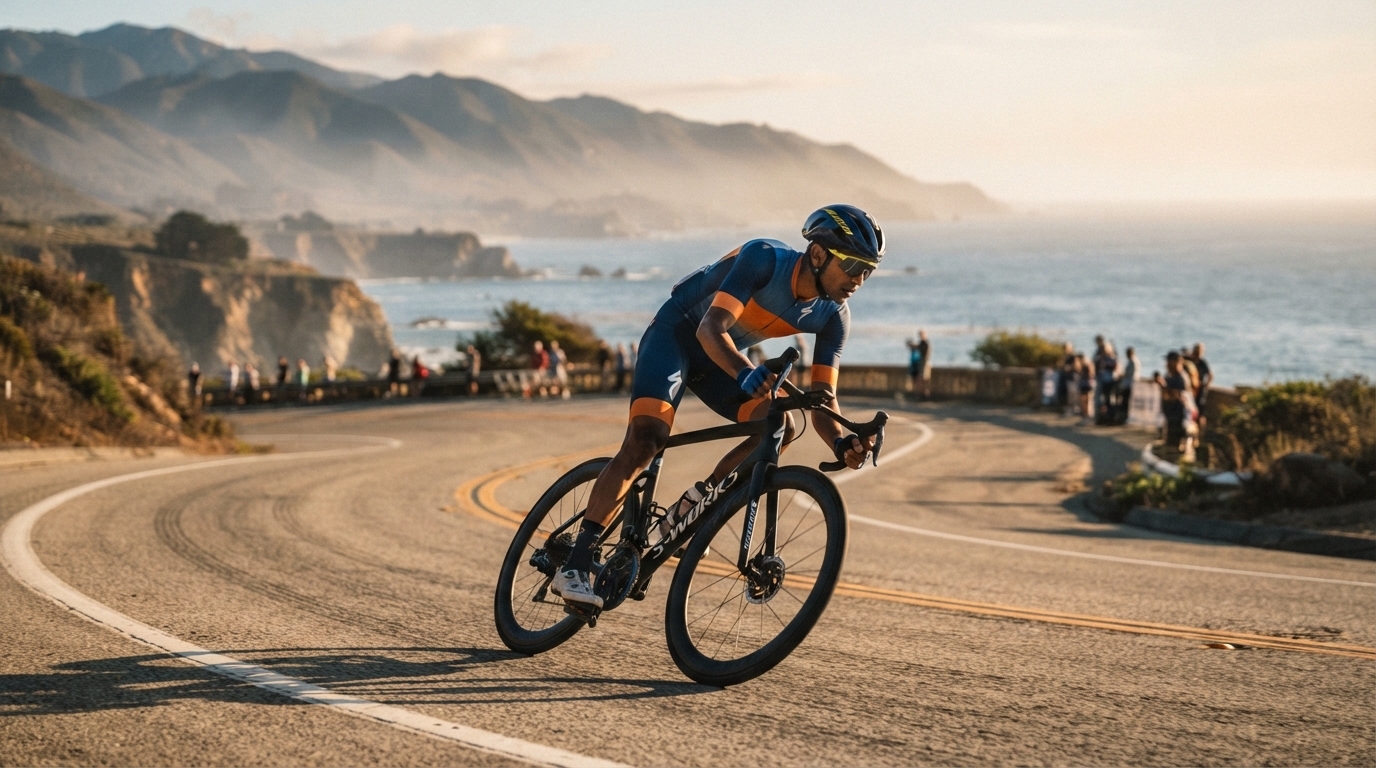
Alexi Grewal made Olympic history at the 1984 Los Angeles Games. Born to an Indian father and American mother, Grewal won the gold medal in the men's individual road race. He attacked on the final climb of the 190-kilometer course, becoming the first American man to win Olympic road race gold. His victory proved that diaspora athletes could reach the highest step of endurance sports podiums.
In professional golf, Vijay Singh achieved global prominence during the late 1990s and early 2000s. Born in Fiji to an Indo-Fijian family, Singh won three major championships: the 1998 and 2004 PGA Championships and the 2000 Masters. In 2004, Singh won nine tournaments in a single season and overtook Tiger Woods for the World Number 1 ranking. His relentless practice routine set new standards for professional golfers worldwide.
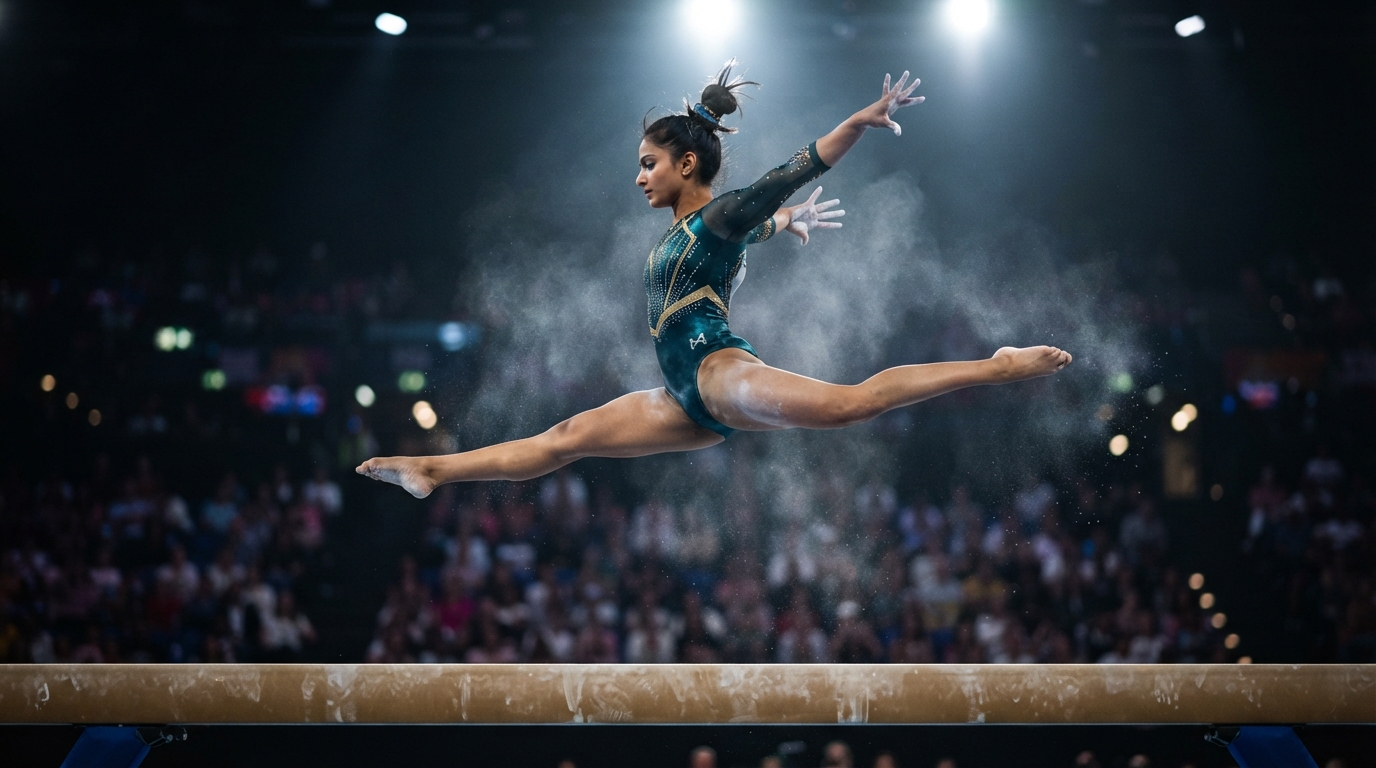
Gymnast Mohini Bhardwaj broke barriers in American gymnastics leading up to the 2004 Athens Games. Born to an Indian father and Russian-American mother, Bhardwaj captained the United States women's gymnastics team to a silver medal. Her powerful vaulting earned individual apparatus finals qualification as well. Her achievements opened doors for diverse athletes in Olympic gymnastics, echoing themes found in milestones in women's athletic history.
In team sports, Canadian-born Sim Bhullar made history in April 2015 with the Sacramento Kings. Standing 7-foot-5, Bhullar became the first player of Indian descent to play in an NBA regular-season game. Canadian wrestling also saw major gains through Amar Dhesi. The heavyweight freestyle wrestler won the 2022 Pan American Championship and represented Canada at both the Tokyo 2020 and Paris 2024 Olympic Games, according to the Canadian Olympic Committee in 2024.
The UK Football Disconnect and Grassroots Representation
While North American athletes broke into various sports, British South Asians faced systematic exclusion in professional football. A 2024 report by Sky Sports and The Indian Express revealed that only 22 out of roughly 3,700 professional footballers in the English leagues identified as South Asian. This 0.25 percent figure stands in sharp contrast to South Asians making up between 7 and 9 percent of the UK population.
Sociologist Daniel Burdsey explained this disparity in his 2024 study, Sport and South Asian Diasporas. Burdsey noted that scouts historically operated with racial stereotypes regarding physical size, diet, and athletic preference. These scouting blind spots kept young British-Indian talent from moving out of local Sunday leagues into elite youth academies.
Signs of progress have emerged recently. The Professional Footballers' Association (PFA) Asian Inclusion Mentoring Scheme (AIMS) reported 134 South Asian male players in elite UK academies and league clubs for the 2022/23 season. That represents a 12.6 percent increase from 119 players in 2021/22. Pioneers like Yan Dhanda, Mal Benning, and Michael Chopra have provided a blueprint for younger prospects coming through English academies.
Can Modern Diaspora Athletes Reshape International Tournaments?
Modern diaspora athletes are transforming international competitions by boosting the competitiveness of emerging sporting nations. Second- and third-generation athletes bring elite training from global programs to international tournaments. Their participation creates competitive national squads in regions without long sports traditions.
The North American Cricket Resurgence
The 2024 ICC Men's T20 World Cup showcased the influence of the Indian diaspora on modern cricket. The Times of India reported in 2024 that 40 Indian-origin players represented foreign national teams at the tournament. Canada led the field with 11 diaspora players on their roster, while the United States fielded eight.
The United States team produced an upset by defeating former champion Pakistan in the group stage. Former India Under-19 bowler Saurabh Netravalkar defended 18 runs in the Super Over to seal the victory, as documented by the ICC in 2024. Netravalkar balanced this athletic schedule with his role as a principal engineer at Oracle in California, according to Deccan Chronicle in 2024. Team captain Monank Patel and all-rounder Harmeet Singh also played crucial roles in pushing the US team into the tournament's Super 8 stage.
Private capital from diaspora entrepreneurs has also funded institutional infrastructure. The launch of Major League Cricket (MLC) in the United States attracted millions of dollars from tech executives and Indian Premier League franchise owners. Modern facilities in Texas, North Carolina, and Florida now support year-round athlete training. This financial backing ensures long-term development pipelines for youth talent across North America.
Racket Sports and Combat Athletics on the Global Stage
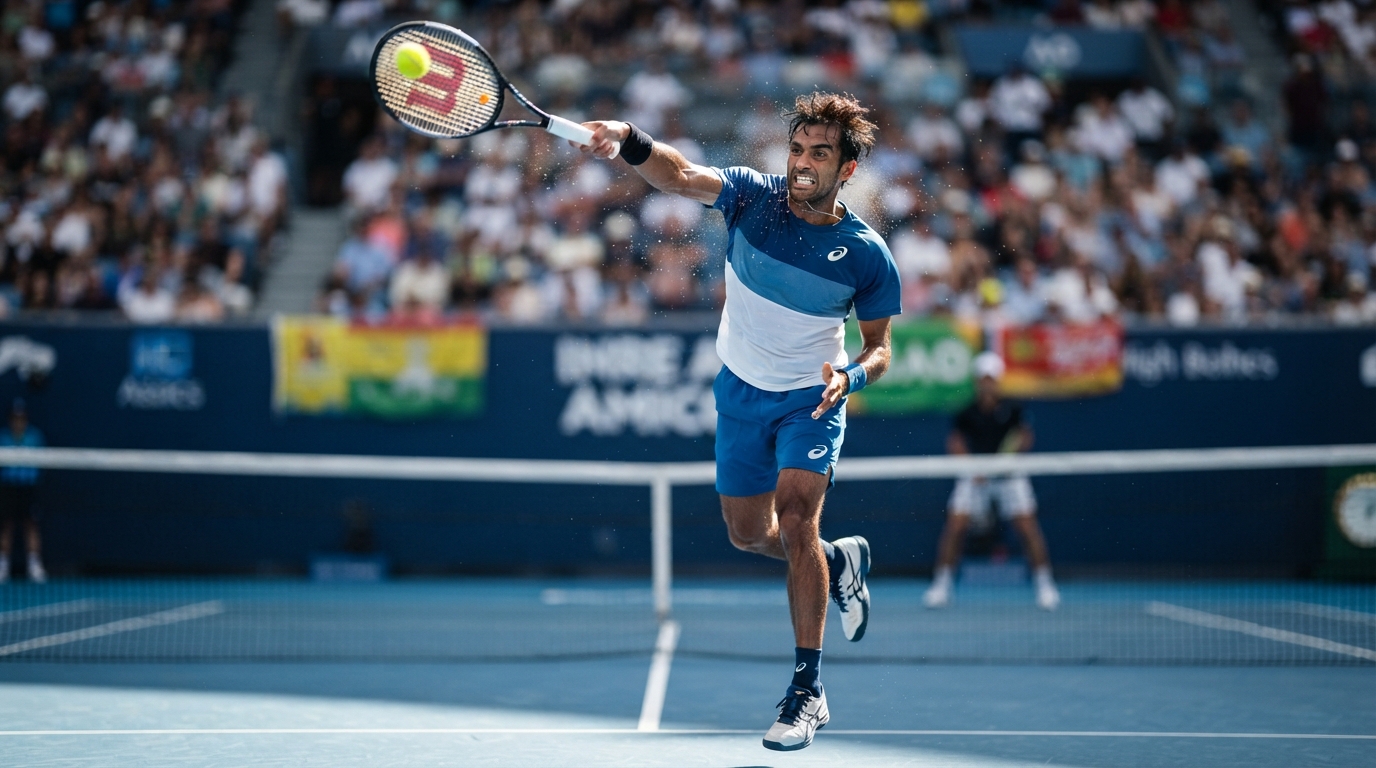
Diaspora athletes have established themselves across international tennis, table tennis, and track circuits. American tennis player Rajeev Ram built one of the most successful doubles careers of his generation. Ram won four Grand Slam men's doubles titles, two mixed doubles titles, and two Olympic silver medals (Rio 2016 and Paris 2024), according to Olympics.com in 2024.
European teams have benefited from diaspora talent in fast-paced racket sports. Table tennis player Prithika Pavade represented France at both the Tokyo 2020 and Paris 2024 Games. Born in Paris to parents from Puducherry, Pavade developed an aggressive left-handed attacking style that pushed her into the world top 20 rankings. Her rise has inspired clubs across France to expand grassroots recruiting.
Singapore sprinter Veronica Shanti Pereira proved that Southeast Asian diaspora athletes could compete against world-class fields. Pereira won gold in the 200 meters and silver in the 100 meters at the 2023 Asian Games in Hangzhou. Her performances broke multiple national records and established her as Singapore's fastest woman in history.
Tracing the Major Milestones of Indian Diaspora Athletes
Documenting Indian sports pioneers history reveals sustained excellence across five distinct generations. Diaspora athletes have adapted to varying cultural, economic, and political environments. The timeline below highlights how individual competitors converted local training into international podium finishes.
1900: Norman Pritchard wins two silver medals at the Paris Olympic Games.
1950: Sonny Ramadhin leads the West Indies to their first Test victory in England.
1984: Alexi Grewal captures gold in the men's Olympic road cycling race in Los Angeles.
1998: Vijay Singh wins the PGA Championship, securing his first major golf title.
2004: Mohini Bhardwaj captains the US women's gymnastics team to Olympic silver in Athens.
2015: Sim Bhullar debuts with the Sacramento Kings as the first Indian-origin NBA player.
2023: Shanti Pereira wins gold in the 200m at the Asian Games in Hangzhou.
2024: Rajeev Ram wins his second Olympic silver medal in tennis doubles at Paris.
2024: Saurabh Netravalkar leads the USA cricket team to the Super 8 stage of the T20 World Cup.
How Did Diaspora Athletes Overcome Institutional Barriers and Scouting Biases?
Institutional barrier overcoming in diaspora athletics is the process through which South Asian athletes bypassed discriminatory scouting stereotypes, self-funded training regimens, and built community sports networks to enter elite global competitions. Historical analyses by sociologists, including Daniel Burdsey in 2024, show that diaspora competitors overcame cultural biases in Western nations by establishing independent community tournaments and private funding mechanisms.
Financial commitments from community groups filled critical funding gaps for diaspora athletes throughout the twentieth century. Sikh communities in Canada and the United Kingdom organized annual sports festivals, featuring Kabaddi tournaments and Highland games, which funded youth athletic development. In the United States, community-run tennis and cricket leagues built the grassroots foundation for future elite competitors such as tennis Olympian Rajeev Ram and World Cup cricketer Saurabh Netravalkar. These local networks sustained athletic development before national governing bodies established formal outreach programs.
Modern professional academies now take a data-driven approach to athlete scouting across North America and Europe. Advanced performance metrics remove subjective biases that previously held back diaspora talent in traditional sports. Professional football and basketball clubs in England and North America track speed, power, and tactical metrics directly, enabling young Indian-origin players to earn academy placements on objective athletic merit.
How Do Dual Citizenship Rules Impact Indian Sports Pioneers History?
Dual citizenship restriction in Indian sports is the statutory prohibition enforced by the Ministry of Youth Affairs and Sports that prevents overseas athletes of Indian origin from representing India in international competitions without renouncing their foreign passports. Under the Constitution of India and the Citizenship Act of 1955, India does not permit dual nationality for its citizens. According to Ministry directives confirmed in 2008, sports federations must restrict national team selection exclusively to individuals holding valid Indian passports, thereby excluding Overseas Citizens of India (OCI) and Persons of Indian Origin (PIO). This legal framework creates significant structural dilemmas for diaspora athletes trained in elite North American and European sports systems who wish to compete under the Indian flag. Because renouncing birth citizenship jeopardizes residency and athletic funding abroad, these nationality rules directly constrain the global talent pool, marking a defining challenge within Indian sports pioneers history.
The 2008 Passport Mandate and Representation Bottlenecks
In December 2008, the Ministry of Youth Affairs and Sports issued a binding policy directive. The rule declared that only Indian passport holders could represent India in international competitions. This decision blocked Overseas Citizens of India (OCI) and Persons of Indian Origin (PIO) from national team selection.
This directive ended the Indian national team careers of several promising diaspora athletes. Tennis player Sunitha Rao, who competed for India at the 2008 Beijing Olympics while holding US citizenship, could no longer participate under the national flag. Similar restrictions affected football players like Michael Chopra, who expressed interest in playing for the Indian national team but could not surrender his British passport.
The policy created an all-or-nothing choice for foreign-born athletes. Giving up a foreign passport often compromises residency, family commitments, and access to professional training leagues abroad. As a result, hundreds of elite diaspora athletes have chosen to represent their countries of birth instead. Understanding these legal boundaries requires reviewing overseas athlete eligibility rules across sports bodies.
The Sports Passport Proposal and Khelo Bharat Niti
Sporting federations have recently lobbied the government for policy revisions. In 2025, the All India Football Federation (AIFF) and sports administrators proposed the "Sports Passport" concept under the draft Khelo Bharat Niti. This framework would allow OCI and PIO athletes to represent Indian national teams without losing their foreign citizenship.
Some athletes have taken the rare step of surrendering their birth nationality to compete for India. In 2025, Australian-born winger Ryan Williams renounced his Australian citizenship to acquire an Indian passport, as reported by Olympics.com. Williams secured official FIFA clearance, becoming only the second naturalized foreign-born player to represent the Indian men's national football team.
+---------------------------+-----------------------------------+-----------------------------------+
| Policy / Mechanism        | Current 2008 Mandate              | Proposed Sports Passport Model    |
+---------------------------+-----------------------------------+-----------------------------------+
| Citizenship Requirement   | Indian Passport only              | OCI / PIO status permitted        |
| Dual Nationality          | Strictly prohibited               | Allowed for international sports  |
| Impact on Diaspora Pool   | Forces passport renunciation      | Opens access to global talent pool|
| Target Sports             | Limited domestic roster           | Football, athletics, swimming     |
+---------------------------+-----------------------------------+-----------------------------------+
Advocates argue that an open eligibility system would raise the competitive level of Indian sports. Access to players developed in European and North American academy systems could improve national rankings in football, basketball, and track events. Opponents argue that national berths should prioritize home-grown athletes trained in domestic facilities. This policy debate will determine the future integration of diaspora talent with Indian sports.
Frequently Asked Questions
Q: Who was the first athlete of Indian descent to win an Olympic medal?
Norman Pritchard won two silver medals in athletics at the 1900 Paris Games. He took second place in both the 200-meter dash and the 200-meter hurdles while representing British India.
Q: Why are there so few British-Indian players in professional football?
Historical scouting biases and a lack of grassroots development pipelines restricted British South Asians to amateur leagues. While South Asians make up roughly 8 percent of the UK population, only 0.25 percent of league professionals have South Asian heritage, according to 2024 PFA and Sky Sports data.
Q: Can Overseas Citizens of India (OCI) play sports for the Indian national team?
Under a 2008 Ministry of Youth Affairs and Sports directive, athletes must hold an Indian passport to represent India. OCI and PIO cardholders cannot join national squads unless they formally renounce their foreign citizenship and obtain Indian nationality.
Q: Which diaspora athletes have won major golf championships?
Vijay Singh, an Indo-Fijian professional golfer, won three major championships: the 1998 and 2004 PGA Championships and the 2000 Masters. Singh reached the World Number 1 ranking in 2004, ending Tiger Woods's five-year run at the top.
Further Reading
- Sport and South Asian Diasporas (Daniel Burdsey, 2024): A sociological examination of systemic barriers and grassroots participation across Western sports leagues.
- Sport in South Asian Society (Boria Majumdar, 2024): An analysis of how sports shifted from colonial tools to instruments of modern cultural influence.
- Professional Footballers' Association AIMS Annual Report (PFA, 2023): Detailed metrics on South Asian player representation and inclusion programs in English academies.
- Ministry of External Affairs Diaspora Profile (MEA, 2024): Government demographic data on migration statistics, population sizes, and global distribution of the Indian diaspora.
To build a deeper understanding of sports history, review match archives and follow current policy debates around national representation. You can track how local sports clubs and international federations adapt their eligibility rules as global migration patterns evolve.
Related Reading
- Milestones in Indian Women's History: A Chronological Guide
- 1,000 Years of Indian Medical History: A Chronological Guide
- Economic Milestones in Indian History: From 1947 to Present
- Milestones in Indian Medicine: Pioneers Like Dr. Jamini Sen
Sources
- USA Stun Pakistan in Dramatic Super Over to Complete All-Time Great Upset — International Cricket Council, 2024. Supports: Saurabh Netravalkar bowling the deciding Super Over for the United States against Pakistan at the 2024 ICC Men's T20 World Cup in Dallas.
- Population of Overseas Indians — Ministry of External Affairs, Government of India, 2024. Supports: The global Indian diaspora comprising over 35 million Non-Resident Indians and Persons of Indian Origin across more than 130 countries.
- Norman Pritchard — International Olympic Committee, 2024. Supports: Norman Pritchard winning two silver medals at the 1900 Paris Games as an early individual Olympic medalist.
- Amsterdam 1928: When India Won Its First Olympic Hockey Gold Medal — International Olympic Committee, 2021. Supports: The Indian men's field hockey team beginning a historic streak of six consecutive Olympic gold medals at Amsterdam 1928.
- Alexi S. Grewal — International Olympic Committee, 2024. Supports: Alexi Grewal winning the men's Olympic road race cycling gold medal for the United States at the 1984 Los Angeles Games.
- Mohini Bhardwaj — International Olympic Committee, 2024. Supports: Mohini Bhardwaj winning an Olympic gymnastics team silver medal with the United States at the 2004 Athens Games.
- Vijay Singh PGA TOUR Player Profile — PGA Tour, 2024. Supports: Vijay Singh's career milestones as a three-time major champion and former World No. 1 golfer representing the Indian diaspora.