India at the Winter Olympics: A Historical Timeline of Milestones
In Short
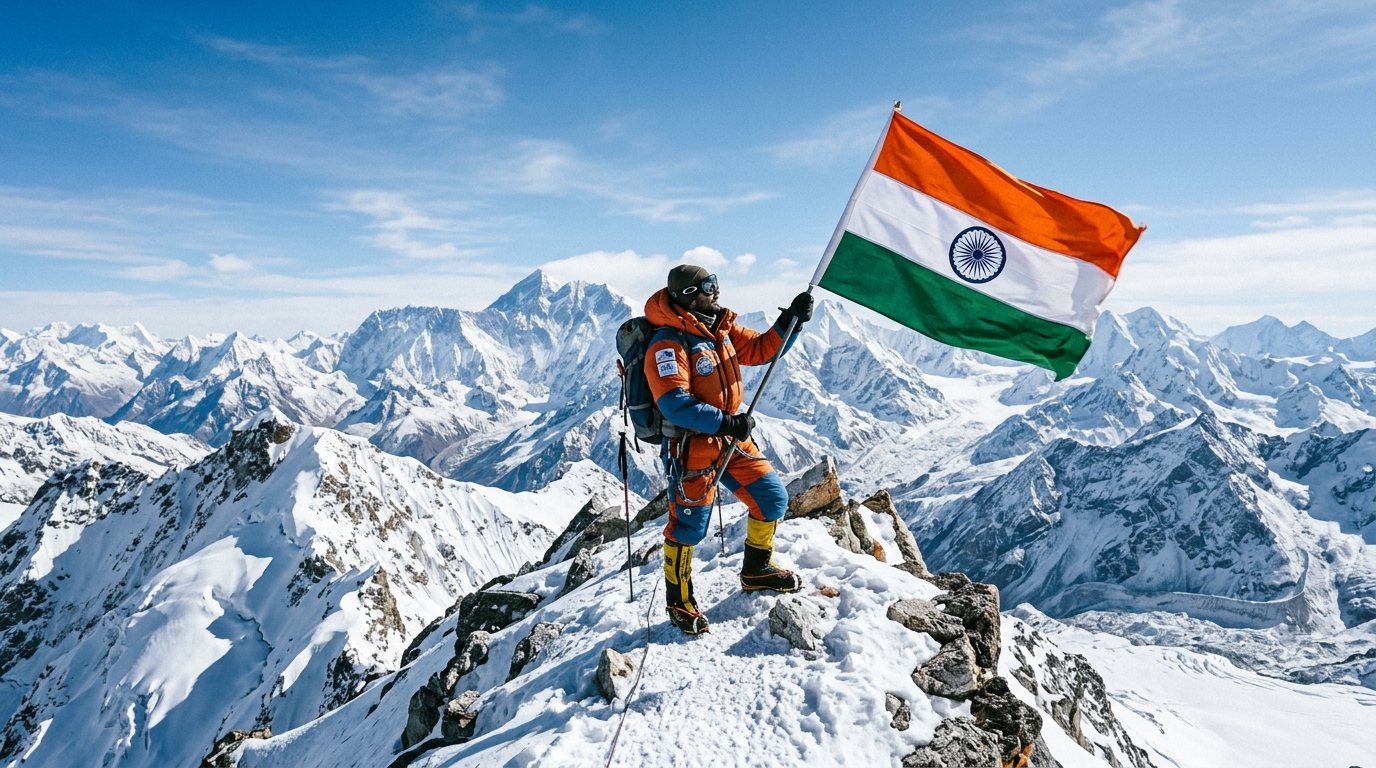
India's Winter Olympics history began in 1964 with alpine skier Jeremy Bujakowski. Since then, a small but determined group of Indian athletes has competed in luge, alpine skiing, and cross-country skiing. Despite immense funding and infrastructure challenges, figures like Shiva Keshavan have kept India's winter sports legacy alive on the global stage.
Key Takeaways
- Shiva Keshavan remains India’s most prolific winter athlete with six Olympic appearances in luge.
- India debuted at the Winter Games in 1964, decades after its Summer Olympics entry.
- Funding and infrastructure remain the largest hurdles for Indian winter sports competitors today.
- Neha Ahuja made history in 2006 as the first Indian woman to compete in the Winter Games.
- Earning International Ski Federation (FIS) points requires athletes to train abroad for months.
Most people assume India’s Olympic story is exclusively tied to field hockey gold medals, track and field stars, and summer sports. The truth is that India has a rich and resilient tradition at the Winter Games that stretches back over half a century. Understanding India Winter Olympics history requires looking past the massive contingents we send to the Summer Games. It means focusing on a handful of dedicated athletes who carve their own paths down icy mountains and frozen tracks.
These competitors often self-fund their journeys. They build makeshift sleds, train on foreign slopes, and battle administrative apathy just to carry the Indian flag. Their milestones represent some of the most remarkable stories in Indian sports. If you look at India at the Olympics: A Timeline of Historic Sporting Milestones, the summer events dominate the narrative. Yet, the winter timeline reveals a different kind of perseverance that deserves equal attention.
When Did India First Participate in the Winter Olympics?
India officially debuted at the Winter Olympics in 1964 during the Innsbruck Games in Austria. A lone athlete, Jeremy Bujakowski, represented the nation in alpine skiing. This marked a major milestone, proving that Indian athletes could compete on snow and ice despite the country's predominantly tropical climate.
The 1964 Innsbruck Debut
The 1964 Winter Games in Innsbruck set the stage for India's entry into a completely new athletic arena. Before this, the Indian Olympic Association focused entirely on the Summer Games. Sending an athlete to compete in a winter sport was a massive logistical and financial leap.
It required coordination with international sporting bodies and a deep understanding of alpine skiing regulations. The decision to participate opened the door for future generations of snow sports enthusiasts in the Himalayas. It proved that a nation known for its heat could field a competitor on the ice. The Innsbruck debut remains a foundational moment in India Winter Olympics history.
Jeremy Bujakowski: The Pioneer
Jeremy Bujakowski was a Polish-born athlete whose family settled in India during World War II. He became an Indian citizen and took up alpine skiing with a passion that eventually led him to the Olympic stage. His journey required immense personal dedication, as he had to seek out training facilities far from his home.
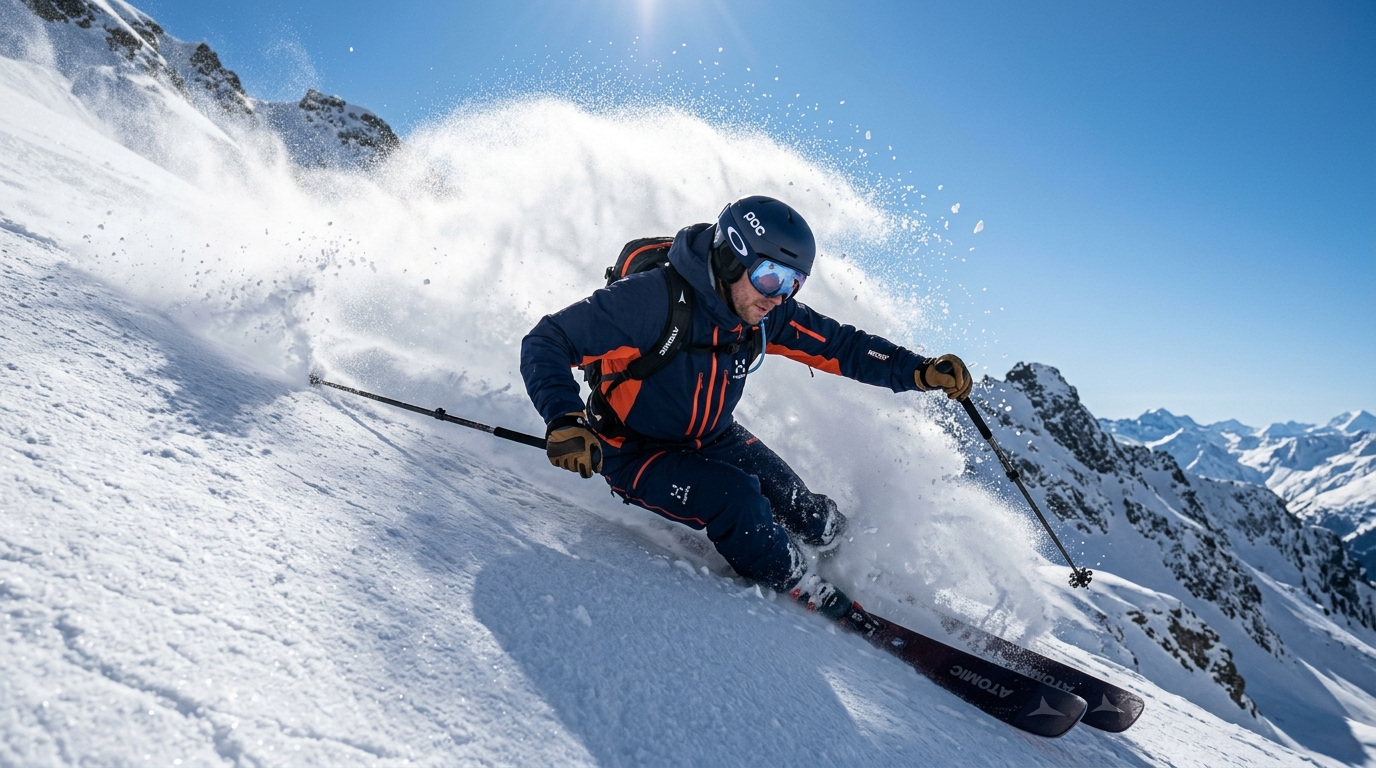
At the 1964 Games, Bujakowski competed in the men's downhill event. He suffered a severe crash during his run and did not finish the race. Despite the injury, his mere presence on the starting line was a historic achievement. He returned to the Winter Olympics four years later in 1968 at Grenoble, France. There, he competed in the downhill, slalom, and giant slalom events, successfully finishing the giant slalom. Bujakowski's resilience established the baseline for all Indian winter athletes who followed.
The Long Gap Before the Next Appearance
After Bujakowski's 1968 appearance, India vanished from the Winter Olympics for exactly two decades. The lack of infrastructure, absence of a governing body for winter sports, and zero funding meant that no Indian athlete could realistically qualify. The momentum built in the 1960s completely stalled.
During this period, winter sports in India were strictly recreational. Tourists visited Gulmarg and Manali, but competitive racing was non-existent. It took a massive cultural shift and the eventual formation of domestic sporting bodies to bring the country back to the Olympic slopes. This 20-year gap highlights how heavily winter sports rely on institutional support and continuous funding. Without a system in place, individual talent simply cannot reach the Olympic level.
Who Are the Defining Figures in India Winter Olympics History?
Three athletes define the core of India Winter Olympics history: Shiva Keshavan in luge, Neha Ahuja in alpine skiing, and Arif Khan in slalom. These individuals broke participation records, shattered gender barriers, and achieved qualification standards that forced the international winter sports community to take India seriously.
Shiva Keshavan: The Luge Legend
If you look up the history of Indian winter sports on Wikipedia or any Olympic database, Shiva Keshavan is the undisputed central entity. He is synonymous with Indian luge. Keshavan discovered the sport as a teenager when a former world champion visited his school in Himachal Pradesh looking for potential talent. He took to the ice naturally.
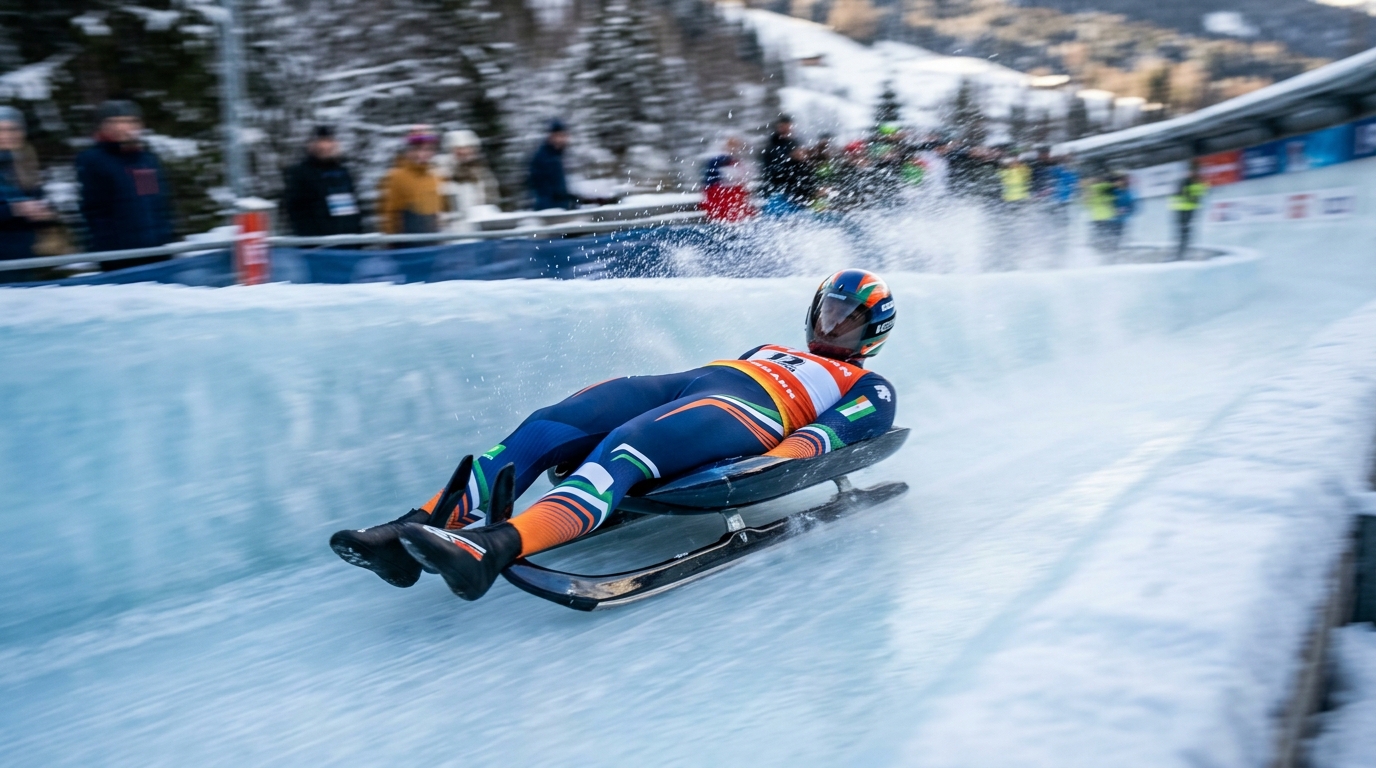
By 1998, at just 16 years old, he became the youngest ever luge Olympian at the Nagano Games. He did not have a proper sled, a coach, or financial backing. He famously competed using a borrowed sled and wore an oversized jacket. Over the next two decades, Keshavan represented India at six Winter Olympics. He won multiple medals at the Asian Luge Cup and became a recognizable face in global winter sports.
His career is a masterclass in determination. He crowd-funded his campaigns, built his own equipment, and single-handedly kept India visible on the international winter sports map until his retirement in 2018.
Neha Ahuja: Breaking Barriers for Women
The 2006 Turin Games marked a massive step forward when Neha Ahuja became the first Indian woman to compete in the Winter Olympics. She qualified for both the slalom and giant slalom alpine skiing events. Achieving this required navigating a sport entirely dominated by European and North American athletes.
Ahuja's journey demanded immense personal sacrifice. She trained in Japan and Europe, as Indian slopes lacked the homologated tracks required for Olympic-level practice. Her participation is a crucial chapter in the Milestones in Indian Women's History: A Chronological Guide. By successfully completing both her events, she proved that Indian women belong on the world's most challenging ski slopes.
Arif Khan: The Alpine Skiing Standard
Arif Khan brought a new level of technical qualification to Indian winter sports at the 2022 Beijing Games. Unlike some previous competitors who received wildcards or universality quotas, Khan earned his spot through rigorous international competition. He met the strict point thresholds set by the global skiing federation.
He became the first Indian athlete to qualify for two distinct events at a single Winter Olympics: the slalom and giant slalom. Hailing from Kashmir, Khan spent years traversing the globe to secure enough International Ski Federation (FIS) points. His performance in Beijing demonstrated a shift from mere participation to genuine competitive qualification. He funded his journey by running a ski shop and relying on local community support.
How Has India's Representation Evolved Over the Decades?
India's Winter Olympic representation has evolved from single-athlete wildcard entries to multi-discipline contingents earning quota spots. The 1998 Nagano Games restarted the engine, the 2006 Turin Games expanded the roster, and the 2014 Sochi Games tested the athletes' resilience against intense administrative politics.
The 1998 Nagano Breakthrough
The 1998 Winter Olympics in Nagano, Japan, served as a hard reboot for India's winter sports program. After missing the 1994 Games, India sent Shiva Keshavan for luge. This marked the beginning of uninterrupted Indian participation in every subsequent Winter Games to date.
This event was critical because it proved that an Indian athlete born and raised in the Himalayas could compete in sliding sports. It caught the attention of the Indian media, which had largely ignored winter sports up to that point. Nagano was the spark that reignited national interest. It encouraged other young athletes in mountain states to consider winter sports as a viable career path rather than just a seasonal hobby.
Expanding the Roster in 2006 and 2010
The 2006 Winter Olympics in Turin saw India send four athletes, its largest contingent ever. The team included Shiva Keshavan (luge), Neha Ahuja (alpine skiing), Hira Lal (alpine skiing), and Bahadur Gupta (cross-country skiing). Sending athletes across three different disciplines was a major administrative victory.
This expansion showed that grassroots efforts in places like Gulmarg and Auli were slowly bearing fruit. Four years later, at the 2010 Vancouver Games, India sent three athletes. While the numbers were small by international standards, maintaining a consistent presence across multiple disciplines was a significant milestone. It established a baseline expectation that India would always field a team at the Winter Games, regardless of the logistical challenges.
The 2014 Sochi Flag Controversy
The 2014 Sochi Olympics presented one of the darkest administrative moments in India Winter Olympics history. The International Olympic Committee (IOC) had suspended the Indian Olympic Association due to election irregularities and government interference. The athletes paid the price for this bureaucratic failure.
As a result, the three Indian athletes—Shiva Keshavan, Himanshu Thakur, and Nadeem Iqbal—were forced to compete as Independent Olympic Participants under the Olympic flag. They walked into the opening ceremony without their national colors. Mid-way through the Games, the IOA held fresh elections, and the IOC lifted the ban. A special ceremony was held in the Olympic village to raise the Indian flag. This ordeal highlighted the heavy toll administrative failures take on athletes who already face insurmountable odds.
What Challenges Do Indian Winter Athletes Face?
Indian winter athletes face a brutal combination of zero institutional funding, a total lack of Olympic-standard training infrastructure, and a sporting culture that ignores them. They spend more time hunting for corporate sponsors and crowd-funding their travel than they do practicing on the snow.
Funding and Sponsorship Hurdles
Winter sports are incredibly expensive. Equipment, travel to European or North American training camps, and coaching fees cost tens of lakhs of rupees annually. A professional luge sled alone can cost as much as a luxury car. Buying professional alpine skis requires constant updates to match changing international regulations.
Unlike cricket or field hockey, winter sports receive negligible government funding in India. Athletes often resort to creating GoFundMe campaigns or begging local businesses for support. Shiva Keshavan famously offered companies advertising space on his race suit just to afford a new luge sled. When athletes spend half their year acting as their own marketing agencies, their training inevitably suffers. The lack of financial security forces many talented junior skiers to abandon the sport early.
Infrastructure and Training Facilities
India has the Himalayas, but it does not have winter sports infrastructure. There is no artificial luge, bobsleigh, or skeleton track anywhere in the country. Athletes competing in these sports cannot practice at home.
For alpine skiing, the slopes in Gulmarg and Auli are beautiful for tourists but lack the homologated tracks required by the FIS for professional racing. There are few reliable snow-making machines, meaning athletes are entirely dependent on natural snowfall, which is becoming increasingly erratic due to climate change. To train properly, Indian athletes must live in Europe or North America for six months of the year. We cover similar geographical and developmental hurdles in Economic Milestones in Indian History: From 1947 to Present.
Administrative Apathy
The Winter Games Federation of India (WGFI) has historically struggled with recognition and funding. At times, internal politics have actively derailed athletes' careers. Governing bodies for niche sports in India often lack the specialized knowledge required to support their competitors.
Athletes frequently complain about delays in entry submissions, lack of communication regarding qualification criteria, and missing travel grants. When the governing body is weak, the athletes bear the brunt of the dysfunction. To build a robust winter sports ecosystem, India needs administrators who understand the specific technical requirements of the FIS and the International Luge Federation. Without professional management, raw talent gets lost in the paperwork.
Where Does India Winter Olympics History Go From Here?
The future of India Winter Olympics history depends on transforming Himalayan tourist towns into professional training hubs. It requires the government to recognize winter disciplines as priority sports, build at least one international-standard sliding track, and fund grassroots programs that identify talent early.
Grassroots Development in the Himalayas
The key to future Olympic success lies in the youth of Jammu and Kashmir, Himachal Pradesh, Uttarakhand, and Sikkim. These regions have a natural affinity for snow sports. Children in these states grow up navigating steep, snowy terrain, providing a natural base of athletic talent.
Programs like the Khelo India Winter Games are a step in the right direction. Launched to promote winter sports at the domestic level, these games provide a competitive platform for young athletes. By organizing national championships in Gulmarg and Leh, the government is slowly building a domestic pipeline. However, these grassroots athletes need a clear pathway to transition from national winners to international competitors. This requires hiring foreign coaches to train local instructors and standardizing the domestic competition circuit.
The Role of Corporate Partnerships
Government funding alone will never be enough to sustain a world-class winter sports program. Corporate India must step in. Brands that align themselves with adventure, endurance, and resilience have a massive opportunity to support these athletes.
We are beginning to see small shifts, with a few private brands sponsoring individual athletes like Arif Khan. To create systemic change, corporations need to invest in infrastructure. Building an indoor ice rink for figure skating or a dedicated ski academy requires public-private partnerships. If companies can sponsor massive summer sports leagues, allocating a fraction of that budget to winter sports could yield massive dividends. The evolution of Indian sports broadcasting proves that audiences will watch new sports if they are packaged and promoted correctly.
Future Prospects for Milan-Cortina 2026
Looking ahead to the 2026 Winter Olympics in Milan and Cortina d'Ampezzo, India has a fresh opportunity to make its mark. The goal is no longer just participation; it is about sending athletes who can compete in the top half of the field.
A new generation of athletes is currently competing on the FIS circuit, trying to accumulate the necessary points. The focus must be on qualifying athletes in new disciplines like snowboarding or freestyle skiing, which appeal to younger demographics. If the Indian Olympic Association provides timely support and clear qualification guidelines, India could send its most prepared and technically proficient contingent yet. The foundation laid over the last 60 years is finally ready to support a larger, more competitive team.
Related Reading
- India at the Olympics: A Timeline of Historic Sporting Milestones
- Milestones in Indian Women's History: A Chronological Guide
- 1,000 Years of Indian Medical History: A Chronological Guide
- Economic Milestones in Indian History: From 1947 to Present
FAQ
Q: Has India ever won a medal at the Winter Olympics? No, India has never won a medal at the Winter Olympic Games. The country's participation has historically focused on qualification and breaking personal or national records rather than podium finishes.
Q: Who was the first Indian to compete in the Winter Olympics? Jeremy Bujakowski was the first Indian to compete. He represented the country in alpine skiing at the 1964 Winter Olympics in Innsbruck, Austria.
Q: Why does India send so few athletes to the Winter Games? India lacks the specialized infrastructure, such as homologated ski slopes and artificial sliding tracks, required for professional training. Combined with a lack of institutional funding, it is incredibly difficult for athletes to reach the Olympic qualification standard.
Q: What sports does India usually compete in at the Winter Olympics? India traditionally competes in alpine skiing, cross-country skiing, and luge. These are the disciplines where Indian athletes have historically managed to secure training and qualification points.
Q: How do Indian winter athletes fund their training? Most Indian winter athletes rely on a mix of personal savings, crowd-funding campaigns, and small private sponsorships. Government support is minimal compared to the funding provided for summer Olympic sports.
Look up the official International Ski and Snowboard Federation (FIS) race calendar online and find the next event featuring an Indian athlete. Following their progress in these qualifying races gives you a real-time view of the grit required to make it to the Olympics, long before the television cameras turn on for the opening ceremony.