Historical Trade Ties: A Timeline of Sino-Indian Economic Milestones
The Quick Read
India China trade history is a two-millennium commercial relationship that evolved from ancient Silk Road commodity exchanges to modern bilateral trade exceeding $150 billion. According to trade data from India's Ministry of Commerce and Industry, the economic partnership centers on industrial manufacturing inputs, telecommunications equipment, active pharmaceutical ingredients, and structured bilateral trade policies.
Key Takeaways
- Bilateral merchandise trade reached a record $151.10 billion in FY 2025–26.
- India's trade deficit with China climbed to $112.16 billion in FY 2025–26.
- Four industrial sectors account for roughly 63% of all Indian imports from China.
- Modern Indian manufacturing relies on Chinese active pharmaceutical ingredients and electronic components.
- Formal trade agreements evolved from the 1954 Panchsheel pact to multi-billion-dollar maritime shipping.
$151.10 billion in bilateral merchandise trade crossed between India and China during FY 2025–26. This figure cements China as India's largest goods trading partner. The scale of this economic relationship surprises many observers, especially given frequent geopolitical tensions along the Himalayan border. Trade grew from just $1.83 billion in 2000 to over $100 billion by 2021. That represents an expansion of more than 50-fold in barely two decades.
Understanding this commercial momentum requires looking at the deep roots of India China trade history. The economic corridor between the two Asian giants has shifted across centuries. It moved from high-altitude overland trails to maritime colonial networks. Today, it forms an interconnected manufacturing supply chain.
How Did Ancient and Colonial Routes Shape Early Commerce?
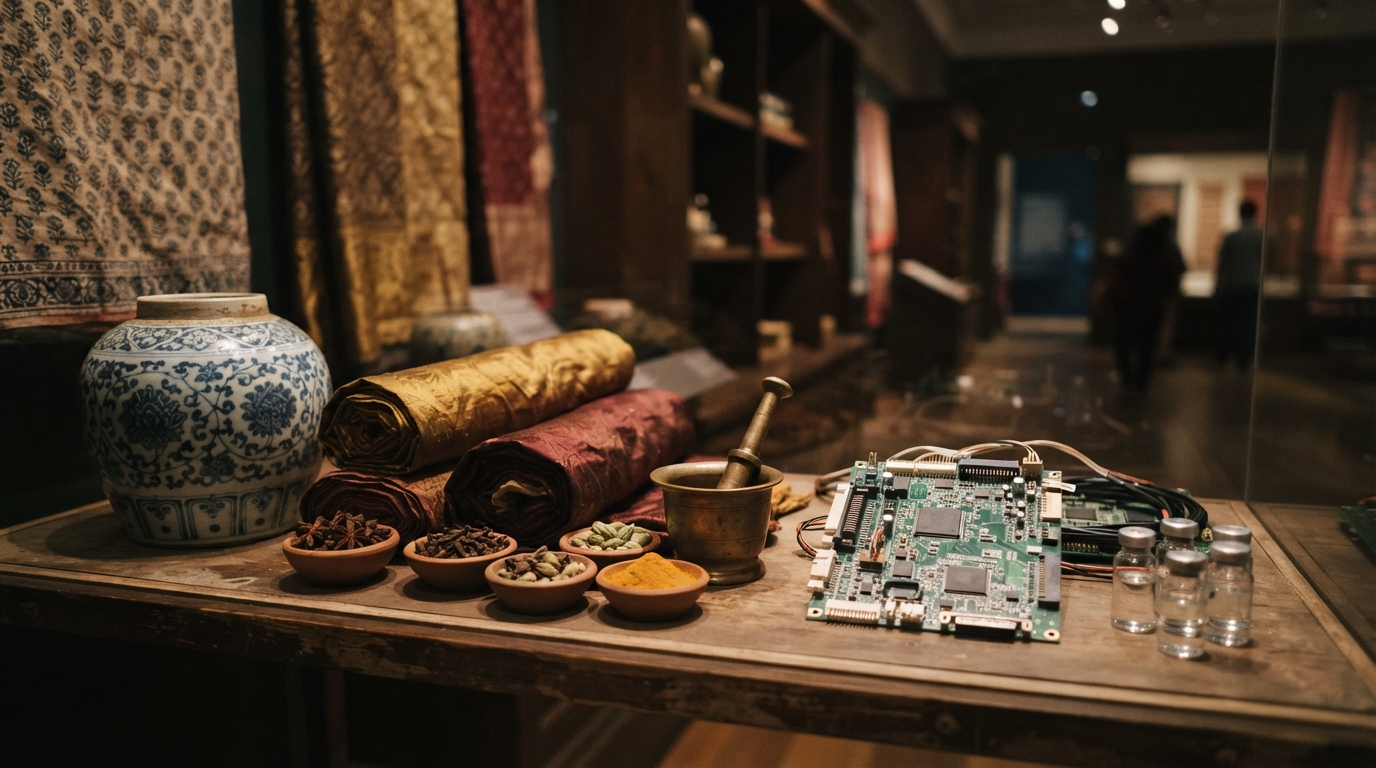
Ancient and colonial Sino-Indian commerce is an exchange network of overland mountain trails, maritime sea routes, and colonial trade monopolies connecting the two Asian economies across two thousand years. According to historical records from ancient travelers and colonial archives, these routes facilitated the transport of silk, porcelain, spices, cotton textiles, and medicinal goods between Indian kingdoms and Chinese dynasties.
Trade historians document that early commercial contact flourished through Buddhist monastic networks, maritime ports across the Bay of Bengal, and the Southwest Silk Road connecting Yunnan with Assam. During the eighteenth and nineteenth centuries, British colonial administration systematically reconfigured these traditional mercantile corridors into industrial shipping channels. Under the British East India Company, commercial traffic shifted toward cash crops, particularly raw cotton and Bengal-cultivated opium directed to Canton to finance tea purchases. Consequently, ancient bilateral exchange transformed from balanced cultural and luxury goods trade into structured colonial commercial routes.
The Maritime Silk Route and Early Overland Corridors
Commercial interactions between the Indian subcontinent and China date back to the second century BCE. During the era of the Maurya and Gupta empires, merchant guilds carried fine cotton textiles, black pepper, and precious gems across the Bay of Bengal and the Malacca Strait. Chinese merchants traded raw silk yarn, processed brocades, and ceramic vessels.
Monks and pilgrims traveled alongside these trading fleets. Scholars like Faxian in the fifth century and Xuanzang in the seventh century documented vibrant commercial ports along the Indian coastline. Tamralipta in Bengal and Muziris in Kerala served as major clearing hubs. Overland corridors also ran through the difficult terrain of Assam, upper Burma, and Yunnan via the Southwest Silk Road. Trade volumes remained modest in weight, but the goods held immense cultural and monetary value for regional royal courts.
Colonial Disruption, Opium, and the Canton Trade
The expansion of European colonial powers transformed Sino-Indian trade during the eighteenth and nineteenth centuries. The British East India Company altered traditional barter systems by introducing industrial-scale cash crop production in India.
British authorities used Indian land to cultivate raw cotton and opium for export to Canton (modern Guangzhou). Opium grown in the Bengal and Malwa regions was shipped to China to offset British trade deficits caused by massive tea and porcelain imports. This colonial triangular trade generated substantial revenue for the British administration. However, it severely damaged domestic artisanal manufacturing in both countries. By the late nineteenth century, Indian ports like Bombay and Calcutta handled regular maritime traffic carrying tea saplings, raw fibers, and handmade silks between the two regions.
Post-Independence Pacts Built the Modern Framework (1947–1984)
Post-independence Sino-Indian economic policy is the diplomatic and regulatory framework established between 1947 and 1984 to govern bilateral trade between the Republic of India and the People's Republic of China. As documented in official bilateral treaties, these early sovereign pacts formalized Himalayan border markets and established transit rules until territorial conflicts caused a fifteen-year commercial suspension.
The 1954 Panchsheel Agreement and Tibetan Border Markets
Formal trade diplomacy began on April 29, 1954, with the signing of the Agreement on Trade and Intercourse between the Tibet Region of China and India. This document introduced the Panchsheel, or Five Principles of Peaceful Coexistence.
+--------------------------------------------------------------------------+
|                  1954 Panchsheel Agreement Key Trade Hubs               |
+--------------------------------------------------------------------------+
|  Indian Trade Agencies in Tibet    |  Yatung, Gyantse, Gartok            |
|  Chinese Trade Agencies in India   |  New Delhi, Calcutta, Kalimpong     |
|  Traditional Border Markets        |  Gunji, Dharchula, Taklakot         |
+--------------------------------------------------------------------------+
The treaty established authorized trade agencies to support traditional Himalayan commerce. Indian merchants traded food grains, sugar, textiles, and manufactured household goods for Tibetan wool, salt, borax, and animal hides. Six Himalayan mountain passes served as authorized transit points for pilgrims and local border residents. This framework regulated overland economic activity until diplomatic friction increased in the late 1950s.
1954: Panchsheel Agreement regulates Tibetan border markets
  │
1962: Border war leads to complete diplomatic and economic freeze
  │
1976: Diplomatic relations restored at ambassadorial level
  │
1977: Direct bilateral commercial transactions formally resume
  │
1984: Most Favoured Nation (MFN) trade agreement signed in Beijing
The 1962 Freeze and the 1984 Most Favoured Nation Pact
The outbreak of the 1962 Sino-Indian border war halted all formal trade. Himalayan passes closed, commercial offices shut down, and direct shipping links ceased. For nearly fifteen years, direct economic interaction between the two nations remained close to zero.
Direct trade resumed on a modest scale in 1977 following the restoration of ambassadorial relations in 1976. Government trading corporations managed these early shipments. On August 15, 1984, the two governments signed a wide-ranging bilateral Trade Agreement in Beijing. The 1984 agreement granted Most Favoured Nation (MFN) status to each nation's goods, lowered tariff barriers, established institutional banking channels, and paved the way for private sector participation in India China trade history.
What Drove the Bilateral Trade Boom After 2000?
The post-2000 Sino-Indian trade boom is an unprecedented commercial expansion driven by China's 2001 accession to the World Trade Organization, accelerated industrialization, and bilateral diplomatic agreements between New Delhi and Beijing. Trade data recorded by bilateral commerce ministries indicates that two-way merchandise trade expanded rapidly from under $3 billion in 2000 to over $100 billion two decades later.
Government delegations and joint economic groups established formal institutional channels that normalized direct market access and reopened historic Himalayan trading posts. At the same time, the trade composition shifted dramatically from traditional primary commodities to high-technology capital equipment, telecommunications hardware, and manufactured components. Rising demand for Indian raw materials like iron ore fueled early growth, while Indian industrial reliance on Chinese electronic intermediate goods and active pharmaceutical ingredients sustained long-term trade acceleration across subsequent decades.
The 2003 Vajpayee Visit and Nathu La Reopening
Prime Minister Atal Bihari Vajpayee visited China in June 2003, creating a major turning point for bilateral commerce. During the visit, the two governments signed the landmark 2003 Declaration on Principles for Relations and Bilateral Cooperation. Both nations also formed the Joint Study Group on trade and economic cooperation.
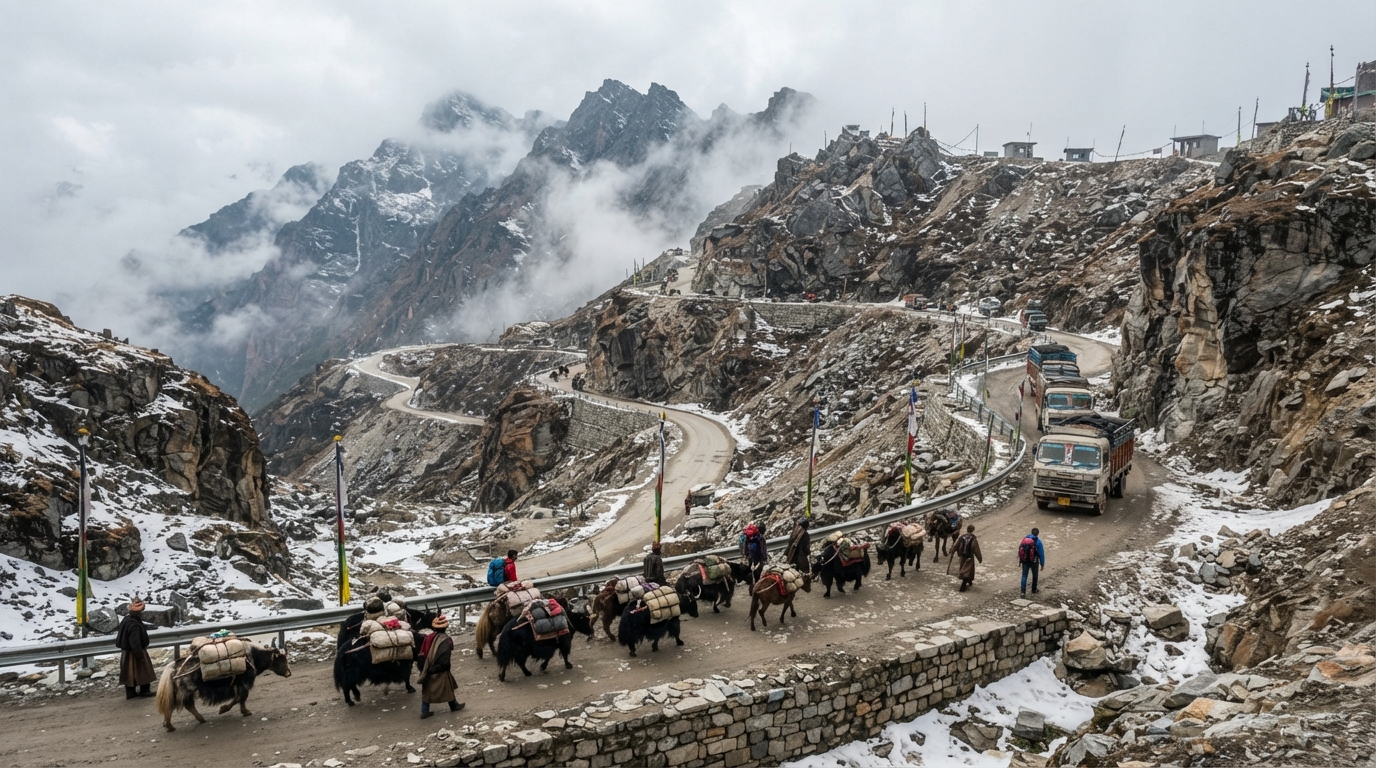
The 2003 visit produced a dedicated protocol to reopen the Nathu La pass in Sikkim for direct border trade. In July 2006, Nathu La officially reopened for local commerce after remaining closed for 44 years. Shipki La in Himachal Pradesh and Lipulekh in Uttarakhand also operated as designated border trading posts.
Overland border trade represents less than 0.1% of total bilateral volume. Maritime routes handle more than 99% of all goods moving between the two nations. Even so, the reopening of Nathu La served as a vital diplomatic benchmark for normalized economic engagement.
The Shift from Primary Commodities to Industrial Inputs
In the early 2000s, Indian exports to China consisted mainly of primary goods. Private miners and state trading firms shipped massive volumes of iron ore, raw cotton, granite, and refined petroleum products. China used these raw materials to fuel its urban construction and industrial expansion.
Early 2000s Trade Profile:
India Exports: Iron ore, raw cotton, marine products
China Exports: Finished consumer goods, basic silk, coal, footwear

Modern Trade Profile (Post-2020):
India Exports: Telecom components, refined copper, iron ore, organic chemicals
China Exports: Capital machinery, solar cells, display panels, bulk drug APIs
Indian industry began importing Chinese capital equipment and intermediate components around 2010. Indian power utilities bought Chinese power generation equipment. Telecommunications companies built 3G and 4G networks using Chinese hardware. Over time, consumer electronics assemblers and chemical companies came to depend on Chinese supply chains for daily manufacturing operations.
Major Milestones in India China Trade History
The institutional timeline of modern Sino-Indian economic ties reflects continuous negotiation between trade liberalization and domestic industrial protection. Both nations set up joint economic groups, signed cross-border customs pacts, and updated investment regulations as trading volumes expanded.
| Year | Milestone / Treaty | Primary Focus | Economic Outcome |
|---|---|---|---|
| 1954 | Trade & Intercourse Agreement | Tibetan border markets | Established trade agencies in Yatung, Gyantse, and Delhi |
| 1984 | Bilateral Trade Agreement | Most Favoured Nation status | Lowered duties, introduced direct banking mechanisms |
| 1994 | Double Taxation Avoidance Pact | Cross-border corporate taxation | Prevented dual taxation for maritime shipping and air freight |
| 2003 | Memorandum on Border Trade | Nathu La corridor reopening | Reconnected Sikkim with the Tibet Autonomous Region |
| 2006 | Nathu La Border Reopening | High-altitude overland trade | Resumed local trade after a 44-year border freeze |
| 2014 | Five-Year Economic Development Plan | Industrial parks and investment | Planned Chinese industrial parks in Gujarat and Maharashtra |
| 2020 | Press Note 3 FDI Amendment | Investment screening | Mandated government approval for all FDI from border nations |
| 2024–2026 | Border Thaw & Industrial Review | Supply chain normalization | Initiated fast-track reviews for non-sensitive component FDI |
The Rise of Intermediate Goods and Supply Chain Dependency
Trade data shows a fundamental structural shift in bilateral flows. Indian imports from China moved away from finished retail consumer goods. Importers now focus on critical intermediate industrial components needed to run Indian factories.
According to trade data from FY 2025–26, Indian imports from China reached $131.63 billion, while Indian exports to China stood at $19.47 billion. This created a bilateral trade deficit of $112.16 billion. Four product categories accounted for $82.6 billion, or approximately 63%, of those total imports:
- Electronics and electrical machinery: Finished assemblies, circuit boards, and integrated chips.
- Industrial machinery and computers: Heavy processing machines, textile looms, and server hardware.
- Organic chemicals: Solvents, chemical reagents, and synthetic precursors.
- Active Pharmaceutical Ingredients (APIs): Bulk chemical inputs used to produce finished medicines.
Data indicates that China supplies 44% of India's total organic chemical imports. It also supplies 43% of national electronics imports and 40% of imported machinery and computers. As the Global Trade Research Initiative (GTRI) observed in their supply chain analysis, complete economic delinking from China remains unfeasible in the medium term because Chinese capital goods are directly embedded in India's industrial operations.
India's Import Reliance on China by Category:
┌─────────────────────────┬───────────────┐
│ Organic Chemicals       │ 44% of Total  │
├─────────────────────────┼───────────────┤
│ Electronics & Telecom   │ 43% of Total  │
├─────────────────────────┼───────────────┤
│ Machinery & Computers   │ 40% of Total  │
├─────────────────────────┼───────────────┤
│ Pharma APIs (Bulk Drugs)│ ~70% of Total │
└─────────────────────────┴───────────────┘
Regulatory Shifts, Press Note 3, and Modern Strategic Realities
Geopolitical friction along the Line of Actual Control (LAC) in 2020 prompted significant regulatory changes in New Delhi. In April 2020, the Department for Promotion of Industry and Internal Trade issued Press Note 3. This policy mandated prior central government approval for any foreign direct investment originating from countries sharing a land border with India.
The regulation slowed Chinese foreign direct investment into Indian technology startups and manufacturing units. The Indian government also banned hundreds of Chinese mobile applications, citing data security concerns.
Economic realities caused policymakers to reconsider these investment restrictions between 2024 and 2026. High-level diplomatic agreements resolved military patrol standoffs along the LAC. Following this border thaw, economic ministries started reviewing investment rules to fast-track approvals for non-sensitive manufacturing joint ventures. Indian factory owners pointed out that building domestic manufacturing facilities often requires Chinese technicians, precision tooling, and specialized assembly components.
Why Does the Trade Deficit Remain a Structural Challenge?
The India-China trade deficit is a persistent macroeconomic imbalance driven by asymmetric market access, disparate industrial export profiles, and Indian manufacturing dependence on Chinese intermediate supply chains. According to trade statistics from India's Ministry of Commerce and Industry, the bilateral trade deficit surpassed $100 billion as India imported intermediate industrial goods while exporting primarily raw and semi-processed commodities.
Structural disparities reinforce this commercial gap because Indian competitive strengths in services, information technology, and pharmaceuticals encounter stringent non-tariff barriers in mainland Chinese markets. Concurrently, Indian domestic manufacturing programs require substantial imports of Chinese machinery, solar cells, and electronic sub-assemblies to sustain production. This asymmetric trade architecture leaves Indian export growth constrained while industrial development continues to generate steady, high-volume demand for Chinese manufactured components and chemical raw materials.
Chinese Non-Tariff Barriers in Pharma and IT
India holds clear global advantages in software services, generic pharmaceuticals, and specialty agriculture. However, these sectors struggle to penetrate mainland Chinese markets. Opaque regulatory processes and lengthy approval timelines limit Indian commercial reach.
- Pharmaceutical registrations: Getting approval from China's National Medical Products Administration can take several years for Indian generic drug applications.
- Information technology procurement: Chinese state-owned enterprises favor domestic enterprise software, which restricts private Indian IT firms to minor back-office contracts.
- Agricultural phytosanitary rules: Stringent import checks regularly delay Indian shipments of non-basmati rice, oil meals, and fresh fruits at Chinese customs ports.
These non-tariff barriers keep Indian exports to China low. They explain why Indian exports hovered below $20 billion in FY 2025–26, even as total bilateral volume broke records. You can review chronological timelines of Indian history to see how regulatory frameworks have shaped trade balances across different decades.
Production Linked Incentives and Raw Material Realities
The Indian government introduced Production Linked Incentive (PLI) schemes across fourteen key manufacturing sectors to build domestic production capacity. These initiatives successfully increased the local assembly of mobile smartphones, solar modules, and consumer appliances for export.
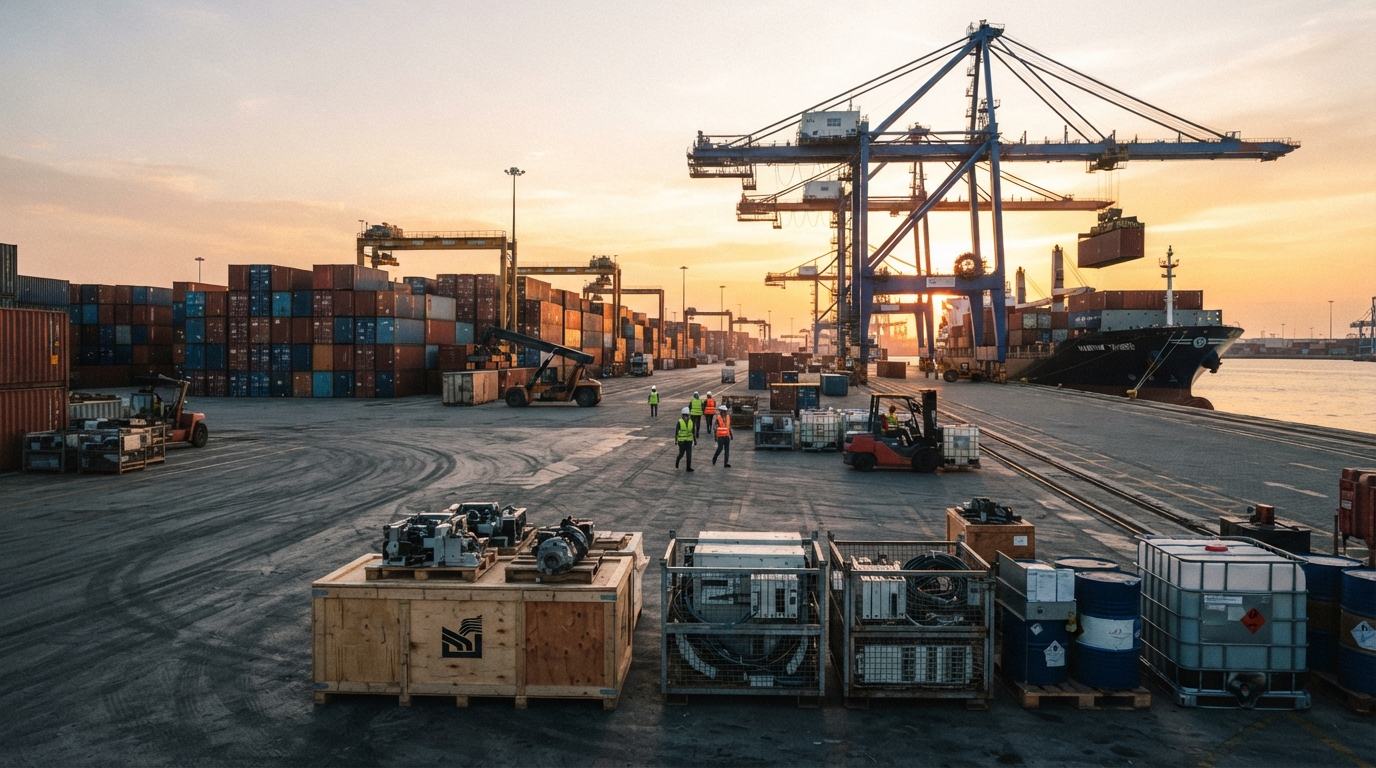
However, this assembly boom created an unintended economic side effect: it increased imports of Chinese sub-components. Assemblers in India rely on Chinese suppliers for touch display panels, camera modules, printed circuit board assemblies, and lithium battery cells.
┌──────────────────────────────────────────────────────────┐
│             The Production-Linked Trade Loop             │
└──────────────────────────────────────────────────────────┘
                            │
                            ▼
      Indian Factories Assemble Finished Export Goods
             (Smartphones, Generic Drugs, Solar)
                            │
                            ▼
      Requires Intermediate Components & Raw Materials
            (Displays, Camera Modules, Bulk APIs)
                            │
                            ▼
         Imports of Chinese Industrial Inputs Surge
      (Deficit expands to $112.16B in FY 2025–26)
The pharmaceutical industry faces a similar challenge. Indian pharmaceutical companies manufacture roughly 20% of the world's generic medicines. Yet these domestic manufacturers rely on Chinese suppliers for nearly 70% of their active pharmaceutical ingredients and chemical intermediates.
As economist Abhay Tilak observed, modern industrial globalization makes autarky impossible. India must balance strategic self-reliance (Atmanirbhar Bharat) with its need for integrated global supply chains. Expanding trade through targeted bilateral border trade agreements and balanced tariff policies helps secure essential supplies while protecting core national interests.
Frequently Asked Questions
Q: When did modern India China trade history officially begin?
Modern commercial ties began on sovereign terms with the 1954 Panchsheel Agreement, which regulated trade and pilgrimage routes in the Tibet region. Following a complete trade freeze caused by the 1962 border war, direct bilateral trade officially resumed in 1977. The two nations established formal Most Favoured Nation status in 1984.
Q: What caused India's trade deficit with China to cross $110 billion?
The deficit reached $112.16 billion in FY 2025–26 because Indian factories rely heavily on Chinese capital machinery, electronics components, and chemical inputs. India's top exports to China remain focused on raw materials, telecom parts, and base metals. Meanwhile, non-tariff regulatory barriers inside China restrict Indian pharmaceutical and IT service exports.
Q: How much trade moves through overland passes like Nathu La compared to sea routes?
Overland trade through Himalayan border passes like Nathu La, Shipki La, and Lipulekh accounts for less than 0.1% of total bilateral trade volume. Maritime shipping handles over 99% of all commercial goods moving between Indian ports and Chinese industrial hubs.
Q: What is Press Note 3 and how did it affect Sino-Indian trade?
Issued in April 2020, Press Note 3 required prior Indian government approval for any foreign direct investment coming from countries sharing a land border with India. This policy slowed direct Chinese investment in Indian startups and technology projects. However, it did not stop bilateral merchandise trade from reaching all-time highs.
Track India's monthly commerce data on the official Department of Commerce export-import portal to see how intermediate supply chains continue to shape regional economic ties.
Related Reading
- India at the Olympics: A Timeline of Historic Sporting Milestones
- Milestones in Indian Women's History: A Chronological Guide
- 1,000 Years of Indian Medical History: A Chronological Guide
- Economic Milestones in Indian History: From 1947 to Present
Sources
- Press Note No. 3 (2020 Series) — Department for Promotion of Industry and Internal Trade, Ministry of Commerce & Industry, Government of India, 2020. Supports: The requirement of prior Indian government approval for foreign direct investment originating from countries sharing a land border with India.
- China supplies over 30% of industrial goods; overdependence critical: GTRI — Business Standard, 2026. Supports: FY 2025–26 trade data showing $131.63 billion in Indian imports from China, a $112.16 billion trade deficit, and high import concentrations in electronics, machinery, computers, and organic chemicals.
- Nathu La reopens for trade after 44 years — The Times of India, 2006. Supports: The reopening of the Nathu La Himalayan pass for direct bilateral border trade in July 2006 after 44 years of closure following the 1962 war.
- Agreement on Trade and Intercourse between the Tibet Region of China and India — Wikisource, 1954. Supports: The April 29, 1954 pact formalizing Himalayan border markets, trade agencies, and the Five Principles of Peaceful Coexistence (Panchsheel).
- Shri Natwar Singh inaugurated International Seminar commemorating 50th anniversary of Panchsheel — Press Information Bureau, Government of India, 2004. Supports: The diplomatic history and enunciation of the 1954 Panchsheel Agreement regulating trade and intercourse between India and China.