Historical Milestones of Jainism: The Legacy of Lord Mahavira
TL;DR
Mahavir Jayanti history marks the birth and teachings of Vardhamana Mahavira, the 24th Tirthankara of Jainism. Born in the early 6th century BCE, he renounced royal life to achieve spiritual omniscience. His enduring legacy established the core principles of non-violence, truth, and asceticism that shaped Indian philosophy and continue to guide millions today.
Key Takeaways
- Mahavira formalized Jainism by establishing the five core vows of ethical living.
- His teachings directly shaped subsequent Indian movements, including modern non-violent resistance.
- Mahavir Jayanti celebrations rely on complex lunar calculations, usually falling in March or April.
- Jain architectural and literary contributions remain vital pillars of ancient Indian history.
- Early oral traditions created historical gaps, leading to distinct sectarian accounts of his life.
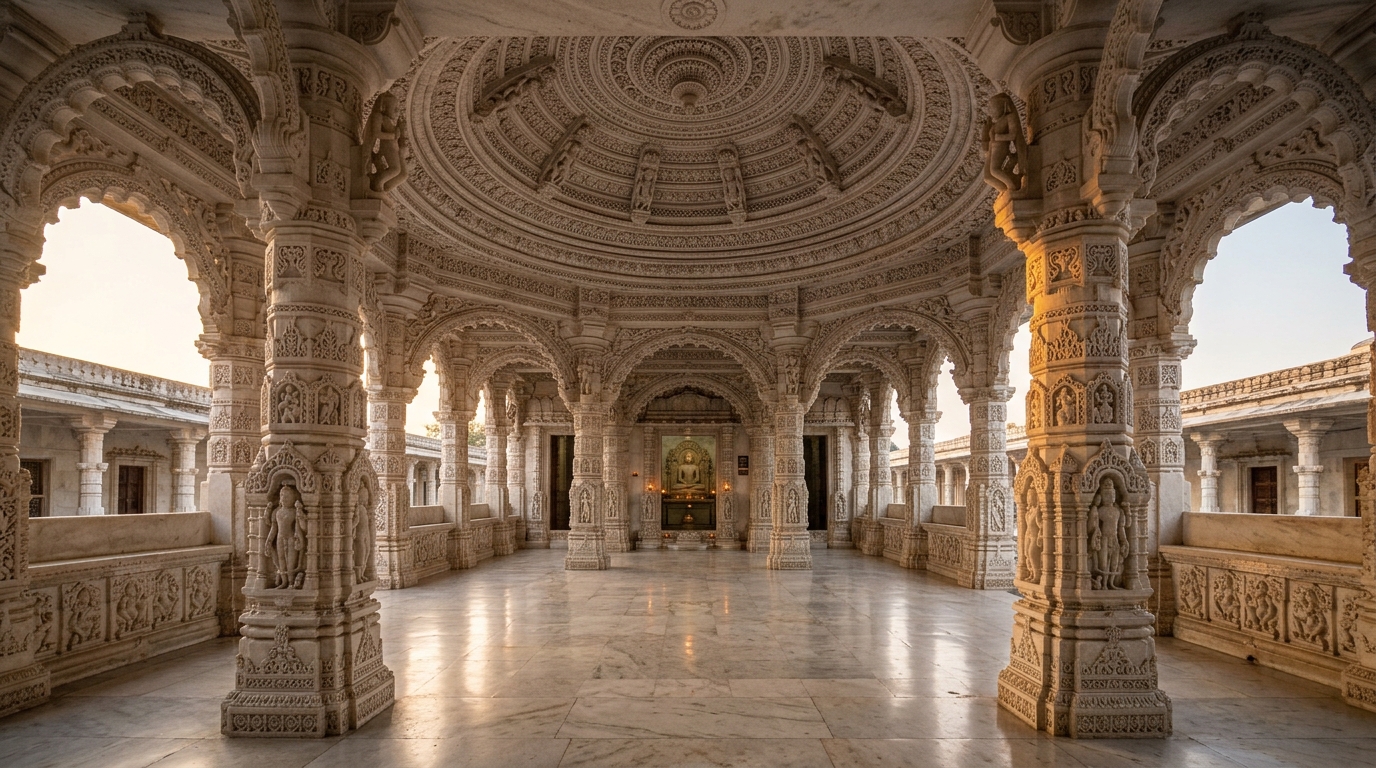
Walk into the Dilwara Temples at Mount Abu at dawn, and you see history etched in white marble. Monks carefully sweep the stone path ahead of them with soft brooms to avoid harming even the smallest insects. This profound commitment to non-violence traces directly back over 2,500 years. Understanding Mahavir Jayanti history requires looking past modern festival celebrations to the ancient milestones that defined a major world religion. Lord Mahavira did not invent Jainism. He formalized its philosophical framework. As the 24th and final Tirthankara, he organized a scattered ascetic tradition into a structured, rigorous path. His life timeline parallels the great intellectual awakening of ancient India.
Who Was Lord Mahavira and When Did He Live?
Vardhamana Mahavira was born into a royal Kshatriya family in Kundagrama, near modern-day Patna, Bihar. Historical consensus places his life roughly between 599 BCE and 527 BCE. This period marked an era of intense philosophical debate across the Indian subcontinent, setting the stage for his spiritual revolution.
Birth and Royal Lineage
The story of Mahavira begins in the ancient Vajji confederacy. He was born to King Siddhartha and Queen Trishala. His birth name, Vardhamana, translates to "the one who grows," reflecting the increased prosperity his kingdom allegedly experienced during his mother's pregnancy. Historical texts confirm his existence as a definable historical entity rather than a mythological figure. Organizations like the Archaeological Survey of India have mapped the geographic realities of his early life. He grew up surrounded by luxury. He received the traditional education of a prince, preparing him for a life of political leadership. Yet, the material wealth of the palace did not satisfy his intellectual curiosity.

The Renunciation at Age 30
At the age of 30, following the death of his parents, Mahavira made a definitive choice. He abandoned his royal title, his wealth, and his family. He left the palace grounds and gave away his possessions. He even discarded his clothing to symbolize a complete detachment from the material world. This act of renunciation marked the beginning of his journey as a spiritual seeker. He chose a life of extreme asceticism. He walked barefoot across the rugged terrain of eastern India. He ate only what was offered to him as alms. This abrupt transition from prince to wandering monk is a central pillar of Mahavir Jayanti history, illustrating the Jain belief that spiritual liberation requires absolute physical detachment.
The Path to Kevala Jnana (Omniscience)
Mahavira spent twelve and a half years wandering the Indian subcontinent as a silent ascetic. He practiced severe austerities, endured harsh climates without shelter, and maintained long periods of fasting. This rigorous chronological timeline culminated in his attainment of Kevala Jnana, or absolute spiritual knowledge.
12 Years of Asceticism
The years following his renunciation were brutal. Mahavira subjected his body to extreme deprivation. He meditated in the scorching summer sun and sat exposed through the freezing winter nights. He frequently fasted for days or weeks at a time. This period of intense physical hardship was not meant as punishment. It was a systematic method to shed accumulated karmic matter from his soul. Jain philosophy teaches that actions bind invisible karmic particles to the soul, weighing it down. Mahavira believed that physical austerity burned off this karma. He remained silent for most of these twelve years. He observed the world closely but refused to engage in worldly disputes.
Attaining Enlightenment at Rijuvalika
The turning point arrived near the village of Jrimbhikagrama. Mahavira sat under a Sala tree on the banks of the Rijuvalika River. After two and a half days of continuous fasting and deep meditation, he achieved Kevala Jnana. This term translates to infinite knowledge or omniscience. He had completely conquered his internal passions—anger, ego, deceit, and greed. Upon reaching this state, he became a "Jina," or conqueror. His followers subsequently became known as Jains. This specific historical milestone transformed him from a silent ascetic into a vocal teacher. He spent the next 30 years traveling barefoot across India to share his spiritual framework with the masses.
What Are the Core Tenets of Mahavira's Teachings?
Mahavira reorganized the existing Jain community into a four-fold order of monks, nuns, laymen, and laywomen. His teachings centered on the personal spiritual struggle against internal passions rather than the worship of external deities. He codified the ethical framework that still dictates Jain life today.
Ahimsa and the Five Vows
The foundation of Mahavira's teachings rests on five great vows, known as the Mahavratas. The first and most critical is Ahimsa, or supreme non-violence. This principle goes beyond avoiding physical harm. It requires practitioners to avoid causing harm through thought, word, or deed. The remaining four vows support this central tenet. Satya demands absolute truthfulness. Asteya prohibits stealing or taking anything not freely given. Brahmacharya requires chastity and control over sensual desires. Aparigraha mandates non-possession and detachment from material goods.
These vows shaped Indian ethical thought for millennia. You can trace their direct influence through history by examining the Timeline of Mahatma Gandhi's Nonviolent Movements in India. Gandhi adopted the Jain concept of Ahimsa as the core strategy for India's independence struggle.
Anekantavada: The Doctrine of Multiple Viewpoints
Mahavira introduced a sophisticated philosophical concept called Anekantavada. This doctrine asserts that truth and reality are complex and have multiple aspects. No single specific viewpoint can capture the complete truth. He often illustrated this using the famous parable of the blind men and the elephant. Each man touches a different part of the animal and describes it differently. All are partially correct, but all are fundamentally incomplete. This intellectual framework encouraged religious tolerance in ancient India. It allowed Jain scholars to engage in peaceful, constructive debates with rival philosophical schools without resorting to dogmatic hostility.
Tracing Mahavir Jayanti History Across the Centuries
The celebration of Mahavira's birth evolved from quiet monastic remembrance into a major public festival over several centuries. Historical records show that the formalization of this date relied on complex lunar calendars. It traditionally falls on the 13th day of the bright half of the Hindu month of Chaitra.
Ancient Texts and the Kalpa Sutra
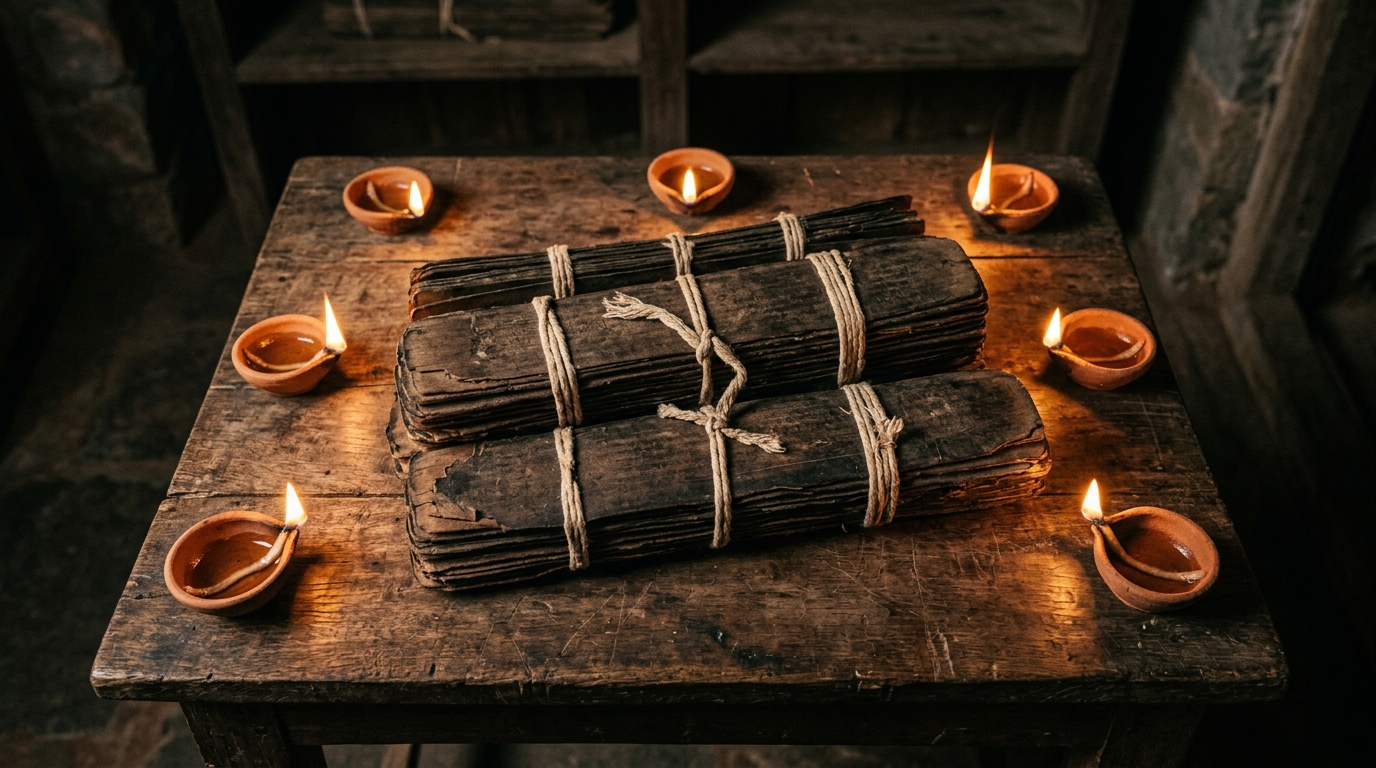
Much of what we know about Mahavir Jayanti history comes from the Kalpa Sutra. This ancient Jain text, traditionally attributed to the scholar Bhadrabahu, contains the detailed biographies of the Tirthankaras. It was compiled roughly 150 years after Mahavira's death. The text meticulously records the astrological alignments present at his birth, his physical characteristics, and the chronological events of his life. Today, educators and historians often use images of these ancient manuscripts with specific alt text like "History of Jain Kalpa Sutra" to help modern students visualize the era. Reading the Kalpa Sutra during the festival remains a central religious practice for Svetambara Jains.
Evolution of the Festival Celebrations
The timing of Mahavir Jayanti shifts annually on the modern Gregorian calendar. It generally occurs in March or April. You can see how this fits into the broader context of spring festivals by reviewing Late April in Indian History: Key Dates, Birthdays, and Milestones. Historically, the celebration involved ritual bathing of Mahavira statues, known as Abhisheka. Monks and nuns lead massive processions through city streets. They carry images of Mahavira on highly decorated chariots. The focus remains heavily on charity. Jain communities historically use this day to fund animal shelters, distribute food to the poor, and organize medical camps.
How Did Jainism Influence Indian Society and Culture?
The legacy of Lord Mahavira extends far beyond theology and personal ethics. Jain communities historically shaped Indian commerce, regional literature, and early medical practices. Their strict dietary and ethical codes created ripple effects that fundamentally altered the broader cultural landscape of the subcontinent.
Contributions to Regional Literature and Art
Mahavira chose to preach in Prakrit, the common language of the masses, rather than Sanskrit, the language of the elite priestly class. This decision democratized spiritual knowledge. It also spurred the development of regional languages. Jain scholars produced massive volumes of literature in Prakrit, Apabhramsha, Kannada, and Tamil. They wrote epics, grammar texts, and mathematical treatises. This literary output preserved local dialects that might otherwise have been lost to history.
Trade, Economics, and the Jain Merchant Class
The strict adherence to Ahimsa had unintended economic consequences. Jain laypeople could not engage in agriculture because plowing the earth killed insects and microorganisms. They could not work in professions involving animal slaughter or weapon manufacturing. Consequently, they migrated toward trade, banking, and commerce. Over centuries, Jains became one of the most prominent mercantile communities in India. They established complex trade networks and early banking systems. Their reputation for honesty, dictated by the vow of Satya, made them highly trusted financiers across different ancient kingdoms.
Architectural Marvels and Visual History
Jain patronage funded some of the most spectacular architecture in Indian history. Their temples are renowned for their intricate carvings and mathematical precision. They also established unique civic institutions. If you explore 1,000 Years of Indian Medical History: A Chronological Guide, you will find that Jains built some of the earliest documented animal hospitals, known as Pinjrapoles.
| Historical Site | Location | Century | Key Architectural Feature |
|---|---|---|---|
| Dilwara Temples | Mount Abu, Rajasthan | 11th-13th Century CE | Intricately carved white marble ceilings and pillars. |
| Gommateshwara Statue | Shravanabelagola, Karnataka | 10th Century CE | 57-foot monolithic statue carved from a single block of granite. |
| Ranakpur Temple | Pali, Rajasthan | 15th Century CE | 1,444 uniquely carved marble pillars. No two are identical. |
| Ellora Jain Caves | Maharashtra | 9th-10th Century CE | Rock-cut architecture featuring detailed reliefs of Tirthankaras. |
The Historical Challenges of Preserving Jain Records
Documenting ancient religious history involves significant tradeoffs. Early Jain teachings were transmitted strictly orally for centuries before being committed to writing. This delay created historical gaps, making the exact chronological dating of Mahavir Jayanti history a subject of ongoing academic refinement.
Oral Tradition vs. Written Texts
For generations after Mahavira's death at Pawapuri, monks memorized his teachings. They passed them down through recitation. A severe twelve-year famine in northern India eventually disrupted this oral tradition. Many monks migrated south to survive. Those who remained in the north struggled to remember the complete texts. Centuries later, Jain leaders convened councils at Pataliputra and Valabhi to finally write down the surviving scriptures. This reliance on human memory meant that some original context was inevitably lost or altered. Historians must carefully cross-reference these late written records with archaeological findings to verify dates.
Reconciling Different Sectarian Accounts
The famine and subsequent migration led to a major schism within Jainism. The community split into two main sects: the Svetambaras (white-clad) and the Digambaras (sky-clad). This division resulted in slightly different historical accounts of Mahavira's life. For example, Svetambara texts state that Mahavira married and had a daughter before his renunciation. Digambara texts insist he remained a lifelong celibate. When researching Mahavir Jayanti history, scholars must acknowledge these sectarian differences. They highlight the difficulty of reconstructing a single, flawless historical narrative from ancient sources.
Open your calendar and mark the upcoming dates for Chaitra Sud 13 to track the next Mahavir Jayanti. Then, explore our timeline of ancient Indian philosophical movements to see exactly what else was happening on the subcontinent during Mahavira's life. Comparing these historical timelines gives you the full picture of India's intellectual evolution.
Related Reading
- Milestones in Indian Women's History: A Chronological Guide
- 1,000 Years of Indian Medical History: A Chronological Guide
- Economic Milestones in Indian History: From 1947 to Present
- What Are the Major Events in Indian History? (FAQ Archive)
FAQ
Q: When is Mahavir Jayanti celebrated? Mahavir Jayanti falls on the 13th day of the bright half of the Hindu month of Chaitra. On the standard Gregorian calendar, this date shifts annually but typically lands in late March or early April.
Q: Is Mahavira the founder of Jainism? No, he is not the founder. Mahavira is the 24th and final Tirthankara (spiritual teacher) of the current time cycle. He reorganized and formalized the existing Jain religion rather than inventing it.
Q: What is the Kalpa Sutra? The Kalpa Sutra is an ancient Jain text containing the biographies of the Tirthankaras. It is the primary historical source for the timeline of Mahavira's birth, asceticism, and spiritual liberation.
Q: Where did Mahavira attain Nirvana? Mahavira attained Nirvana, or final liberation from the cycle of rebirth, at the age of 72. This historical event occurred at Pawapuri, located in the modern-day Nalanda district of Bihar.