Historical Events in Early April: Key Milestones in Indian History

In Short
Early April marks several foundational shifts in India's timeline, from the establishment of the Reserve Bank of India on April 1, 1935, to the climax of the Dandi March on April 6, 1930. These first seven days encompass critical economic, political, and cultural turning points that shaped the modern nation.
Key Takeaways
- The Reserve Bank of India began operations on April 1, 1935, transforming the national economy.
- Mahatma Gandhi broke the salt law on April 6, 1930, escalating the independence movement.
- Chhatrapati Shivaji Maharaj passed away on April 3, 1680, marking a major dynastic shift.
- Early April hosts crucial milestones across military history, regional cinema, and state formations.
On the morning of April 6, 1930, a 60-year-old man waded into the Arabian Sea at Dandi, picked up a lump of salt-rich mud, and quietly defied the British Empire. That single action by Mahatma Gandhi turned a local protest into a nationwide revolution. When we examine Indian history events in April, we find this same pattern repeating across different centuries. The first week of the month routinely hosts decisions, departures, and declarations that alter the subcontinent's trajectory. Understanding these early April milestones provides a clear window into how modern India was built, day by day.
Economic and Administrative Foundations Set in Early April
The first week of April established key economic and administrative frameworks for India, most notably the founding of the Reserve Bank of India on April 1, 1935. This period also saw the implementation of various constitutional reforms and territorial reorganizations that defined the boundaries and financial systems of the state.
April 1 and the Reserve Bank of India
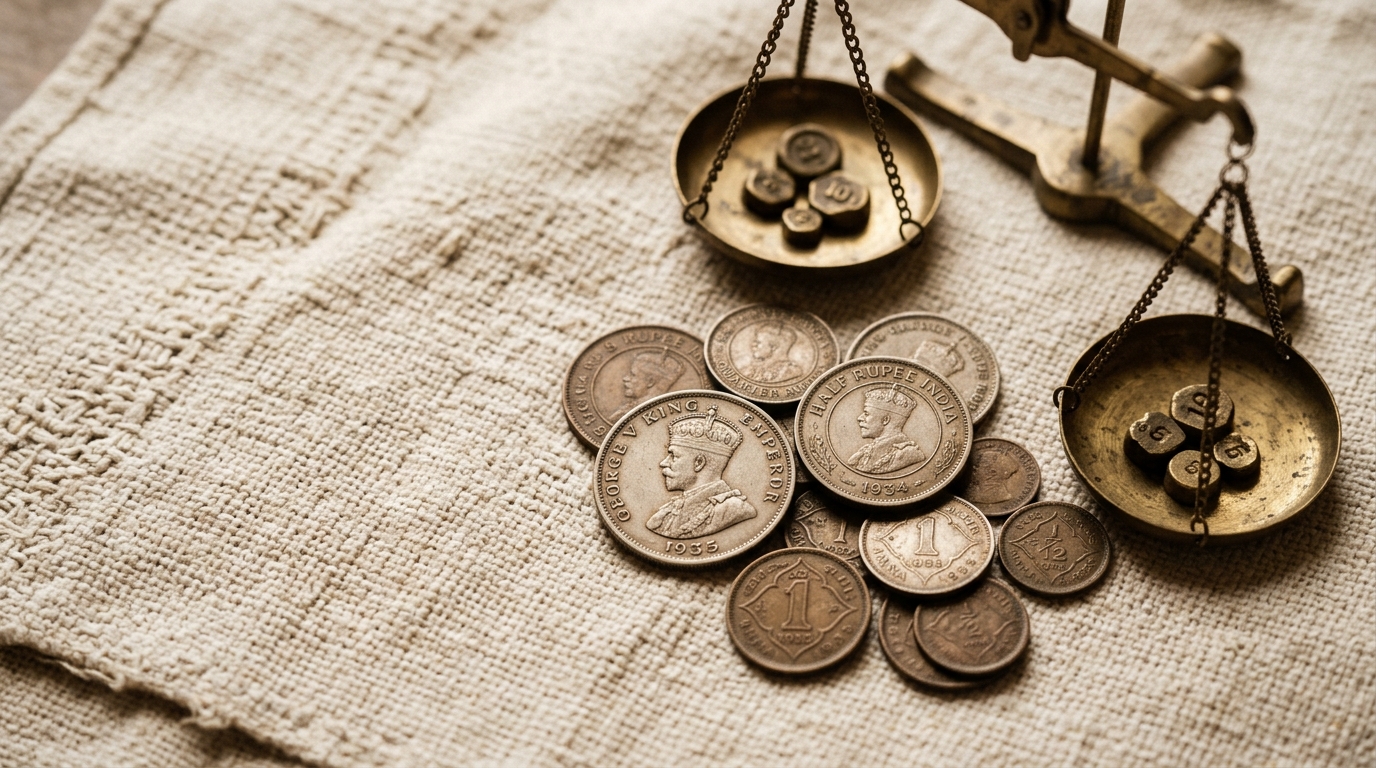
On April 1, 1935, the Reserve Bank of India (RBI) commenced operations, fundamentally altering the economic landscape of the subcontinent. Before this date, the British colonial government managed currency and credit directly. This direct management often led to frequent instability and localized financial crises. The Hilton Young Commission had recommended a central bank years earlier, but it took the Reserve Bank of India Act of 1934 to finally codify its creation. Establishing the RBI provided a centralized mechanism to regulate the issue of bank notes and maintain reserves.
This move shifted immense financial control into a structured institutional framework. It set the stage for post-independence economic sovereignty by providing a mechanism to manage inflation and credit. The bank was initially privately owned but was nationalized in 1949 following independence. You can trace the long-term impacts of this shift through various Economic Milestones in Indian History: From 1947 to Present. The events of this single day in April created the financial bedrock upon which the modern Indian economy operates.
The Formation of New States and Territories
April 1 also serves as a recurring date for territorial reorganization. The most famous example is the formation of Odisha (then Orissa) as a separate province in 1936. The British administration carved the new province out of the Bihar and Orissa Province. This decision followed decades of continuous demand by the Odia-speaking population for linguistic recognition. This administrative milestone is celebrated annually as Utkal Divas.
State reorganization often occurs at the start of the financial year to simplify administrative transitions and tax collection. Consequently, early April remains a busy period in the historical archives for state boundary commissions and legislative enactments. Recognizing these geographical shifts helps historians map the changing political identity of the Indian populace over the 20th century. When you look at Indian history events in April, you are often looking at the literal redrawing of the map.
Why Are Early Indian History Events in April Crucial for Independence?
Early April hosts some of the most decisive moments in the Indian independence movement, climaxing with the conclusion of the Salt Satyagraha on April 6, 1930. These days transformed localized grievances into mass civil disobedience, forcing the British colonial government to recognize the growing political power of the Indian populace.
The Climax of the Salt March
The journey that began in mid-March reached its pivotal conclusion during the first week of April. Mahatma Gandhi and his followers arrived at the coastal village of Dandi on April 5, 1930, after walking 240 miles. The following morning, April 6, Gandhi officially broke the British salt laws by boiling seawater to produce illegal salt. This calculated act of defiance was entirely non-violent. Yet, it struck directly at the economic monopoly of the colonial state.
News of the event spread rapidly via telegraph and newspapers. This prompted millions across the subcontinent to manufacture their own salt in open defiance. The British responded with mass arrests, detaining over 60,000 people by the end of the year. If you want a day-by-day breakdown of this journey, The Dandi March Day-by-Day: A Timeline of the 1930 Salt Satyagraha covers the logistical brilliance of the campaign. The events of early April 1930 proved that mass nonviolent action could effectively paralyze colonial administration.
The Rowlatt Satyagraha of 1919
Another major April milestone occurred eleven years prior, during the intense political climate of 1919. On April 6, 1919, Gandhi launched a nationwide hartal (strike) against the draconian Rowlatt Act. This act allowed the British to imprison political activists without trial and restricted freedom of the press. Shops closed, public transport halted, and citizens gathered in massive numbers for public meetings across major cities.
This date effectively marked the beginning of the Non-Cooperation Movement. It shifted the freedom struggle from elite petitions to mass street protests. The events of early April 1919 created a tense atmosphere that would tragically culminate in the Jallianwala Bagh massacre just a week later. The timeline of the independence movement heavily relies on these early April mobilizations to demonstrate the growing political consciousness of the Indian public.
Significant Cultural and Dynastic Shifts in the First Week
Early April marks the end of eras for major Indian dynasties and the birth of influential cultural movements. The death of Maratha ruler Chhatrapati Shivaji Maharaj on April 3, 1680, stands out as a critical dynastic milestone, while early April dates also host significant developments in regional cinema and literature.
The Legacy of Chhatrapati Shivaji Maharaj
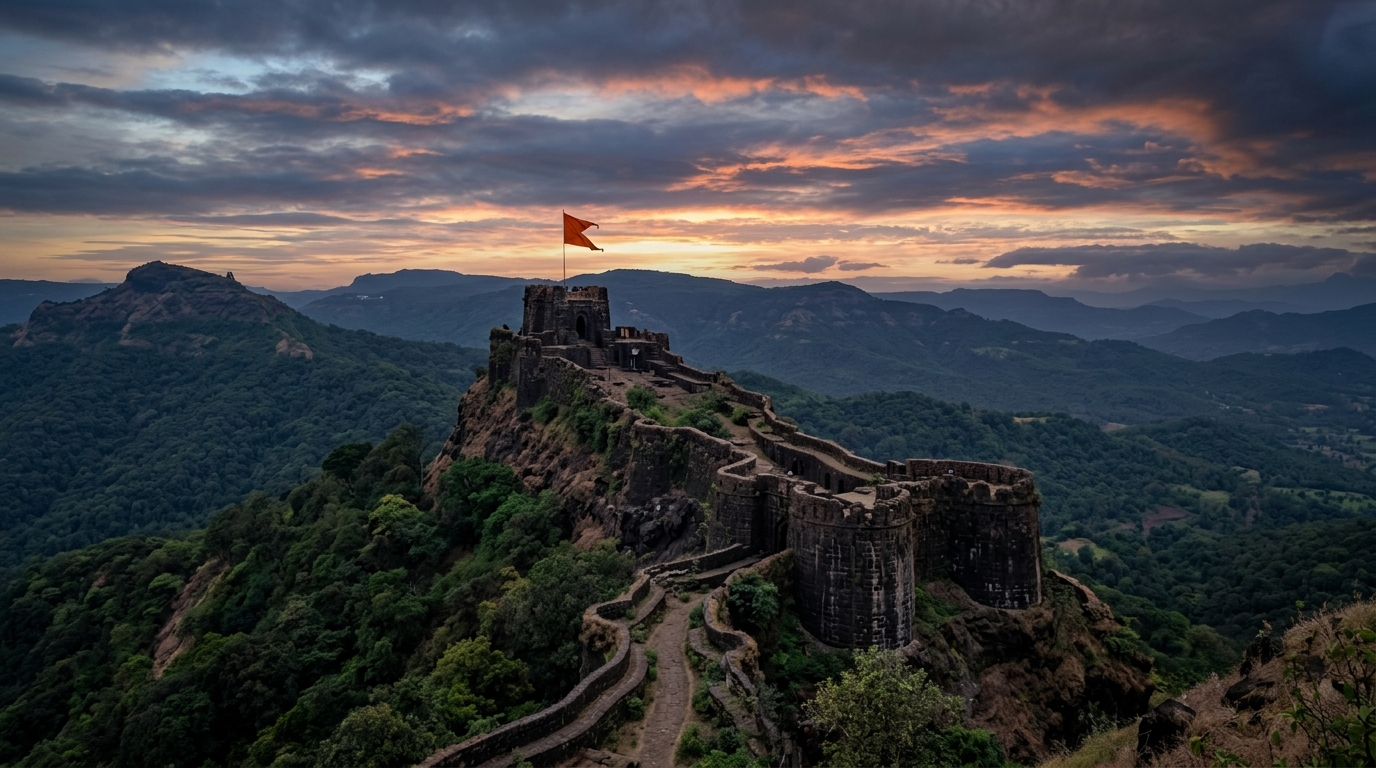
On April 3, 1680, Chhatrapati Shivaji Maharaj, the founder of the Maratha Empire, passed away at Raigad Fort. His death created an immediate power vacuum in the Deccan region. This prompted the Mughal Emperor Aurangzeb to launch a massive southward military campaign. Shivaji had spent decades building a highly mobile military force and a decentralized administrative system. His governance model challenged Mughal hegemony and established a powerful independent state.
His passing tested the resilience of the Maratha state, which eventually survived and expanded under subsequent Peshwas. Defining historical figures like Shivaji as distinct entities in historical records helps researchers understand the localized impact of his governance. Explicitly linking his administrative policies to later statecraft shows continuity in Indian political thought. The events following his death in early April reshaped the military geography of the Indian subcontinent for the next century.
Milestones in Indian Cinema and Arts
The first week of April also records notable firsts in the realm of Indian culture and entertainment. The Hindi theatre scene saw major structural changes in the early 20th century. Traveling troupes formalized their April performance schedules to align with spring festivals. Many classic Indian films, particularly in regional languages, targeted early April releases. Studios wanted to capitalize on the new year festivities celebrated across different states during this month.
You can find several of these release dates archived in Record-Breaking Runs: Historic Dates in Indian Regional Cinema. Historical sites associated with these early studios thrive on imagery and visual documentation. Archival photos with descriptive historical text remain highly valuable for modern researchers tracking cultural evolution. These cultural milestones remind us that history is not solely made on battlefields or in parliaments.
How Do We Track Indian History Events in April Today?
We track Indian history events in April by digitizing primary sources, compiling daily historical archives, and mapping entity relationships between key figures and locations. This systematic approach allows students and researchers to quickly cross-reference dates, ensuring accurate historical timelines and preventing the loss of localized regional history.
The Role of Daily Historical Archives
Archiving daily history requires a meticulous approach to verifying primary sources. Researchers must carefully cross-reference dates across different calendars. The Gregorian calendar we use today often requires conversion when dealing with pre-colonial Indian historical records. These older records relied on lunar or solar regional calendars that shifted year to year. A robust daily history archive standardizes these dates for modern readers.
This allows us to see what happened on April 4 across the years 1500, 1800, and 1950 simultaneously. This vertical slice of time reveals unexpected patterns in historical events. For instance, we see a tendency for colonial tax laws and administrative changes to be enacted in early April. Maintaining these databases ensures that smaller, regional milestones are not overshadowed by national events in textbooks.
Digital Preservation and Visual History
Modern historical research heavily depends on visual search and digital entity definition. Historical sites and museums digitize their collections, tagging images with specific dates and locations. When a student searches for Indian history events in April, they need archival photographs that place the event in its physical context. Adding relevant photos with descriptive text drives significant engagement for historical archives.
Explicitly defining Indian historical figures in digital databases using linked data properties is essential. It helps search engines connect a leader's birthday with their major achievements across different eras. This structured data approach is vital for building accurate digital timelines. You can see this methodology applied in Dr. B.R. Ambedkar's Life: A Chronological Timeline of Legacy. By organizing history day-by-day, we make complex narratives accessible and scannable for the modern reader.
Notable Births and Deaths Between April 1 and April 7
The first week of April contains the birth and death anniversaries of several prominent figures who shaped India's social, political, and scientific landscapes. These dates serve as annual moments of reflection, honoring the contributions of reformers, military leaders, and artists who defined their respective eras.
Social Reformers and Political Leaders
April 5 marks the birth anniversary of Babu Jagjivan Ram. He was a prominent Dalit leader, freedom fighter, and long-serving cabinet minister. Born in 1908, his political career spanned over five decades. During this time, he played a crucial role in shaping India's labor laws and agricultural policies. His birthday is often observed as Samata Diwas (Equality Day) to honor his lifelong fight against untouchability.
Recognizing specific birth dates anchors our understanding of when different generations of leaders emerged. The early days of April also remember figures like Kamaladevi Chattopadhyay, born on April 3, 1903. Her work in reviving Indian handicrafts and theater remains foundational to post-independence cultural policy. Tracking these birthdays helps us map the human element behind large-scale policy changes.
Military and Scientific Figures
The military history of India also honors several key figures during this week. The legendary Maratha general Baji Rao I is remembered for his strategic brilliance. He expanded the Maratha Empire across central India during the 18th century. Localized historical records often tie the start of his key campaigns to the early April harvest season.
In the realm of science, April marks the passing of several pioneers who built India's modern research institutions. Documenting these specific dates provides a structured way to study scientific advancement over the centuries. When you browse daily history archives, you quickly realize the density of significant lives tied to this month. The first week of April is disproportionately packed with the milestones of institution builders.
What Role Did Early April Play in Military History?
Early April witnessed several critical military engagements that defined the borders and security of the Indian subcontinent. From pre-colonial battles aligned with the spring harvest to pivotal World War II clashes on the eastern frontier, these dates mark significant tactical milestones.
The Battle of Kangla Tongbi (April 6, 1944)
On April 6, 1944, during the Second World War, a small detachment of the British Indian Army fought a desperate defensive action. The battle took place at Kangla Tongbi near Imphal in northeast India. Japanese forces had launched a massive offensive to capture British supply dumps and push into India proper. The personnel of the Indian Army Ordnance Corps took up arms to defend their position. These men were mostly non-combatant clerks and storekeepers, not frontline infantry.
They successfully held off the Japanese advance for crucial hours under heavy fire. Their resistance prevented the immediate capture of vital ammunition and supplies. This stalled the Japanese momentum in the region and bought time for reinforcements. This early April engagement remains a highly celebrated milestone in the history of the Army Ordnance Corps. It highlights how auxiliary units played decisive roles in the broader theater of the Burma Campaign.
Pre-Colonial Spring Campaigns
In pre-colonial India, military campaigns frequently commenced in early April. This timing coincided with the end of the spring harvest across much of the subcontinent. Armies required vast amounts of grain and fodder to sustain themselves on the march. Making the post-harvest period strategically ideal for mobilization ensured supply lines remained full. Rulers across the Delhi Sultanate, the Mughal Empire, and the Maratha Confederacy routinely scheduled their troop movements during this window.
The clear weather preceding the summer monsoon allowed for rapid cavalry movements. It also permitted the efficient transport of heavy siege artillery across dry riverbeds. You can see this seasonal warfare pattern reflected in later conflicts, such as those detailed in April 21, 1526: A Historical Timeline of the First Battle of Panipat. Understanding these logistical realities helps historians explain why so many decisive territorial shifts occurred during the spring months.
Related Reading
- What Are the Major Events in Indian History? (FAQ Archive)
- Today in Indian History: March Events, Birthdays, and Milestones
- Late April in Indian History: Key Dates, Birthdays, and Milestones
- Milestones in Indian Women's History: A Chronological Guide
FAQ
Q: What is the most significant historical event in India during early April? A: The conclusion of the Dandi March on April 6, 1930, stands out as the most significant event. Mahatma Gandhi's act of breaking the salt law triggered nationwide civil disobedience and fundamentally shifted the independence struggle.
Q: Why was the Reserve Bank of India established on April 1? A: April 1 marks the beginning of the financial year in India. Establishing the RBI on April 1, 1935, aligned the new central bank's operations with the standard accounting and taxation cycle of the government.
Q: How do historians verify dates from pre-colonial Indian history? A: Historians cross-reference regional lunar and solar calendars with contemporary foreign records, such as Persian court chronicles or European trade logs. They then convert these dates into the standard Gregorian calendar for modern archives.
Q: What major state was formed in early April? A: The province of Odisha (formerly Orissa) was formed on April 1, 1936. It was carved out of the Bihar and Orissa Province based on linguistic demographics, an event celebrated today as Utkal Divas.
Further reading
- The Dandi March Day-by-Day: A Timeline of the 1930 Salt Satyagraha — A detailed logistical breakdown of Gandhi's pivotal 240-mile journey to the sea.
- Economic Milestones in Indian History: From 1947 to Present — Trace how the establishment of institutions like the RBI shaped modern fiscal policy.
- Late April in Indian History: Key Dates, Birthdays, and Milestones — Continue exploring the historical events that occurred in the latter half of the month.
- digital-archives-of-india — Learn how visual search and entity mapping are preserving daily historical records for future generations.