Historic Milestones in Indian Badminton: A Timeline of Triumphs
What Is the Summary of Indian Badminton History?
Indian badminton history is the chronological evolution of competitive shuttlecock play from its 1870s colonial origins in Pune into a multi-medal Olympic sport. According to Badminton World Federation records, India has secured three Olympic medals, multiple world number one rankings across singles and doubles, and the historic 2022 Thomas Cup team championship title.
Key Takeaways
- Modern badminton rules originated in Pune during the 1870s under British administration.
- Prakash Padukone and Pullela Gopichand secured landmark All England Open titles in 1980 and 2001.
- Saina Nehwal and P.V. Sindhu secured three Olympic medals across three consecutive Games between 2012 and 2021.
- India won its first Thomas Cup in 2022, defeating 14-time champions Indonesia 3–0.
- Satwiksairaj Rankireddy and Chirag Shetty became India's first world number one doubles pair in 2023.
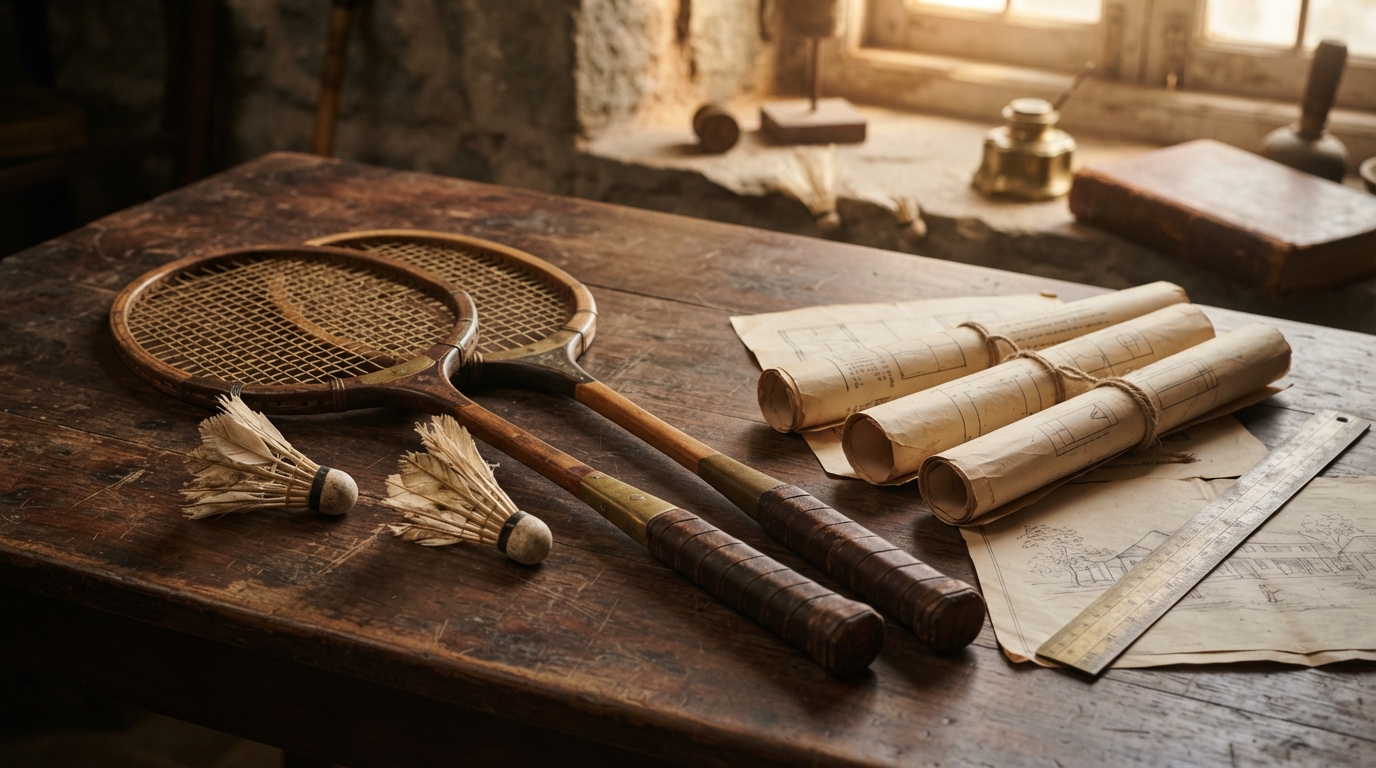
Most sports fans assume badminton originated on English country estates. In reality, British military officers formalized the modern competitive game in the garrison town of Pune during the 1870s under the name "Poona."
Indian badminton history reflects an evolution across a century and a half. The sport shifted from elite colonial recreation into a system producing world champions and Olympic medalists. While countries like China and Indonesia dominated the late 20th century, Indian shuttlers systematically built the technical, physical, and tactical tools required to challenge that monopoly.
Tracking this timeline reveals how Indian athletes moved from isolated individual triumphs to broad team depth. The nation's journey highlights early institutional milestones, the legendary All England victories, the women's singles dominance, and the recent doubles revolution.
The Colonial Origins and Early Pioneers of Indian Badminton History
Indian badminton history traces its formal roots to 1870s Pune, where British army officers drafted the game's earliest structured regulations. Early Indian pioneers, such as Nandu Natekar in the 1950s and Dinesh Khanna in the 1960s, achieved significant continental victories that established the framework for modern professional play across the country.
+-------------------------------------------------------------+
| EARLY INDIAN BADMINTON TIMELINE |
+-------------------------------------------------------------+
| 1870s: British officers formalize "Poona" rules in Pune |
| 1899 : Badminton Association of India (BAI) founded |
| 1956 : Nandu Natekar wins Selangor International (Malaysia)|
| 1965 : Dinesh Khanna captures Asian Championship Gold |
+-------------------------------------------------------------+
The 'Poona' Rules and Institutional Beginnings
During the 1870s, officers of the British Indian Army stationed in Pune added a net to the traditional game of battledore and shuttlecock. They drafted the first written rules of "Poona" in 1873 to convert an informal leisure activity into a competitive sport. Officers returning to England brought these rules to the Duke of Beaufort’s Badminton House in Gloucestershire, which gave the sport its official global name.
Formal governance in India followed shortly after. The Badminton Association of India (BAI) was founded in 1899, making it one of the oldest national governing bodies in world sport according to official records from the [BAI, 2024]. Early clubs in Calcutta, Bombay, and Madras organized regional tournaments, standardizing court dimensions and net heights across the subcontinent.
Nandu Natekar and the First International Breakthroughs
India produced its first international icon in the post-independence era. Nandu Natekar was a master of wrist-work, deception, and front-court control. In 1956, Natekar won the Selangor International tournament in Malaysia, becoming the first Indian badminton player to capture an international title on foreign soil.
Natekar led India to the inter-zone finals of the Thomas Cup during the 1950s. His success proved that Indian players could overcome traditional powerhouses using tactical placement rather than raw power. In 1961, Natekar received the inaugural Arjuna Award for badminton, establishing national recognition for the sport alongside traditional track disciplines covered in the record of historic milestones in Indian athletics.
Dinesh Khanna carried this momentum into the next decade. In 1965, Khanna won the Men's Singles title at the Badminton Asia Championships in Lucknow. He defeated Thailand's Sangob Rattanusorn in the final, becoming the first Indian to claim an Asian continental championship. Khanna also earned a bronze medal at the 1966 Commonwealth Games in Kingston, Jamaica.
What Were the Early Structural Challenges in Domestic Sport?
Early structural challenges in domestic sport were the infrastructural and financial barriers that constrained Indian badminton players prior to the 1980s. According to historical records of the Badminton Association of India, domestic athletes lacked dedicated indoor training venues, competing on outdoor mud courts or teakwood gym floors with heavily taxed, substandard feathered shuttlecocks.
Shuttlecock availability and transport logistics presented persistent hurdles during the 1950s, 1960s, and 1970s. High import duties on feathered shuttlecocks forced domestic competitors to practice with local equipment. Competitors traveled in unreserved train compartments to national ranking tournaments with minimal financial support, relying on personal funds, regional club patrons, and public-sector enterprise jobs to sustain athletic careers.
How Did Prakash Padukone and Gopichand Build Global Credibility?
Prakash Padukone and Pullela Gopichand put India on the world badminton map by winning the prestigious All England Open in 1980 and 2001, respectively. Their victories proved that Indian shuttlers could outplay top Asian and European competitors through tactical precision, wrist work, and superior mental endurance on international courts.
       +-------------------------------------------------------------+
       |               THE ALL ENGLAND BREAKTHROUGHS                 |
       +-------------------------------------------------------------+
       |  1980: Prakash Padukone defeats Liem Swie King (15-3, 15-10)|
       |  1980: Padukone becomes BWF World No. 1                     |
       |  1982: Syed Modi wins Commonwealth Games Gold               |
       |  2001: Pullela Gopichand defeats Chen Hong (15-12, 15-6)    |
       +-------------------------------------------------------------+
Prakash Padukone’s 1980 All England Triumph and World No. 1 Status
On March 23, 1980, Prakash Padukone made history at Wembley Arena in London. He faced Indonesia’s Liem Swie King, the defending champion known for his jumping smash. Padukone used deception, drop shots, and flat baseline clears to control the pace. He defeated King 15–3, 15–10 to become the first Indian to win the All England Open Badminton Championships.
Padukone reached the BWF World No. 1 ranking in 1980, becoming the first Indian shuttler to hold the top spot according to [Olympics.com, 2024]. He backed this victory by winning the inaugural World Cup in Kuala Lumpur in 1981 and a bronze medal at the 1983 BWF World Championships in Copenhagen. Padukone moved to Denmark for training, exposing Indian badminton to European fitness routines and professional club structures.
How Did Syed Modi Achieve Commonwealth Dominance?
Syed Modi was an eight-time Indian national champion who established international dominance in Indian badminton history during the 1980s. According to the Badminton Association of India, Modi won eight consecutive Senior National Championships from 1980 through 1987, utilizing fluid court movement, technical wrist deception, and attacking play across South Asian and international tournaments.
Modi reached his international peak at the 1982 Commonwealth Games in Brisbane. Modi defeated England’s Nick Yates 7–15, 15–5, 15–7 to win the Men's Singles gold medal. That same year, Modi won bronze at the 1982 Asian Games in New Delhi. Modi's accomplishments showed that Indian men's singles possessed top-tier talent beyond Prakash Padukone.
Pullela Gopichand’s 2001 All England Masterclass
Two decades after Padukone's win, Pullela Gopichand restored India to the top of international badminton. Gopichand entered the 2001 All England Open unseeded and recovering from multiple career-threatening knee surgeries. In the semifinals, he faced Denmark’s Peter Gade, then the world's top-ranked player. Gopichand played an aggressive attacking match, defeating Gade in straight sets.
In the final on March 11, 2001, Gopichand defeated China’s Chen Hong 15–12, 15–6. His victory made him the second Indian to lift the All England trophy. Gopichand declined lucrative corporate endorsements after his win, choosing instead to focus on building a world-class training center in Hyderabad. That decision changed the trajectory of the sport in India.
What Was the Golden Era of Women's Singles and Olympic Podiums?
The golden era of women's singles is the competitive decade between 2012 and 2021 when Saina Nehwal and P.V. Sindhu secured three Olympic medals in Indian badminton history. According to International Olympic Committee records, Nehwal won bronze at London 2012, while Sindhu captured silver at Rio 2016, bronze at Tokyo 2020, and gold at the 2019 World Championships.
       +-------------------------------------------------------------+
       |               OLYMPIC & WORLD CHAMPIONSHIP GLORY            |
       +-------------------------------------------------------------+
       |  2012: Saina Nehwal wins London Olympic Bronze              |
       |  2015: Saina Nehwal becomes BWF World No. 1                 |
       |  2016: P.V. Sindhu wins Rio Olympic Silver                  |
       |  2019: P.V. Sindhu wins World Championship Gold (Basel)     |
       |  2021: P.V. Sindhu wins Tokyo Olympic Bronze                |
       +-------------------------------------------------------------+
Saina Nehwal’s Historic Trailblazing and World No. 1 Rank
Saina Nehwal broke the traditional East Asian monopoly in women's badminton. In 2006, she became the first Indian woman to win a 4-star tournament by claiming the Philippines Open. Two years later, she reached the quarterfinals at the 2008 Beijing Olympics, showing that Indian women could contend at the highest level.
Nehwal's defining moment arrived at the 2012 London Olympics. She captured the Women's Singles bronze medal, securing India’s first Olympic badminton medal as recorded by [Olympics.com, 2023]. In March 2015, Nehwal won the India Open Super Series and became the first Indian woman to achieve the BWF World No. 1 ranking according to [Olympics.com, 2024]. Over her career, she won 24 international individual titles, including three Commonwealth Games golds and two BWF World Championship medals.
P.V. Sindhu’s Big-Stage Dominance and World Championship Gold
Pusarla Venkata Sindhu built on Nehwal’s legacy, establishing one of the most consistent records in major tournament history. At the 2016 Rio Olympics, 21-year-old Sindhu reached the final, securing a silver medal after an 83-minute match against Spain's Carolina Marin. Her achievement is documented in the archive of India at the Olympics: A Timeline of Historic Sporting Milestones.
Sindhu reached her athletic peak at the 2019 BWF World Championships in Basel. She defeated Japan’s Nozomi Okuhara 21–7, 21–7 in 38 minutes to become India's first badminton World Champion. At the 2020 Tokyo Olympics (held in 2021), Sindhu defeated China’s He Bingjiao in straight sets to claim bronze. This win made her the first Indian woman to earn two individual Olympic medals, a milestone highlighted in milestones in Indian women's history.
Sindhu accumulated five BWF World Championship medals between 2013 and 2019:
- Gold: 2019 Basel
- Silver: 2017 Glasgow, 2018 Nanjing
- Bronze: 2013 Guangzhou, 2014 Copenhagen
What Was the Institutional Impact of the Hyderabad Academy System?
The Gopichand Badminton Academy is a high-performance training institution established in Hyderabad during the mid-2000s that produced multiple Olympic medalists and world champions. Founded by All England champion Pullela Gopichand, the eight-court facility modernized Indian training through sports science, daily 4:30 AM technical sessions, foreign fitness coaches, recovery infrastructure, and structured boarding programs.
The Gopichand Badminton Academy integrated dedicated physiotherapists, foreign strength conditioning specialists, and video match analysis into daily player development routines. This centralized training system eliminated the administrative delays that previously held back Indian talent. The Hyderabad academy produced Olympic medalists Saina Nehwal and P.V. Sindhu, 2019 World Champion Sindhu, and men's BWF World No. 1 Kidambi Srikanth.
What Drove the Doubles Revolution and the 2022 Thomas Cup Victory?
India transformed from a singles-focused nation into a balanced badminton powerhouse by investing in specialized doubles coaching and modern tactics. This structural shift culminated in winning the 2022 Thomas Cup against 14-time champions Indonesia, alongside historic World No. 1 rankings in men's doubles by Satwiksairaj Rankireddy and Chirag Shetty.
       +-------------------------------------------------------------+
       |             THE DOUBLES & TEAM SUCCESS MILESTONES           |
       +-------------------------------------------------------------+
       |  2022: India defeats Indonesia 3-0 to win maiden Thomas Cup |
       |  2023: Satwik/Chirag win Asian Games Gold (Hangzhou)        |
       |  2023: Satwik breaks world smash record (565 km/h)          |
       |  2024: Satwik/Chirag attain BWF World No. 1 ranking         |
       |  2024: Women's team wins Badminton Asia Team Championship   |
       +-------------------------------------------------------------+
The 2022 Thomas Cup: A 73-Year Breakthrough
On May 15, 2022, India achieved its greatest team triumph at the Impact Arena in Bangkok. The Indian men's team won the Thomas Cup for the first time, ending a 73-year drought since the tournament began in 1949, as reported by [BWF / Scroll.in, 2022]. India entered the knockout rounds as underdogs before beating Malaysia 3–2 in the quarterfinals and Denmark 3–2 in the semifinals.
In the final, India faced Indonesia, the most successful nation in tournament history with 14 titles. India swept the final 3–0:
- First Singles: Lakshya Sen defeated Anthony Sinisuka Ginting (8–21, 21–17, 21–16).
- First Doubles: Satwiksairaj Rankireddy and Chirag Shetty saved four match points to beat Mohammad Ahsan and Kevin Sanjaya Sukamuljo (18–21, 23–21, 21–19).
- Second Singles: Kidambi Srikanth defeated Jonatan Christie (21–15, 23–21).
Chief National Coach Pullela Gopichand stated that this victory proved India had evolved from relying on isolated prodigies to boasting genuine squad depth across all events, according to [Mathrubhumi, 2022]. The team win showed that Indian shuttlers could perform under pressure against elite doubles and singles combinations.
Satwiksairaj Rankireddy and Chirag Shetty’s Global Ascent
India’s doubles turnaround was led by Satwiksairaj Rankireddy and Chirag Shetty, known to fans as "Sat-Chi." The pair won India's first BWF Super 500 title at the 2019 Thailand Open, followed by a Super 1000 victory at the 2023 Indonesia Open. In 2023, they won gold at the Badminton Asia Championships and the Asian Games in Hangzhou.
Rankireddy set an official Guinness World Record for the fastest badminton smash in history, clocking 565 km/h (351 mph) during testing at a Yonex facility, as certified by [Guinness World Records, 2023]. By early 2024, the pair climbed to BWF World No. 1 in Men's Doubles, as confirmed by [Olympics.com, 2024]. Their success broke the historical assumption that Indian players lacked the power and hand speed required for elite doubles play.
Foreign Coaching Specialists and Doubles Tactics
The rise of Indian doubles stemmed from targeted investments in foreign coaching. In 2015, the Badminton Association of India hired Malaysian specialist Tan Kim Her. Tan identified Rankireddy’s baseline power and Shetty’s net interception speed, pairing them together despite resistance from domestic coaches who wanted them in singles.
Later, Danish Olympic silver medalist Mathias Boe joined as national doubles coach. Boe redesigned the pair's serve-and-return routines, tactical positioning, and mid-court defensive blocks. He replaced passive baseline rallies with aggressive flat exchanges. This technical adjustment allowed Indian doubles pairs to compete evenly with traditional powerhouses like South Korea, Japan, and China.
Modern Training Hubs and Next-Generation Milestones in Indian Badminton History
Indian badminton history now features decentralized high-performance centers, sports science support, and rising international contenders across all disciplines. Victories like the 2024 Badminton Asia Team Championship title and Lakshya Sen's Paris Olympic semifinal run demonstrate that India possesses a sustainable talent pipeline for international competitions.
       +-------------------------------------------------------------+
       |             MODERN INDIAN TRAINING ECOSYSTEM                |
       +-------------------------------------------------------------+
       |  Padukone-Dravid Centre of Excellence (Bangalore)           |
       |  Gopichand Badminton Academy (Hyderabad)                   |
       |  National Centre of Excellence (Guwahati)                   |
       +-------------------------------------------------------------+
Decentralizing Talent: Beyond Hyderabad
Indian badminton no longer relies on a single training center. The Padukone-Dravid Centre for Sports Excellence (PDCSE) in Bangalore has become a premier training ground under head coach Vimal Kumar. The center features sports science labs, altitude-simulation chambers, and data-driven biomechanical analysis.
In 2023, the Badminton Association of India launched the National Centre of Excellence in Guwahati, Assam. This facility houses 24 indoor courts, housing for 100 athletes, and international coaching staff led by former world champion Ivan Sozonov. Former World No. 1 Prakash Padukone noted that while infrastructure and government funding now match elite global standards, sustaining top-tier dominance requires younger players to focus on psychological conditioning and match execution, as reported by [India Today, 2024].
Young Prodigies and Continental Success
India's talent pipeline continues to deliver international medals. In February 2024, the Indian women's team won gold at the Badminton Asia Team Championships in Shah Alam, Malaysia, according to [Olympics.com, 2024]. The team defeated China, Japan, and Thailand. In the final against Thailand, 17-year-old Anmol Kharb won the decisive fifth rubber (21–14, 21–9) against World No. 45 Pornpicha Choeikeewong.
In men's singles, Lakshya Sen proved his elite pedigree. Sen won bronze at the 2021 World Championships and gold at the 2022 Commonwealth Games. At the 2024 Paris Olympic Games, Sen became the first Indian male shuttler to reach the Olympic singles semifinals, as recorded by the [BWF, 2024].
| Year | Milestone Event | Key Shuttlers | Historical Significance |
|---|---|---|---|
| 1873 | Formalization of "Poona" Rules | British Officers in Pune | Created the foundational rules for modern badminton |
| 1956 | Selangor International Win | Nandu Natekar | First international title won by an Indian shuttler |
| 1965 | Asian Badminton Championship | Dinesh Khanna | First Asian continental singles gold medal for India |
| 1980 | All England Open Championship | Prakash Padukone | First All England title and first BWF World No. 1 ranking |
| 1982 | Commonwealth Games Gold | Syed Modi | Solidified India's singles presence across the Commonwealth |
| 2001 | All England Open Championship | Pullela Gopichand | Restored India to the top of international men's singles |
| 2012 | London Olympic Games | Saina Nehwal | Won India's first Olympic medal (Bronze) in badminton |
| 2015 | BWF World Rankings | Saina Nehwal | First Indian female player to attain World No. 1 |
| 2016 | Rio Olympic Games | P.V. Sindhu | First Indian badminton player to secure an Olympic Silver |
| 2018 | BWF World Rankings | Kidambi Srikanth | Reached World No. 1 in Men's Singles |
| 2019 | BWF World Championships | P.V. Sindhu | Won India’s first World Championship Gold (Basel) |
| 2021 | Tokyo Olympic Games | P.V. Sindhu | First Indian woman to secure two individual Olympic medals |
| 2022 | Thomas Cup Championship | Indian Men's Team | Won maiden team world championship, beating Indonesia 3–0 |
| 2023 | Asian Games (Hangzhou) | Satwik / Chirag | First Asian Games Gold medal in Indian badminton history |
| 2024 | Badminton Asia Team Champ. | Indian Women's Team | First continental women's team gold medal |
These milestones reflect structured long-term development. The progress of Indian badminton mirrors the broader sporting evolutions chronicled in the timeline of 25 historic Indian events from 2000 to 2025. The combination of specialized training facilities, strategic doubles investment, and dedicated junior development programs ensures that Indian shuttlers will continue to contend for major titles on the international circuit.
Frequently Asked Questions
Q: Who was the first Indian to achieve the BWF World No. 1 ranking in badminton?
Prakash Padukone became the first Indian to reach the BWF World No. 1 ranking in 1980 following his All England Open victory. Saina Nehwal became the first Indian woman to achieve the top spot in 2015. Kidambi Srikanth and the doubles pair of Satwiksairaj Rankireddy and Chirag Shetty later reached World No. 1 in their respective categories.
Q: How many Olympic medals has India won in badminton?
India has won three Olympic medals in badminton, all in women's singles. Saina Nehwal won a bronze medal at the 2012 London Games. P.V. Sindhu captured a silver medal at the 2016 Rio Games and followed with a bronze medal at the 2020 Tokyo Games.
Q: Why was the 2022 Thomas Cup victory significant for India?
The 2022 Thomas Cup victory was India's first title in the tournament's 73-year history. India defeated 14-time champions Indonesia 3–0 in the final. The win confirmed that India had developed world-class squad depth across both singles and doubles disciplines.
Q: Where were the modern rules of badminton first established in India?
The modern rules were established in Pune during the 1870s by British army officers who added a net to the traditional game of battledore and shuttlecock. The game was initially known as "Poona" before being introduced to England and renamed badminton.
Explore the daily archives at IndiaOnThisDay to discover how specific dates in Indian sporting history shaped modern athletic achievements across the country.
Related Reading
- Milestones in Indian Women's History: A Chronological Guide
- 1,000 Years of Indian Medical History: A Chronological Guide
- Economic Milestones in Indian History: From 1947 to Present
- What Are the Major Events in Indian History? (FAQ Archive)
Sources
- History of badminton in India: The complete guide — Olympics.com, 2023. Supports: Modern badminton rules originated in the garrison town of Pune during the 1870s under the name "Poona."
- Nandu Natekar passes away: India's 'first superstar of badminton' had a Pune connection — The Indian Express, 2021. Supports: Nandu Natekar became the first Indian badminton player to win an international title overseas at the 1956 Selangor International in Malaysia.
- Prakash Padukone Birthday Special: A pioneer in Indian badminton — Olympics.com, 2021. Supports: Prakash Padukone defeated Liem Swie King to win the 1980 All England Open and attained the World No. 1 ranking.
- Pullela Gopichand's All England Open 2001 win: A tale of grit and vision — Olympics.com, 2021. Supports: Pullela Gopichand defeated Chen Hong 15–12, 15–6 to win the 2001 All England Open title.
- India's badminton medals at the Olympics – A trend started by Saina Nehwal, perfected by PV Sindhu — Olympics.com, 2024. Supports: Saina Nehwal and P.V. Sindhu secured three Olympic medals for India across consecutive Olympic Games between 2012 and 2021.
- India Complete Ascent to Summit — Badminton World Federation, 2022. Supports: India won its maiden Thomas Cup title in 2022 by defeating defending champions Indonesia 3–0.
- Chirag Shetty-Satwiksairaj Rankireddy rise to world No. 1 in badminton rankings — Olympics.com, 2024. Supports: Satwiksairaj Rankireddy and Chirag Shetty became India's first world No. 1 ranked men's doubles pair in 2023.