Historic Broadcasts: 10 Defining Indian Events Announced on All India Radio
Bottom Line
All India Radio served as the definitive voice of India for decades, delivering the nation’s most critical news directly to citizens. From Jawaharlal Nehru’s "Tryst with Destiny" speech in 1947 to the declaration of the 1975 Emergency and the 1983 World Cup victory, these ten historic broadcasts shaped public consciousness before the television era.
Key Takeaways
- Radio remained the primary news source for most Indians until the late 1980s.
- Nehru’s broadcast of Gandhi’s death set a standard for national crisis communication.
- Wartime updates heavily relied on AIR to prevent panic and share frontline facts.
- Rural populations experienced space and science milestones exclusively through audio broadcasts.
- Sports commentary united diverse linguistic regions through shared national audio events.
People assume television and the internet created the modern Indian news cycle. In reality, a single radio network dictated the pace of national information for over half a century.
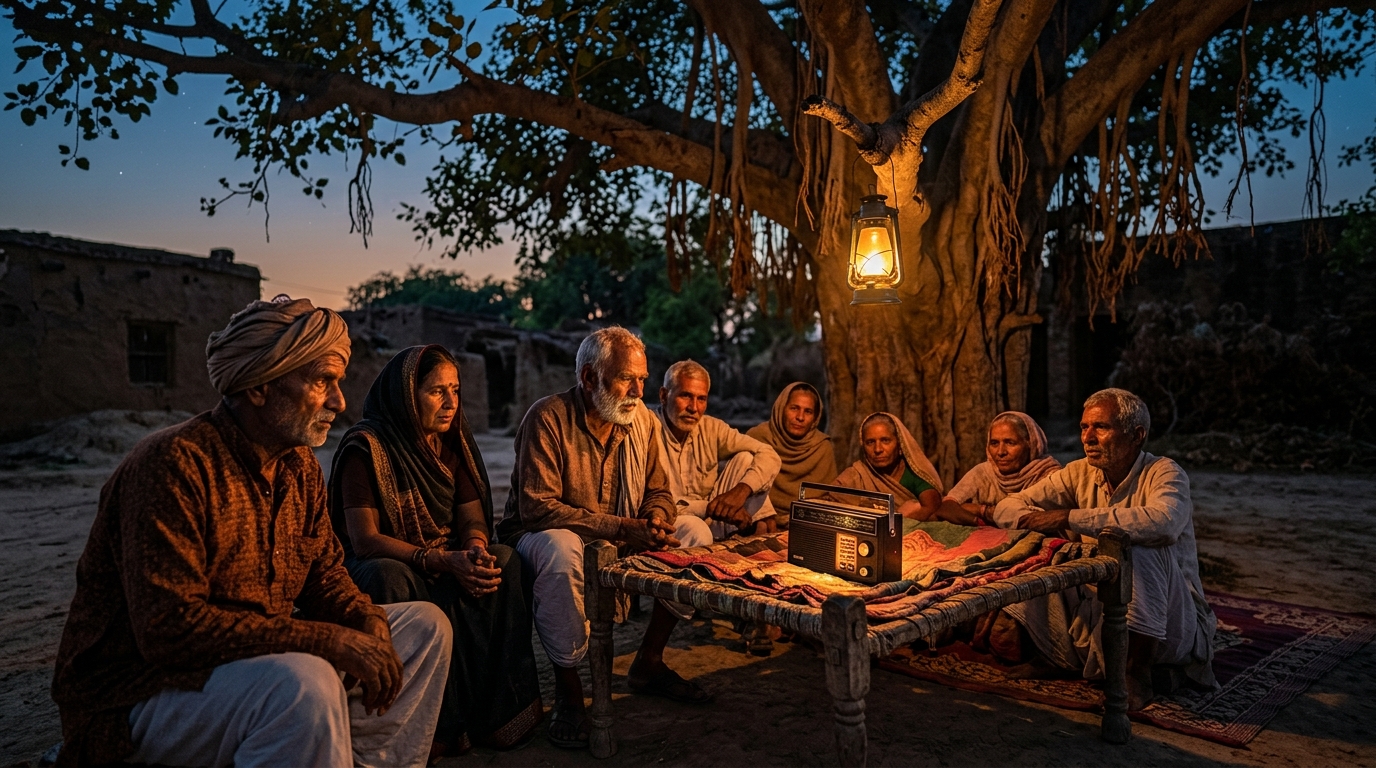
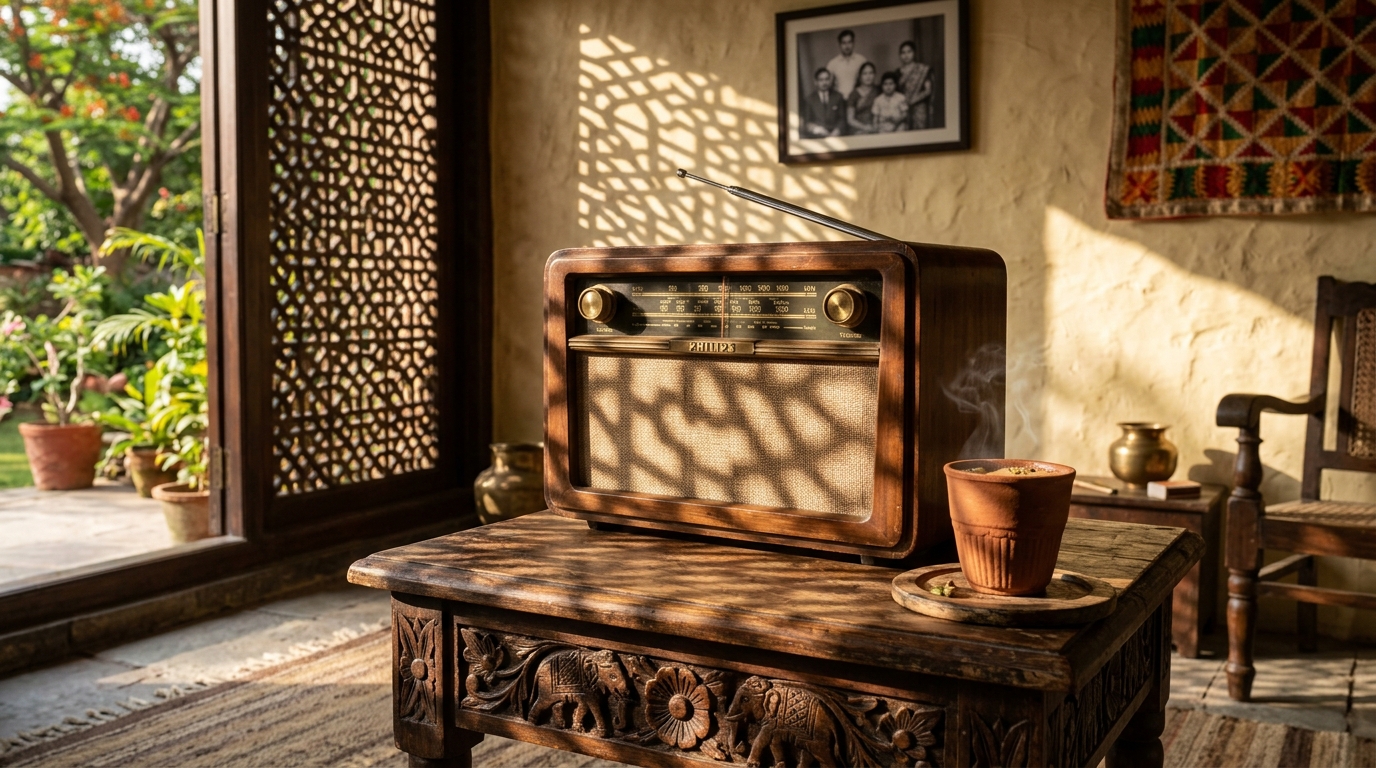
Understanding All India Radio history means understanding how a newly independent nation learned to talk to itself. For decades, the wooden transistor radio was the centerpiece of the Indian living room. Neighbors gathered around it during crises. Shopkeepers kept it humming during cricket matches. Families tuned in at exact times to catch the daily news bulletins read in crisp Hindi and English.
Before 24/7 news channels fractured our attention, a single voice coming through a static-filled speaker had the power to stop the entire country. These broadcasts did not just report the news. They became the historical events themselves. You can trace the 10 most searched dates in Indian history and why they matter directly through the archives of these radio transmissions.
Here are ten defining moments when All India Radio broke the news that changed India forever.
The Birth of a Nation Broadcasts Set the Standard
During the transition to independence, the government needed a reliable way to reach millions across vast geographies simultaneously. Radio provided the only viable infrastructure. The earliest and most vital moments in All India Radio history involve managing the fragile emotions of a newly partitioned country.
August 14-15, 1947: Tryst with Destiny
At the stroke of the midnight hour, India awoke to life and freedom. Jawaharlal Nehru, India's first Prime Minister, delivered his famous "Tryst with Destiny" speech to the Constituent Assembly in New Delhi.

All India Radio broadcast this speech live across the subcontinent. For millions of people sitting in the dark, listening to the crackling audio, this broadcast was the exact moment they became citizens of an independent nation. The broadcast required massive technical coordination. Engineers laid special cables from the Parliament house to the broadcasting center to ensure the audio did not drop.
The gravity of Nehru's voice coming through the radio valves gave the new government immediate authority. It set a precedent. When the state needed to speak to the people, it would use the radio.
January 30, 1948: The Light Has Gone Out
Just months after independence, the young nation faced its most severe emotional test. Mahatma Gandhi was assassinated in New Delhi.
The news spread through word of mouth, causing immediate panic and confusion. Nehru recognized the danger of rumors leading to violence. He rushed to the All India Radio studios to address the nation directly. He spoke without a script.
"The light has gone out of our lives, and there is darkness everywhere," he told the listeners. This broadcast did two critical things. First, it confirmed the tragedy officially, stopping the spread of misinformation. Second, Nehru explicitly named the assassin as a Hindu extremist, which prevented retaliatory communal violence against Muslims. This moment remains a masterclass in crisis communication. You can see the culmination of Gandhi's life work and the tragedy of his end in our timeline of Mahatma Gandhi's nonviolent movements in India.
Wartime Communications Relied Exclusively on Radio Frequencies
When borders became volatile, print media moved too slowly to keep citizens safe or informed. The state utilized radio broadcasts to issue blackout warnings, share frontline updates, and maintain civilian morale. These wartime communications defined crisis management in All India Radio history for decades.
The 1962 Sino-Indian War Updates
The border conflict with China in 1962 shocked the Indian public. Information from the high-altitude frontlines in the Himalayas was scarce.
All India Radio became the sole lifeline for updates. When the town of Bomdila fell to advancing Chinese forces, Nehru addressed the nation over the radio. His tone was somber. He expressed his sympathy for the people of Assam, a statement that many interpreted as a concession of defeat.
The 1962 broadcasts taught the government a hard lesson about morale. The raw, unfiltered despair in the Prime Minister's voice caused widespread panic. Future wartime broadcasts would be heavily curated to project strength and confidence, regardless of the reality on the ground.
The 1971 Indo-Pak War and Bangladesh Liberation
Nine years later, the broadcasting strategy had entirely changed. During the 1971 war, AIR was a strategic tool.
When Pakistani forces launched preemptive strikes on Indian airbases on December 3, Prime Minister Indira Gandhi was in Calcutta. She rushed back to Delhi and delivered a midnight radio address to the nation. Her voice was steady and resolute. She declared that the war in Bangladesh had become a war on India.
Throughout the two-week conflict, radio announcers like Melville de Mellow provided updates that kept civilian spirits high. The network broadcast blackout instructions and air raid siren tests. Most notably, AIR broadcast messages directed at Pakistani troops, urging them to surrender. When the war ended, the news of the victory and the creation of Bangladesh sparked celebrations in streets across India, all triggered by a simple radio bulletin.
National Emergencies and Political Shifts Dominated the Airwaves
Domestic political crises require immediate mass communication to establish authority and outline new rules. During the 1970s, radio became the primary tool for political leaders to bypass traditional journalism. They spoke directly to the electorate, permanently altering the relationship between state and media.
June 26, 1975: The Declaration of Emergency
Perhaps the most chilling broadcast in Indian history occurred on the morning of June 26, 1975.
Indira Gandhi took to the airwaves to announce that the President had proclaimed a state of Internal Emergency. "There is nothing to panic about," she assured the listeners. However, the reality was starkly different.
The government cut power to major newspaper presses in Delhi the night before. This ensured that All India Radio was the only source of news that morning. By controlling the radio transmitters, the state controlled the narrative. During the 21-month Emergency period, AIR functioned largely as a mouthpiece for the ruling party, broadcasting the government's 20-point program and censoring dissenting voices. This era forced citizens to tune into the BBC World Service on shortwave to hear independent reporting about their own country.
1977: The First Non-Congress Government Victory
The lifting of the Emergency led to the historic 1977 general elections.
Counting votes in a country as large as India took days. Without television coverage, the entire nation stayed glued to their radio sets. People walked around with transistors pressed to their ears. Shopkeepers placed speakers outside their stores so crowds could hear the updates.
The broadcasts slowly revealed a political earthquake. Indira Gandhi had lost her own seat. The ruling Congress party, which had governed since independence, was swept out of power. The Janata Party claimed victory. The methodical, objective reading of the election results by AIR newsreaders restored some public trust in the institution. This political shift had massive ripple effects, which are detailed in our guide to economic milestones in Indian history from 1947 to present.
Space and Science Milestones Reached Remote Villages
Scientific achievements hold little nation-building value if the public remains unaware of them. Radio bridged the gap between highly technical space programs and the general public. It turned complex scientific milestones into accessible moments of shared national pride for remote villages.
April 19, 1975: Aryabhata Satellite Launch
India entered the space age with the launch of its first satellite, Aryabhata.
Built by the Indian Space Research Organisation (ISRO) and launched by the Soviet Union, the event marked a massive technological leap. Most Indians did not have the scientific literacy to understand orbital mechanics. They did not need to.
All India Radio broadcast the distinct "beep-beep" telemetry signals transmitted by the satellite as it passed over the subcontinent. Hearing that sound coming from space made the achievement real. News bulletins explained the satellite's purpose in regional languages, ensuring that a farmer in rural Punjab and a teacher in Kerala both understood that India had joined an elite global club.
April 3, 1984: Rakesh Sharma in Space
Nine years later, India sent its first citizen into space. Squadron Leader Rakesh Sharma flew aboard the Soviet Soyuz T-11 mission.
The highlight of this mission was a live audio-visual linkup between Sharma in orbit and Prime Minister Indira Gandhi in New Delhi. While Doordarshan televised the exchange, the vast majority of Indians experienced it via All India Radio.
Gandhi asked Sharma how India looked from space. Sharma replied with a line from a famous Urdu poem: "Sare Jahan Se Achha" (Better than the entire world). That audio clip played on loop across every radio station in the country. It remains one of the most recognizable soundbites in modern Indian history, cementing the emotional connection between the space program and the public.
Sports and Cultural Triumphs United Millions Around Transistors
Before televised sports became common in India, radio commentary required listeners to visualize the action. The descriptive power of sports broadcasters turned athletes into legends. These events transformed regional listeners into a unified audience experiencing tension and triumph at the exact same second.
June 25, 1983: The Cricket World Cup Victory
Cricket was popular in India before 1983, but the World Cup victory turned it into a religion.
The final match against the mighty West Indies at Lord's Cricket Ground in London was not widely televised in India. Millions of fans relied on the Hindi and English commentary broadcast over the radio. Commentators like Sushil Doshi painted vivid pictures of the pitch, the weather, and the tension.
When Mohinder Amarnath took the final wicket of Michael Holding, the radio commentators erupted. The roar of the crowd in London traveled through the radio waves, setting off firecrackers in streets from Bombay to Madras. The shared audio experience of that underdog victory is a cornerstone of All India Radio history. It proved that live sports broadcasting could unite the country faster than any political speech.
The Golden Age of Vividh Bharati and Cultural Integration
While news bulletins defined historic dates, the Vividh Bharati service defined the culture.
Launched in 1957 to combat the popularity of Radio Ceylon, Vividh Bharati brought film music, dramas, and light entertainment to the masses. Programs like Hawa Mahal and Binaca Geetmala (hosted by the legendary Ameen Sayani) became weekly rituals.
These broadcasts did more to popularize Hindi across non-Hindi speaking states than any government mandate. By broadcasting the songs of Lata Mangeshkar and Kishore Kumar, the radio created a shared cultural vocabulary. You can explore how this era influenced the broader entertainment landscape in our piece on record-breaking runs and historic dates in Indian regional cinema.
Tragic National Disasters Required Immediate Mass Alerts
Industrial accidents and sudden assassinations create immediate information vacuums that rumors quickly fill. Official radio channels served as the critical mechanism for confirming tragedies. They issued safety instructions and attempted to restore order during some of the darkest days in modern Indian history.
October 31, 1984: The Assassination of Indira Gandhi
The morning Prime Minister Indira Gandhi was assassinated by her bodyguards, the state media apparatus froze.
The government hesitated to break the news, fearing widespread violence. For hours, All India Radio played normal programming and somber music, offering no details. Meanwhile, the BBC World Service broke the news of her death to the world.
Indians found themselves in a bizarre situation. They were tuning into a foreign broadcaster to find out if their own Prime Minister was dead. AIR finally confirmed the assassination in its evening bulletin. The delay severely damaged the credibility of the state broadcaster. It highlighted the dangers of state-controlled media in a fast-moving crisis, showing how silence can be just as destabilizing as bad news.
December 1984: The Bhopal Gas Tragedy News Breaking
Just months later, the country faced the worst industrial disaster in human history.
On the night of December 2, lethal methyl isocyanate gas leaked from the Union Carbide plant in Bhopal. As people woke up choking and fleeing into the streets, local radio stations became the only way to broadcast emergency information.
By morning, the national AIR bulletins carried the grim news to the rest of the country. The broadcasts struggled to convey the sheer scale of the death toll, which rose by the hour. Radio announcements called for medical volunteers and directed survivors to safe zones. The role of mass communication during this crisis is a key component of our historical timeline of the Bhopal gas tragedy.
Related Reading
- India at the Olympics: A Timeline of Historic Sporting Milestones
- Milestones in Indian Women's History: A Chronological Guide
- 1,000 Years of Indian Medical History: A Chronological Guide
- Economic Milestones in Indian History: From 1947 to Present
FAQ
Q: When did All India Radio start broadcasting? All India Radio officially began operations under that name in 1936. It evolved from the Indian State Broadcasting Service, which had been set up by the British colonial government a few years earlier.
Q: Why was radio more popular than television in early independent India? Television infrastructure was incredibly expensive to build and maintain. Radio transmitters could cover vast rural areas cheaply, and battery-operated transistor radios allowed people without electricity to stay informed.
Q: Does All India Radio still operate today? Yes. Now officially known as Akashvani, it remains one of the largest broadcasting organizations in the world. It broadcasts in 23 languages and 179 dialects, serving millions of listeners, especially in rural areas.
Q: How did people record these historic broadcasts? In the early days, the station itself recorded important broadcasts on spool tapes. Later, citizens with access to cassette tape recorders would place microphones near their radio speakers to capture major speeches or cricket commentary for their personal archives.
Look up the current broadcast schedule for your local Akashvani station today and listen to a five-minute news bulletin. Pay attention to the pacing, the clear pronunciation, and the lack of sensationalism—you will hear the exact same audio format that informed your grandparents during the most critical moments of the 20th century.