From Chaturanga to Grandmasters: A Historical Timeline of Indian Chess
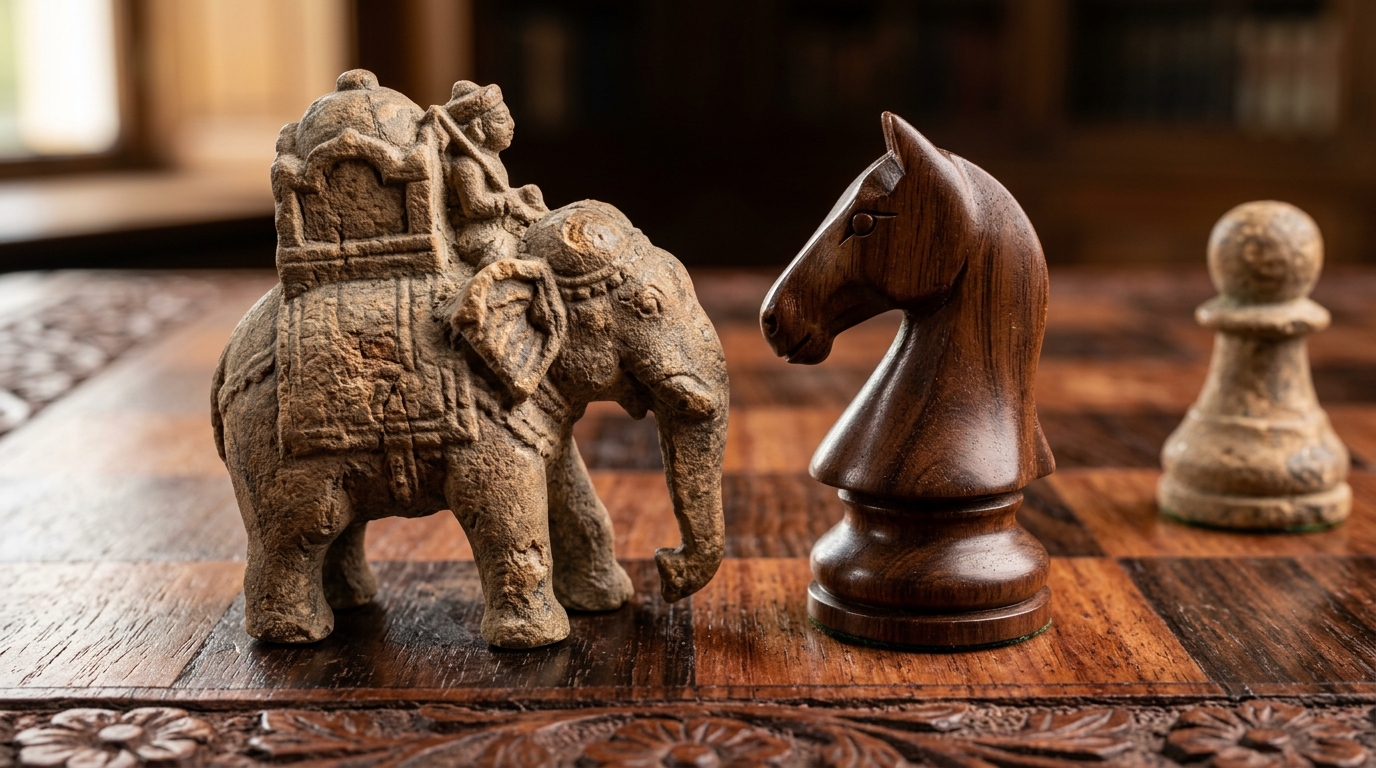
In Short
The history of chess in India timeline begins in the 6th century with the Gupta Empire's game of Chaturanga. This ancient war simulation spread through Persia and Europe before returning to India in its modern form. Today, India produces top-tier Grandmasters who dominate global chess competitions.
Key Takeaways
- Chaturanga originated in 6th-century India as a simulation of four military divisions.
- The game evolved into Shatranj in Persia before reaching Europe and gaining modern rules.
- Moheschunder Bannerjee shaped modern opening theory during the 19th-century British colonial era.
- Viswanathan Anand became India's first Grandmaster in 1988, changing the sport's trajectory.
- India now leads the global chess landscape with a massive roster of young prodigies.
Many people believe chess originated in medieval Europe or ancient Persia. The truth is that the game began in India during the Gupta Empire as a military strategy simulation. Exploring the history of chess in India timeline reveals a fascinating cultural journey. The game traveled outward, evolved over centuries, and eventually returned to its birthplace as an international sport.
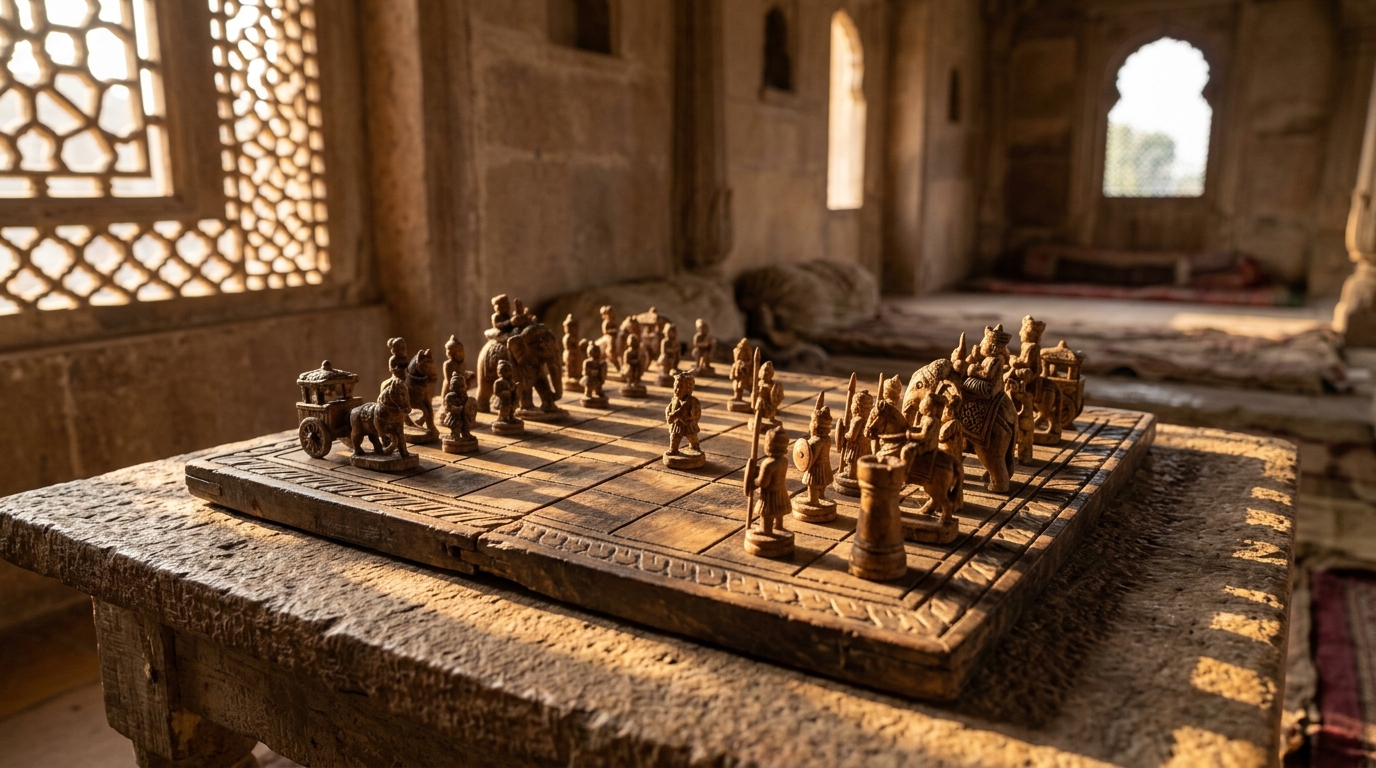
Today, Indian players dominate the global rankings. We see this same spirit of strategic excellence when looking back at India at the Olympics: A Timeline of Historic Sporting Milestones. Understanding how chess grew in India requires looking at specific eras, key figures, and the cultural shifts that shaped the board. Let us walk through the definitive milestones of India's greatest intellectual export.
Chaturanga Marks the Ancient Origins of the Game
The earliest form of chess started in northwestern India around the 6th century. Known as Chaturanga, this ancient game simulated battlefield tactics using four distinct military divisions. It laid the foundation for the modern chessboard, establishing the core concept of protecting a king to win the game.
The Gupta Empire and Early Rules
The Gupta period fostered immense intellectual growth in India. During this era, Chaturanga emerged as a popular pastime for royalty and scholars. The name itself translates to "four limbs" in Sanskrit. These limbs represented the traditional Indian army components: infantry, cavalry, elephants, and chariots.
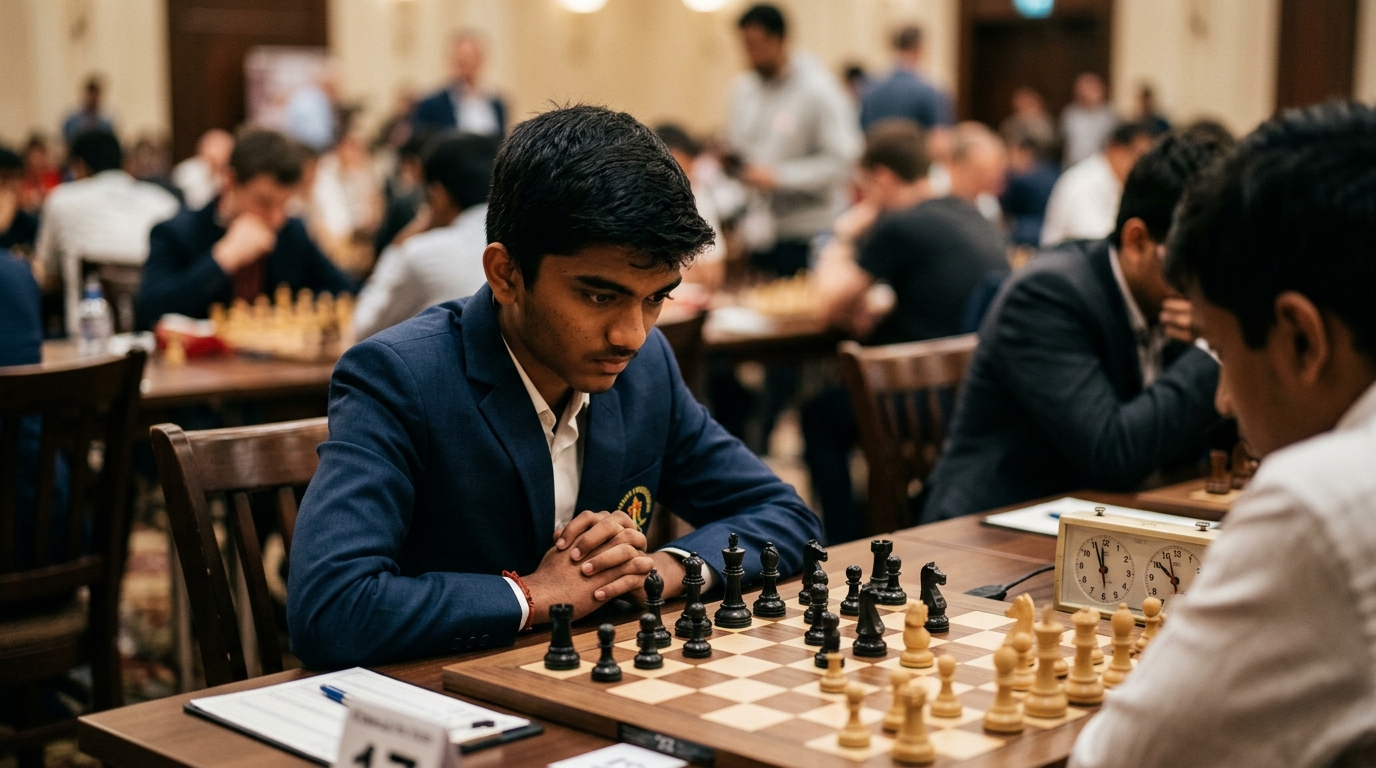
You played it on an uncheckered 8x8 grid called an ashtapada. The rules differed from what we play today. Players used dice to determine moves in some early variations. The pieces had limited mobility. The king could not castle, and the pawn could only move one square forward. Yet, the core objective remained identical to modern chess: capture the opponent's king.
Historian H.J.R. Murray's definitive 1913 book, A History of Chess, points to this era as the undisputed genesis of the game. Tracking the history of chess in India timeline starts right here on these uncheckered boards. When museums display these ancient artifacts today, adding descriptive alt text like "History of chess in India timeline - Ancient Chaturanga pieces" helps researchers find these vital physical links to the past.
Military Divisions Reflected on the Board
The pieces in Chaturanga mirrored a real Indian army. Infantry became pawns. Cavalry became knights. Elephants eventually became bishops, and chariots turned into rooks. The king's counselor, or mantri, stood beside the king. This piece was much weaker than the modern queen, moving only one square diagonally.
Visualizing these ancient pieces helps us understand the game's original intent. It was a tool for teaching military strategy. You can see how deeply embedded military strategy was in Indian history by looking at events like those covered in April 21, 1526: A Historical Timeline of the First Battle of Panipat. The board was quite literally a battlefield.
| Chaturanga Piece | Sanskrit Name | Modern Equivalent | Original Movement Rules |
|---|---|---|---|
| King | Raja | King | One square in any direction |
| Counselor | Mantri | Queen | One square diagonally |
| Elephant | Gaja | Bishop | Two squares diagonally (leaping) |
| Horse | Ashva | Knight | L-shape (same as modern) |
| Chariot | Ratha | Rook | Any number of squares orthogonally |
| Foot Soldier | Padati | Pawn | One square forward |
The Game Spreads and Evolves Across the Globe
Trade routes carried Chaturanga out of India and into the Persian Empire by the 7th century. The game transformed into Shatranj, adapting to new cultures and languages. This migration started a centuries-long evolution that eventually brought the game to Europe, where it gained its modern rules.
Persian Influence and Shatranj
Merchants and diplomats took the game to Sassanid Persia. The Persians called it Chatrang. After the Islamic conquest of Persia, the name morphed into Shatranj to fit Arabic phonetics. The Islamic world embraced the game enthusiastically. Scholars wrote the first manuals on chess openings and tactics.
They also dropped the use of dice entirely. This made it a game of pure skill and intellect. The pieces became abstract shapes to comply with Islamic rules against depicting living creatures. This abstraction made the pieces easier to carve and helped popularize the game across social classes. The history of chess in India timeline is incomplete without acknowledging this crucial Persian bridge. It preserved the game and pushed it westward along the Silk Road.
European Modifications and Modern Rules
Shatranj entered Europe through Moorish Spain and Byzantine trade routes around the 10th century. Europeans changed the game to reflect their own medieval society. The counselor became the queen. The elephant became the bishop. The chariot became the castle or rook.
By the late 15th century, the game underwent a massive change in Spain and Italy. The queen gained the ability to move any number of squares in any direction. The bishop could now slide across the entire diagonal. These changes sped up the game drastically. This new version, called "mad queen chess," is the game we recognize today. While Europe finalized the rules, the strategic DNA remained entirely Indian.
The Colonial Era Brings Modern Rules Back to India
The British East India Company introduced the European version of chess to India in the 18th century. Indian players quickly adapted to the new rules and began challenging British officials. This period produced India's first modern chess masters and birthed famous opening strategies still used today.
British Influence and Local Clubs
British colonial officials played chess in their clubs and cantonments. They frequently hired local Indians to play with them. These Indian players were used to traditional regional variations of the game, which still resembled older forms of Shatranj. The pawns did not have a double-step first move. The king could leap like a knight once per game instead of castling.
When Indian players learned the European rules, their natural talent shone through immediately. Chess clubs began forming in major cities like Calcutta and Bombay. This era of cultural exchange is similar to the economic shifts seen in Economic Milestones in Indian History: From 1947 to Present, where external forces reshaped local practices. The game had returned home, but it looked very different.
Moheschunder Bannerjee and the Indian Defense
John Cochrane, a strong British chess master stationed in Calcutta in the mid-19th century, regularly played against a local Brahmin named Moheschunder Bannerjee. Bannerjee was a formidable opponent. Because he was used to the older Indian rules where pawns moved slowly, he preferred to develop his knights and bishops from behind his pawn lines rather than pushing pawns to the center.
Cochrane documented these games meticulously. European players studied them and named this setup the "Indian Defense." Today, the King's Indian Defense and Nimzo-Indian Defense are staple openings played by World Champions globally. Bannerjee's intuitive play cemented India's influence on modern chess theory. Defining figures like Bannerjee in the historical record ensures we remember the exact individuals who shaped the modern history of chess in India timeline.
Viswanathan Anand Ignites a Modern Chess Revolution
Viswanathan Anand single-handedly transformed India into a chess powerhouse in the late 20th century. Becoming India's first Grandmaster in 1988, he broke Soviet dominance in the sport. His five World Championship titles sparked a massive surge in chess popularity across the entire country.
India's First Grandmaster
Before Anand, India had strong players like Mir Sultan Khan, who won the British Chess Championship three times in the 1930s. But India lacked a formal infrastructure to support professional players. Anand changed that narrative completely. Known as the "Lightning Kid" for his rapid playing speed, he dominated junior tournaments in the 1980s.
In 1987, he became the first Asian to win the World Junior Chess Championship. A year later, he secured his Grandmaster title. This milestone is a critical anchor in the history of chess in India timeline. It proved that an Indian player could reach the absolute pinnacle of the sport. His rise parallels the global impact of Indian cultural exports, much like the milestones covered in Historic Milestones of Indian Cinema on the Global Stage. He proved India could win on the world's biggest boards.
Five World Championships
Anand did not just participate at the top level; he defined an entire era. He won the FIDE World Chess Championship in 2000, 2007, 2008, 2010, and 2012. He won titles in tournament, match, and knockout formats. He defeated legends like Vladimir Kramnik, Veselin Topalov, and Boris Gelfand.
His success created a massive boom in Indian chess academies. Parents saw chess as a viable, prestigious pursuit for their children. Corporate sponsors began funding tournaments. The All India Chess Federation (AICF) expanded its reach, organizing events at the district and state levels. Anand's legacy is not just his titles, but the ecosystem he inspired. For a deeper look at his specific title matches, you can explore the Viswanathan Anand World Titles Timeline.
A New Generation Dominates the Global Stage
The seeds planted by Anand have grown into a forest of elite Indian Grandmasters. Today, India boasts dozens of players ranked in the global top 100. Teenage prodigies are winning major international tournaments and challenging for the World Championship, securing India's future in the sport.
The Rise of Teenage Prodigies
The current history of chess in India timeline is defined by youth. Players like Rameshbabu Praggnanandhaa, Gukesh D, and Arjun Erigaisi have shattered age records. Gukesh became the third-youngest Grandmaster in history at age 12. In 2024, he won the Candidates Tournament, becoming the youngest player ever to challenge for the World Chess Championship.
These players benefit from powerful chess engines, online databases, and strong domestic competition. They train with AI and play thousands of online blitz games a year. The ecosystem is ruthless but highly effective. They travel the world with dedicated coaches and secure major sponsorships before they even finish high school.
Women Elevate Indian Chess
The women's game in India has seen equally impressive milestones. Subbaraman Vijayalakshmi became India's first Woman Grandmaster (WGM) in 2001. Koneru Humpy took the baton next, becoming the youngest woman ever to achieve the full Grandmaster title in 2002 at age 15.
Players like Harika Dronavalli and Rameshbabu Vaishali continue to win medals on the global stage. Vaishali and Praggnanandhaa made history as the first sister-brother duo to both achieve the Grandmaster title. These achievements fit perfectly alongside the events documented in Milestones in Indian Women's History: A Chronological Guide. They prove that Indian chess talent runs deep across all demographics.
Olympiad Triumphs and Future Prospects
India's collective strength is highly visible in team events. The Indian team secured bronze at the 2014 and 2022 Chess Olympiads. In 2020, they shared the gold medal with Russia in the Online Chess Olympiad. The country also successfully hosted the 44th Chess Olympiad in Chennai in 2022, showcasing its massive organizational capabilities.
With the establishment of franchise leagues like the Global Chess League, the financial incentives for playing chess in India have never been better. The game that left India as a simple military simulation has returned as a high-tech, highly competitive modern sport. The board remains the same, but the players have evolved.
Related Reading
- India at the Olympics: A Timeline of Historic Sporting Milestones
- Indian History Timeline Chart: Key Milestones (Digital Reference)
- Indian History Milestones: The Maurya and Gupta Empires
- Timeline of Mahatma Gandhi's Nonviolent Movements in India
FAQ
Q: Where did chess originally come from? The game originated in northern India during the Gupta Empire around the 6th century. It was initially called Chaturanga, a military strategy game simulating four divisions of an army.
Q: Who was the first chess Grandmaster from India? Viswanathan Anand became India's first Grandmaster in 1988. He later became a five-time World Chess Champion, sparking a massive chess boom across the country.
Q: What is the Indian Defense in chess? The Indian Defense is a family of chess openings where Black responds to White's first move by developing pieces rather than immediately pushing pawns to the center. It was named after the playing style of 19th-century Indian player Moheschunder Bannerjee.
Q: How many Grandmasters does India have today? As of early 2024, India has over 80 chess Grandmasters. The country consistently ranks among the top three nations globally in terms of average top-player ratings.
If you want to understand India's modern chess dominance, start by following the current FIDE rating lists and watching the upcoming World Championship cycles. Track the progress of young Indian prodigies like Gukesh D and Praggnanandhaa to see this ancient legacy play out in real-time.