Foundational Dates of Modern Indian Enterprises and Economy
What Is the Bottom Line of India's Economic Evolution?
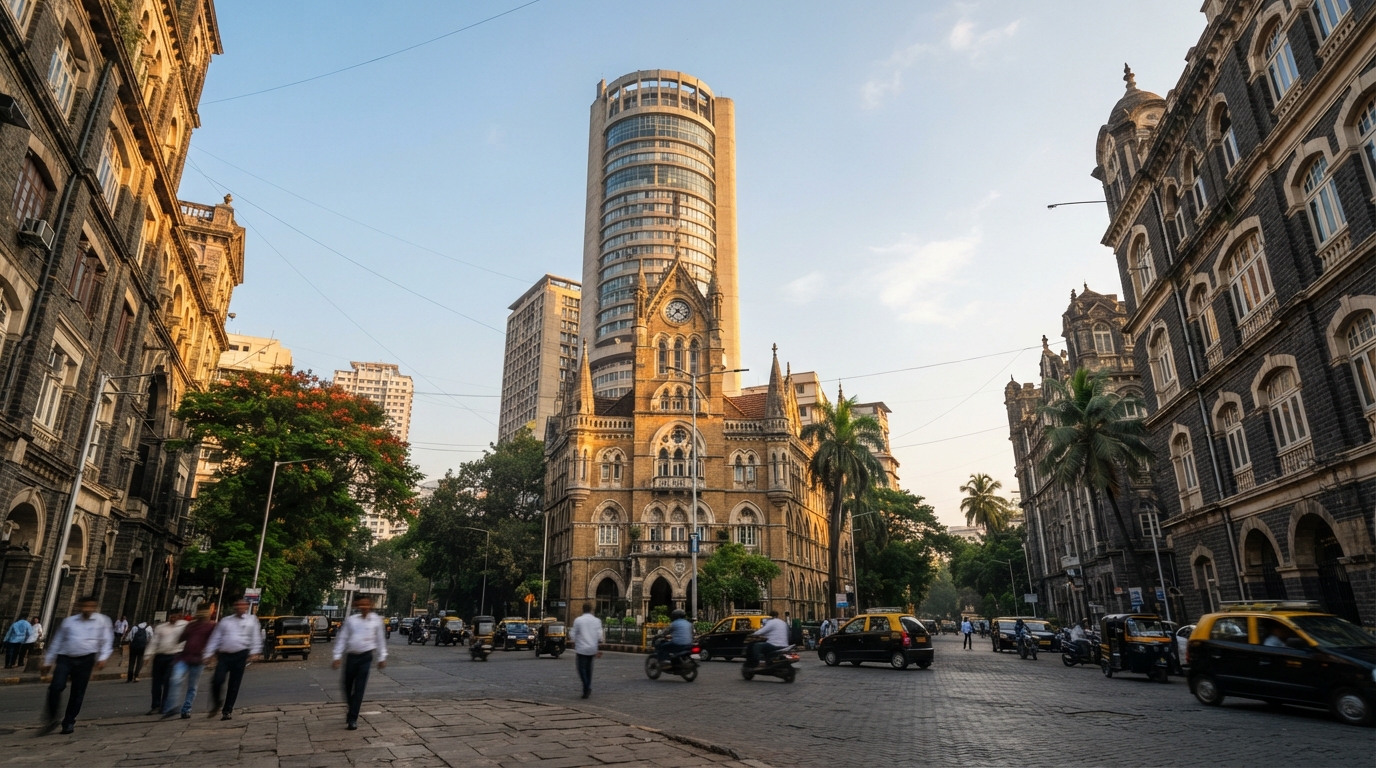
The economic transformation of modern India is the structural transition of a colonial-era agrarian state into a $3.76 trillion to $4.15 trillion enterprise powerhouse [IMF / World Bank, 2024–2026]. This evolution was driven by early industrial foundations, the July 1969 bank nationalization, the July 1991 balance-of-payments crisis, and the April 2016 digital payments expansion.
Key Takeaways
- Colonial deindustrialization dropped India's global economic share from 27% to 4.2% by 1950.
- The July 1969 nationalization placed 85% of bank deposits under direct state control.
- The July 1991 balance of payments crisis triggered industrial deregulation and foreign investment.
- Statutory market rails like SEBI and the National Stock Exchange democratized domestic capital access.
- India bypassed traditional mass manufacturing to build a 54.7% services-driven modern economy.
27% of global gross domestic product belonged to India in 1700, yet that figure dropped to just 4.2% by 1950 [Angus Maddison / Econofact, 2024]. Colonial extraction, deindustrialization, and rigid trade barriers left the young republic with a fragile agricultural base. Tracking the critical economic milestones in Indian history reveals how targeted enterprise decisions restored that lost ground. Today, the nation generates between $3.76 trillion and $4.15 trillion in nominal GDP, expanding at 6.5% to 7.6% annually [IMF / World Bank, 2024–2026]. Understanding these Indian economic history milestones helps explain how a closed, food-deficient economy turned into a global services and venture capital hub.
Understanding how policy dates altered daily commerce clarifies modern India's enterprise trajectory. Every major market expansion connects back to a specific calendar event. When readers explore today in history india, economic shifts often provide the strongest context for modern institutional reforms. These dates mark the structural turning points that built the nation's commercial backbone.
Early Industrial Foundations Built India's Indigenous Corporate Backbone
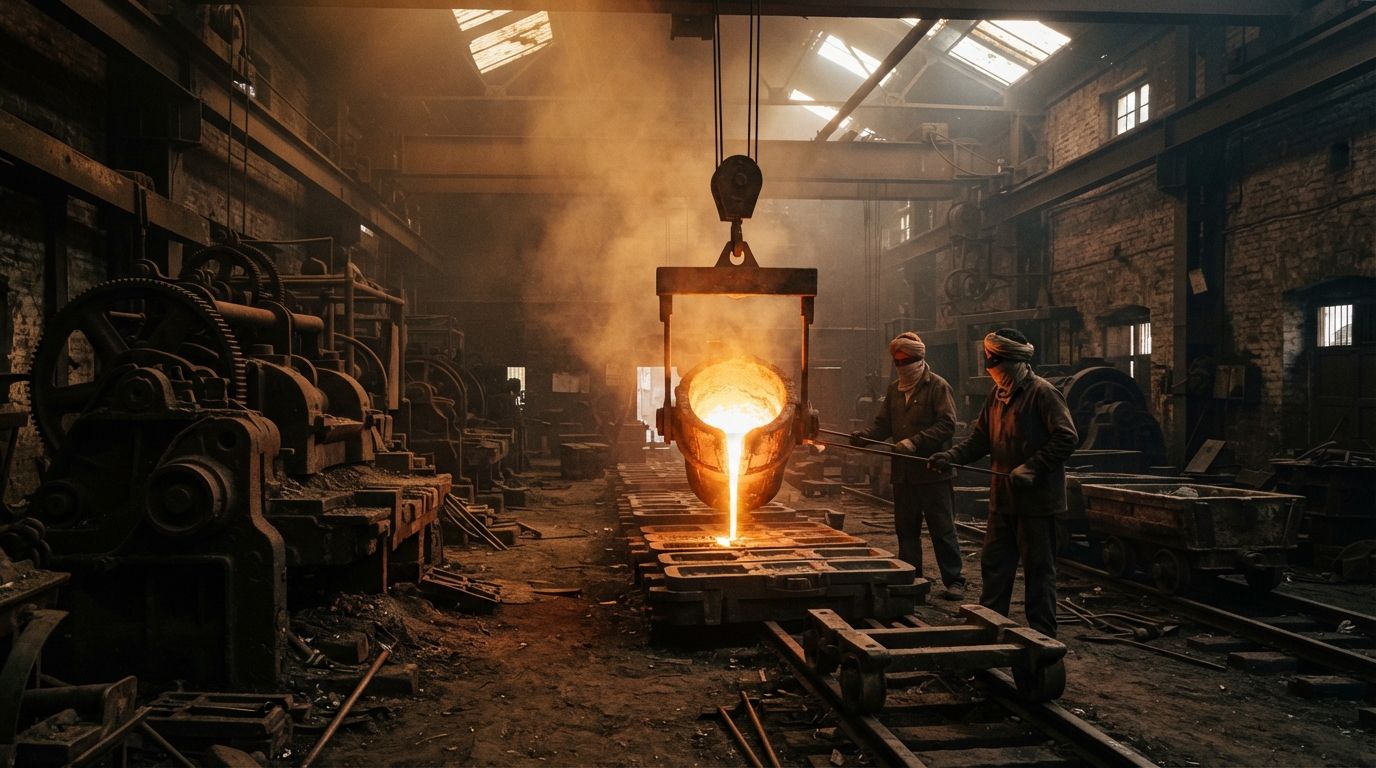
India's corporate roots grew from pre-independence industrial pioneers who established private infrastructure despite strict colonial restrictions. These early manufacturing milestones provided the technical talent, capital networks, and physical assets that sustained the nation after 1947, laying the groundwork for heavy public and private manufacturing sectors.
1854: Bombay Spinning & Weaving Mill establishes modern textile production
1907: Jamsetji Tata founds TISCO in Jamshedpur (India's first steel plant)
1956: Second Five-Year Plan prioritizes state-run heavy capital goods
1969: Nationalization puts 14 major private banks under state control
The Rise of Swadeshi Manufacturing (1854–1907)
Modern Indian industry began when Cowasji Nanabhoy Davar opened the Bombay Spinning and Weaving Company on 7 July 1854. That single steam-powered textile plant broke the monopoly of British mills in Manchester. It proved that domestic capital could run mechanized factories. Indian entrepreneurs soon built dozens of textile operations across Bombay and Ahmedabad, creating an organized domestic working class.
Industrial expansion reached heavy metals on 26 August 1907, when Jamsetji Tata registered the Tata Iron and Steel Company (TISCO) in Jamshedpur. British colonial administrators doubted that Indians could manufacture high-grade steel to international standards. TISCO proved them wrong by delivering 1,500 miles of steel rails to British military campaigns during the First World War. This project established a domestic industrial base run by Indian engineers, financed by local investors, and protected from external supply shocks.
The Public Sector Mandate and Heavy Industry (1947–1968)
Independence in August 1947 forced the state to address widespread poverty and a missing industrial supply chain. Prime Minister Jawaharlal Nehru and statistician Prasanta Chandra Mahalanobis designed the Second Five-Year Plan in 1956. This plan prioritized state investment in capital goods over consumer products.
                                [1956 Industrial Policy Resolution]
                                                 │
                        ┌────────────────────────┴────────────────────────┐
                        ▼                                                 ▼
             [Schedule A: State Monopoly]                      [Schedule B: Mixed Sector]
             • Heavy Electricals (BHEL)                        • Machine Tools (HMT)
             • Steel Plants (Bhilai, Rourkela)                 • Mining & Fertilizers
             • Oil Exploration (ONGC)                          • Aluminum & Basic Chemicals
The Industrial Policy Resolution of 1956 classified critical industries under state control. It established public sector undertakings like Bharat Heavy Electricals Limited (BHEL) and the Steel Authority of India (SAIL). These plants required massive capital that private firms could not raise at the time. This model created vital core infrastructure, but it also produced a rigid bureaucratic system. The resulting "License-Permit Raj" capped private production quotas, discouraged technological modernization, and penalized companies for producing beyond state-approved limits.
What Was the 1969 Bank Nationalization Shift?
The 1969 bank nationalization is the state-mandated takeover of 14 major commercial lenders enacted on 19 July 1969 by Prime Minister Indira Gandhi to reallocate credit toward rural agriculture [Reserve Bank of India Historical Records, 2023]. This intervention brought 85% of domestic deposits under government control, directly funding the agricultural inputs essential for India's Green Revolution.
Nationalization forced commercial banks to open thousands of rural branches across agricultural belts, ending chronic post-independence food deficits. However, the policy carried severe long-term costs. Political interference in state credit decisions caused high non-performing assets (NPAs) and reduced capital efficiency across public sector banks for several decades.
How Did the 1991 Balance of Payments Crisis Catalyze Structural Indian Economic History Milestones?
The 1991 balance of payments crisis is a sovereign financial emergency in June 1991 when India's foreign exchange reserves plummeted to $5.8 billion, covering barely two weeks of imports [Reserve Bank of India, 2024]. This acute shortfall forced structural reforms that dismantled the License-Permit Raj, slashed tariffs, and permanently redirected Indian economic history milestones toward market-driven growth.
June 1991: FX reserves drop to $5.8B (2 weeks of import cover)
July 1991: Rupee devalued by ~19% in two-step adjustment
July 1991: Industrial Policy statement ends License-Permit Raj
1991–1993: Tariffs cut from 300%+ to under 50%; trade opens
The June 1991 Foreign Exchange Collapse
A combination of external trade shocks and domestic fiscal deficits pushed India to the brink of sovereign default in mid-1991. The Gulf War spiked global crude oil prices while cutting off worker remittances from the Middle East. At the same time, political instability caused capital flight by non-resident Indian depositors.
Foreign exchange reserves fell to $5.8 billion in June 1991, barely covering two weeks of essential imports [Reserve Bank of India, 2024]. The Reserve Bank of India had to airlift 47 tonnes of gold to the Bank of England and the Union Bank of Switzerland to secure a $405 million emergency loan. This public measure highlighted the failure of four decades of closed, state-managed trade policy.
Dismantling the License-Permit Raj via Trade Reforms
On 24 July 1991, Finance Minister Manmohan Singh delivered a landmark budget speech that reshaped commerce. The accompanying Statement on Industrial Policy abolished industrial licensing for all but 18 strategic sectors. It eliminated asset limits under the Monopolies and Restrictive Trade Practices (MRTP) Act, letting Indian businesses expand production without prior state approval.
State-Led Model (1950–1990)               Market Reform Model (1991–Present)
┌─────────────────────────────────┐       ┌─────────────────────────────────┐
│ • Strict production quotas      │       │ • Capacity determined by demand │
│ • Peak tariffs exceeding 300%   │  ──►  │ • Tariffs standardized to <15%  │
│ • State allocation of raw input │       │ • Market pricing of inputs      │
│ • Automatic currency pegs       │       │ • Market-determined FX rates    │
└─────────────────────────────────┘       └─────────────────────────────────┘
The government reduced peak import tariffs from over 300% down to 50% across three budgets. It allowed automatic approval for foreign direct investment up to 51% equity in 34 priority industries. These changes forced domestic manufacturers to upgrade quality and cut costs to compete with foreign products.
Devaluation and Fiscal Realignment
Currency management changed completely during the first week of July 1991. The Reserve Bank of India devalued the rupee by roughly 9% on 1 July, followed by another 10% reduction on 3 July. This two-step adjustment realigned the rupee with international market values and made Indian exports cost-competitive.
The state transitioned the rupee to a market-determined exchange rate through the Liberalised Exchange Rate Management System (LERMS) in March 1992. By 1994, the rupee reached full current account convertibility. These adjustments eliminated the black market for foreign exchange and stabilized balance-of-payments accounts. Indian foreign exchange reserves grew from $5.8 billion in 1991 to more than $650 billion by 2024 [Reserve Bank of India, 2024].
How Did Institutional Rails and Capital Markets Transform Enterprise Financing?
Modern enterprise financing in India is an institutional capital ecosystem established through statutory regulation and electronic trading infrastructure during the early 1990s. By replacing state-controlled pricing through the Controller of Capital Issues and eliminating paper-based exchanges via SEBI and the National Stock Exchange, these market rails created liquid equity trading and reduced investor settlement risk.
1977: Reliance Industries IPO sparks modern retail equity culture
1992: SEBI granted statutory powers; Controller of Capital Issues abolished
1994: National Stock Exchange launches electronic screen-based trading
1996: NSDL established, ending physical share certificates
The Statutory Empowerment of SEBI in 1992
Before 1992, the state set share prices for new public listings through the Controller of Capital Issues (CCI). This agency underpriced shares, which limited capital for growing firms and rewarded speculative insiders. The Securities and Exchange Board of India (SEBI) gained statutory authority through an Act of Parliament on 12 April 1992.
Pre-1992 (Controller of Capital Issues)     Post-1992 (SEBI Statutory Era)
┌──────────────────────────────────────┐   ┌──────────────────────────────────────┐
│ State bureaucrats set IPO share price│   │ Companies use free market book-build │
│ High physical counterparty risk      │──►│ Dematerialized settlement via NSDL   │
│ Opaque floor-based open outcry       │   │ Transparent electronic order book    │
└──────────────────────────────────────┘   └──────────────────────────────────────┘
The repeal of the Capital Issues (Control) Act of 1947 allowed companies to price equity offerings based on market demand. SEBI enforced disclosure standards, insider trading rules, and investor protection guidelines. These institutional safeguards restored trust in capital markets following major trading frauds in early 1992.
The Launch of the National Stock Exchange in 1994
The Bombay Stock Exchange operated for over a century as an opaque, broker-dominated club using an open-outcry floor. Settlement cycles stretched over weeks, and physical share certificates were frequently lost, stolen, or forged. The central government established the National Stock Exchange (NSE) in November 1992, and it began equity trading on 3 November 1994.
The NSE introduced satellite-connected screen trading with automated order matching. It eliminated geographic barriers, letting a retail investor in Kochi trade with the same pricing and speed as an institutional firm in Mumbai. The creation of the National Securities Depository Limited (NSDL) in August 1996 ended physical share certificates. The market moved to electronic book-entry settlement, reducing counterparty settlement risk from weeks down to two days (T+2), and later to one day (T+1).
The Expansion of the Retail Equity Culture
The retail equity movement began in November 1977 when Dhirubhai Ambani listed Reliance Industries on the Bombay Stock Exchange. At a time when foreign banks avoided Indian enterprise, Ambani invited small rural and middle-class savers to buy company stock. Over 58,000 retail investors backed the initial offering, creating a dedicated shareholder base across small towns.
This retail culture matured through Systematic Investment Plans (SIPs) managed by mutual funds. Indian households moved savings out of physical assets like gold and real estate into transparent financial assets. Domestic institutional inflows now exceed $2 billion monthly, giving domestic markets enough liquidity to withstand foreign portfolio sell-offs.
The Direct Transition to a Services and Digital Economy
India altered standard development economics by transitioning directly from an agrarian base to high-value services without an intermediate mass-manufacturing stage. Knowledge exports, software services, and state-backed digital public infrastructure turned the nation into a global services center while expanding domestic financial inclusion to hundreds of millions.
1981–1999: Infosys founded, lists on BSE (1993) and Nasdaq (1999)
2009–2016: India Stack rolls out (Aadhaar, Jan Dhan, UPI)
2016: Reliance Jio launches, dropping 4G data prices by over 95%
2020–2024: $15B+ semiconductor PLI push initiates high-tech manufacturing
Bypassing Mass Manufacturing for IT Services
Traditional economies move labor from agriculture into low-skilled factory manufacturing before shifting into services. India followed a different path. The services sector contributed 54.7% of gross value added (GVA) in FY 2024, while agriculture accounted for 17.7% and manufacturing generated under 18% [MoSPI / Govt of India, 2024].
Traditional Development Path (East Asian Model):
Agriculture (Low Productivity) ──► Manufacturing (Mass Jobs) ──► High-Skill Services

India's Structural Path:
Agriculture (45% of Workforce) ──► Leapfrogged Direct ──────► IT & Tech Services (54.7% GVA)
N.R. Narayana Murthy and six engineers founded Infosys on 2 July 1981 with 10,000 rupees of borrowed capital. Infosys went public domestically in June 1993, then became the first Indian company to list on the Nasdaq on 11 March 1999. It pioneered the offshore Global Delivery Model, proving that Indian software engineers could manage mission-critical enterprise systems for global Fortune 500 corporations. The Y2K software update window at the end of the 1990s gave Indian software exporters the scale they needed to build a multi-billion dollar export industry.
The Emergence of India Stack and Universal Payments
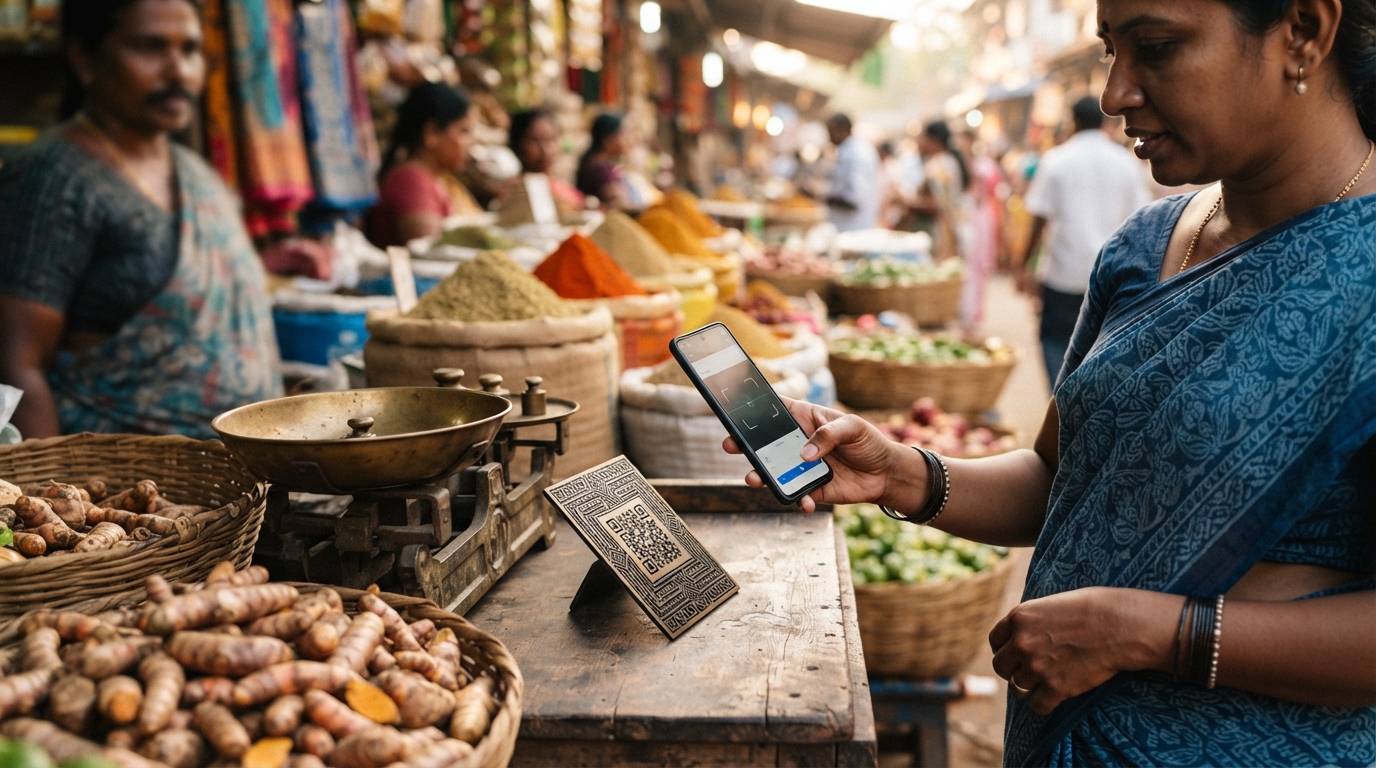
Modern digital commerce relies on a state-backed, open-access architecture known as India Stack. It links unique biometric identification (Aadhaar, launched 2009), direct bank accounts (Pradhan Mantri Jan Dhan Yojana, 2014), and mobile data access. This system cut identity verification and customer onboarding costs for financial firms from hundreds of rupees down to pennies.
                      [India Stack Architecture]
                                   │
         ┌─────────────────────────┼─────────────────────────┐
         ▼                         ▼                         ▼
  [Identity Layer]          [Payments Layer]           [Data Layer]
  • Aadhaar (2009)          • UPI (NPCI, 2016)         • Account Aggregator
  • e-KYC Verification      • Real-time settlement     • Consent-based sharing
  • 1.4B+ enrollments       • 130B+ transactions/yr    • Direct Credit Access
The National Payments Corporation of India (NPCI) launched the Unified Payments Interface (UPI) on 11 April 2016. UPI transaction volume exceeded 130 billion annual transactions by 2024, transforming domestic retail payments [NPCI / RBI, 2024]. On 5 September 2016, Reliance Jio launched high-speed 4G data networks at low retail prices. Jio brought over 450 million users online, providing the data infrastructure for modern venture-backed startups in food delivery, e-commerce, and digital logistics.
The High-Tech Push and PLI Schemes (2020–2024)
Heavy service reliance leaves millions of semi-skilled workers without formal factory employment. To address this structural gap, the government introduced Production Linked Incentive (PLI) schemes in 2020 across 14 manufacturing sectors, including electronics, pharmaceuticals, and green energy.
The state approved more than $15 billion in semiconductor fabrication and packaging projects through partnerships with Tata Electronics and Micron Technology [Ministry of Electronics and IT, 2024]. Arvind Panagariya, Chairman of the 16th Finance Commission, points out that sustained 8% economic expansion requires factor-market reforms in land, labor, and domestic regulation alongside these capital subsidies [Columbia University / NITI Aayog Lectures, 2024]. This push aims to balance the dominant services sector with modern manufacturing output.
Chronological Analysis of Indian Economic History Milestones and Their Structural Outcomes
Evaluating economic progress requires comparing distinct eras of state planning, deregulation, and digital expansion against hard economic indicators. Key policy dates directly correlate with changes in gross domestic product, foreign reserves, industrial output, and consumer access across seven decades of structural development.
| Date / Milestone | Core Policy Mechanism | Primary Economic Sector | Direct Measurable Outcome |
|---|---|---|---|
| 7 July 1854 Bombay Spinning Mill |
Private indigenous capital equipment investment | Cotton Textiles / Manufacturing | Broke British fabric import monopolies in domestic retail markets |
| 26 August 1907 TISCO Founding |
Private industrial venture in raw steel production | Heavy Industry / Metals | Supplied 1,500 miles of steel rails to regional infrastructure |
| 19 July 1969 14 Commercial Banks Nationalized |
State acquisition of 85% of total bank deposits | Banking / Rural Credit | Financed the inputs needed for the Green Revolution |
| 24 July 1991 New Industrial Policy |
Abolished industrial licensing (Delicensing) | Broad Commerce / Manufacturing | Foreign exchange reserves rose from $5.8B to $650B+ |
| 12 April 1992 SEBI Statutory Act |
Abolished the Controller of Capital Issues (CCI) | Capital Markets / Securities | Allowed market-determined pricing for new equity listings |
| 3 November 1994 NSE Equity Operations |
Electronic screen-based automated trading | Capital Markets / Equity | Shortened settlement cycles from multi-week delays down to T+1 |
| 11 March 1999 Infosys Nasdaq Listing |
Global delivery model for corporate software | Information Technology / Services | Services exports expanded to contribute 54.7% of national GVA |
| 11 April 2016 UPI Launch by NPCI |
Open-protocol digital payments architecture | Fintech / Digital Payments | Annual payment volume grew past 130 billion transactions |
What Are the Structural Tradeoffs Across Seven Decades of Policy?
The structural tradeoff in Indian policy is the continuous balance between state-directed social distribution and market-driven industrial efficiency across seven decades of development [Columbia University / NITI Aayog Lectures, 2024]. While the 1969 bank nationalization expanded rural agricultural credit, state interference generated persistent bad loans, and post-1991 services growth created wealth while leaving semi-skilled manufacturing underdeveloped.
Relying on capital-heavy IT services allowed the national economy to expand without fixing the complex labor, land, and local regulatory bottlenecks that hold back mass manufacturing. The Production Linked Incentive schemes attempt to address this structural imbalance through state subsidies, but subsidies cannot substitute for simpler domestic business regulations.
Policy Milestone ──► Positive Economic Return ──► Structural Tradeoff / Friction
─────────────────────────────────────────────────────────────────────────────
1969 Bank Takeover ──► Rural financial access ──► Bad loan accumulation (NPAs)
1991 Delicensing  ──► Private sector boom   ──► Increased regional inequality
1999 IT Services  ──► High-value exports    ──► Few jobs for non-graduates
2016 UPI Rollout  ──► Cashless commerce     ──► Platform concentration risks
Navigating Future Growth Toward Viksit Bharat 2047
The central government formalized the Viksit Bharat 2047 roadmap to reach high-income status ($18,000+ per capita income) by the centenary of independence in 2047 [NITI Aayog, 2024]. Reaching this goal requires the economy to expand at roughly 8% annually for over two decades.
Economic analyst Pramit Bhattacharya emphasizes that institutional credibility is essential to manage this growth [Carnegie India, 2023]. Modernizing data collection, protecting regulatory independence, and simplifying local tax compliance will determine whether India meets its development targets. For more context on these long-term trends, review our guide to historic dates in modern India.
Archival Dates in Focus for Enterprise and Daily History
Historical business milestones help explain how specific policy choices shaped modern commercial life. Readers who check the daily history archive can trace how these reforms took hold across the calendar year.
January–April:
• 12 April 1992: SEBI Act establishes modern securities regulation
• 11 April 2016: UPI opens public digital payments infrastructure

May–August:
• 7 July 1854: Bombay Spinning Mill launches mechanized domestic textiles
• 19 July 1969: State nationalizes 14 major private commercial banks
• 24 July 1991: Budget speech officially ends the License-Permit Raj
• 19 August / 20 August: Key parliamentary debates reshape trade policy
• 26 August 1907: TISCO registers as India's first primary steel company

September–December:
• 5 September 2016: Reliance Jio launches nationwide low-cost 4G data
• 3 November 1994: National Stock Exchange launches electronic trading
Calendar records show that many important economic decisions occurred during regular administrative sessions. For example, trade policy debates on 19 August and 20 August set the stage for later export laws. Tracking these dates in national records shows how individual legislative sessions created the conditions for long-term economic expansion. Readers can explore our archive of major events in Indian history to see how political and economic milestones intersect over time.
Frequently Asked Questions
Q: What was the License-Permit Raj and when did it end?
The License-Permit Raj was a state-controlled economic system that required private businesses to secure government permits before setting up factories, changing production volumes, or importing materials. It ran from the early 1950s until 24 July 1991, when the Statement on Industrial Policy abolished licensing across most commercial sectors.
Q: Why did India nationalize 14 major commercial banks in July 1969?
Prime Minister Indira Gandhi nationalized 14 private banks holding 85% of domestic deposits to redirect commercial lending toward underfunded sectors. Private banks had directed credit almost entirely to urban industrial groups, starving rural farmers and small businesses of the capital needed to support the Green Revolution.
Q: How did the 1991 Balance of Payments crisis reshape India's economy?
A collapse in foreign exchange reserves to $5.8 billion in June 1991 forced India to devalue the rupee, dismantle industrial licensing, and lower import tariffs. These emergency measures opened domestic markets to foreign investment, integrated local supply chains with global trade, and launched three decades of sustained economic expansion.
Q: What is India Stack and why is it significant for business?
India Stack is a set of state-backed digital public software layers: Aadhaar for identity verification, the Unified Payments Interface (UPI) for real-time payments, and Account Aggregator for consent-based financial data sharing. It lowered customer onboarding and payment processing costs, providing the digital infrastructure for modern tech startups and widespread banking access.
Further Reading
- India Unbound by Gurcharan Das: A detailed history of the shift from the License Raj to the 1991 liberalized market economy.
- Reserve Bank of India History Series (Volumes 1–5): Primary-source accounts of central banking decisions, the 1969 bank nationalization, and the 1991 foreign exchange crisis.
- The Turn of the Tortoise by T.N. Ninan: A data-focused study analyzing structural bottlenecks, market reforms, and industrial growth paths.
- NITI Aayog Strategy Reports for Viksit Bharat 2047: Policy frameworks outlining the industrial and infrastructure investments required to reach high-income status.
To apply these insights today, track the regulatory and market rules governing your industry. Sustained enterprise growth depends on understanding how state infrastructure, open digital networks, and clear legal rails interact. Study the policy decisions behind your sector to anticipate regulatory shifts, spot emerging markets, and build resilient commercial strategies.
Related Reading
- Economic Milestones in Indian History: From 1947 to Present
- Indian History Milestones: The Maurya and Gupta Empires
- Milestones in Indian Women's History: A Chronological Guide
- Today in Indian History: March Events, Birthdays, and Milestones
Sources
- Brief History - Chronology of Events - 1968 to 1985 — Reserve Bank of India, 2023. Supports: The July 1969 nationalization of 14 major commercial banks holding 85% of domestic deposits.
- Annual Report: India's Foreign Exchange Reserves — Reserve Bank of India, 2004. Supports: India's foreign exchange reserves standing at $5.8 billion during the 1991 balance-of-payments crisis.
- Provisional Estimates of Annual GDP for 2023-24 And Quarterly Estimates of GDP for Q4 of 2023-24 — Press Information Bureau / Ministry of Statistics and Programme Implementation, 2024. Supports: National sectoral Gross Value Added (GVA) breakdown and services-led economic contribution.
- India recorded about 131 billion UPI transactions in FY24, says finance minister — Mint, 2024. Supports: Unified Payments Interface (UPI) annual volume surpassing 130 billion transactions.
- India's Statistical System: Past, Present, Future — Carnegie Endowment for International Peace, 2023. Supports: Pramit Bhattacharya's analysis on modernizing data governance and institutional credibility for sustained economic growth.