Fascinating Discoveries from India's Earliest Census Records (1881-1931)
Bottom Line
India's earliest census records from 1881 to 1931 transformed a vast, undocumented subcontinent into a quantifiable demographic landscape. These massive administrative exercises codified social hierarchies, tracked severe mortality crises like the 1918 influenza pandemic, and established the foundational Indian census history facts that historians still use to understand colonial economics, public health, and societal shifts.
Key Takeaways
- The 1881 census established the first synchronous demographic baseline for the entire Indian subcontinent.
- Colonial administrators rigidly categorized complex local identities, permanently altering social dynamics and caste structures.
- The 1921 census marked a demographic divide, transitioning India from a fluctuating to a growing population.
- Early census data reveals devastating mortality rates linked to famines, plagues, and the 1918 influenza.
- The 1931 census remains the last complete enumeration of caste data used in modern policymaking.
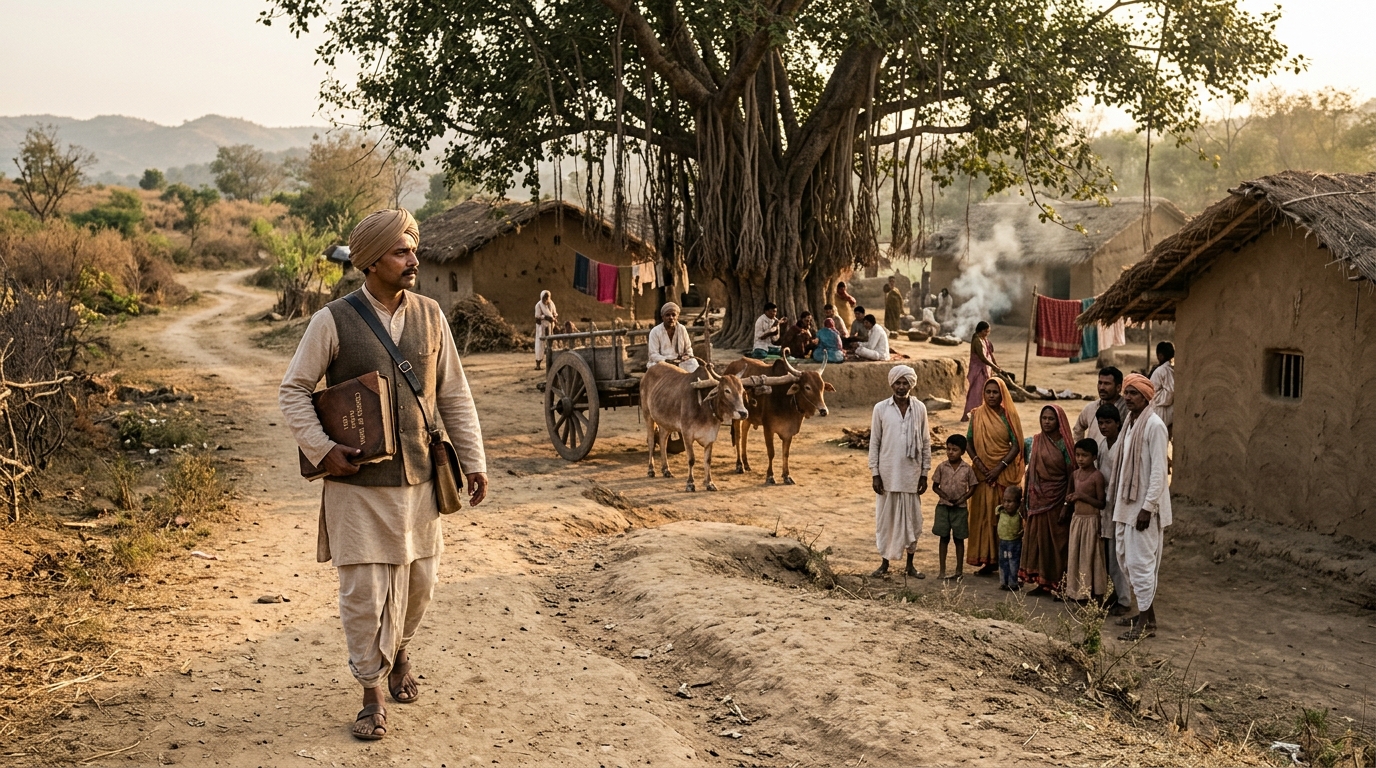
Exactly 253,891,821 individuals were counted during the monumental 1881 census of India. This exact figure marked the first time a synchronous demographic snapshot of the subcontinent was ever achieved. Before this massive undertaking, colonial administrators operated on rough estimates. They relied on localized headcounts that routinely missed millions of people. Gathering accurate Indian census history facts required mobilizing an army of enumerators. Over half a million local workers traveled by foot, boat, and bullock cart to reach remote villages. They navigated drastically different terrains to count every single household.

These early records offer much more than dry statistical tables. They provide a vivid window into the socio-economic realities of a population navigating the pressures of British colonial rule. The period between 1881 and 1931 captures an era defined by profound transformations. Traditional agricultural structures clashed directly with emerging industrialization. By examining the data collected every ten years, researchers can trace historical shifts. They track the devastating impacts of famines, the slow march of urbanization, and the rigid codification of complex social identities.
The sheer scale of the administrative effort stands as a testament to the complexities of governing such a diverse region. The insights extracted from these archives continue to inform our understanding of historical milestones. You can see similar long-term trends by tracking the Economic Milestones in Indian History: From 1947 to Present. Historians treat these census documents as primary evidence of how a modern state attempts to quantify its citizens. The data reveals both the triumphs of logistics and the failures of colonial understanding.
What were the biggest challenges in executing the 1881 census?
Executing the 1881 census required overcoming massive geographical barriers, widespread illiteracy, and deep public suspicion. Administrators struggled to standardize data collection across hundreds of princely states and British provinces. Enumerators faced the daunting task of translating complex demographic questions into dozens of regional languages while navigating hostile terrains.
The logistics of enumerating a subcontinent
The sheer physical geography of the Indian subcontinent presented an unprecedented logistical nightmare for late 19th-century administrators. Enumerators had to map out and visit every single dwelling. They climbed to high-altitude villages in the Himalayas. They waded through the dense river deltas of Bengal. Coordinating a synchronous count meant everyone was counted on the exact same night. This required synchronizing thousands of local officials without the benefit of modern telecommunications.

This localized effort relied heavily on village headmen and local scribes. These men understood the immediate terrain but often lacked formal statistical training. They received basic instructions on how to fill out the standardized paper schedules. The resulting Indian census history facts were compiled using millions of these physical forms. Carts transported the fragile paperwork to central provincial offices for manual tabulation. This process took years to complete and publish. Vast warehouses and hundreds of clerks were needed to tally the final numbers by hand.
Overcoming linguistic and cultural barriers
Beyond the physical distance, the linguistic diversity of the population created severe friction in data standardization. The census schedule asked questions about age, civil condition, religion, and birthplace. These concepts did not always translate neatly into local dialects. Enumerators frequently encountered resistance from households suspicious of the government's motives. Rumors spread quickly across villages. Many believed the headcount was a precursor to new taxes or military conscription.
To mitigate these fears, colonial officials had to rely on local intermediaries. These community leaders explained the purpose of the census in culturally acceptable terms. Women were often undercounted due to strict social taboos. Many cultures prohibited mentioning the names of female household members to strangers. These early records reflect the inherent biases of a foreign administration. The British tried to quantify a complex, multi-layered society through a very rigid administrative lens. The data captured the reality of the enumerator more than the reality of the household.
How did early Indian census history facts shape social identities?
Early Indian census history facts fundamentally altered social identities by forcing fluid, localized community affiliations into rigid administrative categories. The British obsession with classifying the population by religion and caste hardened social boundaries. This massive cataloging effort inadvertently laid the groundwork for modern political and social divisions across the subcontinent.
The codification of caste and religion
The British colonial administration viewed the intricate social fabric of India as a puzzle. They believed they could solve it through rigorous classification. Prior to the census exercises, caste and community identities were often fluid. They varied significantly by region and adapted to local economic conditions. The census required every individual to fit neatly into predefined boxes. Enumerators assigned rigid labels to complex social realities.
Herbert Hope Risley served as the Census Commissioner for 1901. He famously attempted to classify castes based on ethnographic and anthropometric data. He created a strict social hierarchy that many communities actively contested. This process of enumeration sparked massive social mobilization. Different groups petitioned the census authorities to secure a higher social ranking in the official records. By quantifying and ranking these groups, the census transformed caste into a continent-wide political identity. You can trace the long-term impacts of these social categorizations through the life of pivotal reformers, as detailed in Dr. B.R. Ambedkar's Life: A Chronological Timeline of Legacy.
Occupational shifts and economic data
Alongside social classification, the census provided detailed records of occupational distribution. This offered a stark view of the colonial economy. The data from 1881 through 1931 highlighted the overwhelming dependence of the population on agriculture. It simultaneously tracked the slow decline of traditional artisanal industries. British manufactured goods flooded the Indian market during these decades. Census records captured the displacement of local weavers, potters, and metalworkers. Millions were forced back into agricultural labor.
The administration attempted to categorize occupations to understand tax bases and labor availability. They often misunderstood the pluralistic nature of Indian livelihoods. A single person might be a farmer, a trader, and an artisan depending on the season. The rigid schedules forced individuals to pick just one primary occupation. Despite these administrative blind spots, the economic data remains crucial today. Historians use it to analyze the structural underdevelopment of the Indian economy under colonial rule. It provides hard numbers to back up localized accounts of economic hardship.
What demographic shifts occurred between 1881 and 1931?
The period between 1881 and 1931 witnessed erratic population growth characterized by severe mortality crises, culminating in the demographic divide of 1921. After decades of stagnant growth caused by famines and pandemics, the decade following 1921 marked the beginning of consistent, accelerating population expansion across the Indian subcontinent.
Mortality crises and the 1921 demographic divide
The early decades of Indian census history facts reveal a population constantly battered by disasters. Natural and epidemiological catastrophes struck with alarming frequency. The decades leading up to 1921 saw minimal population growth. High birth rates were entirely offset by catastrophic death rates. The 1890s brought severe famines across central and western India. The early 1900s saw the bubonic plague decimate urban centers like Bombay and Pune.
The most severe demographic shock was recorded in the 1921 census. This count captured the horrific toll of the 1918 influenza pandemic. This pandemic alone wiped out an estimated 12 to 17 million people. It resulted in a net population decline for that entire decade. Demographers refer to 1921 as the "Year of the Great Divide." Every census following this date recorded steady and significant population growth. The stabilization of mortality rates post-1921 fundamentally altered the demographic trajectory of the subcontinent. Slight improvements in transportation and famine relief helped keep more people alive.
Urbanization and migration patterns
The vast majority of the population remained rural during this period. However, the census records carefully tracked the early stages of industrial urbanization. Cities like Calcutta, Bombay, and Madras experienced significant population influxes. Landless laborers migrated in search of work in newly established jute and cotton mills. The census data captured these internal migration corridors. It highlighted the movement of people from impoverished regions like the United Provinces toward the industrializing coastal hubs.
The records also document the organized emigration of indentured laborers. Millions moved to overseas British colonies during these decades. This massive diaspora reshaped global demographics in places like Fiji and South Africa. Tracking these migration patterns helps historians understand the physical mobility of the Indian workforce. It shows the gradual breakdown of traditional village economies. For context on how public health evolved during these urban shifts, readers can explore 1,000 Years of Indian Medical History: A Chronological Guide.
Why do these Indian census history facts matter for modern historians?
These Indian census history facts matter because they provide the only comprehensive baseline for understanding the subcontinent's socio-economic evolution during colonial rule. Modern historians rely on this raw data to analyze long-term trends in public health, literacy, economic displacement, and the structural foundations of modern demographic challenges.
Tracking the evolution of public health
Modern historical research relies heavily on the granular data buried within these early census reports. Scholars use it to understand the epidemiological history of South Asia. By analyzing the age and sex distribution across different provinces, historians can reconstruct localized outbreaks. They track the specific impacts of diseases like cholera and malaria. The census reports often included detailed notes from regional medical officers. These notes provide qualitative context to the raw mortality statistics.
This combination of numerical data and administrative commentary is invaluable. It allows researchers to evaluate the effectiveness of colonial public health interventions. The data highlights the severe vulnerabilities of specific demographic groups. Women of childbearing age faced exceptionally high mortality rates during this era. Understanding these historical public health crises provides essential context for modern epidemiological studies. It shows how infrastructure and healthcare access dictate survival rates during pandemics.
Understanding colonial administrative priorities
The actual structure of the census questionnaires reveals the underlying priorities of the British colonial state. Historians study what the administration chose to count. They also study what the administration chose to ignore. This reflects the government's core philosophy. The heavy emphasis on martial races, religious affiliations, and caste hierarchies is telling. It demonstrates a clear strategy of mapping the population to maintain control. The British needed to prevent unified resistance against their rule.
The census severely lacked detailed data on domestic economies. It ignored informal labor and female workforce participation almost entirely. This highlights the patriarchal and extractive nature of colonial economics. By reading against the grain of these official documents, modern scholars extract a more nuanced picture. They uncover the everyday life that the British administrators never intended to capture. This analytical approach to historical documents is similar to the methods used to reconstruct pivotal moments like The Dandi March Day-by-Day: A Timeline of the 1930 Salt Satyagraha.
How did the 1931 census change the way data was collected?
The 1931 census introduced more sophisticated tabulation methods and remains historically significant as the last complete enumeration of caste data under British rule. It faced unprecedented political boycotts led by the Indian National Congress, forcing administrators to adapt their collection strategies amidst widespread civil disobedience and unrest.
Innovations in data tabulation
The sheer volume of data required significant upgrades in processing methodologies by 1931. J.H. Hutton directed the administration to implement primitive mechanical sorting techniques. This helped handle the millions of individual slips generated by the enumerators. This census attempted to refine the classification of occupations. It moved away from the confusing dual-role systems of previous decades. It introduced a more streamlined categorization of primary and secondary incomes.
The administrators also placed a stronger emphasis on recording specific dialects. They captured a snapshot of linguistic diversity before mass media began standardizing regional languages. The process remained incredibly labor-intensive despite these technical improvements. Legions of clerks still had to manually verify the cross-tabulations. The resulting reports generated thousands of pages of statistical tables. These tables remain a goldmine for contemporary economic historians studying the late colonial period.
The final comprehensive colonial census
The 1931 census holds a unique place in Indian census history facts. It was the last time the colonial government successfully collected comprehensive data on individual castes. The subsequent 1941 census was severely disrupted by the outbreak of World War II. That disruption resulted in limited data processing and mostly unpublished tables. The 1931 exercise occurred during the height of the Civil Disobedience Movement. Enumerators faced active boycotts and hostility in major urban centers.
The administration had to rely heavily on punitive measures to complete the count. They used local loyalists to fill in the gaps left by protesting citizens. Independent India later chose to drop detailed caste enumeration from its census operations. From 1951 onwards, only Scheduled Castes and Tribes were counted specifically. Because of this, the 1931 data remains the primary reference point. It is still used for numerous modern affirmative action policies and quota calculations. This enduring legacy underscores how early statistical exercises continue to exert a powerful influence over contemporary Indian governance.
Related Reading
- Milestones in Indian Women's History: A Chronological Guide
- 1,000 Years of Indian Medical History: A Chronological Guide
- Economic Milestones in Indian History: From 1947 to Present
- What Are the Major Events in Indian History? (FAQ Archive)
FAQ
Q: What was the first official census of India? The first synchronous census of the entire Indian subcontinent was conducted in 1881 under British rule. While earlier localized censuses occurred between 1865 and 1872, the 1881 exercise was the first to successfully count the population simultaneously across all provinces.
Q: Why is the 1921 census called the demographic divide? The 1921 census is known as the demographic divide because it marks the point where India's population shifted from stagnant, fluctuating numbers to continuous, steady growth. Prior to 1921, severe famines and pandemics like the 1918 influenza kept population growth near zero.
Q: How did the early census impact the Indian caste system? The early British censuses forced fluid, regional community identities into rigid, standardized administrative categories. By officially ranking these castes and linking them to government employment and representation, the census hardened social boundaries and permanently altered the subcontinent's social dynamics.
Q: Why is the 1931 census still referenced today? The 1931 census was the last comprehensive colonial census to collect and publish detailed data on all individual castes across the subcontinent. Because post-independence censuses stopped collecting this specific data, the 1931 figures are still utilized to estimate populations for modern affirmative action policies.
Explore the digital archives of the Census of India or the Digital South Asia Library to find the original 1881 or 1931 census reports for your specific home district. Reading the localized administrative notes in these primary sources will give you a direct, unfiltered look at the economic and social conditions your ancestors navigated over a century ago.