Famous Partnerships in Indian History: Key Dates and Milestones
TL;DR
The most influential partnerships in Indian history shaped the nation's politics, society, and science through collaborative effort. Duos like Gandhi and Nehru led the freedom struggle, Jyotirao and Savitribai Phule pioneered mass education, and Bhabha and Sarabhai built India's scientific infrastructure. These alliances drove systemic change.
Key Takeaways
- Shared visions between leaders accelerate major historical milestones.
- Gandhi and Nehru blended grassroots activism with modern political strategy.
- The Phules initiated India's intersectional fight against caste and gender discrimination.
- Patel and Menon united 565 princely states through political and bureaucratic synergy.
- Collaborative scientific efforts in the 1950s laid the groundwork for ISRO and atomic research.
History books often highlight lone heroes. People love a simple narrative where a single leader changes the world. Yet, the most profound shifts in society usually stem from strategic partnerships. Examining the historical figures India produced reveals a pattern of collaboration. Behind almost every major reform, scientific breakthrough, or political revolution, you will find two people working together. They debate, divide the labor, and achieve what neither could do alone.
The Political Architects: Gandhi and Nehru
Mahatma Gandhi and Jawaharlal Nehru formed the most consequential political alliance in modern Indian history. Their partnership bridged traditional grassroots mobilization with modern state-building. From their first meeting in 1916 to the transfer of power in 1947, these two leaders directed the strategy that ended British colonial rule.
The 1916 Meeting at Lucknow
Gandhi and Nehru first met at the Lucknow session of the Indian National Congress in 1916. Nehru was a young, Western-educated lawyer. Gandhi had recently returned from South Africa with a reputation for civil disobedience. They did not immediately align. Nehru found Gandhi's methods unorthodox. Gandhi viewed Nehru as slightly disconnected from rural India. Over time, they recognized their complementary strengths. Gandhi possessed the moral authority to move millions. Nehru had the administrative vision to build a modern nation.
Drafting the 1929 Purna Swaraj Resolution
Their partnership solidified during the December 1929 Lahore session of the Congress. Nehru served as the Congress President. With Gandhi's full backing, Nehru drafted the "Purna Swaraj" declaration. This resolution demanded complete independence from British rule. It marked a sharp pivot from previous demands for mere dominion status. On January 26, 1930, they publicly issued the declaration. This set the stage for the Timeline of Mahatma Gandhi's Nonviolent Movements in India.
The 1942 Quit India Movement Collaboration
The duo faced their ultimate test in 1942. World War II raged. The British refused to grant immediate independence. On August 8, 1942, the All-India Congress Committee launched the Quit India Movement. Gandhi delivered his famous "Do or Die" speech. Nehru managed the political messaging and international outreach. The British arrested both men the next day. Their unified front during this period galvanized the public. It made the continuation of British rule untenable after the war ended.
Social Reformers: Jyotirao and Savitribai Phule
Jyotirao and Savitribai Phule dismantled centuries of caste and gender oppression through education. Working as a married team, they challenged orthodox social structures in Maharashtra. Their joint efforts between 1848 and 1890 established the foundation for India's anti-caste movement and opened doors for marginalized communities.
Opening the First Girls' School in 1848
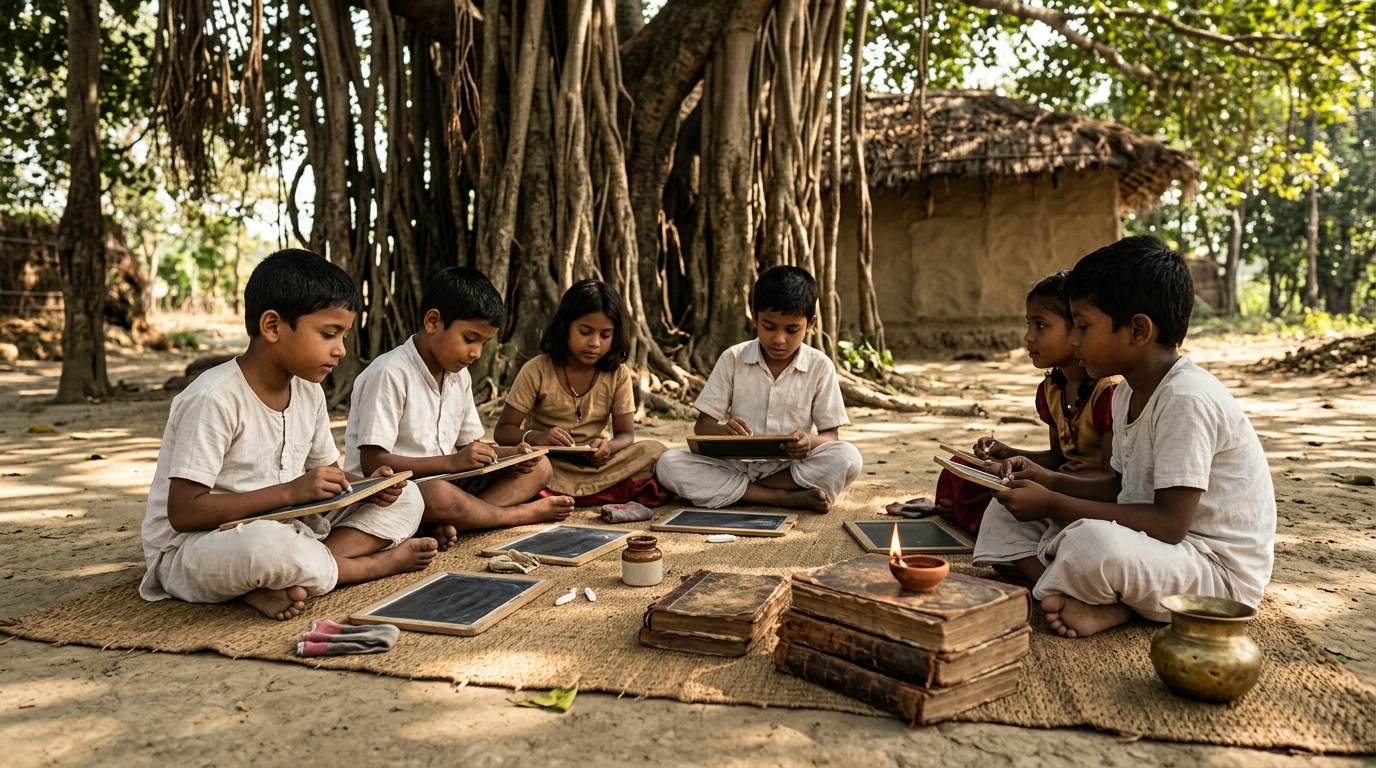
Education in 19th-century India was strictly controlled by the upper castes. Women and marginalized castes faced severe restrictions. The Phules decided to break this monopoly. On January 1, 1848, they opened the first school for girls at Bhide Wada in Pune. Savitribai became the first female teacher in India. She faced intense public backlash. People threw stones and dung at her as she walked to school. Jyotirao stood by her, providing physical protection and moral support. This event remains a cornerstone among the Milestones in Indian Women's History: A Chronological Guide.

Founding the Satyashodhak Samaj in 1873
The couple realized education alone was not enough. They needed an organizational structure to fight social inequality. On September 24, 1873, Jyotirao founded the Satyashodhak Samaj (Truth Seekers' Society). Savitribai served as the head of the women's section. The society promoted widow remarriage, opposed child marriage, and advocated for caste equality. They conducted marriages without Brahmin priests. This direct challenge to religious orthodoxy required immense courage from both partners.
Pioneering Education for Marginalized Castes
Their educational mission expanded quickly. By 1851, they ran three schools for girls. They also opened schools specifically for children from the Mahar and Mang castes. Jyotirao managed the administration and funding. Savitribai handled the curriculum and daily teaching. They also opened a care center for pregnant widows in 1853. Their partnership proved that structural social change requires both theoretical critique and practical institution-building.
Science and Innovation: Homi Bhabha and Vikram Sarabhai
India's emergence as a scientific power traces back to the alliance between Homi Bhabha and Vikram Sarabhai. These prominent historical figures India produced shared a vision for national development. During the 1950s and 1960s, they built the institutional framework for the country's nuclear and space programs.
Establishing the Cosmic Ray Research Unit in 1947
Bhabha and Sarabhai both studied at Cambridge University. They reconnected at the Indian Institute of Science in Bangalore during the 1940s. They shared a mentor in Nobel laureate C.V. Raman. In 1947, Sarabhai founded the Physical Research Laboratory (PRL) in Ahmedabad. Bhabha had already established the Tata Institute of Fundamental Research (TIFR) in 1945. They collaborated heavily on cosmic ray research. They frequently exchanged scientists, equipment, and data between their institutes. You can trace this collaboration in our Scientific Milestones in Indian History: A Date-Wise Guide.
The 1962 Formation of INCOSPAR
Bhabha led India's atomic energy program. He used his influence to help Sarabhai launch the space program. In 1962, Bhabha helped Sarabhai establish the Indian National Committee for Space Research (INCOSPAR). Bhabha provided the initial funding through the Department of Atomic Energy. Sarabhai provided the scientific direction. They identified Thumba, a small fishing village in Kerala, as the ideal location for a rocket launching station. Their combined efforts led to India's first sounding rocket launch on November 21, 1963.
Administrative Visionaries: Sardar Patel and V.P. Menon
Sardar Vallabhbhai Patel and V.P. Menon executed the monumental task of uniting a fractured subcontinent. Following independence in 1947, this duo integrated 565 princely states into the Indian Union. Patel provided the political authority, while Menon delivered the bureaucratic tact necessary to redraw the map.
The 1947 Ministry of States Partnership
In June 1947, the interim government created the Ministry of States. Patel took charge as the Minister. He selected V.P. Menon, a brilliant civil servant, as his Secretary. They had exactly ten weeks before independence to convince hundreds of monarchs to surrender their sovereignty. Unlike other historical figures India remembers for public speeches, Patel and Menon worked behind closed doors. They operated with ruthless efficiency.
Integrating 565 Princely States
Patel and Menon developed a two-pronged strategy. Patel played the role of the stern statesman. He made it clear that India would not tolerate independent enclaves within its borders. Menon played the role of the diplomatic negotiator. He traveled across the country, drafted legal documents, and handled the detailed negotiations.
| Role | Sardar Vallabhbhai Patel | V.P. Menon |
|---|---|---|
| Primary Function | Political leadership and ultimate authority | Bureaucratic execution and legal drafting |
| Negotiation Style | Firm, uncompromising on core principles | Persuasive, detail-oriented, tactical |
| Key Contribution | Ensured the backing of the Indian armed forces | Drafted the Instrument of Accession |
They finalized the Instrument of Accession. This document required princes to cede defense, foreign affairs, and communications to the Indian government. By August 15, 1947, all but three states within India's geographical boundaries had signed. Their partnership prevented the balkanization of the subcontinent.
The Freedom Fighters: Bhagat Singh and Chandrashekhar Azad
Bhagat Singh and Chandrashekhar Azad injected militant urgency into the independence struggle. These revolutionary historical figures India honors today transformed the Hindustan Republican Association into a socialist force. Between 1928 and 1931, their coordinated actions forced the British administration to acknowledge the radical youth movement.
The 1928 Formation of HSRA
Singh and Azad represented a stark contrast to the moderate Congress leaders. They met through revolutionary networks in North India. On September 8, 1928, they convened a secret meeting at the Feroz Shah Kotla ruins in Delhi. Azad could not attend in person due to police heat, but he fully endorsed Singh's proposal. They renamed their organization the Hindustan Socialist Republican Association (HSRA). Singh provided the ideological framework and Marxist literature. Azad served as the commander-in-chief, organizing arms and logistics.
The Lahore Conspiracy and Assembly Bombing
Their partnership yielded high-profile strikes against the colonial government. In December 1928, they assassinated British police officer John Saunders in Lahore. This was retaliation for the death of Lala Lajpat Rai. Azad ensured their safe escape from the city. A few months later, on April 8, 1929, Singh and Batukeshwar Dutt threw non-lethal smoke bombs in the Central Legislative Assembly in Delhi. Azad managed the external operations. Singh used his subsequent trial to broadcast their political ideology. Azad remained underground, funding the legal defense until his death in a police shootout in 1931.
Cinematic Pioneers: Satyajit Ray and Subrata Mitra
Director Satyajit Ray and cinematographer Subrata Mitra revolutionized Indian filmmaking on the world stage. Beginning with their 1955 masterpiece, they introduced neo-realism to regional cinema. Their technical innovations and storytelling methods influenced generations of filmmakers and redefined how Indian stories appeared on screen.
The 1955 Release of Pather Panchali
Ray met Mitra when Mitra was a 21-year-old still photographer. Ray asked him to be the cinematographer for his debut film, Pather Panchali. Neither had ever made a feature film. They began shooting in 1952 with minimal funding. Ray focused on the narrative structure and directing non-professional actors. Mitra focused on capturing naturalistic visuals. The film released on August 26, 1955. It won the Best Human Document award at the Cannes Film Festival in 1956. This milestone is detailed in our guide to Historic Milestones of Indian Cinema on the Global Stage.
Inventing Bounce Lighting
Their collaboration changed film technology. While shooting Aparajito in 1956, they faced a technical problem. They needed to shoot a scene inside a studio, but Ray wanted it to look like natural daylight. Mitra stretched a white cloth above the set. He bounced the studio lights off the cloth to create soft, diffused lighting. This technique, known as bounce lighting, is now a standard practice in global cinema. Ray's visual imagination relied entirely on Mitra's technical ingenuity.
Related Reading
- The 1971 India-Pakistan War: Key Dates and Historical Summary
- Famous Indian Birthdays Today: Historical Figures Born This Month
- India at the Olympics: A Timeline of Historic Sporting Milestones
- Scientific Milestones in Indian History: A Date-Wise Guide
FAQ
Q: Why was the Gandhi-Nehru partnership so effective? Their differences made them a complete team. Gandhi mobilized the rural masses through moral and spiritual appeals. Nehru handled international relations, modern political administration, and the drafting of formal policies.
Q: Did the Phules work with other reformers? Yes. They worked closely with Fatima Sheikh. She was a pioneering Muslim educator who provided the Phules with space in her home to run their school when they faced eviction.
Q: How do we study the historical figures India celebrates today? You should look at primary sources like letters, diaries, and official government records. Archives like the Nehru Memorial Museum and Library hold correspondence that reveals how these leaders collaborated behind the scenes.
Q: What is the Instrument of Accession? It was a legal document drafted by V.P. Menon in 1947. It allowed the rulers of princely states to legally join the Dominion of India by surrendering control of defense, foreign affairs, and communications.
Next time you read about a major historical event, look past the primary name in the headline. Search for the secondary figures, the administrators, and the collaborators who worked in the background. Understanding these partnerships gives you a much clearer picture of how real change actually happens.