Everyday Artifacts: Tracing Indian History Through Design Shifts
The Quick Read
Everyday objects function as tangible records of India's evolving political and economic landscape. Changes in regional furniture, kitchen utensils, and textiles map directly to major historical milestones. These Indian history cultural artifacts reveal how colonial trade, independence movements, and industrialization reshaped daily domestic life across the subcontinent.
Key Takeaways
- Textiles like Khadi transformed from simple domestic garments into powerful tools for political resistance.
- Indo-Portuguese furniture blends European structural forms with local Indian craftsmanship and tropical materials.
- The shift from heavy brass to stainless steel reflects post-independence industrialization and modern convenience.
- Mass-produced items like HMT watches symbolized the aspirations of the newly independent Indian middle class.
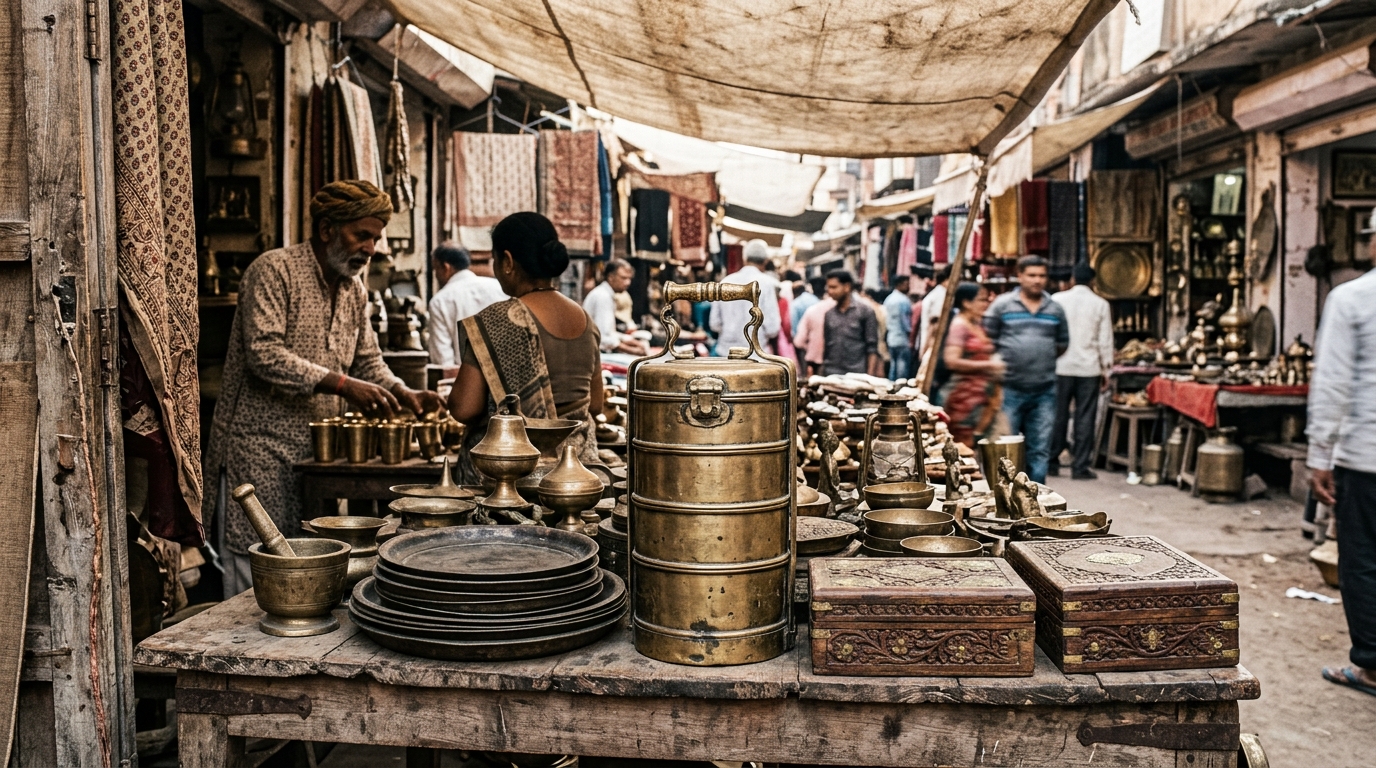
Walk through the bustling lanes of Mumbai's Chor Bazaar or the antique markets of Kochi, and you see history piled on dusty wooden tables. A heavy brass tiffin carrier sits next to an art deco Godrej steel almirah. A delicate piece of Indo-Portuguese rosewood furniture rests against a stack of post-independence stainless steel plates. These objects are not just vintage decorations waiting for a buyer. They are physical records of India's past. The design, material, and manufacturing of these everyday items track exactly how the subcontinent moved through centuries of trade, colonization, and eventual independence. By examining these Indian history cultural artifacts, we gain a direct view into the homes of people who lived through major historical shifts. You do not need to visit a museum to understand how global trade routes or nationalistic movements changed daily life. The evidence sits in our cupboards, living rooms, and wardrobes, quietly documenting the passage of time.
The Evolution of Indian History Cultural Artifacts in Daily Life
The physical objects used in Indian homes evolved continuously as local artisans adapted to new materials and foreign influences. Examining these Indian history cultural artifacts reveals a timeline where indigenous utility gradually merged with imported aesthetics. This evolution highlights a constant negotiation between tradition and external economic pressures.
Pre-Colonial Craftsmanship and Utility
Before the widespread influence of European trade companies, Indian domestic design prioritized climate appropriateness and local material availability. Artisans utilized regional woods like teak, rosewood, and jackfruit to create low-seating furniture suited for the hot, humid environment. Seating arrangements often relied on floor mats, bolsters, and low wooden platforms like the takht or charpai. These designs promoted maximum air circulation. Storage chests featured heavy brass bindings to protect valuables from monsoons and pests.
The design of these early items was intensely regional. Northern craftsmen employed intricate bone inlay work, while southern artisans focused on deep relief carving. Each piece served a distinct functional purpose tied to the specific geography of its origin. The Victoria and Albert Museum's extensive records on Indian woodwork note a specific trend. Pre-17th-century domestic items rarely featured the tall legs or upright backs common in European furniture. Furniture sat low to the ground.
The Arrival of European Sensibilities
As the British East India Company established footholds along the coast, domestic spaces began to reflect a hybrid design vocabulary. British administrators commissioned local carpenters to recreate European furniture styles using indigenous woods and techniques. This demand birthed the Anglo-Indian style. It featured familiar Georgian or Victorian silhouettes executed with dense Indian carving. Artisans in regions like Gujarat and the Coromandel Coast adapted their traditional skills rapidly. They began producing writing desks, dining chairs, and four-poster beds.
These objects represent a distinct phase in Indian history where colonial power dynamics manifested in physical goods. The introduction of tall seating changed how homes were organized. It shifted social interactions from the floor to elevated platforms. This design shift was initially confined to the homes of colonial officials and wealthy Indian merchants. Over time, these hybrid forms trickled down into the broader urban middle class. They fundamentally altered the standard landscape of Indian domestic interiors.
How Did the Portuguese Era Reshape Coastal Design?
The Portuguese presence in western India fundamentally altered coastal architecture and domestic design by introducing European forms to local craftsmen. This cultural exchange produced a unique Indo-Portuguese aesthetic that combined tropical materials with Iberian design principles. The resulting furniture remains highly distinct today.
Goan Furniture and the Indo-Portuguese Aesthetic
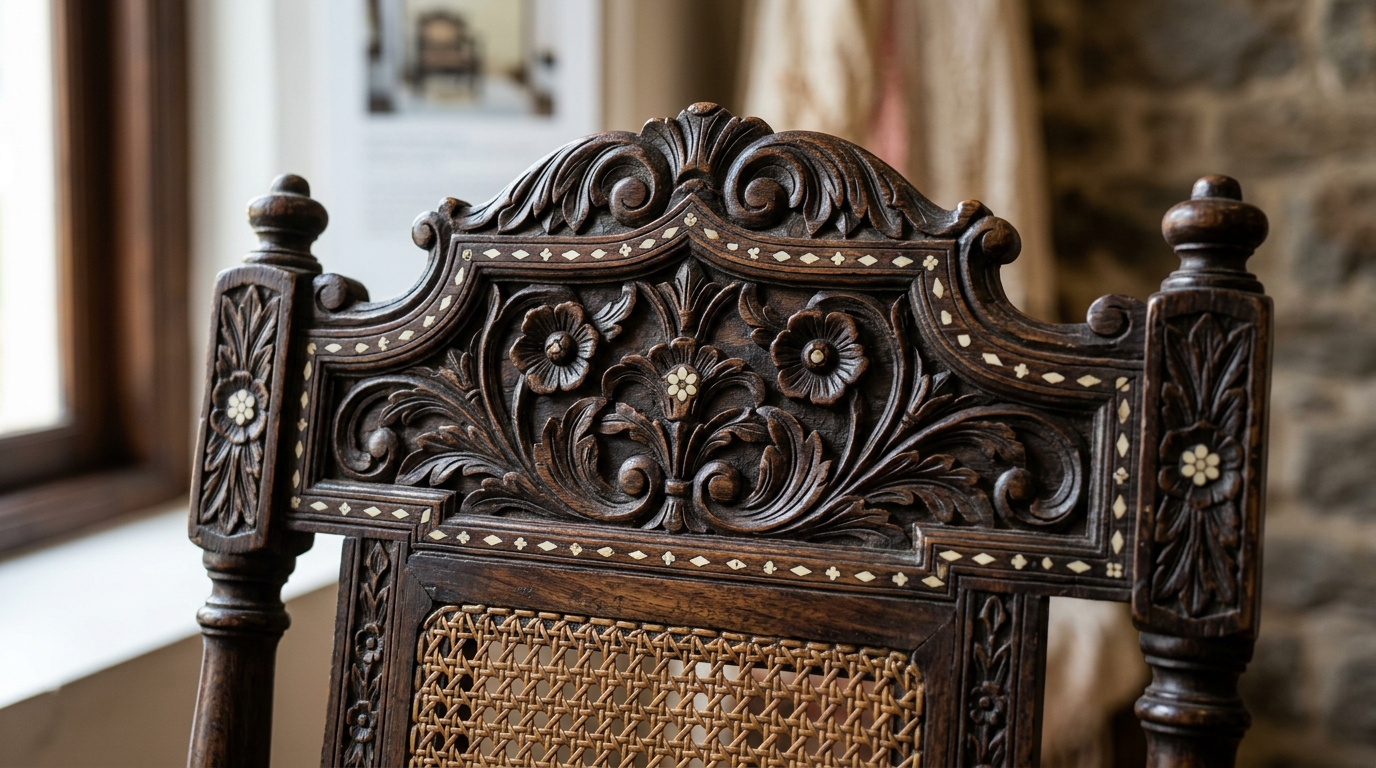
The Portuguese colonization of Goa in the early 16th century created an immediate demand for European-style domestic goods in a tropical setting. Local Hindu and Christian artisans began crafting chairs, cabinets, and tables that merged Renaissance forms with Indian motifs. They utilized local rosewood and teak. They incorporated intricate ivory inlay and deep floral carving. A common feature of this furniture was the use of cane weaving for seats and backs. This was a necessary adaptation. It provided comfort in Goa's humid climate.
You can trace much of this development in the Portuguese Era in Goa: Key Dates and Architectural Milestones, which highlights how architectural shifts mirrored these interior changes. The contador, a multi-drawered cabinet on a stand, became a staple of wealthy Indo-Portuguese households. These cabinets often featured a mix of Christian iconography and local geometric patterns. They perfectly illustrate the blending of two distinct visual cultures.
Azulejos Tiles in Domestic Spaces
Beyond furniture, the Portuguese introduced azulejos—tin-glazed ceramic tiles—to the Indian subcontinent. Initially imported directly from Portugal, these blue-and-white tiles decorated churches, public buildings, and the interior courtyards of affluent homes. The tiles depicted pastoral scenes, religious narratives, and geometric patterns. They offered a stark contrast to traditional Indian wall treatments.
Over time, the subject matter of the tiles adapted to include local flora and fauna. This demonstrated a localized design evolution. The presence of these tiles in a home signaled wealth and social standing within the colonial hierarchy. Today, preserving these tiles represents a significant effort in heritage conservation across Goa and Daman. They serve as durable, visual markers of a specific historical period. They anchor the coastal region to its complex colonial past.
Textiles as Political Indian History Cultural Artifacts
Fabric in India evolved from a basic economic commodity into a potent symbol of political resistance and national identity. The shift from handwoven textiles to mill-made cloth, and the subsequent return to homespun fabric, tracks the trajectory of India's struggle against colonial rule. These textiles define the nation's economic history.
The Shift from Muslin to Mill Cloth
For centuries, Indian handloom weavers produced some of the world's most sought-after textiles. This included the legendary fine muslins of Bengal. The British Industrial Revolution disrupted this ancient industry by flooding the Indian market with cheap, machine-made cotton goods from Lancashire. This influx decimated local weaving communities. It fundamentally altered the Indian economy, turning the country into an exporter of raw cotton and an importer of finished cloth.
The transition from wearing indigenous handloom to imported mill cloth marked a massive cultural shift. Tracking Economic Milestones in Indian History: From 1947 to Present requires understanding this initial colonial disruption of the textile trade. The everyday clothing of the average Indian became a physical manifestation of imperial economic policy. This reliance on imported fabric drained wealth from the subcontinent. It set the stage for one of the most significant political movements in modern history.
Khadi and the Swadeshi Movement
In response to the economic devastation caused by imported textiles, the Indian independence movement weaponized fabric. Mahatma Gandhi championed Khadi—handspun and handwoven cloth—as a tool for self-reliance and political protest. The spinning wheel, or charkha, was elevated from a simple domestic tool to a national symbol of defiance. By boycotting foreign cloth and wearing Khadi, Indians across different social classes actively participated in the freedom struggle.
If you examine the Timeline of Mahatma Gandhi's Nonviolent Movements in India, the Swadeshi movement stands out for its brilliant use of an everyday object. Khadi erased visible class distinctions among protesters. It created a shared visual identity for the nationalist movement. Today, Khadi remains one of the most powerful Indian history cultural artifacts. It represents the successful intersection of grassroots economics and mass political mobilization.
What Can Kitchen Utensils Tell Us About Economic Shifts?
The evolution of cooking and dining vessels maps directly onto India's industrialization and the changing priorities of its middle class. The transition from heavy traditional metals to modern alloys reflects broader shifts in manufacturing capabilities and domestic labor dynamics. Kitchen shelves serve as a timeline of economic progress.
The Brass to Stainless Steel Transition
Until the mid-20th century, Indian kitchens were dominated by heavy vessels made of brass, copper, and bell metal. These items were often passed down through generations. Families valued them both for their utility and as a form of stored financial wealth. Maintaining these utensils required significant domestic labor. They needed regular tinning (kalai) to prevent toxic reactions with acidic foods.
The arrival of stainless steel in the decades following independence revolutionized the Indian kitchen. Steel was durable, required no specialized maintenance, and was significantly lighter than traditional metals. The rapid adoption of stainless steel plates, bowls, and tiffin carriers signaled a shift toward modern convenience. It also reflected the diminishing availability of cheap domestic labor. The traditional artisan classes like the kalaiwalas slowly declined.
| Feature | Traditional Kitchenware (Brass/Copper) | Modern Kitchenware (Stainless Steel) |
|---|---|---|
| Era of Dominance | Pre-1950s | Post-1960s to Present |
| Maintenance | High (Requires regular kalai tinning) | Low (Rust-resistant, easy to wash) |
| Weight & Handling | Heavy, difficult to transport | Lightweight, stackable |
| Economic Symbolism | Generational wealth, artisanal craft | Industrial progress, middle-class convenience |
Mass Production and the Post-Independence Economy
The widespread availability of stainless steel tied directly to the newly independent nation's push for industrial self-sufficiency. As public sector steel plants began operations, domestic manufacturing of consumer goods expanded rapidly. The standardized steel thali (plate) and the multi-tiered tiffin carrier became ubiquitous symbols of the urban working class. These items represent a democratization of durable goods. They made long-lasting utensils accessible to a broader segment of the population.
A deeper look at the history of Indian industrial manufacturing reveals how government policies directly shaped the contents of the average kitchen. The uniform design of these mass-produced items contrasted sharply with the localized, handcrafted nature of older brassware. This shift from artisanal craft to industrial production perfectly mirrors the broader economic trajectory of post-1947 India.
The Integration of Industrial Design in the Modern Era
Post-independence India embraced industrial design as a pathway to modernization and national self-reliance. State-owned and private enterprises began producing consumer goods that quickly became fixtures in homes across the country. These manufactured objects defined the aspirations of the newly emerging Indian middle class.
Godrej Safes and the Urban Middle Class
The story of modern Indian industrial design requires mentioning the Godrej steel almirah (wardrobe). Introduced in the early 20th century, these heavy steel cupboards replaced traditional wooden chests. They became the standard for secure domestic storage. For decades, a Godrej almirah was a mandatory item in middle-class dowries. It symbolized security, stability, and modernity.
The design of the almirah remained largely unchanged for generations. It featured a distinctive clicking lock and a purely utilitarian shape. It served as a physical vault for a family's valuables, important documents, and generational wealth. The transition from ornate wooden chests to standardized steel cupboards reflects a societal shift toward functionalism and urban living. These steel wardrobes are enduring Indian history cultural artifacts that capture the practical mindset of the 20th-century Indian household.
The HMT Watch as a National Symbol
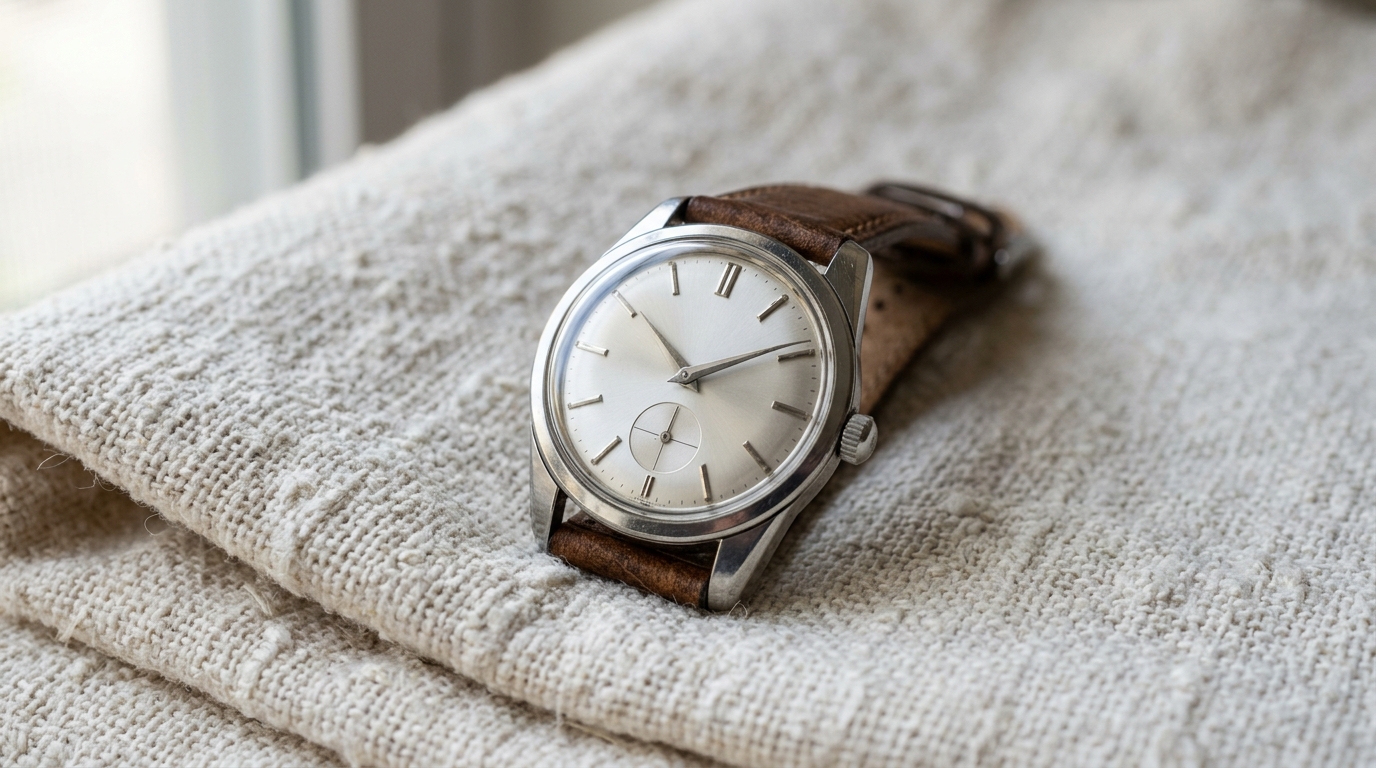
In 1961, the Government of India established the Hindustan Machine Tools (HMT) watch division. The goal was to produce affordable timepieces for the masses. The HMT watch quickly became more than just a tool for telling time. It was a symbol of national pride and technological capability. Models like the Janata (meaning "the people") featured clean, minimalist dials and reliable mechanical movements.
Giving an HMT watch as a graduation or wedding gift became a widespread cultural practice. The watch represented the punctual, disciplined ethos expected of the modern Indian citizen. These citizens were filling roles in newly formed government offices and public sector units. HMT's dominance eventually waned with the arrival of quartz technology and economic liberalization in the 1990s. However, vintage HMT watches are now highly sought-after collectibles. People cherish them as tangible pieces of India's early nation-building era.
How Do We Preserve These Everyday Artifacts Today?
Preserving everyday historical items requires a shift in how we value domestic objects compared to royal or monumental antiquities. Conservation efforts must balance the physical stabilization of materials with the documentation of the oral histories surrounding their use. Proper archiving ensures these common objects remain accessible for future study.
The Role of Private Collectors and Archives
National museums often focus on dynastic history and fine arts. The preservation of everyday Indian history cultural artifacts frequently falls to private collectors and regional archives. Initiatives like the Indian Memory Project have begun cataloging the material culture of ordinary citizens. These collections capture the nuances of regional variations in furniture, textiles, and domestic tools.
Documenting these items involves recording more than just physical dimensions. It requires capturing the specific context of their use. A brass pot is just a pot until you document the specific festival it was used for or the family that owned it. This grassroots approach to historical preservation provides a more comprehensive picture of Indian society. It democratizes history by elevating the possessions of the working and middle classes to the status of historical evidence.
Digital Documentation and Future Access
The physical preservation of organic materials like wood and textiles in India's harsh climate presents significant challenges. Consequently, digital documentation has become a critical tool for historians and conservators. High-resolution photography, 3D scanning, and detailed metadata tagging allow researchers to study these objects remotely. This prevents risking physical degradation of the original item.
Creating accessible digital databases ensures that the knowledge embedded in these artifacts is available globally. This approach aligns with modern historical methodologies that prioritize broad access over restricted physical hoarding. By digitizing the records of these everyday items, we safeguard the narrative of India's domestic evolution. We protect it against the inevitable decay of the physical objects themselves.
Related Reading
- Milestones in Indian Women's History: A Chronological Guide
- 1,000 Years of Indian Medical History: A Chronological Guide
- Economic Milestones in Indian History: From 1947 to Present
- What Are the Major Events in Indian History? (FAQ Archive)
FAQ
Q: What defines a cultural artifact in the context of Indian history? A cultural artifact is any physical object created, adapted, or used by humans that provides information about the culture, economy, or politics of its time. In Indian history, this ranges from monumental architecture to everyday items like Khadi cloth or stainless steel utensils.
Q: Why did Indo-Portuguese furniture use cane weaving instead of solid wood seating? Cane weaving was an adaptation to the hot and humid tropical climate of the Indian coast. It allowed for air circulation, preventing the buildup of sweat and making the European-style tall chairs comfortable to use in regions like Goa.
Q: How did the Swadeshi movement impact the production of Indian textiles? The Swadeshi movement boycotted imported British mill cloth and promoted the production and use of Khadi (handspun fabric). This revived local weaving economies, unified the populace politically, and established homespun cloth as a lasting symbol of national independence.
Q: Are HMT watches still manufactured in India? HMT officially ceased its primary watch manufacturing operations in 2016 due to sustained financial losses and an inability to compete with modern quartz brands. However, existing vintage models remain highly collectible, and limited refurbished stocks are occasionally sold to enthusiasts.
Take a walk through your own home or your grandparents' house and identify one object that dates back more than forty years. Document its history by writing down where it came from, what materials it uses, and how its function has changed over the decades to preserve your own piece of everyday history.