August 15 Global Milestones: India's Independence in World History
What Are the Key August 15 Historical Events in India and Worldwide? (TL;DR)
August 15 is a defining calendar date in modern world history, marking the end of British imperial rule in India in 1947, the conclusion of World War II through Emperor Hirohito's 1945 surrender broadcast, and the 1914 commercial opening of the Panama Canal. According to historical records from the Government of India and the Panama Canal Authority, August 15 represents a convergence of decolonization, international diplomacy, and global maritime commerce. In 1947, India ended two centuries of British colonial rule, establishing the world's largest democracy while integrating 565 princely states. Simultaneously, August 15 marks sovereign independence and national liberation milestones for South Korea (Gwangbokjeol) and North Korea in 1945, the Republic of the Congo from France in 1960, Bahrain from Great Britain in 1971, and the establishment of Liechtenstein's National Day in 1940. These coordinated historical transitions demonstrate how a single calendar date reshaped territorial boundaries, global trade routes, and international relations across the twentieth century.
Key Takeaways
- India gained independence on August 15, 1947, ending two centuries of British imperial dominance.
- Viceroy Louis Mountbatten advanced India's independence date to match Japan's 1945 World War II surrender.
- Five other sovereign nations observe national liberation or statehood milestones on August 15.
- The 1914 opening of the Panama Canal transformed global maritime trade on this date.
- India's transition to self-rule sparked a wave of decolonization across Asia and Africa.
At midnight on August 14, 1947, thousands of people gathered outside the illuminated Constituent Assembly building in New Delhi under heavy monsoon air. Clocks struck twelve, sirens sounded across city squares, and radio transmitters broadcast Jawaharlal Nehru's voice into living rooms around the country. Studying August 15 historical events India reveals how this single midnight moment shifted global politics forever. The date did not just mark the birth of modern Indian democracy. It accelerated the dismantling of European colonial empires worldwide.
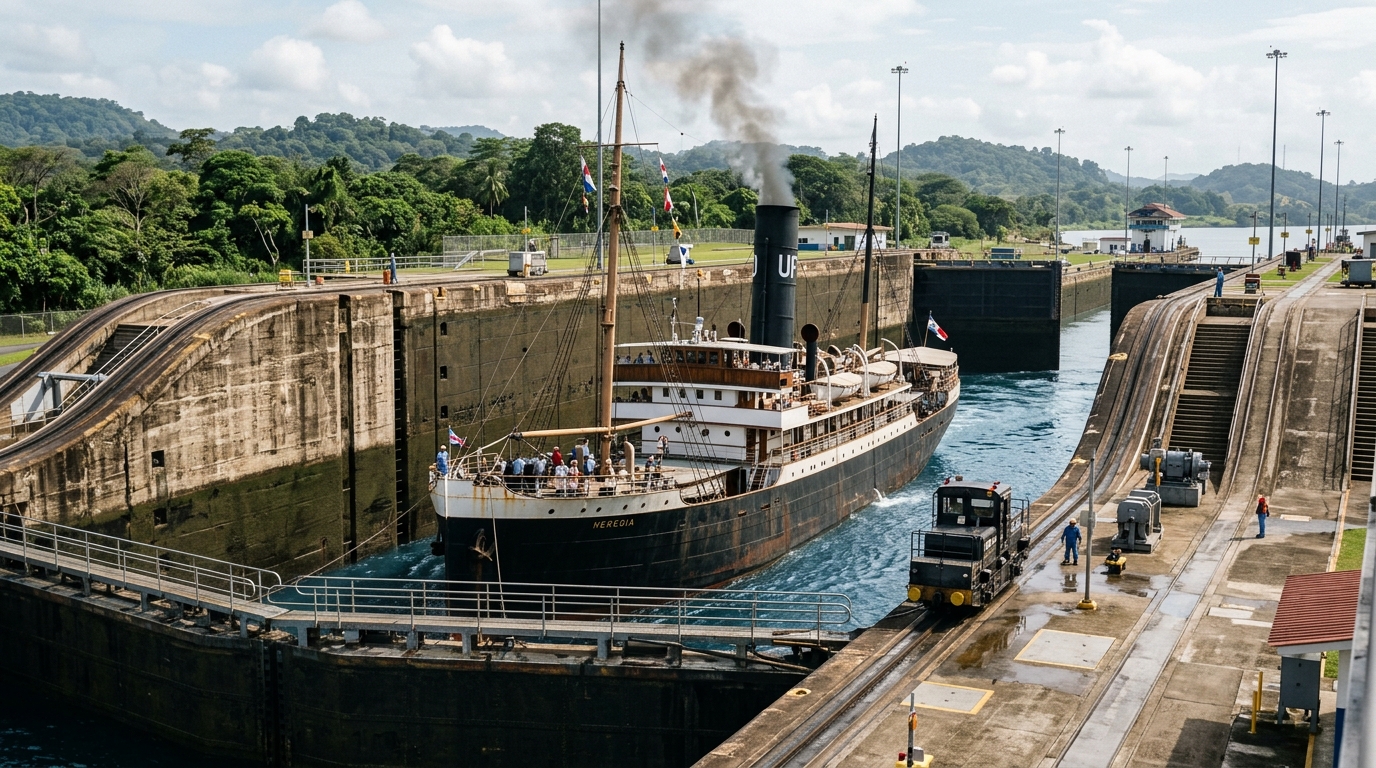
August 15 had gathered substantial historical weight long before the events of 1947. On this same calendar date in 1914, the steamship SS Ancon navigated the newly opened channels of the Panama Canal. In 1945, Emperor Hirohito broadcast his surrender message to conclude the Second World War. When historians study August 15 historical events India, they find a date where several major paths of modern history intersect. These paths link industrial trade, total warfare, and national independence into a single day.
How Did August 15 Historical Events in India Anchor a Global Turning Point?
August 15 historical events India is the landmark sequence of political transitions beginning on August 15, 1947, that ended two centuries of British colonial rule and catalyzed global decolonization. According to archival records from India's Ministry of Culture, this transition created the world's largest democracy, integrated 565 princely states, and established new diplomatic precedents for emerging nations across the Global South.
THE AUGUST 15 HISTORICAL CONVERGENCE
1914: Panama Canal Opens 1945: V-J Day / Korean Liberation
(SS Ancon commercial transit) (Emperor Hirohito surrender broadcast)
\ /
\ /
\ /
============================
AUGUST 15 IN WORLD HISTORY
============================
/ | \
/ | \
/ | \
1947: Indian Independence 1960: Congo 1971: Bahrain Independence
(565 states integrated) Independence (British East of Suez exit)
How Did Mountbatten’s Deadline Accelerate the Transfer of Power?
Mountbatten's deadline is the accelerated August 15, 1947, transfer of power date announced by Viceroy Lord Louis Mountbatten, advancing Britain's planned June 1948 withdrawal by ten months. According to historical research by Priya Satia (2024), Mountbatten selected August 15 to match Japan's 1945 surrender anniversary, compressing complex constitutional negotiations and administrative divisions into weeks.
This arbitrary decision compressed complex constitutional, administrative, and military negotiations into just a few weeks. Civil servants had to divide government assets, police personnel, and national treasury funds under severe time pressure.
Historian Priya Satia from Stanford University noted in a 2024 study that this hasty withdrawal served British domestic interests rather than Indian security. Post-war Britain faced deep financial debt and administrative exhaustion. By pushing the timeline forward, the British government avoided maintaining expensive security operations on the subcontinent. The compressed calendar left local authorities unprepared for the logistical turmoil that followed. Boundary commissions worked with outdated maps to draw thousands of miles of international borders in under six weeks.
The Partition Crisis and Institutional Fracture
The sudden implementation of the border created one of the largest mass migrations in modern history. According to a joint Harvard and Yale study by Bharadwaj et al. (2008), between 14 and 15 million people were displaced across the new borders. The study also estimates that between 200,000 and 2 million people died in the communal violence that accompanied Partition [Britannica, 2024]. Refugee camps filled rapidly across Delhi, Punjab, and Bengal as families fled across new international lines. Essential public services broke down in border districts where police forces divided along communal lines.
The human cost led the Government of India to designate August 14 as Partition Horrors Remembrance Day [Ministry of Culture, 2024–2025]. State-level archival exhibitions and recorded oral histories document the personal losses of displaced families.
The territorial division split rail networks, irrigation systems, and industrial supply lines overnight. Factories in West Bengal lost direct access to raw jute fields located in East Pakistan. These structural economic ruptures shaped regional trade policy for decades after 1947, as explored in our guide on economic milestones in Indian history from 1947 to present. Readers can also examine the detailed Radcliffe Line partition timeline to see how border delays triggered local administrative collapses.
Integration of the 565 Princely States
British suzerainty over 565 princely states lapsed on August 15, 1947, according to records from the Ministry of Culture (2023). These autonomous territories covered roughly 40 percent of India's landmass and contained nearly one-third of its total population. Monarchs held the technical option to join India, join Pakistan, or attempt to maintain sovereign independence.
Historian Ramachandra Guha observed that without rapid administrative integration, the subcontinent faced fragmentation into hundreds of small military kingdoms. Sardar Vallabhbhai Patel and V. P. Menon led the diplomatic effort to secure accessions before the British departure. Patel used a mix of patriotic appeals, financial guarantees, and firm political pressure to persuade hesitant rulers.
Most rulers signed the Instruments of Accession before August 15, transferring control over defense, external affairs, and communications. Complex exceptions like Hyderabad, Junagadh, and Kashmir required protracted negotiations and direct state intervention. Patel's diplomatic campaign prevented the territorial fragmentation of South Asia. His success established a unified legal and administrative foundation for the modern Republic of India.
How Does World History on August 15 Span Empires, Canals, and Global Liberation?
August 15 in world history is a multi-continental intersection of geopolitical milestones encompassing imperial surrenders, maritime breakthroughs, and post-colonial sovereignty declarations. According to historical records from the Panama Canal Authority and international diplomatic archives, August 15 encompasses the 1914 commercial opening of the Panama Canal, Emperor Hirohito's 1945 surrender broadcast concluding World War II, and sovereign declarations across Africa, the Middle East, and Europe.
                          CHRONOLOGY OF AUGUST 15

  1914                1940           1945                1947          1960        1971
   |                   |              |                   |             |           |
Panama Canal    Liechtenstein    V-J Day &           India Gains     Republic    Bahrain
Opens for       Adopts Nat'l     Korean Liberation   Independence    of Congo    Becomes
Commerce        Day              from Japan          from Britain    Free        Sovereign
Imperial Japan’s 1945 Surrender and the Korean Peninsula’s Gwangbokjeol
On August 15, 1945, Emperor Hirohito broadcast the Gyokuon-hoso (Jewel Voice Broadcast) over public radio across the Japanese Empire. The radio address announced Japan's unconditional acceptance of the Potsdam Declaration terms. This broadcast concluded the fighting of World War II after six years of worldwide conflict. The 80th V-J Day commemorations organized by the RAF Museum in 2025 highlighted how this surrender instantly dismantled the Japanese military administration across Asia.
For the Korean Peninsula, August 15, 1945, brought immediate liberation from 35 years of Japanese colonial occupation. Both South Korea and North Korea commemorate this date as a major national holiday. In South Korea, the holiday is known as Gwangbokjeol, which translates directly to the "Restoration of Light Day." In North Korea, the date is marked as Chogukhaebang'ui nal (Liberation of the Fatherland Day). Three years later, on August 15, 1948, the Republic of Korea was officially inaugurated in Seoul. This date stands as the foundational moment of modern Korean constitutional government.
The 1914 Opening of the Panama Canal and Maritime Commerce
On August 15, 1914, the American cargo-passenger steamship SS Ancon completed the first official transit through the newly constructed Panama Canal. The 50-mile waterway cut through the Isthmus of Panama, connecting the Atlantic and Pacific Oceans.
According to the Panama Canal Authority and Maritime Cyprus (2024), opening the canal eliminated an 8,000 nautical mile detour around Cape Horn at the southern tip of South America.
       MARITIME ROUTE COMPARISON (NEW YORK TO SAN FRANCISCO)

  Pre-1914 (Cape Horn Route):  ~~~~~~~~~~~~~~~~~~~~~~~ 13,000+ Nautical Miles
  Post-1914 (Panama Canal):    ~~~~~~~~~ 5,200 Nautical Miles
                               [Saved: 8,000 Nautical Miles]
The canal's opening transformed international shipping patterns and naval strategy. Cargo carriers saved weeks of hazardous travel, lowering shipping costs for industrial goods and agricultural commodities. The construction project cost over 25,000 worker lives during French and American construction efforts due to malaria, yellow fever, and rockslides. Opening on August 15, 1914, the canal gave commercial navies direct access between two major oceans. This transit route remains a central artery for global trade today.
How Did Sovereignty Unfold in the Congo, Bahrain, and Liechtenstein on August 15?
August 15 sovereignty in the Congo, Bahrain, and Liechtenstein is the convergence of national independence milestones across three distinct continents [Times of India, 2024; WION, 2024]. According to United Nations records and diplomatic documentation, August 15 marks the Republic of the Congo's 1960 liberation from France, Bahrain's 1971 independence from Great Britain, and Liechtenstein's 1940 National Day declaration.
In 1960, the Republic of the Congo (Congo-Brazzaville) secured full independence from French colonial rule under President Fulbert Youlou. This milestone occurred during the "Year of Africa," when seventeen African nations achieved self-governance. Congo's liberation signaled the steady decline of French administrative control in Central Africa.
Bahrain declared its independence on August 15, 1971, ending its status as a British protectorate following a United Nations survey of popular will. The British military withdrew its permanent garrisons from east of Suez, prompting the Gulf state to establish its sovereign administration.
In Europe, the Principality of Liechtenstein established August 15 as its official National Day in 1940. The date combined the Feast of the Assumption with the birthday of ruling Prince Franz Josef II. The small Alpine nation used this annual celebration to rally public unity against the threat of Nazi annexation during World War II.
Comparative Milestones Across Continents Reveal Shared Patterns of Decolonization
Comparing August 15 milestones reveals common pressures that drove twentieth-century geopolitical transitions. Whether in South Asia, East Asia, the Middle East, or Central Africa, European and imperial powers withdrew rapidly due to economic exhaustion, shifting military alliances, and surging grassroots nationalist movements across each territory.
| Country / Project | Milestone Year | Historical Event | Immediate Global Consequence | Long-Term Strategic Legacy |
|---|---|---|---|---|
| India | 1947 | Independence from British Empire | End of British imperial rule in Asia; Partition | World's largest democracy; Non-Aligned Movement pioneer |
| South Korea | 1945 | Liberation from Imperial Japan (Gwangbokjeol) | End of 35-year Japanese colonial rule | Division into two states; global manufacturing and tech leader |
| Panama Canal | 1914 | First commercial transit (SS Ancon) | Cut Atlantic-Pacific transit by 8,000 nautical miles | Vital bottleneck handling 5% of global maritime commerce |
| Republic of the Congo | 1960 | Independence from France | Accelerated decolonization across Central Africa | Key regional participant in African Union diplomacy |
| Bahrain | 1971 | Independence from British protectorate | Completed British military exit from East of Suez | Strategic financial hub and Gulf maritime operations center |
| Liechtenstein | 1940 | Official establishment of National Day | Reinforced civic resistance against Nazi expansion | Stable constitutional monarchy and European financial center |
Structural Differences in Post-Colonial Transitions
The paths to sovereignty differed sharply across these August 15 milestones. In India, independence was won through decades of organized mass movements, civil disobedience campaigns, and constitutional negotiations. Grassroots campaigns like the Salt Satyagraha demonstrated how nonviolent resistance could destabilize imperial control, a process detailed in our overview of Mahatma Gandhi's nonviolent movements in India.
In contrast, the liberation of Korea on August 15, 1945, was triggered directly by external Allied military victories over Japan rather than a domestic transfer treaty.
Bahrain's transition in 1971 occurred through formal diplomatic treaties following Britain's planned withdrawal from the Persian Gulf. There was little domestic military conflict involved in the final transfer of authority. The Republic of the Congo transitioned within the French Community framework during 1960, though political instability surfaced soon after independence. Each case shows how local institutional preparation determined whether post-colonial transitions remained stable or led to domestic conflict.
The Strategic Convergence of Wartime Anniversaries
The recurrence of August 15 in diplomatic history is not purely coincidental. Mountbatten's explicit use of the 1945 V-J Day anniversary to schedule India's 1947 independence created a direct link between World War II's close and the British Empire's retreat. Mountbatten served as the Supreme Allied Commander in South East Asia during the war. He sought to connect his wartime record with his final political mission in India.
This scheduling choice caused severe administrative complications. Linking a complex national partition to a wartime anniversary rushed critical boundary demarcation work. The boundary reports were completed on August 12, 1947, but withheld from the public until August 17 to keep the official handover ceremonies orderly. As a result, millions of citizens celebrated independence without knowing which country they lived in. This five-day delay contributed to confusion and heightened communal friction along newly formed border zones.
Why August 15 Historical Events in India Reshaped Modern International Diplomacy
August 15 historical events India transformed twentieth-century diplomacy by creating a model for Asian and African decolonization. India rejected Cold War military blocs, pioneered the Non-Aligned Movement, and demonstrated that newly independent states could maintain democratic governance while rebuilding post-colonial economies.
                    INDIA'S POST-1947 DIPLOMATIC IMPACT

        1947: Indian Independence (August 15)
                         |
                         v
        1949: London Declaration (Republics in Commonwealth)
                         |
                         v
        1955: Bandung Conference (Afro-Asian Solidarity)
                         |
                         v
        1961: Non-Aligned Movement Founded in Belgrade
                         |
                         v
        2047: Viksit Bharat Target (Centenary of Independence)
The Unraveling of the British Imperial System
India was the economic core and military center of the British Empire. Its independence on August 15, 1947, broke the logistical foundation of British rule throughout Asia. British control over Burma (Myanmar) and Ceylon (Sri Lanka) ended within months, in 1948. Malaya followed a decade later. Without the Indian Army to secure trade routes across the Indian Ocean, maintaining far-flung colonial outposts became financially unsustainable for London.
The transfer of power also reorganized the British Commonwealth. India chose to become a sovereign republic in 1950 while remaining an equal member of the Commonwealth of Nations. This compromise established the modern Commonwealth framework, allowing republics to join alongside constitutional monarchies. It opened the path for dozens of newly independent African, Caribbean, and Asian nations to join international councils without swearing allegiance to the British Crown.
The Rise of Non-Alignment and South-South Diplomacy
Under Jawaharlal Nehru's leadership, independent India adopted an independent foreign policy distinct from American and Soviet power blocs. India co-sponsored the 1955 Bandung Conference in Indonesia alongside newly independent Asian and African states. This conference laid the groundwork for the Non-Aligned Movement (NAM), established in Belgrade in 1961. The organization enabled developing nations to exercise collective diplomatic influence at the United Nations during the Cold War.
India used its international platform to oppose apartheid in South Africa and support liberation movements in Angola, Mozambique, and Algeria. The nation showed that decolonized states did not have to become client territories of global superpowers. This diplomatic posture made India a leading voice for developing nations. The policy established a doctrine of strategic autonomy that continues to guide Indian foreign relations today. Readers can explore related milestones on our guide to the 10 most searched dates in Indian history and why they matter.
Modern Commemoration and the Viksit Bharat 2047 Horizon
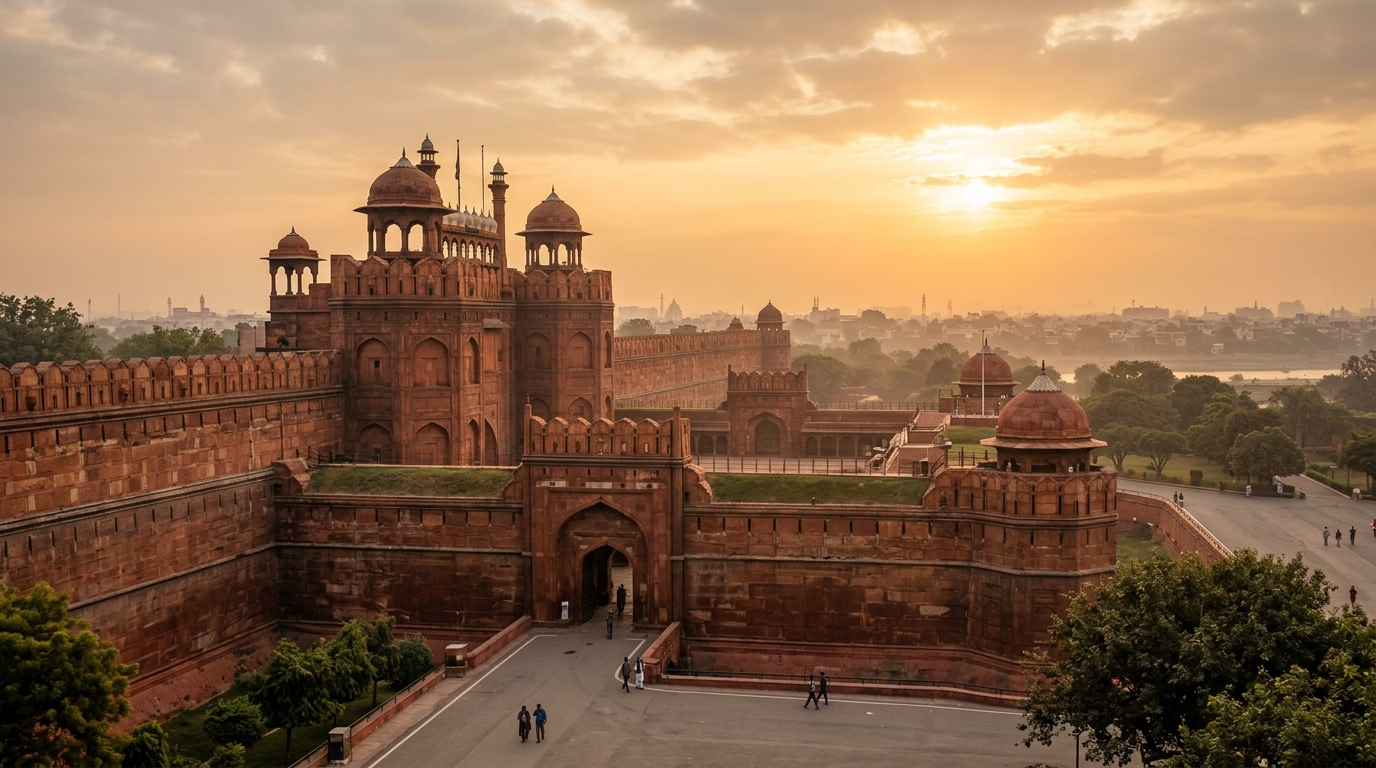
Independence Day remains the primary civic celebration on India's national calendar. Every August 15, the Prime Minister hoists the national tricolor from the ramparts of Delhi's Red Fort and delivers an address to the nation. Recent Red Fort addresses have connected national development targets to the Viksit Bharat 2047 framework [Press Information Bureau, 2024–2025]. This initiative sets a deadline for India to achieve fully developed nation status by the centenary of its independence.
                     VIKSIT BHARAT 2047 PILLARS

  [High-Tech Manufacturing] ---> Semiconductor fabrication & hardware exports
  [Defense Sovereignty]     ---> Indigenous military platforms & aerospace
  [Energy Transition]       ---> Solar, green hydrogen, & grid modernization
  [Digital Infrastructure]  ---> Unified public digital platforms & AI scale
The government has expanded domestic manufacturing in high-tech sectors, including semiconductor production, green energy systems, and defense hardware. Modern Independence Day addresses emphasize industrial self-reliance alongside traditional tributes to historical freedom fighters. This focus connects historical struggles for political sovereignty to current goals for technological independence. Tracking these milestones across time demonstrates how national priorities evolve across generations.
Related Reading
- Scientific Milestones in Indian History: A Date-Wise Guide
- The 1971 India-Pakistan War: Key Dates and Historical Summary
- Visual History of the Indian Independence Movement: Key Dates
- What Are the Major Events in Indian History? (FAQ Archive)
FAQ
Q: Why did Lord Mountbatten choose August 15 for India's independence?
Mountbatten selected August 15 because it marked the second anniversary of Japan's surrender in World War II. He had served as Supreme Allied Commander in South East Asia and wanted to associate his military success with the transfer of power. This decision advanced the original British departure date by ten months.
Q: Which other countries celebrate independence or national milestones on August 15?
Five other nations observe major national holidays on August 15. South Korea and North Korea commemorate liberation from Japanese colonial rule in 1945. The Republic of the Congo marks its 1960 independence from France, Bahrain observes its 1971 independence from Britain, and Liechtenstein celebrates its National Day.
Q: What major non-political event occurred on August 15 in world history?
The Panama Canal officially opened for commercial traffic on August 15, 1914, when the steamship SS Ancon completed its transit. This engineering project cut global maritime shipping routes between the Atlantic and Pacific oceans by 8,000 nautical miles.
Q: How do August 15 historical events in India connect to broader global decolonization?
India's independence in 1947 ended Britain's military dominance across the Indian Ocean and encouraged liberation campaigns across Asia and Africa. The new government co-founded the Non-Aligned Movement, establishing a diplomatic framework that allowed post-colonial nations to avoid Cold War alliances.
Study the archival records from August 15, 1947, including Jawaharlal Nehru's speech manuscripts and original boundary commission maps, to see firsthand how specific territorial decisions shaped the modern international order.
Sources
- Indian Independence Act 1947 — The National Archives (UK), 1947. Supports: The claim that British imperial rule in India officially ended and two independent Dominions were established on August 15, 1947.
- Panama Canal Turns 90 — Autoridad del Canal de Panamá, 2004. Supports: The claim that the steamship SS Ancon made the first official transit through the Panama Canal on August 15, 1914.
- The Jewel Voice Broadcast — Atomic Heritage Foundation / National Museum of Nuclear Science & History, 2016. Supports: The claim that Emperor Hirohito broadcast the surrender announcement on August 15, 1945, bringing an end to World War II.
- Republic of the Congo - Countries - Office of the Historian — Office of the Historian, U.S. Department of State, 1960. Supports: The claim that the Republic of the Congo gained its full independence from France on August 15, 1960.
- Bahrain - Countries - Office of the Historian — Office of the Historian, U.S. Department of State, 1971. Supports: The claim that Bahrain terminated its British treaty relationships and declared full independence on August 15, 1971.
- The Big March: Migratory Flows after the Partition of India — Harvard Kennedy School, 2008. Supports: The claim that 14 to 15 million people were displaced across borders during the 1947 Partition of India.