April Observances in India: The History Behind Significant National Days
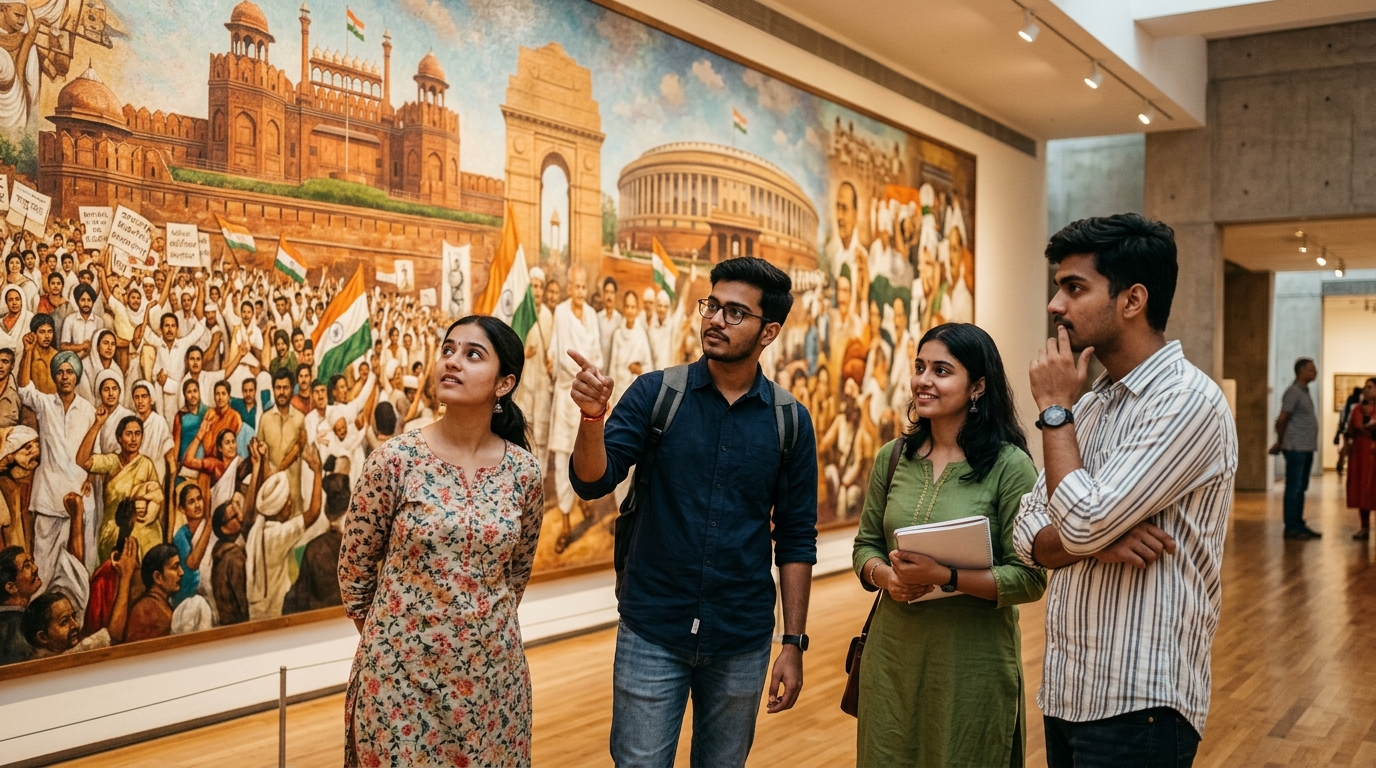
What are the key April observances in Indian history?
The key April observances in Indian history are a series of critical historical milestones, from the Jallianwala Bagh massacre on April 13, 1919, to Ambedkar Jayanti on April 14, 1891, and National Panchayati Raj Day on April 24, 1993. According to historical records, the April dates shaped India's independence movement, constitutional framework, and modern decentralized governance system.
Key Takeaways
- The Jallianwala Bagh massacre death toll remains heavily disputed between official and historical records.
- The central government recently made Dr. B.R. Ambedkar’s birth anniversary a permanent national holiday.
- National Panchayati Raj Day commemorates the 73rd Amendment Act of 1992.
- Panchayats rely on central grants for 95% of their revenue despite having 24.04 lakh elected representatives.
- Visual documentation of historical sites drives significant public awareness and digital archiving efforts.
Citizens and students assume that India's national calendar primarily revolves around August and January independence milestones. April holds the most concentrated series of events that defined modern Indian civil rights and governance. Exploring Indian history April events reveals the exact moments when grassroots democracy took shape. From constitutional amendments to defining protests, April serves as a focal point for understanding how the nation evolved. You can track the overlapping timelines in our guide to Late April in Indian History: Key Dates, Birthdays, and Milestones.

What happened at Jallianwala Bagh on April 13, 1919?
On April 13, 1919, British troops fired on a peaceful gathering in Amritsar's Jallianwala Bagh. The crowd had assembled for Baisakhi and to protest the repressive Rowlatt Act. The Jallianwala Bagh massacre became a primary catalyst for the Indian independence movement and permanently fractured colonial relations.
The Rowlatt Act and the Gathering
The British colonial government passed the 1919 legislation widely known as the Rowlatt Act, officially aimed at curbing anti-colonial uprisings. The Rowlatt Act allowed the government to imprison individuals suspected of anti-colonial activities without trial. The Rowlatt Act sparked widespread anger across the subcontinent. Leaders organized peaceful protests and strikes.
In Amritsar, the situation grew tense after the arrest of prominent nationalist leaders Dr. Saifuddin Kitchlew and Dr. Satyapal. On April 13, 1919, thousands of people gathered at Jallianwala Bagh. Thousands of attendees were villagers visiting Amritsar for the Baisakhi festival. The villagers were unaware of the martial law orders banning public meetings. Brigadier-General Reginald Dyer entered the enclosed ground with the British troops. Brigadier-General Reginald Dyer blocked the only narrow exit. Brigadier-General Reginald Dyer ordered the British troops to open fire on the unarmed crowd without warning. The firing continued until the troops ran out of ammunition.
Disputed Death Tolls and Historical Records
The exact number of casualties remains a subject of historical debate. The discrepancy in the Jallianwala Bagh massacre death toll is stark. Official British records cited 379 dead. The Indian National Congress estimated over 1,000 fatalities.
The 621-person gap in the historical record causes ongoing friction. Tarlochan Singh, Former Rajya Sabha MP and Jallianwala Bagh Trust trustee, recently argued that 107 years later, the martyr count remains unsettled. Tarlochan Singh demanded an authenticated, government-verified list of victims be publicly displayed at the site. Historical closure requires accurate data. Without a verified list, regional historians struggle to document the exact families impacted by the massacre.
Visual Preservation of the Site
The Jallianwala Bagh National Memorial Trust currently manages the 7-acre site in Amritsar. The Jallianwala Bagh National Memorial Trust preserves the bullet-marked walls and the martyr's well. The bullet-marked walls and the martyr's well visually educate visitors on the realities of colonial rule.
Digital preservation of the Amritsar sites is equally critical for modern education. Historical sites thrive on imagery. Adding relevant photos with 'History of Jallianwala Bagh' alt text can drive significant traffic from image search and AI overview panels. Webmasters and educators who catalog Indian history April events must prioritize accurate visual metadata. Accurate visual metadata ensures that younger generations can discover the physical memorials through digital platforms.
Why is Dr. B.R. Ambedkar's birth anniversary celebrated on April 14?
Dr. B.R. Ambedkar's birth anniversary, celebrated on April 14, is a national observance honoring the chief architect of the Indian Constitution. The April 14 observance recognizes Dr. Ambedkar's foundational role in establishing equal rights for all citizens and shaping the legal framework of modern India. According to Union Culture Minister Gajendra Singh Shekhawat, establishing a permanent public holiday for Dr. Ambedkar is a necessary tribute to the man who established a new era of equality in Indian society. Dr. Bhimrao Ramji Ambedkar was born on April 14, 1891, and overcame severe social discrimination to earn doctorates from both Columbia University and the London School of Economics. Dr. Ambedkar's academic brilliance directly led to Dr. Ambedkar's appointment as the Chairman of the Drafting Committee of the Constituent Assembly. Today, political leaders and citizens gather at the newly designated Prerna Sthal in the Parliament House premises to pay respects, featuring Buddhist chants and cultural presentations that highlight Dr. Ambedkar's monumental contributions to India's democratic foundation.
Who was the Architect of the Constitution?
The Architect of the Constitution is Dr. Bhimrao Ramji Ambedkar, who was born on April 14, 1891. Dr. Ambedkar overcame severe social discrimination to become one of the most educated Indians of the early 20th century. According to historical records, Dr. Ambedkar earned doctorates from both Columbia University and the London School of Economics.
Dr. Ambedkar's academic brilliance led to Dr. Ambedkar's appointment as the Chairman of the Drafting Committee of the Constituent Assembly. Ambedkar Jayanti serves as a day to reflect on Dr. Ambedkar's contributions to nation-building. In March 2025, the central government officially declared Dr. B.R. Ambedkar's birth anniversary a permanent national public holiday. Union Culture Minister Gajendra Singh Shekhawat stated that establishing a permanent public holiday for Dr. Ambedkar is a necessary tribute to the man who established a new era of equality in Indian society.
Modern Commemorations and Prerna Sthal
Observances of Ambedkar Jayanti have evolved over the decades. The 2026 Ambedkar Jayanti was marked by a massive cross-party gathering at the newly designated Prerna Sthal in the Parliament House premises. The 2026 Ambedkar Jayanti event featured Buddhist chants and cultural presentations.
Prerna Sthal now serves as a central location for political leaders and citizens to pay respects. Prerna Sthal consolidates various statues of national icons into one accessible area. Prerna Sthal makes the statues easier for visitors to engage with the physical representations of India's democratic founders. Coverage of the April 14 events highlights Dr. Ambedkar's academic degrees and Dr. Ambedkar's role as the chief architect of the Indian Constitution.
How are we defining historical figures online?
Defining historical figures online is the process of explicitly categorizing Indian historical figures as entities using Wikification to help search engines understand the figures' context. According to digital archiving best practices, educators building digital archives face a specific challenge when cataloging dates like April 14.
Linking to Wikipedia or adding sameAs properties in schema markup ensures that digital platforms accurately connect Dr. Ambedkar to Dr. Ambedkar's specific legal and social reforms. Adding sameAs properties in schema markup prevents historical facts from becoming diluted in basic text searches.
How did April 24 become National Panchayati Raj Day?
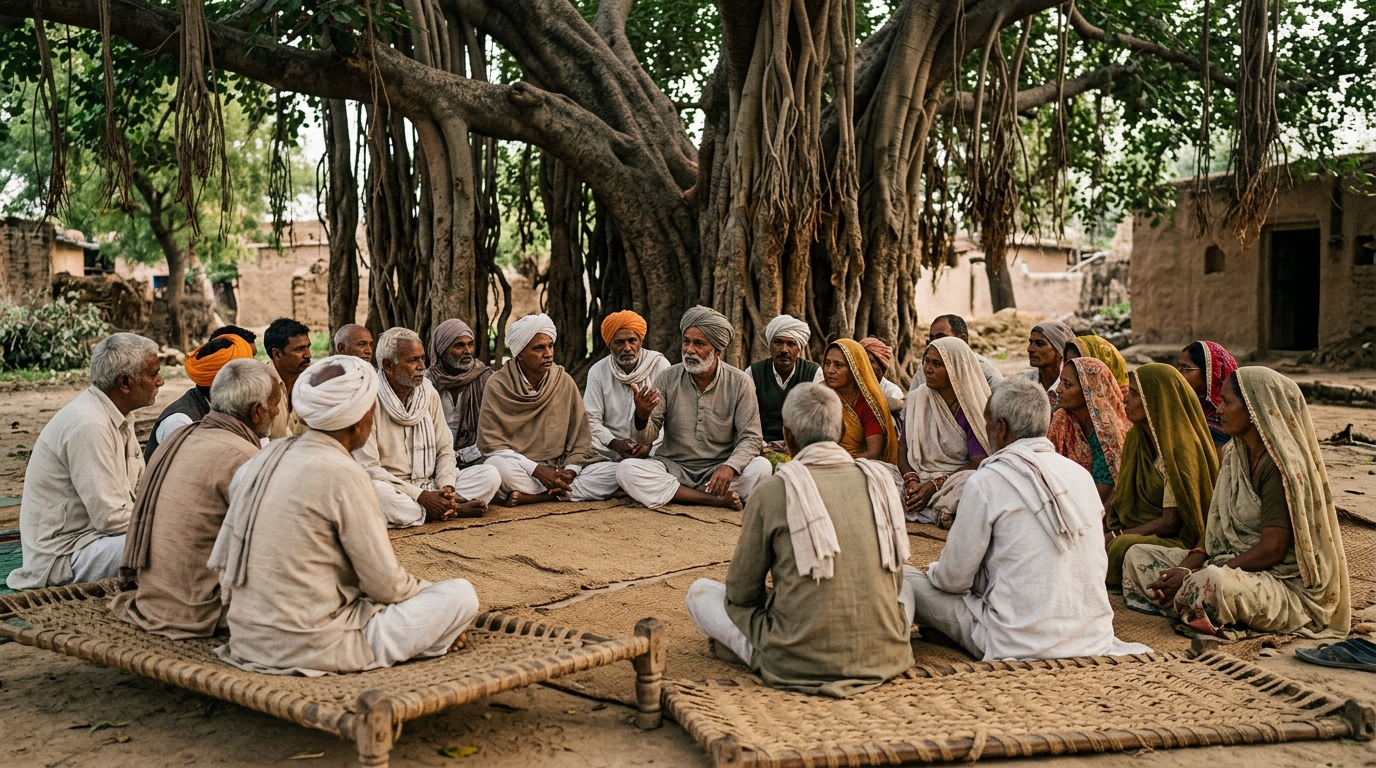
April 24 commemorates the day the 73rd Amendment Act of 1992 came into force in 1993. The 73rd Amendment Act formalized the three-tier Panchayati Raj system. The 73rd Amendment Act institutionalized grassroots democracy and empowered local village councils across rural India to manage economic development.
What is the 73rd Amendment Act of 1992?
The 73rd Amendment Act of 1992 is the constitutional legislation that formalized the three-tier Panchayati Raj system in India. Before 1992, local village councils existed but lacked constitutional backing, and state governments frequently delayed elections. According to constitutional records, the 73rd Amendment Act mandated regular elections every five years.
The 73rd Amendment Act also established State Election Commissions and State Finance Commissions to support local bodies that previously had no guaranteed funding. The 73rd Amendment Act created a three-tier system: village, intermediate, and district levels. You can read more about how the 73rd Amendment Act shifted the nation's financial structure in our guide to Economic Milestones in Indian History: From 1947 to Present. The 73rd Amendment Act also mandated the reservation of seats for Scheduled Castes, Scheduled Tribes, and women.
Grassroots Governance by the Numbers
The scale of India's local governance is massive. There are currently 24.04 lakh elected representatives across India's 2.5 lakh Panchayats. Nearly 49.75% of the 24.04 lakh elected representatives are women. The 24.04 lakh elected representatives make the Panchayati Raj system one of the largest democratic participatory systems in the world.
During recent Panchayati Raj Day observances, Gram Sabhas across India passed specific WASH resolutions. The WASH resolutions focused on water, sanitation, and hygiene. Local councils provided certifications for local water assets. The WASH resolutions integrated health and sanitation directly into village governance. The Panchayat Advancement Index 2.0 was also launched during the April 2026 National Panchayati Raj Day celebrations. The Panchayat Advancement Index 2.0 helps the government better track and evaluate grassroots governance and rural development.
The Financial Reality of Local Boards
News articles celebrate Panchayati Raj Day as a democratic victory. News articles ignore the crippling financial dependency that prevents true local autonomy.
The 15th Finance Commission recommended Rs. 2,36,805 Crore for rural local bodies and panchayats for the 2021–2026 period. However, the national average for per capita Own Source Revenue (OSR) collected annually by Panchayats is a negligible Rs 59. The Rs 59 average highlights that 95% of Panchayat revenue still comes from central and state grants.
| Governance Tier | Primary Role | Revenue Reality |
|---|---|---|
| Gram Panchayat (Village) | Local infrastructure and sanitation | Heavy reliance on state grants |
| Panchayat Samiti (Block) | Agricultural and rural development | Acts as a funding conduit |
| Zila Parishad (District) | District-wide planning and coordination | Manages large central allocations |
Without the ability to collect meaningful local taxes, Panchayats struggle to fund independent projects. Panchayats must wait for state allocations. The reliance on state grants restricts the very autonomy the 73rd Amendment intended to create.
What other historical milestones mark Indian history April events?
Beyond civil rights and governance, April contains major military and protest milestones. The Indian history April events include the fall of the Delhi Sultanate at Panipat. The Indian history April events also feature the conclusion of Mahatma Gandhi's historic Salt March at Dandi, which challenged British taxation directly.
The First Battle of Panipat (April 21, 1526)
Military history shifted dramatically on April 21, 1526. Babur's invading forces met the army of Ibrahim Lodi, the Sultan of Delhi. Babur utilized field artillery and matched the field artillery with rapid cavalry movements. The tactical combination overwhelmed the much larger Lodi army.
The victory at Panipat marked the beginning of the Mughal Empire in India. The First Battle of Panipat ended the Delhi Sultanate. The use of gunpowder and cannons changed regional warfare permanently. For a detailed breakdown of troop movements and tactical choices, review our timeline of April 21, 1526: A Historical Timeline of the First Battle of Panipat.
The Dandi March Conclusion (April 6, 1930)
The Salt Satyagraha reached its climax in early April. Mahatma Gandhi and Mahatma Gandhi's followers marched for 24 days from Sabarmati Ashram to the coastal village of Dandi. On April 6, 1930, Gandhi broke the British salt laws by picking up a lump of natural salt from the mud.
The act of picking up natural salt triggered a massive wave of civil disobedience across the country. Millions of Indians began producing natural salt. The British responded with mass arrests, imprisoning over 60,000 people. The Salt Satyagraha gained global media attention. The Salt Satyagraha exposed the harsh realities of British colonial policies to an international audience. We track the daily progression in The Dandi March Day-by-Day: A Timeline of the 1930 Salt Satyagraha.
The Establishment of the Reserve Bank of India (April 1, 1935)
April also marks the birth of India's central banking system. The Reserve Bank of India (RBI) was established on April 1, 1935, in accordance with the Reserve Bank of India Act, 1934. Initially headquartered in Calcutta, the Reserve Bank of India moved permanently to Mumbai in 1937.
The Reserve Bank of India started as a privately owned entity. The Reserve Bank of India was nationalized in 1949 after independence. The creation of the RBI stabilized the currency and credit system of the country. The Reserve Bank of India remains the central pillar of India's economic framework today.
Build your own historical timeline by cross-referencing the April dates with regional archives. Look at your local municipal or panchayat records to see how national amendments impacted your specific district. Check the official data on your local Gram Panchayat's Own Source Revenue to understand how grassroots governance functions in your own neighborhood.
Related Reading
- What Are the Major Events in Indian History? (FAQ Archive)
- Today in Indian History: March Events, Birthdays, and Milestones
- Late April in Indian History: Key Dates, Birthdays, and Milestones
- Milestones in Indian Women's History: A Chronological Guide
FAQ
Q: When did Ambedkar Jayanti become a permanent national public holiday? The central government officially declared Dr. B.R. Ambedkar's birth anniversary a permanent national public holiday in March 2025. This move standardized the observance across all states and central government offices.
Q: Why do historical death tolls for Jallianwala Bagh differ? Official British records deliberately minimized the casualty count to 379 to reduce political fallout. The Indian National Congress conducted its own inquiry and estimated over 1,000 fatalities based on local witness accounts and missing persons reports.
Q: What is the Panchayat Advancement Index 2.0? It is a tracking tool launched during the April 2026 National Panchayati Raj Day celebrations. The government uses it to evaluate grassroots governance, measure rural development metrics, and assess local administrative efficiency.
Q: How do Panchayats generate revenue today? Panchayats generate a negligible national average of Rs 59 in per capita Own Source Revenue annually. They rely on central and state grants for roughly 95% of their total funding.