April 1919: A Day-by-Day Account of the Jallianwala Bagh Tragedy
In Short
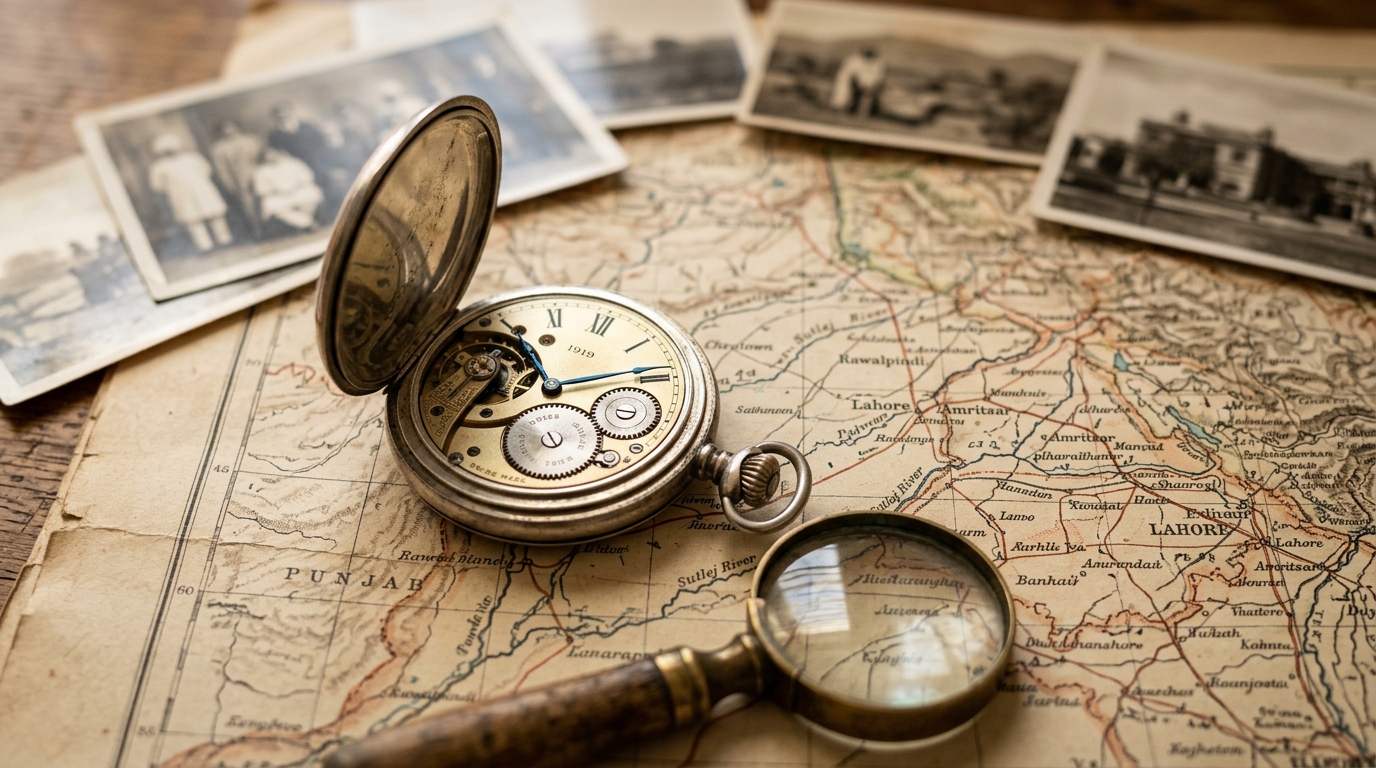
The Jallianwala Bagh tragedy was not an isolated incident, but the climax of a tense two-week period in April 1919. This Jallianwala Bagh history timeline tracks the escalation from peaceful protests against the Rowlatt Act to the arrest of local leaders, culminating in Brigadier-General Reginald Dyer's deadly order to fire on unarmed civilians.
Key Takeaways
- The massacre fundamentally shifted the Indian independence struggle from elite petitions to mass non-cooperation.
- Peaceful protests against the Rowlatt Act in early April triggered the initial colonial panic.
- The secret deportation of leaders Saifuddin Kitchlew and Satyapal on April 10 sparked the first civilian casualties.
- Brigadier-General Reginald Dyer fired 1,650 rounds into the unarmed Baisakhi crowd without warning.
- The subsequent martial law regime inflicted severe physical and psychological punishments on Punjab's citizens.
Many people believe the Jallianwala Bagh massacre happened spontaneously on a quiet spring afternoon. In reality, April 13 was the breaking point of a highly volatile, two-week standoff between the British colonial administration and the citizens of Amritsar. The air in Punjab was already thick with anxiety, political mobilization, and military crackdowns long before the crowd gathered for Baisakhi.
Understanding this tragedy requires looking at the days leading up to it. The Jallianwala Bagh history timeline provides a clear view of how colonial paranoia met rising Indian nationalism. We map out the exact sequence of events, day by day, to show how administrative decisions transformed a local protest into one of the darkest chapters in British imperial history. This chronological record relies on primary accounts, including the official Hunter Commission Report and records from the National Archives of India, to present the facts objectively.
The Rowlatt Act ignited the initial spark for the Jallianwala Bagh history timeline.
The timeline begins with the passage of the Anarchical and Revolutionary Crimes Act of 1919, commonly known as the Rowlatt Act. This law extended wartime emergency measures, allowing the colonial government to arrest and incarcerate Indians without trial. This blatant denial of civil liberties triggered immediate, widespread outrage across India.
Early April protests in Amritsar
By late March and early April, Mahatma Gandhi had called for a nationwide strike, or hartal, against the Rowlatt Act. Amritsar responded with massive, peaceful demonstrations. On April 6, the city shut down completely. Shops closed, transportation halted, and thousands of citizens marched through the streets. You can see how this fits into the broader Timeline of Mahatma Gandhi's Nonviolent Movements in India.
The British administration, led by Lieutenant Governor of Punjab Michael O'Dwyer, viewed these peaceful protests as the precursors to a violent mutiny. O'Dwyer had heavily recruited Punjabi soldiers during World War I and feared that returning veterans might join the nationalist cause. He ordered local authorities to stop the political organizing by any means necessary. The colonial government feared a repeat of the 1857 uprising.
The arrest of local leaders
The situation escalated on April 9 during the Hindu festival of Ram Navami. Hindus and Muslims celebrated together in the streets of Amritsar. They displayed a remarkable unity that alarmed the British officials. Two prominent local leaders, Dr. Saifuddin Kitchlew and Dr. Satyapal, led this unified front.
The British administration decided to remove the leadership. On the morning of April 10, the Deputy Commissioner of Amritsar summoned Kitchlew and Satyapal to his residence. Upon arrival, police arrested both men secretly and deported them to Dharamshala. The authorities thought removing the leaders would quiet the city. Instead, it lit the fuse for the violence that followed.
Tensions escalated rapidly between April 10 and April 12.
The secret deportation of Kitchlew and Satyapal on April 10 provoked an immediate, angry response from the citizens of Amritsar. Crowds marched toward the civil lines to demand the release of their leaders, meeting armed military pickets. The resulting clashes set the stage for military rule.
The April 10 violence and civilian casualties
When the crowd reached the Hall Gate railway overbridge leading to the British cantonment, soldiers ordered them to stop. The crowd refused to disperse. The military fired on the unarmed protesters, killing up to twenty people.
Panic and rage swept through the city. Mobs retaliated by attacking symbols of British authority. They set fire to the town hall, the railway station, and several banks. During the chaos, rioters killed five European men. They also severely beat a British missionary, Marcella Sherwood, who was eventually rescued by local Indians. The colonial administration lost control of the walled city of Amritsar. They cut the water and electricity supplies. This effectively placed the civilian population under siege.
General Dyer takes command of Amritsar
On April 11, the civil administration handed control of the city over to the military. Brigadier-General Reginald Dyer arrived in Amritsar late that evening. He quickly established his headquarters at the railway station and brought in reinforcements. His troops included Gurkha and Baluchi regiments.
Dyer viewed the situation not as a civil disturbance, but as a state of war. On April 12, he marched his troops through the city streets. He arrested dozens of people suspected of participating in the April 10 riots. He issued a proclamation banning all public meetings and assemblies. However, authorities read this proclamation in only a few locations. Most of Amritsar's residents, and the thousands of villagers arriving from the countryside, never heard the warning. You can see how these communication failures compound during crises by looking at other 10 Most Searched Dates in Indian History and Why They Matter.
April 13 marked the devastating climax of the Jallianwala Bagh history timeline.
April 13 was Baisakhi, the traditional Sikh New Year and harvest festival. Thousands of villagers flocked to Amritsar to celebrate at the Golden Temple. By the afternoon, a massive crowd gathered in Jallianwala Bagh, an enclosed piece of wasteland near the temple, completely unaware of Dyer's martial orders.
The Baisakhi gathering
Jallianwala Bagh was not a park. It was a dusty, uneven open space surrounded on all sides by the high walls of adjacent houses. It had only a few narrow entrances. Estimates suggest between 15,000 and 20,000 people gathered there on the afternoon of April 13.
The crowd was a mix of people. Many were families resting after visiting the Golden Temple. Others were attending a peaceful political meeting organized to protest the Rowlatt Act and the arrest of Kitchlew and Satyapal. The atmosphere was calm. There were no weapons, no barricades, and no signs of impending violence.
The unprovoked firing
General Dyer received word of the gathering around 4:00 PM. He marched a detachment of 50 riflemen and two armored cars equipped with machine guns toward the Bagh. The alleyway leading into the compound was too narrow for the armored cars. Dyer left them outside.
He entered the compound with his troops, blocked the main exit, and deployed his men on a raised bank. Without issuing a single warning to the crowd to disperse, Dyer ordered his men to open fire.
The firing lasted for about 10 minutes. Dyer specifically directed his troops to shoot at the thickest parts of the crowd. He ordered them to fire toward the narrow exits where people were desperately trying to flee. The troops fired 1,650 rounds of ammunition. They stopped only when they ran out of bullets.
The immediate aftermath in the walled compound
The scene inside Jallianwala Bagh was horrific. Hundreds lay dead, and over a thousand were wounded. People were crushed in the stampede to escape. Many jumped into the solitary well inside the compound to avoid the bullets. They drowned or were crushed by others falling on top of them. Today, this is known as the Martyrs' Well.
Dyer withdrew his troops immediately after the firing stopped. He provided no medical assistance to the wounded. Because a strict curfew was in place, families could not enter the Bagh to search for their loved ones or bring them water until the next morning. The wounded lay bleeding in the dirt overnight.
Martial law brutalized Punjab in the weeks following the massacre.
The tragedy of April 13 was followed by a punitive martial law regime that punished the entire province. The colonial government retroactively declared martial law on April 15. This gave the military unchecked power to humiliate, arrest, and torture Indian citizens across Punjab.
The crawling order and public floggings
General Dyer instituted several degrading orders designed to break the spirit of the local population. The most infamous was the "crawling order." He forced any Indian passing through the street where Marcella Sherwood was attacked to crawl on their bellies.
The military set up whipping triangles across the city. Soldiers publicly flogged Indian men for minor infractions, such as failing to salute British officers. They forced students to march for miles in the hot sun to attend roll calls. The administration even dropped bombs on civilian crowds in Gujranwala using Royal Air Force planes. These events represent one of the darkest periods in Late April in Indian History: Key Dates, Birthdays, and Milestones.
Information suppression and censorship
The British administration worked hard to suppress news of the massacre. They imposed strict censorship on the press and restricted travel in and out of Punjab. It took weeks for the full details of the Jallianwala Bagh history timeline to reach the rest of India and the outside world.
When the news finally broke, it sent shockwaves across the country. Rabindranath Tagore renounced his British knighthood in protest. The massacre destroyed any remaining trust the Indian political elite had in British justice. It proved that the colonial state relied entirely on brute force to maintain its rule.
The Hunter Commission exposed the deep colonial divide.
Under mounting pressure, the British government formed the Disorders Inquiry Committee, known as the Hunter Commission, in October 1919. The commission aimed to investigate the disturbances in Punjab. Its proceedings ultimately highlighted the vast ideological gulf between the British rulers and their Indian subjects.
Dyer's unapologetic testimony
When General Dyer testified before the Hunter Commission, he showed no remorse. He stated clearly that his intention was not simply to disperse the crowd. He wanted to produce a "moral effect" and strike terror into the whole of Punjab. He admitted that he would have used the machine guns if he could have gotten the armored cars into the compound.
The Commission's final report, published in 1920, condemned Dyer's actions but imposed no criminal penalties. The military simply forced him to resign his commission. Back in England, many conservatives hailed Dyer as the "savior of Punjab." They raised a massive financial fund to support him in his retirement.
The shift in the Indian independence movement
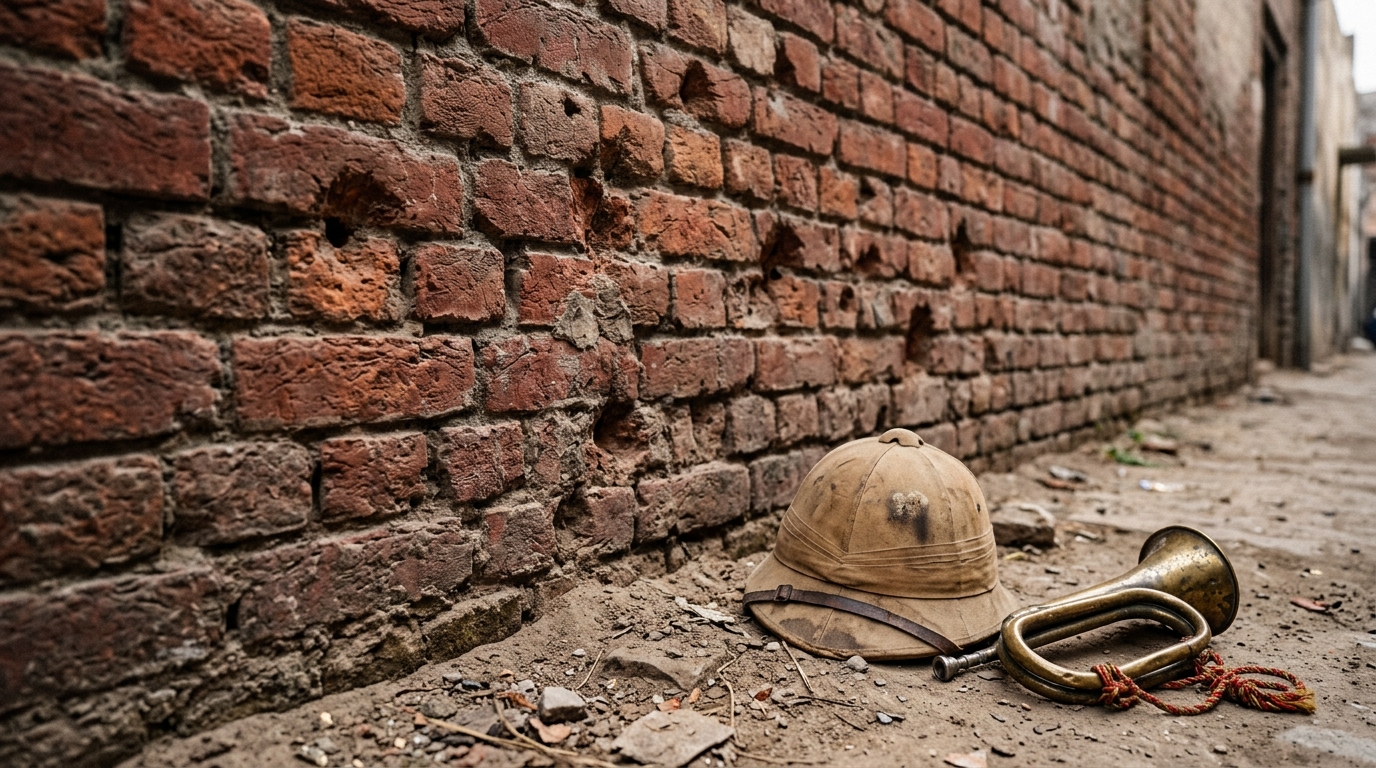
The Indian National Congress conducted its own independent inquiry. They estimated a much higher death toll than the official British count of 379. Official Indian records now recognize over 1,000 casualties. The bullet marks are still visible on the brick walls of the memorial site today.
The massacre fundamentally altered the trajectory of Indian history. It ended the era of moderate politics and petitions. The brutality of April 1919 paved the way for the first mass Non-Cooperation Movement in 1920. If you track the history of indian independence movements, Jallianwala Bagh stands as the definitive turning point where the demand for self-rule became an uncompromising mass movement.
| Date | Event in the Timeline |
|---|---|
| April 6, 1919 | Nationwide hartal (strike) against the Rowlatt Act. |
| April 9, 1919 | Hindu-Muslim unity displayed during Ram Navami. |
| April 10, 1919 | Arrest of Kitchlew and Satyapal; ensuing riots and deaths. |
| April 11, 1919 | General Dyer arrives and takes military control. |
| April 13, 1919 | The Jallianwala Bagh massacre occurs on Baisakhi. |
| April 15, 1919 | Martial law officially declared across Punjab. |
Related Reading
- Indian History Timeline Chart: Key Milestones (Digital Reference)
- India at the Olympics: A Timeline of Historic Sporting Milestones
- Indian History Milestones: The Maurya and Gupta Empires
- Milestones in Indian Women's History: A Chronological Guide
FAQ
Q: How many people died at Jallianwala Bagh? The official British inquiry (Hunter Commission) reported 379 deaths and roughly 1,200 wounded. However, the Indian National Congress inquiry and local records estimate that over 1,000 men, women, and children were killed in the compound.
Q: What happened to General Dyer after the massacre? The Hunter Commission condemned his actions, and the military forced him to resign his command and return to England. He faced no criminal charges or trial for the massacre, and actually received a large pension funded by British sympathizers who viewed him as a hero.
Q: Why were people gathered at Jallianwala Bagh on April 13? The crowd was a mix of locals attending a peaceful meeting to protest the Rowlatt Act and the arrest of their leaders. They were joined by thousands of villagers who had come to Amritsar to celebrate the Baisakhi harvest festival at the nearby Golden Temple.
Q: Did the crowd have any warning before the shooting started? No. General Dyer marched his troops into the enclosed area, blocked the main exit, and ordered them to open fire immediately without issuing any warning or order to disperse.
To fully grasp the impact of the Jallianwala Bagh history timeline, explore the primary source documents from the Hunter Commission Report available through the National Archives of India. Compare the official British testimony against the Indian National Congress inquiry to see how historical narratives diverge based on who holds power. Visit our date-based index to see what other historical shifts occurred in the month of April.