April 13 in Indian History: Jallianwala Bagh and Baisakhi Milestones
What Happened on April 13 in Indian History?
April 13 in Indian history is a defining national milestone shaped by religious, anti-colonial, and military developments. Historical records document three critical events on April 13: Guru Gobind Singh's establishment of the Khalsa in 1699, the British military's Jallianwala Bagh massacre in 1919, and the Indian Army's Operation Meghdoot in 1984.
Key Takeaways
- Guru Gobind Singh established the Khalsa order at Anandpur Sahib on April 13, 1699.
- British troops fired 1,650 rounds into unarmed civilians at Jallianwala Bagh in 1919.
- The 1919 massacre unified public resistance and accelerated the demand for complete independence.
- India launched Operation Meghdoot on April 13, 1984, securing the strategic Siachen Glacier.
- Baisakhi serves as both an agricultural celebration and a solemn national memorial day.
Exactly 1,650 rifle rounds fired in under ten minutes altered the course of the British Empire in South Asia. This defining event anchors April 13 Indian history, turning an ancient spring harvest festival into a permanent symbol of sacrifice. The date carries a unique dual identity across the subcontinent. Millions celebrate the day as Baisakhi, marking the Punjabi solar new year and the spiritual birth of the Sikh Khalsa in 1699.
At the same time, the nation reflects on the 1919 Jallianwala Bagh massacre in Amritsar. Modern military history also intersects with this date through the 1984 capture of the Siachen Glacier. Understanding these converging timelines shows how a single calendar day can shape religious identity, anti-colonial resistance, and national defense. As an entry point into the 10 most searched dates in Indian history, April 13 provides an unvarnished look at how sacrifice and statecraft forged modern India.
What Makes April 13 Central to Sikh Tradition and Baisakhi Celebrations?
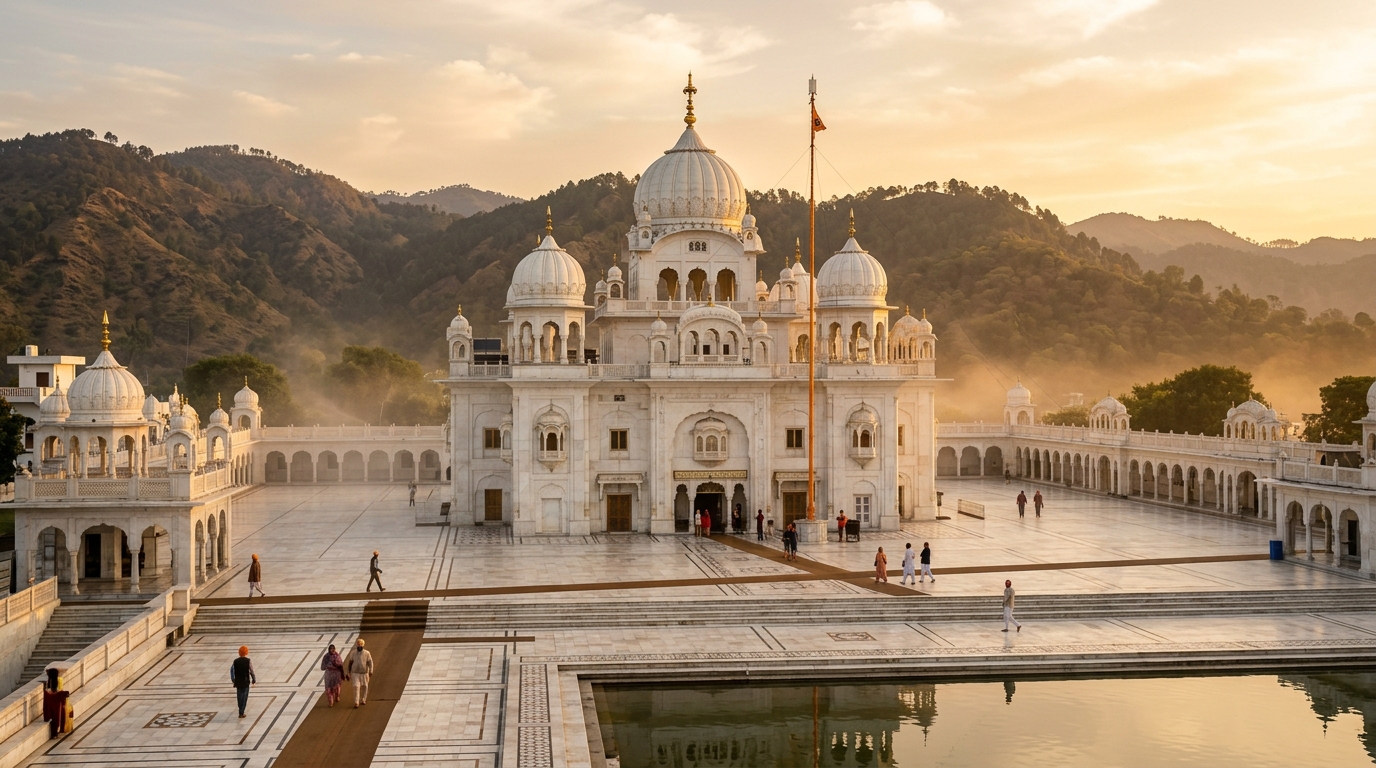
April 13 in Sikh tradition is the foundational anniversary of the Khalsa panth, established by the tenth Sikh spiritual leader, Guru Gobind Singh, at Anandpur Sahib on April 13, 1699. This event institutionalized Sikh identity through a formal code of conduct, religious initiation, and external articles of faith known as the Five Ks.
According to historical accounts documented by the Shiromani Gurdwara Parbandhak Committee and Sikh chroniclers, the 1699 Baisakhi congregation brought together thousands of devotees from across the Indian subcontinent. Guru Gobind Singh utilized the traditional Punjabi spring harvest gathering to establish an egalitarian order of saint-soldiers dedicated to resisting Mughal tyranny and caste oppression. The initiation of the Panj Pyare (Five Beloved Ones) on April 13, 1699, fundamentally reshaped northern Indian society by replacing hereditary caste hierarchies with absolute spiritual and social equality. Consequently, April 13 transformed Baisakhi from an agricultural harvest festival into the primary religious holiday celebrating the formal birth of the Sikh community.
The Creation of the Khalsa in 1699
The gathering at Anandpur Sahib in 1699 altered the social hierarchy of seventeenth-century Punjab. Guru Gobind Singh called upon the congregation, asking for volunteers willing to sacrifice their lives for righteousness. Five men from different castes stepped forward to answer the call.
According to records preserved by the Shiromani Gurdwara Parbandhak Committee, these five individuals became the Panj Pyare (the Five Beloved Ones). The Guru initiated them into the Khalsa brotherhood through the Khande di Pahul (amrit nectar ceremony). He then asked them to initiate him in return, dissolving traditional barriers between teacher and disciple.
The creation of the Khalsa established the mandatory wearing of the Five Ks: Kesh (uncut hair), Kangha (wooden comb), Kara (iron bracelet), Kachera (cotton undergarment), and Kirpan (ceremonial dagger). This new order rejected caste divisions and mandated that all initiated men take the name Singh (Lion) and women take the name Kaur (Princess). The order gave the community an organized identity to resist Mughal religious persecution.
+-------------------------------------------------------------------+
|               THE FIVE BELOVED ONES (PANJ PYARE) - 1699           |
+---------------------+-----------------------+---------------------+
| Name                | Origin                | Original Caste      |
+---------------------+-----------------------+---------------------+
| Bhai Daya Ram       | Lahore (Punjab)       | Khatri (Shopkeeper) |
| Bhai Dharam Das     | Hastinapur (UP)       | Jat (Farmer)        |
| Bhai Himmat Rai     | Puri (Odisha)         | Jheer (Water-carrier)|
| Bhai Mohkam Chand   | Dwarka (Gujarat)      | Chhimba (Tailor)    |
| Bhai Sahib Chand    | Bidar (Karnataka)     | Nai (Barber)        |
+---------------------+-----------------------+---------------------+
Agricultural Roots and the Punjabi Solar New Year
Long before 1699, Baisakhi marked the solar transition of the sun into the Mesha rashi (Aries zodiac). This transition aligned with the arrival of the rabi (spring) harvest across the fertile plains of the Punjab region. Farmers celebrated the ripening of wheat crops, which represented their primary economic lifeline for the coming year.
The festival combined folk dances like Bhangra and Giddha with local fairs, athletic competitions, and collective feasts. It represented a time when rural communities exchanged goods, settled debts, and celebrated hard manual labor. The seasonal timing guaranteed that rural populations from across Punjab gathered in regional urban centers every mid-April.
The Sacred Gathering of Pilgrims at Harmandir Sahib
Amritsar served as the spiritual and commercial hub of these harvest celebrations. Tens of thousands of devotees traveled to the Golden Temple (Harmandir Sahib) to take a holy dip in the sacred pool (Amrit Sarovar). Concurrently, the municipal authorities hosted the annual Baisakhi horse and cattle fair outside the walled city.
This agricultural market drew rural traders, families, and day laborers from remote villages who had little contact with urban political developments. The presence of these peaceful rural visitors proved critical centuries later. Their regular holiday routine brought thousands of innocent people into the center of the city on April 13, 1919.
Why Is April 13 Indian History Defined by the 1919 Jallianwala Bagh Massacre?
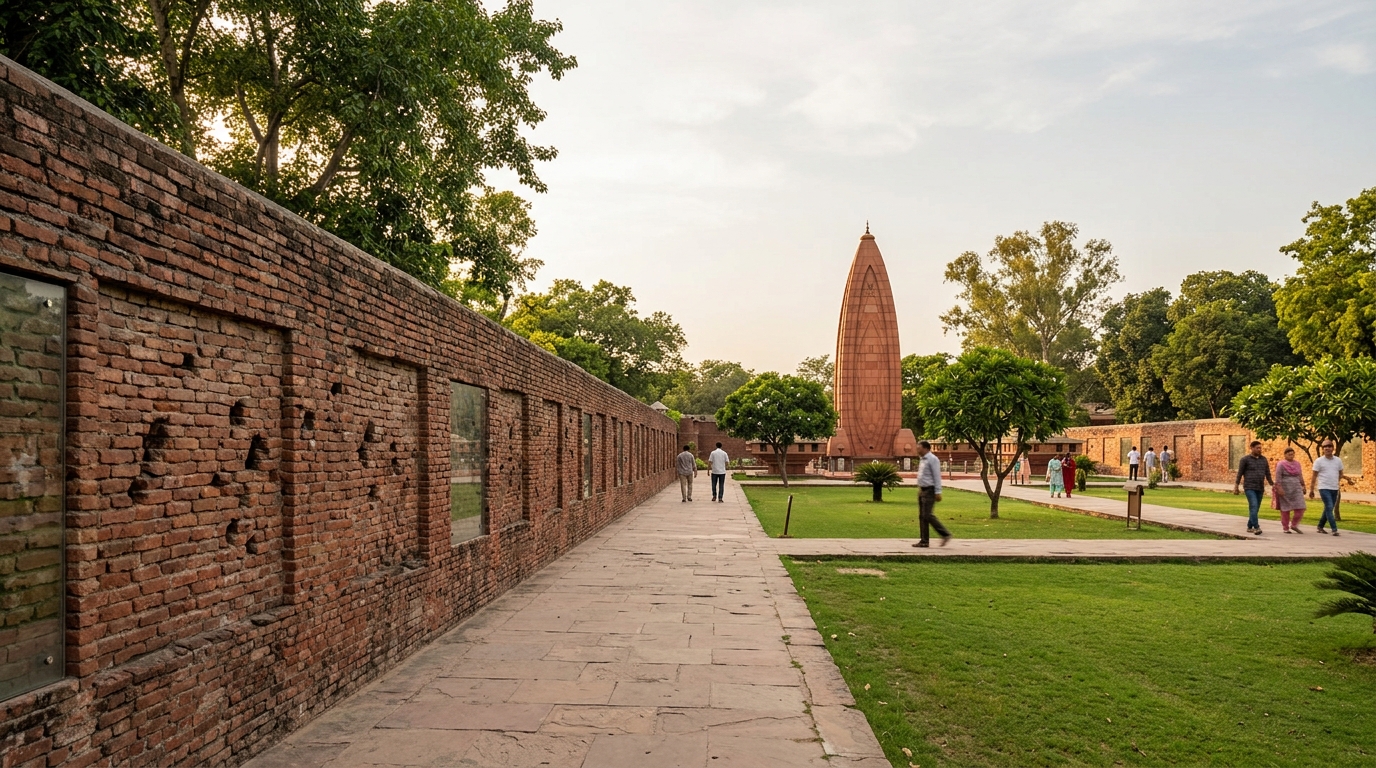
On April 13, 1919, Brigadier General Reginald Dyer ordered British Indian Army troops to shoot into an unarmed crowd trapped inside Amritsar's Jallianwala Bagh. The brutal attack killed hundreds of peaceful protesters and rural pilgrims. It destroyed public faith in British justice and catalyzed the nationwide struggle for complete self-rule.
       [ Single Narrow Entrance / Exit (~7-8 feet wide) ]
                             │
     ┌───────────────────────▼────────────────────────┐
     │   50 British Indian Army Riflemen on Raised Ground │
     │                                                │
     │            1,650 Rounds Fired into Crowd       │
     │                                                │
     │      [Trapped Civilians: Protesters & Pilgrims]│
     │                                                │
     │       [Martyrs' Well]                          │
     │                                                │
     │   High Brick Walls Encircling Entire Compound  │
     └────────────────────────────────────────────────┘
The Anti-Rowlatt Agitation and Amritsar's Tense Build-Up
Tensions in Punjab began with the passage of the Anarchical and Revolutionary Crimes Act of 1919, known as the Rowlatt Act. This legislation extended wartime emergency measures into peacetime, allowing the colonial government to jail political suspects for up to two years without a trial. Mahatma Gandhi called for a nationwide hartal (general strike) to protest the law.
In Amritsar, two prominent nationalist leaders, Dr. Saifuddin Kitchlew and Dr. Satyapal, led peaceful public demonstrations. On April 10, 1919, the British deputy commissioner secretly arrested both leaders and removed them from the city.
The arrests triggered spontaneous public marches demanding their release. Colonial police opened fire on the demonstrators near the railway footbridge, killing several people. The crowd turned violent, setting fire to British banks, cutting telegraph wires, and killing five Europeans.
Lieutenant Governor Sir Michael O'Dwyer placed Amritsar under de facto martial law. He handed administrative command to Brigadier General Reginald Dyer, who banned all public meetings and assemblies of more than four people.
What Happened During the Ten Minutes of Firing at Jallianwala Bagh?
The ten minutes of firing at Jallianwala Bagh is the lethal military assault executed on April 13, 1919, when British officer Brigadier General Reginald Dyer commanded 50 Gurkha and Baluchi soldiers to fire 1,650 rounds into an unarmed crowd of 15,000 to 20,000 trapped civilians in Amritsar without prior warning.
According to the 1920 Disorders Inquiry Committee testimony, General Dyer had issued a proclamation prohibiting public gatherings on the morning of April 13, 1919, but colonial officials read the notice in only 19 locations across Amritsar. By mid-afternoon, between 15,000 and 20,000 people had gathered inside Jallianwala Bagh, an enclosed six-to-seven-acre walled space with a single narrow entrance passage and five locked boundary exits.
At approximately 5:15 PM, General Dyer arrived at Jallianwala Bagh with 50 riflemen and two armored cars. Because the armored vehicles could not navigate the narrow 7-to-8-foot alleyway, Dyer stationed the vehicles outside and deployed the infantry onto raised ground inside the enclosure.
Without issuing a dispersal order, Dyer commanded the soldiers to open fire directly into the dense crowd. Over ten continuous minutes, the riflemen expended 1,650 rounds of .303 caliber ammunition. Civilians attempted to scale the ten-foot brick walls or jumped into the open well inside the compound to evade gunfire. General Dyer ordered the soldiers to cease firing only when ammunition ran low, subsequently withdrawing the military unit without administering medical aid to injured victims.
+-------------------------------------------------------------------+
|               JALLIANWALA BAGH CASUALTY ESTIMATES (1919)          |
+------------------------------------+---------------+--------------+
| Investigating Body                 | Dead          | Injured      |
+------------------------------------+---------------+--------------+
| Hunter Committee (Colonial Govt.)  | 379           | ~1,200       |
| INC Inquiry Report (Malaviya/Gandhi)| 1,000+       | 1,500+       |
| Civil Surgeon Dr. Smith (Amritsar) | 1,800+ (Total casualties)    |
+------------------------------------+---------------+--------------+
Casualty records remain disputed. The official Disorders Inquiry Committee (the Hunter Commission) reported 379 deaths and approximately 1,200 wounded in 1920. However, the independent inquiry conducted by the Indian National Congress, led by Madan Mohan Malaviya and Mahatma Gandhi, determined that more than 1,000 people died and over 1,500 sustained severe injuries.
Who Were the Rural Pilgrims and Cattle Fair Visitors at Jallianwala Bagh?
The rural pilgrims and cattle fair visitors at Jallianwala Bagh were non-political villagers from rural Punjab who entered the enclosed ground on April 13, 1919, during annual Baisakhi celebrations. Historical inquiry reports confirm that these rural families gathered to rest and socialize after visiting the Golden Temple and the municipal livestock market.
According to the 1920 Indian National Congress Inquiry Report, thousands of rural residents walked into Amritsar from districts including Gurdaspur, Jalandhar, and Sialkot for religious rituals at Harmandir Sahib and trade at the Govindgarh cattle fair. Rural families entered Jallianwala Bagh on the afternoon of April 13 to rest under trees and listen to public speeches without intending to participate in anti-colonial agitation.
Historical evidence documented by the Disorders Inquiry Committee indicates that General Dyer's morning proclamation had not been broadcast in rural villages, the Amritsar railway station, or the cattle fair grounds. Consequently, hundreds of unnotified agricultural pilgrims were trapped and killed by colonial riflemen alongside urban political demonstrators.
How Did the Massacre Reshape Indian Politics and the Independence Struggle?
The political aftermath of the Jallianwala Bagh massacre is the decisive turning point in the Indian national movement that shattered faith in British constitutional reform. This 1919 tragedy prompted Rabindranath Tagore to renounce his knighthood, caused Mahatma Gandhi to launch the 1920 Non-Cooperation Movement, and permanently unified nationwide demands for complete sovereignty (Purna Swaraj).
Historical analyses by scholars including Bipan Chandra and Kim A. Wagner demonstrate that the events of April 13, 1919, transformed Indian nationalism from an elite constitutional petition movement into a mass anti-colonial struggle. The violent suppression in Punjab alienated moderate Indian leaders and demonstrated the moral bankruptcy of British imperial rule. Mahatma Gandhi, who had previously supported the British Empire during the First World War, formally declared British rule to be "satanic" following the Hunter Commission's lenient treatment of General Reginald Dyer. By aligning diverse religious, regional, and economic groups against imperial governance, the massacre catalyzed nationwide civil disobedience campaigns and established total independence rather than dominion status as the non-negotiable objective of the Indian National Congress.
Tagore's Renunciation and Gandhi's Non-Cooperation Movement
The news of the massacre was heavily censored by colonial authorities, but word reached Calcutta by late May 1919. On May 31, 1919, Nobel laureate Rabindranath Tagore wrote a scathing letter to the Viceroy, Lord Chelmsford, renouncing his British knighthood.
Tagore stated that the time had come when badges of honor made their shame glaring in the context of mass humiliation. His public act pierced imperial prestige globally and drew international attention to conditions in Punjab.
For Mahatma Gandhi, the massacre marked an irreversible psychological break with the British legal framework. Gandhi had previously believed in the possibility of constitutional reform within the British Empire.
The brutality of Amritsar convinced him that the colonial administration was morally bankrupt. In 1920, Gandhi launched the nationwide Non-Cooperation Movement, demanding Swaraj (self-governance) and calling on citizens to boycott British schools, courts, textile imports, and government jobs.
Punitive Martial Law and the Infamous Crawling Order
Following the massacre, General Dyer and Lieutenant Governor O'Dwyer imposed harsh martial law regulations on the residents of Amritsar and Lahore. Dyer instituted the infamous "Crawling Order" in the Kucha Kurrichhan lane, where an English missionary, Marcella Sherwood, had been assaulted during the April 10 riots.
British soldiers forced every Indian who passed through the narrow street to crawl on all fours through the dirt. Those who raised their backs were beaten with rifle butts.
Martial law administrators also ordered public floggings of citizens suspected of minor infractions. They cut off municipal water and electricity supplies to Indian neighborhoods and forced university students to march sixteen miles a day to report to military checkpoints.
As historian Prof. Kim A. Wagner notes in Amritsar 1919: An Empire of Fear (2019), Dyer's actions were not the isolated outburst of a rogue officer. Instead, they reflected standard imperial counter-insurgency doctrine designed to project terror through collective violence.
The Resignation of C. Sankaran Nair and the 1924 London Trial
Sir Chettur Sankaran Nair, the sole Indian member of the Viceroy's Executive Council, resigned his post in direct protest against martial law atrocities in Punjab. His resignation caused a major political crisis within the colonial government. Nair subsequently published a detailed critique titled Gandhi and Anarchy in 1922.
In the book, Nair accused Sir Michael O'Dwyer of responsibility for the atrocities committed against the civilian population. O'Dwyer sued Nair for libel in London, leading to the sensational five-week trial of O'Dwyer v. Nair in the King's Bench Court in 1924.
Although the conservative British jury ruled against Nair by eleven to one, the court proceedings forced the reality of Punjab's martial law operations into public British court records. British public opinion remained starkly divided. While the House of Commons officially censured Dyer, London's Morning Post newspaper raised a pro-imperialist fund of £26,000 (worth over £1.3 million today) to reward Dyer as the "Man who Saved India," as recorded by UK National Archives files.
The lasting trauma of the Amritsar massacre drove militant anti-colonial activists to pursue direct armed resistance against British imperial officials. Shaheed Udham Singh, who had witnessed the 1919 violence in Amritsar, traveled to London and assassinated Sir Michael O'Dwyer at Caxton Hall on March 13, 1940, viewing it as retribution for Punjab's suffering.
How Did April 13 Indian History Influence Modern Defense Through Operation Meghdoot?
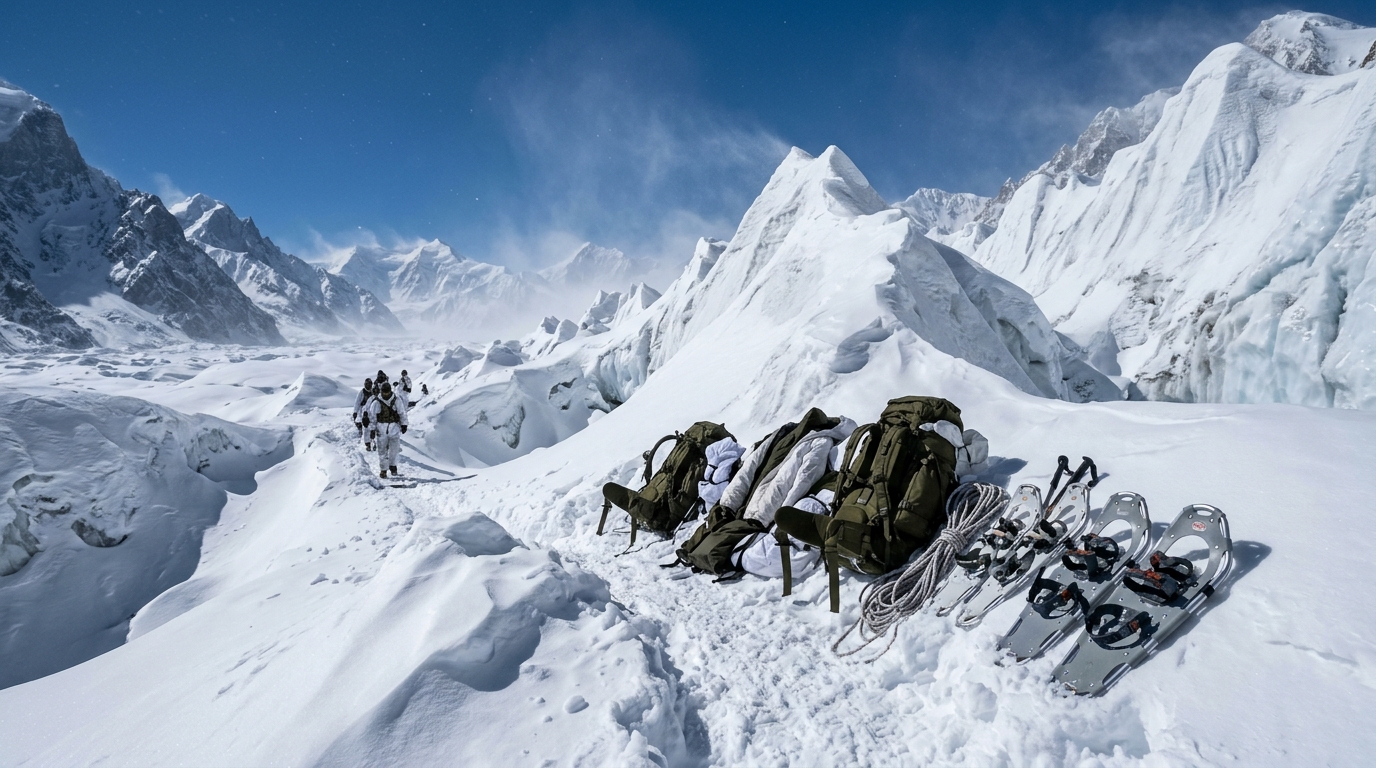
On April 13, 1984, the Indian Armed Forces launched Operation Meghdoot to establish permanent military control over the Siachen Glacier. Executed in sub-zero terrain on Baisakhi day, this pre-emptive high-altitude operation prevented Pakistani forces from occupying dominant mountain passes along the Saltoro Ridge in northern Ladakh.
              SIACHEN GLACIER CONFLICT (1984)

   Pakistani Plan                     Indian Counter-Operation
 [Operation Ababeel]                    [Operation Meghdoot]
  Scheduled: April 17, 1984              Launched: April 13, 1984
                                                  │
                                                  ▼
                                    Indian Army secures Sia La
                                    and Bilafond La passes 96 hours
                                    ahead of Pakistani deployments.
Pre-empting Operation Ababeel on the World's Highest Battlefield
The conflict over the Siachen Glacier stemmed from differing interpretations of the 1949 Karachi Agreement and the 1972 Simla Agreement. Both treaties left the border undemarcated beyond map coordinate Point NJ9842, stating that the line ran "thence north to the glaciers."
During the late 1970s, Pakistan began permitting foreign mountaineering expeditions to the Saltoro Ridge to establish a cartographic claim over the region. Indian military intelligence later discovered that Pakistan had ordered cold-weather mountaineering gear from a supplier in London for an upcoming deployment dubbed Operation Ababeel.
Lieutenant General P. N. Hoon, who served as Commander of XV Corps during the operation, noted in military records that launching Operation Meghdoot on Baisakhi day provided decisive tactical surprise. The Indian Army deployed troops to the high passes 96 hours before Pakistan's scheduled offensive.
By capturing Sia La and Bilafond La passes on April 13, Indian forces established defensible positions along the Saltoro Ridge, commanding the high ground overlooking the glacier. These military strategies highlight how defense choices are interwoven with key events in late April in Indian history.
Aviation Feats and Logistical Challenges above 18,000 Feet
Operation Meghdoot required unprecedented logistical coordination by the Indian Air Force (IAF). Helicopter pilots flew Mi-8, Mi-17, and Chetak helicopters far beyond their standard operational altitude limits. They air-dropped soldiers from the Kumaon Regiment onto narrow ice shelves at altitudes exceeding 18,000 to 20,000 feet.
+-------------------------------------------------------------------+
|               OPERATION MEGHDOOT KEY SPECIFICATIONS (1984)        |
+------------------------------------+------------------------------+
| Launch Date                        | April 13, 1984               |
| Operational Area                   | Siachen Glacier/Saltoro Ridge|
| Altitude Range                     | 17,000 to 22,000 feet        |
| Extreme Temperatures Recorded      | Down to -70°C                |
| Primary Passes Secured             | Sia La, Bilafond La, Gyong La|
+------------------------------------+------------------------------+
Soldiers faced severe physical hazards, including pulmonary edema, frostbite, and hypothermia in temperatures dropping to -70°C. Kerosene had to be flown in special containers to keep personnel alive, and weapons regularly jammed due to the extreme cold. The operation established the world's highest active battlefield, reshaping modern high-altitude warfare doctrine.
The Lasting Strategic Cost of the Siachen Conflict
Holding the Siachen Glacier has demanded continuous resource allocation and human sacrifice since that initial Baisakhi deployment. According to the Ministry of Defence figures reported by The Hindu in 2024, more than 1,150 Indian soldiers have lost their lives serving in the Siachen sector since April 13, 1984.
Over eighty percent of these casualties resulted from environmental hazards like avalanches, altitude sickness, and crevasses rather than enemy fire.
In 2024, the Indian Army marked the 40th anniversary of the operation, confirming continued dominance over all key heights along the Saltoro Ridge. This high-altitude deployment remains one of the most physically demanding border-defense commitments anywhere in the world.
What Ongoing Debates Continue to Surround April 13 Historical Milestones?
April 13 remains a focal point for active diplomatic, political, and cultural discussions in contemporary India and Britain. Modern debates center on formal British state apologies for the 1919 massacre, controversies over recent memorial renovations in Amritsar, and the long-term geopolitical commitments required to sustain high-altitude military frontiers.
+-----------------------------------------------------------------------------------------+
|                  COMPARATIVE TIMELINE OF APRIL 13 IN INDIAN HISTORY                     |
+------+-----------------------+-------------------------+--------------------------------+
| Year | Milestone Event       | Primary Actors          | Strategic / Cultural Impact    |
+------+-----------------------+-------------------------+--------------------------------+
| 1699 | Creation of Khalsa    | Guru Gobind Singh       | Institutionalized Sikh identity|
| 1919 | Jallianwala Bagh      | Gen. Dyer / O'Dwyer     | Accelerated freedom movement   |
| 1984 | Operation Meghdoot    | Indian Army & IAF       | Secured Siachen Glacier border |
+------+-----------------------+-------------------------+--------------------------------+
The Diplomatic Campaign for a Formal British Apology
The diplomatic relationship between India and the United Kingdom continues to grapple with the legacy of the 1919 massacre. Visiting British dignitaries have regularly addressed the tragedy, but none have delivered a formal state apology.
During his visit to Amritsar in 2013, Prime Minister David Cameron called the event a "deeply shameful event in British history." Similarly, Prime Minister Theresa May expressed "deep regret" in the British Parliament in 2019.
Campaigners argue that expressions of regret fall short of an official, binding state apology. In 2025, British lawmakers, including Member of Parliament Bob Blackman, tabled motions urging the UK government to issue a formal apology on the floor of the House of Commons.
Scholars maintain that a full state apology is essential for transparent historical accountability. It formally recognizes that the violence was an outcome of imperial policy rather than an individual officer's poor judgment.
Heritage Conservation versus Memorial Renovation at the Bagh
The physical site of Jallianwala Bagh has become the subject of intense heritage conservation debates within India. In 2021, the Union Government unveiled a major restoration project at the memorial ground. The work added polished stone murals along the narrow entrance alley, updated the Martyrs' Well with protective glass casing, and installed a multimedia sound-and-light show for evening visitors.
Heritage experts, historians, and representatives from the Partition Museum voiced concern over the changes. They argued that the renovations diluted the raw, somber character of the killing ground.
Critics contend that turning a solemn site of colonial execution into a tourist attraction erases the visceral horror experienced by the trapped victims in 1919. Proponents maintain that the upgrades protect historic structures from environmental decay and make the history engaging for younger generations.
Frequently Asked Questions
Q: Why did General Dyer order his troops to fire at Jallianwala Bagh?
General Dyer viewed the public gathering as an open defiance of his martial law proclamation banning assemblies. He stated before the Hunter Commission that his objective was not merely to disperse the crowd, but to produce a sufficient moral effect from a military point of view across Punjab.
Q: How many casualties occurred during the Jallianwala Bagh massacre on April 13, 1919?
The British government's official Hunter Commission report identified 379 dead and roughly 1,200 wounded. An independent inquiry conducted by the Indian National Congress estimated that over 1,000 people died and more than 1,500 suffered injuries.
Q: What is the religious significance of Baisakhi on April 13?
Baisakhi marks the founding of the Khalsa panth by Guru Gobind Singh at Anandpur Sahib on April 13, 1699. The day institutionalized the core Sikh identity, established the code of the Five Ks, and unified the community against social inequality and political tyranny.
Q: Why was Operation Meghdoot launched specifically on April 13, 1984?
The Indian Army chose April 13 to coincide with the Baisakhi festival and the start of the spring thaw in Ladakh. Launching on this date achieved tactical surprise, allowing Indian forces to occupy the high passes of the Siachen Glacier 96 hours before Pakistani troops could deploy.
Visit the official India On This Day historical archives to explore the primary source documents, colonial commission transcripts, and oral histories that define every milestone date across our shared national heritage.
Related Reading
- Late April in Indian History: Key Dates, Birthdays, and Milestones
- Milestones in Indian Women's History: A Chronological Guide
- 1,000 Years of Indian Medical History: A Chronological Guide
- Economic Milestones in Indian History: From 1947 to Present
Sources
- Jallianwala Bagh Massacre — Encyclopaedia Britannica, 2026. Supports: British troops opening fire on an unarmed crowd in Amritsar on April 13, 1919, catalyzing the Indian independence movement.
- Khalsa — Encyclopaedia Britannica, 2026. Supports: Guru Gobind Singh establishing the Khalsa order at Anandpur Sahib during Baisakhi in 1699 and instituting the Panj Pyare and the Five Ks.
- Reginald Dyer — Encyclopaedia Britannica, 2026. Supports: Brigadier General Reginald Dyer ordering troops to block exits and open fire without warning at Jallianwala Bagh.
- Amritsar Massacre: Centenary — UK Parliament, 2019. Supports: British Indian Army troops firing approximately 1,650 rifle rounds into the trapped crowd and the resulting casualty figures.
- Rowlatt Act — Encyclopaedia Britannica, 2026. Supports: The British colonial administration enacting the Rowlatt Act (Anarchical and Revolutionary Crimes Act) in 1919 to extend wartime emergency powers and allow detention without trial.
- Guru Gobind Singh — Encyclopaedia Britannica, 2026. Supports: Guru Gobind Singh founding the egalitarian Khalsa community at Anandpur Sahib and establishing the universal titles Singh and Kaur.