Ancient India Achievements Timeline: Major Milestones
In Short
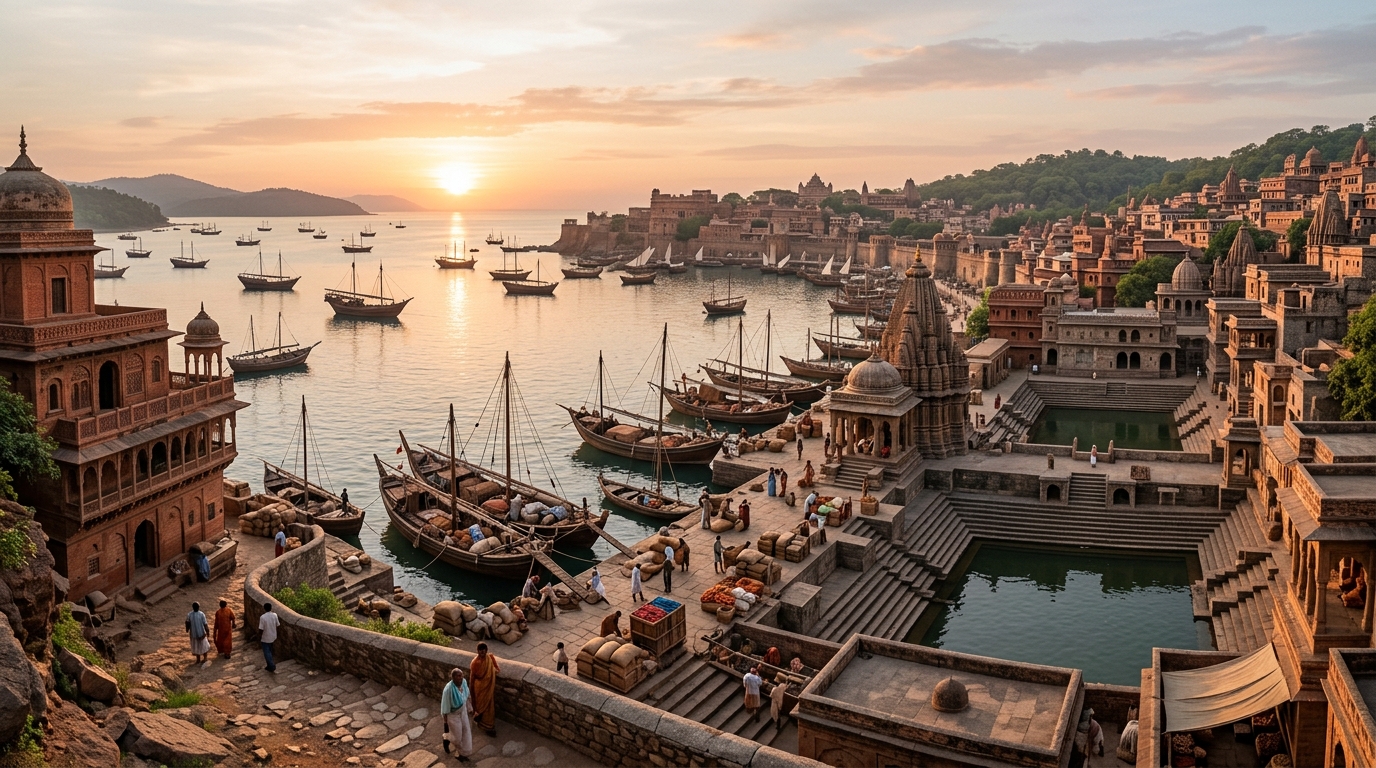
An ancient india achievements timeline maps thousands of years of continuous innovation across the Indian subcontinent. From the 2500 BCE urban planning of the Indus Valley Civilization to Aryabhata's mathematical breakthroughs, these milestones established foundational global standards in metallurgy, medicine, astronomy, and maritime trade.
Key Takeaways
- The Indus Valley Civilization pioneered sophisticated indoor plumbing systems long before contemporary empires.
- Gupta-era mathematicians introduced the decimal place-value system and the concept of zero.
- South Indian maritime networks established massive global trade routes with the Roman Empire.
- Early Indian metallurgists produced rust-resistant iron and high-carbon Wootz steel.
Rakhigarhi, the largest known settlement of the Indus-Saraswati Civilization, spans approximately 550 hectares of meticulously planned urban space [The New Indian Express, 2026]. This massive site in Haryana demonstrates a level of civic engineering that outpaced most human settlements of its era. Tracing an ancient india achievements timeline requires looking past basic dates to understand how these early societies solved complex problems. They built cities with standardized baked bricks, created precise weights for trade, and developed medical treatises that modern practitioners still study.
We examine the concrete milestones that define ancient Indian history. You will see exactly how early kingdoms managed resources, mapped the stars, and forged trade networks that spanned continents. We rely on physical evidence, from metallurgical artifacts to recent archaeogenetic data, to build a clear picture of early Indian innovation.
What makes the Indus Valley cities an engineering marvel?
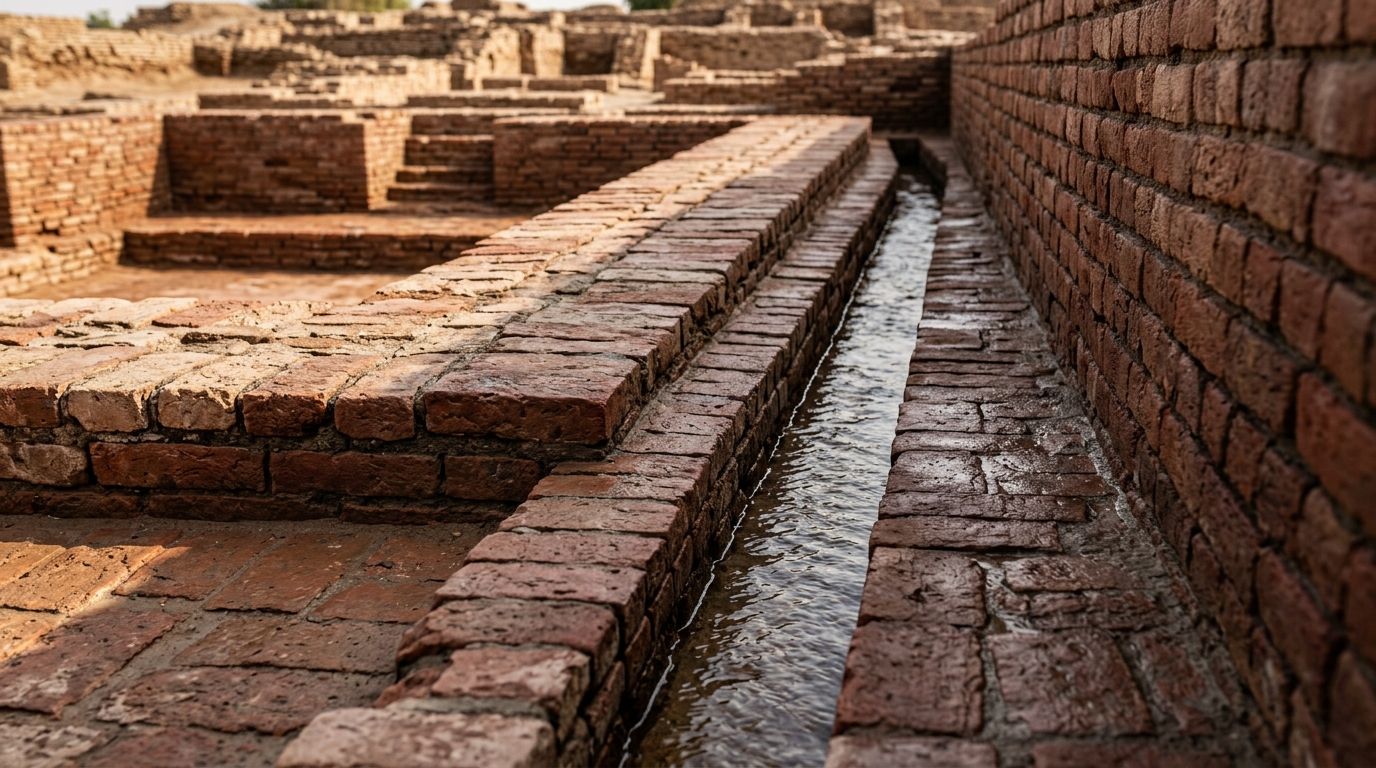
The Indus Valley Civilization flourished around 2500 BCE to 1900 BCE, featuring some of the world's earliest sophisticated indoor plumbing systems [World History Encyclopedia / Sutori, 2025]. Builders prioritized public health through covered drainage networks, standardized baked-brick architecture, and multi-story residential housing across major urban centers.
Urban Planning at Rakhigarhi and Mohenjo-Daro
City planners in the Indus Valley utilized a strict grid system for their streets. They aligned major thoroughfares to the cardinal directions, which allowed prevailing winds to act as a natural air conditioning system. The 550-hectare site of Rakhigarhi features distinct neighborhoods separated by wide avenues. Builders constructed homes using baked bricks of a standard 4:2:1 ratio. This uniformity across hundreds of miles suggests a highly centralized administrative authority capable of enforcing building codes.

These cities lacked massive palaces or grand religious monuments typical of contemporary Egyptian or Mesopotamian cultures. Planners focused resources on civic amenities rather than royal glorification. Excavations reveal large communal granaries with raised platforms to protect food stores from flooding. The Great Bath at Mohenjo-Daro features finely fitted bricks laid with gypsum mortar to ensure waterproofing.
Advanced Water Management
Engineers designed complex water supply and sanitation systems for almost every household. Homes featured designated bathing areas with sloped floors that directed wastewater into street drains. These municipal drains ran alongside the main streets and were covered with loose bricks to allow for regular maintenance and cleaning. The sophisticated indoor plumbing systems developed here remained unmatched globally for thousands of years.
Water harvesting reached remarkable heights at sites like Dholavira in Gujarat. The city sat between two seasonal streams, and engineers constructed a series of massive stone reservoirs to capture monsoon runoff. They built intricate channels to divert water into these holding tanks, ensuring a year-round supply for the population.
Standardization of Weights and Measures
Trade required precision. The Harappan people developed an exact system of weights based on binary and decimal proportions. Merchants used chert stone weights crafted into perfect cubes to measure goods. The smallest weight was approximately 0.85 grams, and the increments doubled predictably. This standardization allowed for fair trade across the vast geographic expanse of the civilization.
Craftsmen also used precise linear measures. An ivory scale found at Lothal features divisions of roughly 1.7 millimeters. This represents the smallest division ever recorded on a Bronze Age scale. Builders used these precise measurements to ensure the architectural uniformity seen in their brickwork and street layouts.
How did ancient Indian mathematics shape the modern world?
Ancient Indian mathematicians developed the decimal place-value system and established zero as a distinct numerical value. These mathematical breakthroughs during the Gupta period provided the essential foundation for modern arithmetic, algebra, and advanced astronomical calculations used globally today.
Aryabhata and the Computation of Pi
The 5th-century scholar Aryabhata fundamentally changed mathematical astronomy. His primary text, the Aryabhatiya, utilized the decimal place-value system to simplify complex calculations. He accurately calculated the computation of Pi to four decimal places (3.1416). He used this precise value to measure the circumference of the Earth with remarkable accuracy for the ancient world.
Aryabhata also applied mathematics to planetary motion. He proposed that the Earth rotates on its axis, causing the apparent daily movement of the stars. He accurately calculated the length of the solar year as 365.25858 days. These calculations required a deep understanding of spherical trigonometry and fractions.
| Mathematician | Time Period | Key Contribution | Impact on Modern Science |
|---|---|---|---|
| Aryabhata | 5th Century CE | Accurate computation of Pi | Foundation for geometry and astronomy |
| Brahmagupta | 7th Century CE | Rules for computing with zero | Basis for modern arithmetic |
| Bhaskara II | 12th Century CE | Early concepts of calculus | Precursor to Newtonian mathematics |
The Invention of Zero
The conceptualization of zero as a number with its own mathematical properties occurred in ancient India. While other cultures used placeholder symbols to represent empty spaces in calculations, Indian mathematicians treated zero as an independent value. Brahmagupta outlined specific rules for calculating with zero in his 7th-century treatise Brahmasphutasiddhanta.
He defined the rules for addition, subtraction, and multiplication involving zero. He also attempted to define division by zero, recognizing it as a unique mathematical challenge. This shift from viewing zero as merely a blank space to treating it as a functional number enabled the development of algebra and negative numbers.
Trigonometry and Astronomical Mapping
Indian scholars developed modern trigonometry to map the heavens. They created the sine (jya) and cosine (kojya) functions to calculate planetary positions and predict eclipses. Unlike Greek chords, which measured the full width of an arc, Indian sine functions measured the half-chord. This approach proved far more practical for astronomical calculations.
These mathematical tools allowed astronomers to create highly accurate calendars and navigation charts. Scholars recorded detailed observations of planetary conjunctions and lunar phases. This data drove the agricultural planning and maritime navigation that supported the broader economy of the subcontinent.
Why are ancient Indian metallurgical achievements still relevant?
Early Indian metallurgists pioneered high-carbon steel production and rust-resistant iron forging techniques that remain chemically impressive today. They produced Wootz steel for export and cast massive structural monuments, demonstrating a practical mastery of high-temperature furnace technology and alloy composition.
The Iron Pillar of Delhi
The Iron Pillar of Delhi stands as a prime example of ancient metallurgical expertise. Forged during the Gupta Empire in the 4th century CE, the seven-meter-tall structure weighs over six tons. It has withstood the elements for more than 1600 years without significant corrosion. Modern materials scientists attribute this extreme rust resistance to a high phosphorus content in the iron.
The ancient smiths did not use lime in their smelting process, which kept the phosphorus levels high. This phosphorus facilitated the formation of a thin, protective layer of misawite on the surface of the pillar. This passive film prevents moisture and oxygen from reaching the underlying iron. Replicating this exact chemical balance requires precise temperature control during the bloomery process.
Wootz Steel Production
South Indian metalworkers invented crucible steel, known historically as Wootz steel, around the 6th century BCE. They placed wrought iron, carbon-rich plant material, and glass inside sealed clay crucibles. They heated these crucibles in specialized furnaces to temperatures exceeding 1400 degrees Celsius. The iron absorbed the carbon, melting into a high-carbon steel ingot.
This steel possessed a unique internal crystalline structure containing bands of microscopic carbon nanotubes. Merchants exported Wootz steel ingots across the Arabian Sea to the Middle East. Blacksmiths there forged these ingots into the famous Damascus swords, prized for their sharpness and distinctive water-patterned blades. The exact production methods for Wootz steel remained a closely guarded industrial secret for centuries.
Zinc Smelting in Zawar
India holds the record for the earliest known production of metallic zinc. Extracting zinc from its ore presents a specific chemical challenge because zinc vaporizes at a temperature lower than the heat required to smelt it. If the vapor hits the open air, it immediately oxidizes back into a useless powder.
Metallurgists in Zawar, Rajasthan, solved this problem by developing a downward distillation process. They heated the zinc ore in a sealed retort. The zinc vapor traveled down a ceramic tube into a cooler condensation chamber placed below the furnace. This ingenious design allowed them to collect pure liquid zinc. They used this zinc to produce high-quality brass for religious icons and everyday utensils.
What are the key milestones in ancient Indian medicine?
Ancient Indian medical practitioners compiled encyclopedias that covered everything from surgical procedures and anatomical observations to herbal pharmacology. The Sushruta Samhita and Charaka Samhita established systematic approaches to patient diagnosis, complex surgeries, and holistic treatments that influenced medical practices across Asia.
Sushruta and Early Surgery
Sushruta, often recognized as the father of surgery, documented over 300 surgical procedures in his foundational text. He detailed the use of 121 different surgical instruments. His most famous contribution was the development of reconstructive rhinoplasty. He described a method for repairing severed noses using a flap of skin taken from the patient's forehead or cheek.
He also pioneered early cataract surgery. He used a specialized curved needle to loosen the opaque lens and push it out of the field of vision. He instructed practitioners to bathe the eye in warm butter and bandage it securely. You can trace these surgical milestones through the 1,000 Years of Indian Medical History: A Chronological Guide, which maps out exactly how these techniques evolved over the centuries.
Charaka and Internal Medicine
The Charaka Samhita focuses extensively on internal medicine, diagnostics, and preventative care. Charaka emphasized that health requires a balance between the mind, body, and environment. He outlined diagnostic methods that required physicians to examine a patient's pulse, urine, and physical appearance to identify underlying imbalances.
His text catalogs hundreds of medicinal plants and animal products. He provided specific instructions for extracting active compounds through boiling, grinding, and fermentation. Charaka also established a strict code of ethics for physicians. He demanded that doctors prioritize patient care above personal gain and maintain strict confidentiality regarding medical conditions.
Public Health and Institutional Care
The Mauryan Emperor Ashoka established some of the world's earliest state-sponsored hospitals in the 3rd century BCE. He directed administrators to build medical facilities for both humans and animals along major trade routes. These institutions provided free medical care and dispensed herbal medicines to travelers and local citizens.
Ashoka also mandated the cultivation of medicinal herbs in botanical gardens. He ordered officials to plant shade trees and dig wells to support public health infrastructure. This state-level commitment to healthcare demonstrates a sophisticated understanding of disease prevention and civic responsibility.
How did South Indian maritime trade connect the ancient world?
South Indian dynasties established dominant maritime trade routes connecting the Indian subcontinent with the Roman Empire, Southeast Asia, and China. They built massive naval fleets and coastal infrastructure to export spices, textiles, and steel, creating a wealthy, interconnected global economy.
The Sangam Period Ports
During the Sangam period, the Chera, Chola, and Pandya dynasties controlled major port cities like Muziris and Arikamedu. These ports functioned as bustling international hubs. Merchants exported black pepper, pearls, and fine muslin cloth. They received Roman gold, wine, and glass in return. The sheer volume of this trade significantly impacted the Roman economy.
Archaeologists recently discovered a massive stone labyrinth in Maharashtra dating to the Satavahana Dynasty (late 2nd century BCE to early 3rd century CE). The structure measures 50 feet in diameter and features 15 concentric rings [Archaeology Magazine, 2026]. Archaeologist Sachin Patil notes that this labyrinth likely served as a navigational landmark for Roman merchants [Archaeology Magazine, 2026]. He states the discovery is vital because it corroborates historical narratives that India's western coast was a major hub for foreign trade with the Mediterranean.
Chola Naval Expansion
The later Chola dynasty built upon these early maritime foundations to create a formidable naval empire. They constructed ships capable of carrying hundreds of troops and massive cargo loads across the Bay of Bengal. The Chola navy conducted successful maritime expeditions against the Srivijaya Empire in modern-day Indonesia and Malaysia.
This military and commercial dominance secured control over the lucrative spice trade routes to China. The Cholas established merchant guilds that operated independently across Southeast Asia. These guilds managed complex financial transactions and enforced trade agreements, acting as early multinational corporations. You can explore the financial impact of these networks in our guide to Economic Milestones in Indian History: From 1947 to Present.
Cultural Exchange and Architecture
Trade brought immense wealth, which funded monumental architecture and facilitated cultural exchange. Indian merchants and monks carried Hinduism and Buddhism across the sea. They influenced the art, script, and statecraft of Southeast Asian kingdoms.
Within India, this wealth supported massive construction projects. The Ancient Buddhist Site of Sarnath in Uttar Pradesh represents this architectural legacy. It was recently inscribed as India's 45th UNESCO World Heritage property [PIB, 2026]. Tim Curtis, Director of the UNESCO Regional Office for South Asia, notes that Sarnath's monuments bear witness to centuries of shared human heritage, making the safeguarding of this site a collective global responsibility [UNESCO, 2026]. For a deeper look at structural milestones, read our ancient indian architecture timeline.
How does new DNA evidence update the ancient india achievements timeline?
Modern archaeogenetic research provides concrete data about ancient migration patterns, population makeup, and continuous habitation in the Indian subcontinent. DNA analysis from major excavation sites allows researchers to reconstruct the genetic history and lifestyle of early urban populations with unprecedented accuracy.
The Rakhigarhi Skeletal Analysis
Recent excavations at Rakhigarhi have yielded crucial biological evidence. In June 2026, the Archaeological Survey of India transferred 5,000-year-old human skeletal remains from Rakhigarhi to the Anthropological Survey of India [The New Indian Express, 2026]. Scientists are conducting ancient DNA analysis, stable isotope studies, and facial reconstruction to determine the genetic history and lifestyle of the Harappan people.
Prof. BV Sharma, Director of AnSI, states that the scientific investigation of the Rakhigarhi skeletons will significantly advance multidisciplinary research into the urban centers of the Indus-Saraswati Civilization [The New Indian Express, 2026]. This data helps historians move beyond studying pottery and bricks to understanding the actual people who built these cities.
Shifting Historical Narratives
Early DNA results from Harappan sites challenge older models of population replacement. The genetic markers show a strong continuity between the ancient inhabitants of the Indus Valley and modern South Asian populations. The data suggests that agricultural techniques and urban planning knowledge developed indigenously over millennia.
Stable isotope analysis of the teeth and bones reveals details about ancient diets and migration. By measuring strontium and oxygen isotopes, researchers can determine where an individual was born and where they spent their final years. This proves that Harappan cities were cosmopolitan centers that attracted migrants from surrounding regions.
Multidisciplinary Archaeological Methods
Modern archaeology relies heavily on technology to update the historical record. Ground-penetrating radar allows teams to map unexcavated structures without disturbing the soil. Satellite imagery helps identify ancient riverbeds, such as the dried-up Saraswati river, providing context for why certain settlements collapsed due to climate change.
Facial reconstruction techniques use cranial measurements to create accurate 3D models of ancient individuals. These visual representations bridge the gap between abstract history and human reality. Integrating these scientific tools ensures that our understanding of ancient India remains dynamic and data-driven.
Related Reading
- India at the Olympics: A Timeline of Historic Sporting Milestones
- Timeline of Mahatma Gandhi's Nonviolent Movements in India
- The 1971 India-Pakistan War: Key Dates and Historical Summary
- December 1984: A Historical Timeline of the Bhopal Gas Tragedy
FAQ
Q: When did the Indus Valley Civilization flourish? The Indus Valley Civilization flourished primarily between 2500 BCE and 1900 BCE. During this mature phase, cities like Harappa, Mohenjo-Daro, and Rakhigarhi developed sophisticated urban planning and indoor plumbing.
Q: What was Aryabhata's most significant contribution? Aryabhata accurately calculated the computation of Pi to four decimal places and utilized the decimal place-value system in his 5th-century text. He also accurately calculated the length of the solar year and proposed that the Earth rotates on its axis.
Q: Why is Wootz steel historically important? Wootz steel, developed in South India around the 6th century BCE, was an early form of high-carbon crucible steel. Merchants exported it widely to the Middle East, where blacksmiths used it to forge the famous Damascus swords.
Q: How did ancient Indians trade with the Roman Empire? South Indian dynasties used major ports like Muziris to export spices, textiles, and pearls to the Roman Empire. They navigated the Arabian Sea using monsoon winds and established coastal landmarks, such as the recently discovered stone labyrinth in Maharashtra, to guide merchant ships.
Review your current curriculum or personal reading list and identify which specific era of Indian history you want to explore next. Choose one primary source translation, such as an excerpt from the Aryabhatiya or the Charaka Samhita, to read this week. Grounding your study in original texts provides the clearest view of how these historical figures actually solved the problems of their time.
Sources
- Rakhigarhi - Wikipedia — Wikimedia Foundation, 2026. Supports: Rakhigarhi is the largest known settlement of the Indus-Saraswati Civilization, spanning approximately 550 hectares.
- Bricks and urbanism in the Indus Valley rise and decline — Harappa.com, 2013. Supports: Builders in the Indus Valley Civilization used standardized baked bricks with a 4:2:1 ratio.
- Lothal - Wikipedia — Wikimedia Foundation, 2026. Supports: An ivory scale found at Lothal features divisions of roughly 1.7 millimeters, the smallest division recorded on a Bronze Age scale.
- Aryabhata - Wikipedia — Wikimedia Foundation, 2026. Supports: Aryabhata accurately calculated the computation of Pi to four decimal places (3.1416) and the length of the solar year as 365.25858 days.
- Brahmagupta - Biography — MacTutor History of Mathematics, 2000. Supports: Brahmagupta outlined specific rules for calculating with zero in his 7th-century treatise Brahmasphutasiddhanta.
- Did this ancient society thrive without elites? — National Geographic, 2026. Supports: The Indus Valley Civilization featured some of the world's earliest sophisticated indoor plumbing systems.