A Timeline of Indian Culinary Heritage: How History Shaped Modern Dining
The Quick Read
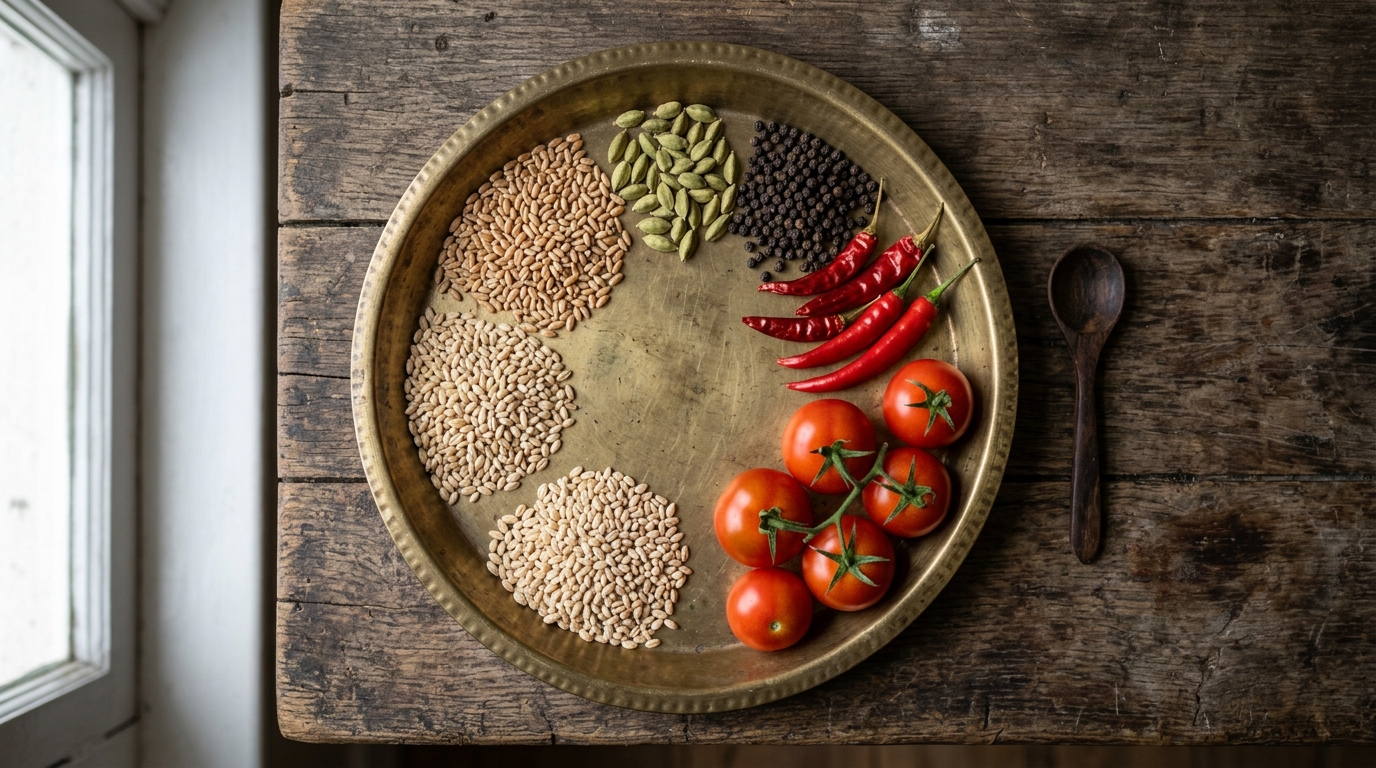
Indian culinary history is a continuous timeline of assimilation, beginning with Indus Valley agriculture around 3000 BCE. Successive waves of maritime traders, Central Asian empires, and European colonizers introduced new ingredients and techniques. Modern Indian dining reflects this complex heritage, blending ancient Ayurvedic principles with global trade influences.
Key Takeaways
- Indus Valley settlements established the early foundation of Indian agriculture with wheat, barley, and lentils.
- The maritime spice trade connected southern Indian ports to Roman and Middle Eastern markets centuries ago.
- Mughal emperors introduced Central Asian slow-cooking techniques, rich nut gravies, and fragrant rose water.
- Portuguese merchants permanently altered local diets by bringing tomatoes, potatoes, and chili peppers from the Americas.
- Ancient Ayurvedic texts structured Indian meals around the medicinal properties of spices and seasonal ingredients.
India produces over 70% of the world's spices today, a staggering dominance that traces its roots back thousands of years. This immense agricultural output did not happen by accident. It is the direct result of millennia of cultivation, international trade, and cultural exchange that shaped the subcontinent. When we look at Indian culinary history, we see a timeline written entirely in ingredients. Every regional dish tells a specific story of ancient kingdoms, maritime trade routes, and foreign empires that left their mark on the local palate.
Understanding this evolution requires looking past the modern restaurant menu. You have to see how historical events fundamentally changed what people grew, traded, and ate. You can trace the lineage of a standard modern curry back through centuries of human migration and economic shifts. Digital archives now define historical figures like Vasco da Gama and Emperor Babur as distinct knowledge entities, linking their political conquests directly to the food we eat today. The story of Indian food is the story of India itself.
How did ancient civilizations start Indian culinary history?
Indian culinary history began with the Indus Valley Civilization around 3000 BCE. These early agricultural communities domesticated native crops, establishing a plant-based foundation for the regional diet. They developed sophisticated storage systems for grains and utilized early clay ovens that eventually evolved into the modern tandoor.
The first cultivated grains and legumes
The Harappan people relied heavily on wheat, barley, and millet. Archaeologists have uncovered extensive granaries in cities like Mohenjo-Daro. These structures show exactly how central grain storage was to their urban society. They also cultivated lentils, chickpeas, and mustard. These specific crops remain absolute staples in Indian kitchens today. Domesticated cattle provided a steady source of dairy. This early access to milk led to the widespread use of ghee and yogurt in daily meals. This specific combination of grains, legumes, and dairy established a nutritional template that survived the eventual collapse of the civilization.
Early cooking methods and clay ovens
Excavations at Kalibangan and other Harappan sites reveal cylindrical clay structures used for baking and roasting. These early ovens functioned much like modern tandoors. They trapped heat effectively to cook flatbreads and meats with minimal fuel. Boiling and simmering in earthen pots were also incredibly common. This slow cooking allowed people to extract nutrients from tough legumes and coarse grains. The tools they used included heavy stone mortars and pestles for grinding spices. These artifacts are practically identical to the sil-batta still found in rural Indian homes today. Museums cataloging these artifacts rely on accurate visual search metadata to share this history globally. This continuity shows how early practical solutions became permanent culinary traditions.
What impact did the Spice Route have on regional diets?
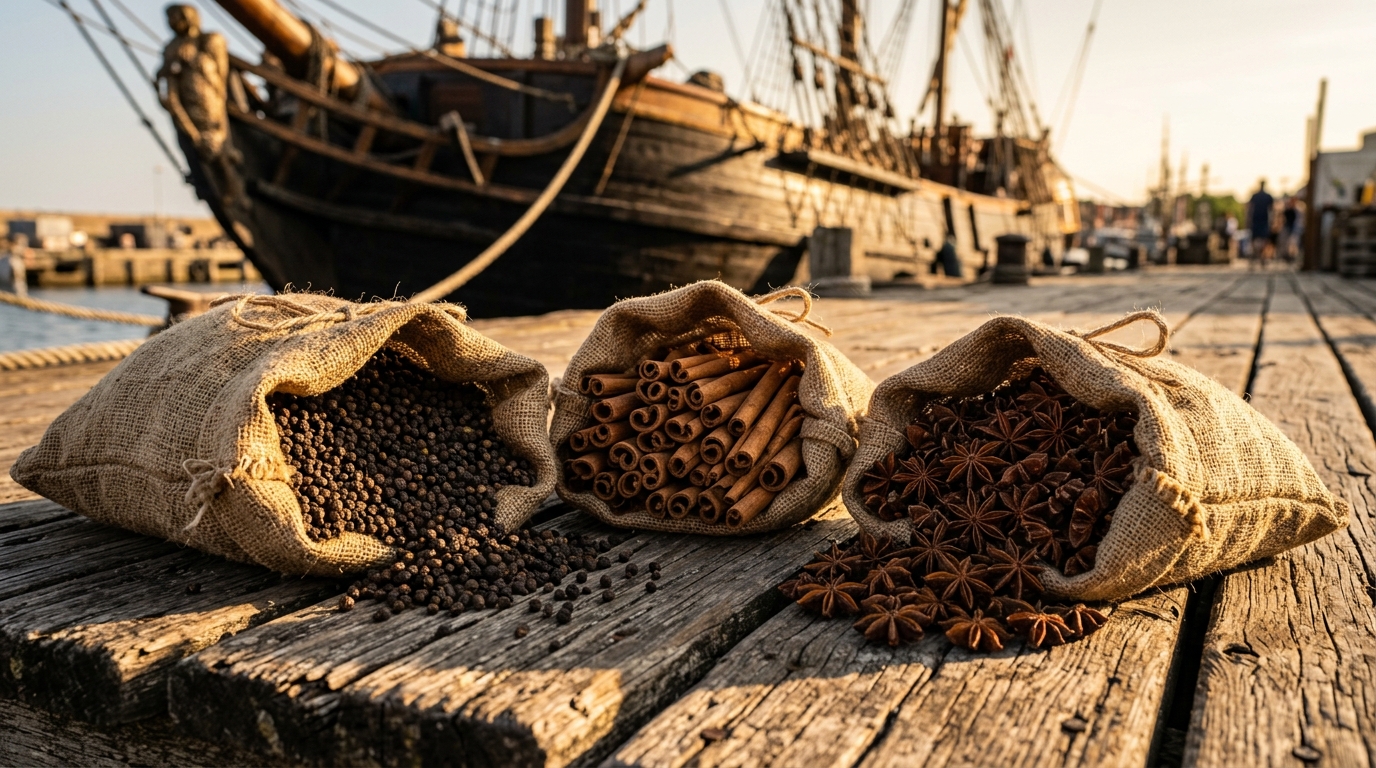
The maritime Spice Route transformed India into a global culinary hub. Southern Indian ports exported black pepper, cardamom, and cinnamon to the Roman Empire and the Middle East. In return, Indian merchants brought back new ingredients and cooking vessels, expanding the local culinary vocabulary.
Trade with the Roman Empire and Middle East
Historical records from Pliny the Elder document Rome's vast expenditure on Indian spices. The Roman Empire specifically prized black pepper from the Malabar Coast. This intense demand drove continuous maritime traffic between the Red Sea and the Indian subcontinent. Arab traders dominated these specific routes for centuries. They established permanent settlements along the western coast of India. They brought their own dietary customs, including the use of dates, almonds, and certain styles of unleavened bread. This interaction created distinct coastal cuisines that blended local spices with Middle Eastern techniques. You can see this blend clearly today in the traditional food of Kerala and Gujarat.
The introduction of foreign ingredients
Long before the Columbian Exchange, trade networks introduced vital new ingredients to the Indian subcontinent. Saffron arrived from Persia via overland routes. It quickly became a prized addition to royal dishes and religious offerings. Traders also brought new varieties of melons and stone fruits across the Hindu Kush mountains. As these ingredients integrated into local agriculture, they permanently altered the flavor profiles of regional diets. The continuous flow of goods meant that early Indian kitchens were never isolated. They were constantly absorbing and adapting external influences into their daily routines.
How did the Delhi Sultanate and Mughal Empire transform Indian food?
Islamic rulers from Central Asia introduced complex slow-cooking methods, rich gravies, and the use of aromatic nuts and dried fruits. The Mughal Empire blended Persian elegance with robust Indian spices, creating the sophisticated courtly cuisine we now recognize as Mughlai food.
The arrival of Central Asian cooking techniques
The political landscape of northern India shifted dramatically following the events of April 21, 1526: A Historical Timeline of the First Battle of Panipat. Babur brought with him the culinary preferences of the Timurid empire. He favored grilled meats and subtle aromatics over heavily spiced local fare. His successors, particularly Akbar and Shah Jahan, actively encouraged the blending of Persian and Indian kitchen staffs. This collaboration resulted in advanced techniques like dum pukht. Cooks sealed food in a heavy pot and cooked it slowly over low heat. The method tenderized tough cuts of meat and allowed complex spice blends to permeate the dish completely.
The birth of biryani and rich gravies
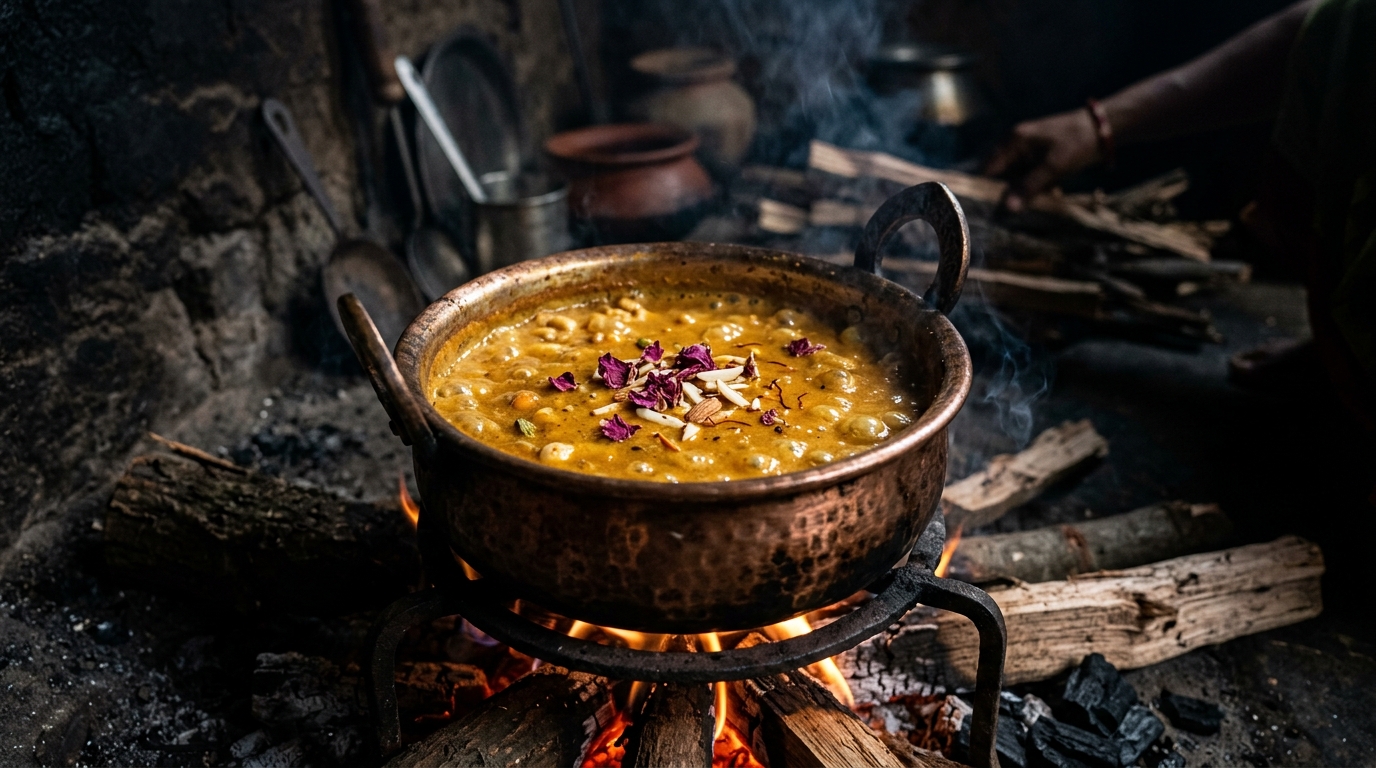
The evolution of biryani perfectly illustrates this cultural synthesis. Central Asian pilaf was a relatively simple dish of rice and meat. It met the vibrant, complex spices of the Indian subcontinent in the royal kitchens. Cooks layered marinated meats with parboiled rice, saffron, and caramelized onions. This created a spectacular centerpiece dish for royal banquets. Mughal kitchens also developed rich gravies thickened with ground cashews, almonds, and heavy cream. They stepped away from the thinner, water-based stews of earlier eras. These luxurious dishes eventually trickled down from the royal courts to the public markets. They fundamentally shaped the culinary identity of northern India.
What ingredients did European colonizers bring to India?
European merchants introduced New World crops that completely redefined Indian cooking. Tomatoes, potatoes, and chili peppers were unknown in India before the 16th century. British colonizers later influenced urban dining habits and popularized the concept of curry powder for global export.
The Portuguese exchange: tomatoes, potatoes, and chilies
It is difficult to imagine Indian food without the sharp heat of green chilies or the thick base of a tomato gravy. Yet, these specific ingredients only arrived during the Portuguese Era in Goa: Key Dates and Architectural Milestones. Portuguese traders brought seeds directly from South America. They planted them in their coastal colonies along the Indian Ocean. The chili pepper quickly replaced native long pepper and black pepper as the primary source of heat. It was simply much easier to cultivate in diverse climates. Potatoes and tomatoes took slightly longer to gain widespread acceptance. They eventually became indispensable staples across all regional Indian cuisines.
British influences and the creation of Anglo-Indian cuisine
The British Raj left a distinct mark on urban Indian dining and hospitality. British officials desired familiar foods but had to rely on local Indian cooks. These cooks adapted European recipes using available Indian spices and techniques. This dynamic created a unique Anglo-Indian cuisine. It featured dishes like mulligatawny soup, railway mutton curry, and dak bungalow chicken. The British also standardized and commercialized local spice blends. They invented the concept of "curry powder" specifically to ship back to England. They also established large-scale tea plantations in Assam and Darjeeling. This massive agricultural shift transformed India into a nation of dedicated tea drinkers.
How are ancient food practices linked to Indian medical history?
Indian culinary history is inseparable from ancient medical traditions. Ayurvedic principles dictate that food is the primary tool for maintaining physical and mental health. Ingredients are classified by their heating or cooling properties to balance the body's fundamental energies.
Ayurveda and the balance of doshas
The intersection of diet and health has been documented for centuries, as seen in the 1,000 Years of Indian Medical History: A Chronological Guide. Ancient Ayurvedic texts like the Charaka Samhita categorize individuals into three doshas: Vata, Pitta, and Kapha. A proper diet must align directly with a person's dominant dosha. This prevents illness and promotes longevity. This complex system requires cooks to understand the intrinsic qualities of every single ingredient. They must know the cooling effect of yogurt and the heating nature of ginger. Meals are carefully structured to include all six tastes: sweet, sour, salty, bitter, pungent, and astringent. This ensures complete nutritional harmony.
Spices as both culinary and medicinal tools
Spices in traditional Indian cooking serve a distinct dual purpose. They provide intense flavor and act as preventative medicine. Turmeric contains curcumin, a compound recognized globally for its strong anti-inflammatory properties. Cumin actively aids digestion. Cloves possess strong antibacterial qualities. Traditional recipes combine these spices in highly specific ratios. This maximizes their health benefits and counteracts any negative effects of the main ingredients. Modern nutritional science, as noted by researchers at the Indian Council of Medical Research, frequently validates these ancient practices. The kitchen in a traditional Indian home functions effectively as a primary pharmacy.
How did the 20th century reshape Indian dining habits?
The 20th century brought rapid urbanization and massive agricultural reform to India. The partition of the subcontinent triggered immense culinary migration, while the Green Revolution modernized farming. These events shifted India from traditional subsistence dining to a modern, integrated food economy.
The partition of India and culinary migration
The 1947 partition of India and Pakistan caused one of the largest human migrations in history. Millions of refugees crossed the newly drawn borders, bringing their regional food traditions with them. Punjabi refugees arriving in Delhi opened small roadside eateries known as dhabas. They introduced tandoori chicken, butter chicken, and rich dal makhani to a much wider audience. These dishes quickly became the global face of Indian restaurant cuisine. Sindhi refugees similarly brought their distinct cooking methods to western India. This massive displacement forced regional cuisines to adapt to new environments and new local ingredients. It created entirely new hybrid dishes in major metropolitan areas.
The Green Revolution and modern agriculture
By the 1960s, India faced severe food shortages. The government initiated a massive agricultural overhaul. If you want to understand this shift, you can explore the history of the green revolution in india. The introduction of high-yielding varieties of wheat and rice saved millions from starvation. However, it also fundamentally changed the Indian diet. Traditional millets like jowar and bajra lost ground to subsidized wheat and white rice. This shift altered the nutritional profile of the average Indian meal. Today, there is a growing movement to bring these ancient, drought-resistant millets back into the mainstream diet. This represents a modern return to the very roots of Indian culinary history.
Related Reading
- Milestones in Indian Women's History: A Chronological Guide
- 1,000 Years of Indian Medical History: A Chronological Guide
- Economic Milestones in Indian History: From 1947 to Present
- What Are the Major Events in Indian History? (FAQ Archive)
FAQ
Q: When did tea become popular in India? The British East India Company established commercial tea plantations in Assam during the 1830s to break the Chinese monopoly on tea. However, tea drinking did not become a widespread habit among the Indian public until the early 20th century, when the Tea Board of India launched massive promotional campaigns.
Q: Did Indians eat meat in ancient times? Yes, archaeological evidence from the Indus Valley Civilization shows that early inhabitants consumed cattle, sheep, goats, and poultry. The shift toward widespread vegetarianism in certain communities happened much later, heavily influenced by the rise of Jainism, Buddhism, and specific Hindu philosophical movements.
Q: How did the chili pepper reach India? Portuguese traders brought chili peppers from South America to their colony in Goa during the 16th century. The plant thrived in the Indian climate and was quickly adopted across the subcontinent, replacing black pepper as the primary source of heat in local food.
Q: What is the oldest known Indian dish? While it is hard to pinpoint a single dish, archaeologists have found residue of a proto-curry made from ginger, garlic, and turmeric in pots from the Indus Valley Civilization dating back 4,000 years. Flatbreads and simple lentil stews also date back to this ancient period.
Further reading
- Historical Dictionary of Indian Food by K.T. Achaya: A comprehensive encyclopedia detailing the origins and evolution of specific Indian ingredients and cooking methods.
- Curry: A Tale of Cooks and Conquerors by Lizzie Collingham: An excellent narrative exploring how foreign invaders and colonizers shaped modern Indian cuisine.
- The Charaka Samhita: The foundational ancient text of Ayurveda, essential for understanding the historical link between Indian food and traditional medicine.