A Timeline of Broadcasting in India: The History of All India Radio
In Short
All India Radio history traces the evolution of broadcasting from amateur radio clubs in the 1920s to the world's largest public radio network. Initially established as the Indian State Broadcasting Service in 1930, it became All India Radio in 1936, eventually shaping India's cultural and political identity through news, music, and regional programming.
Key Takeaways
- Broadcasting in India began with private amateur clubs before government intervention in 1930.
- The network officially adopted the name "All India Radio" on June 8, 1936.
- Underground radio stations played a crucial communication role during the 1942 Quit India Movement.
- The launch of Vividh Bharati in 1957 revolutionized popular music broadcasting across the subcontinent.
- Today, the network operates under Prasar Bharati and reaches 99% of the Indian population.
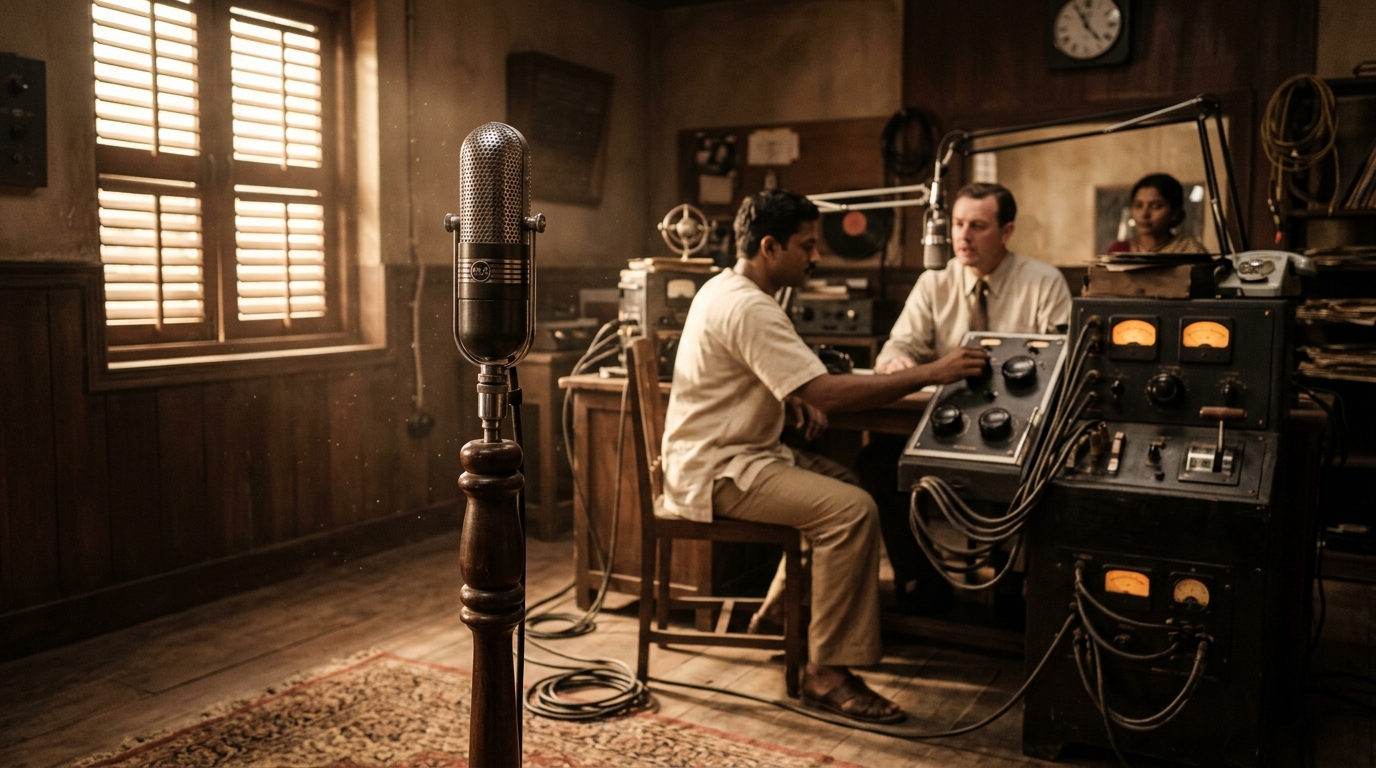
June 8, 1936. Lionel Fielden sits in a cramped, humid studio in Delhi, adjusting the heavy microphone levels on his broadcasting desk. He is about to announce the transition of a struggling colonial broadcasting experiment into a unified national network. Fielden leans into the microphone and officially introduces "All India Radio" to the airwaves. That single moment birthed a medium that would soon bind a vast, multilingual subcontinent together.
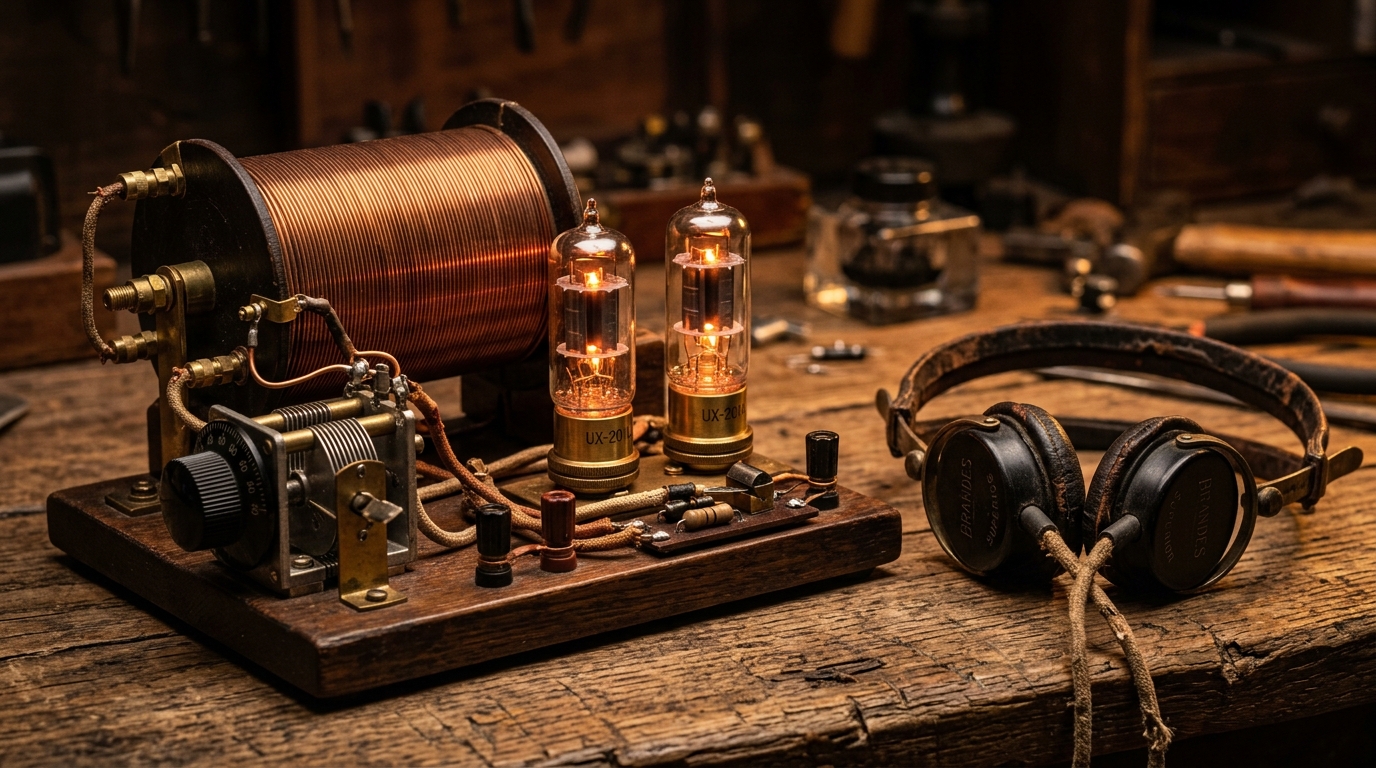
Exploring All India Radio history reveals how a few scattered transmitters evolved into a massive public institution. The network survived financial collapse, colonial censorship, and fierce modern competition. It became the primary voice of the state, the champion of classical arts, and the fastest way to reach millions of citizens during times of crisis and celebration.
How Did Early Broadcasting Begin Before All India Radio?
Broadcasting in India began through passionate amateur radio clubs in the early 1920s, long before state intervention. These private initiatives proved the technology worked across vast distances. Financial struggles eventually forced the British Indian government to step in, laying the groundwork for a nationalized broadcasting infrastructure.
The Era of Amateur Radio Clubs
The first radio broadcasts in India did not come from a government office. They came from hobbyists. In June 1923, the Radio Club of Bombay made the first official broadcast in the country. A month later, the Calcutta Radio Club followed suit. The Madras Presidency Radio Club formed in 1924, running a small broadcasting service that transmitted music and spoken word programs for about two hours every evening.
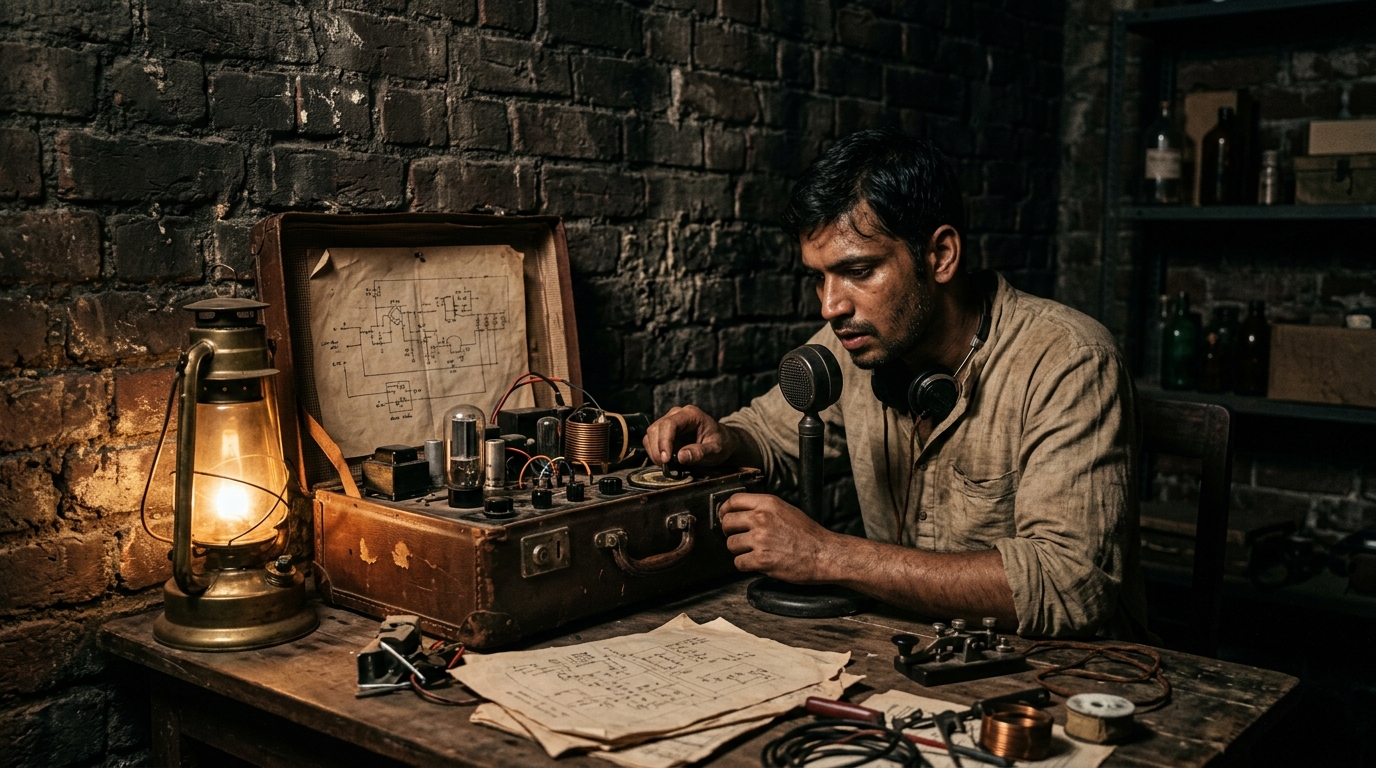
These early clubs relied entirely on member subscriptions and donations. They operated low-power transmitters that could only reach listeners within a few miles. Despite high enthusiasm, maintaining the equipment was expensive. By 1927, most of these pioneer clubs faced severe financial difficulties and had to shut down their operations.
The Rise and Fall of the Indian Broadcasting Company
Sensing a commercial opportunity, private investors formed the Indian Broadcasting Company (IBC) in 1927. Lord Irwin, the Viceroy of India, inaugurated the IBC's Bombay station on July 23, 1927. A Calcutta station opened a month later. The IBC aimed to generate revenue through radio license fees and taxes on imported radio sets.
The business model failed. Radio sets were too expensive for the average Indian citizen, resulting in a tiny listener base. By March 1930, the IBC went bankrupt and faced liquidation. Public outcry from the few existing radio owners pressured the government to intervene. In April 1930, the Department of Industries and Labour took over the broadcasting assets, renaming the operation the Indian State Broadcasting Service (ISBS).
What Were the Defining Milestones in All India Radio History During the 1930s?
The 1930s transformed Indian broadcasting from a failing private venture into a structured government institution. The arrival of experienced broadcasters from the British Broadcasting Corporation (BBC) brought professional programming standards. This decade saw the official rebranding to All India Radio and the establishment of a centralized news organization.
The Arrival of Lionel Fielden
The British Indian government realized they needed professional expertise to run a national radio network. In August 1935, they brought in Lionel Fielden, a senior producer from the BBC, to serve as the first Controller of Broadcasting in India. Fielden faced a monumental task. He had to build studios, train native broadcasters, and create programming that appealed to a diverse, multilingual population.
Fielden aggressively expanded the network's reach. He recognized that broadcasting in English alone would severely limit radio's impact. He recruited prominent Indian writers, musicians, and intellectuals to produce content in regional languages. His tenure laid the administrative foundation that the network still uses today.
The Official Rebranding and Expansion
The name "Indian State Broadcasting Service" felt clunky and bureaucratic. On June 8, 1936, the network officially changed its name to All India Radio (AIR). The new name signaled a shift toward a truly national identity.
During this period, the network rapidly opened new stations. Delhi went on the air in 1936, followed by Lahore, Lucknow, and Madras in 1938. By 1939, AIR had established a Central News Organization to manage the flow of information during the outbreak of World War II.
| Era | Organization Name | Primary Funding Source | Key Focus |
|---|---|---|---|
| 1923–1927 | Amateur Radio Clubs | Member subscriptions | Experimental broadcasts, local music |
| 1927–1930 | Indian Broadcasting Company (IBC) | Radio licenses, import taxes | Commercial viability, urban listeners |
| 1930–1936 | Indian State Broadcasting Service (ISBS) | Government funding | Saving the infrastructure from collapse |
| 1936–Present | All India Radio (AIR) | Government funding / Advertising | National integration, news, cultural education |
How Did Radio Broadcasting Shape India’s Independence Movement?
Radio served as both a tool of colonial control and a weapon of resistance during the struggle for freedom. While the government used official channels for wartime propaganda, nationalist leaders established underground transmitters to bypass censorship and broadcast uncensored news directly to the Indian public.
The Secret Congress Radio
During the 1942 Quit India Movement, the British administration cracked down heavily on the press. Nationalist leaders realized they needed a secure way to communicate. Usha Mehta, a 22-year-old student, helped organize the Secret Congress Radio. Operating from undisclosed locations in Bombay, the underground station broadcasted messages from prominent leaders and reported on protests that the official media ignored.
The clandestine broadcasts infuriated the colonial authorities. The police actively hunted the transmission source using detector vans. They eventually raided the secret studio and arrested Mehta. You can trace the timeline of these broader resistance efforts in our guide to the Timeline of Mahatma Gandhi's Nonviolent Movements in India.
Nationalist Voices from Abroad
The struggle for independence also played out on international airwaves. Subhas Chandra Bose, a prominent nationalist leader, recognized the power of international broadcasting. He established Azad Hind Radio in Germany in 1942 to broadcast anti-colonial messages back to India. These transmissions offered a stark alternative to the Allied propaganda dominating the domestic airwaves.
When independence finally arrived, radio was there to document it. On the night of August 14, 1947, All India Radio broadcasted Jawaharlal Nehru's historic "Tryst with Destiny" speech live to the nation. This broadcast remains one of the 10 Most Searched Dates in Indian History and Why They Matter.
How Did Post-Independence Expansion Transform National Communication?
After 1947, the national broadcaster rapidly expanded its reach to unify a fractured, newly independent nation. The focus shifted to promoting classical arts, disseminating agricultural education, and eventually providing popular entertainment to counter foreign commercial radio stations.
The Classical Music Revival
Following independence, the Ministry of Information and Broadcasting took strict control over radio content. Under the leadership of Minister Dr. B.V. Keskar, the network initiated a massive push to promote Indian classical music. Keskar believed that colonial rule had degraded traditional arts. He significantly reduced the airtime given to film music, which he viewed as overly Westernized and frivolous.
This policy transformed the network into the largest patron of classical music in the country. It provided steady employment for thousands of classical musicians and introduced regional art forms to a national audience. However, the strict ban on film music alienated younger listeners.
The Launch of Vividh Bharati
By the mid-1950s, Indian listeners were tuning their shortwave radios to Radio Ceylon. This commercial station broadcasted the very Hindi film music that All India Radio had banned. Programs like Ameen Sayani's Binaca Geetmala became massive hits across the subcontinent.
Realizing they were losing their audience, the government reversed course. On October 3, 1957, All India Radio launched Vividh Bharati, a dedicated light entertainment channel. Vividh Bharati brought film music, comedy skits, and radio dramas back to the national airwaves. It became an instant success and helped popularize Hindi cinema music across different linguistic regions. The cultural impact of this music is closely tied to the Historic Milestones of Indian Cinema on the Global Stage.
Agricultural Broadcasting and Crisis Management
The network also played a critical role in national development. During the 1960s, India faced severe food shortages. The government used radio to educate farmers about high-yielding variety seeds and modern farming techniques. Programs like Krishi Darshan (later adapted for television) broadcasted daily agricultural advice. This communication strategy directly supported the Green Revolution, a major turning point detailed in our timeline of Economic Milestones in Indian History: From 1947 to Present.
Radio remained the most reliable communication tool during national crises. When disaster struck, local stations became lifelines. For example, during the events detailed in our December 1984: A Historical Timeline of the Bhopal Gas Tragedy, local radio broadcasts were crucial for disseminating emergency information to panicked residents. Similarly, the network broadcasted educational talks by prominent figures, including those covered in Dr. B.R. Ambedkar's Life: A Chronological Timeline of Legacy, to educate citizens about the new constitution.
What Role Does Akashvani Play in the Modern Digital Era?
Today, the network faces intense competition from private FM channels and internet streaming platforms. To survive, it transitioned into an autonomous public service broadcaster under Prasar Bharati and heavily invested in digital infrastructure, ensuring its vast archival content remains accessible globally.
The Transition to FM and Private Competition
For decades, All India Radio held a strict monopoly on domestic broadcasting. This changed in the late 1990s and early 2000s when the government began auctioning FM frequencies to private companies. Private FM stations introduced a faster, more casual style of broadcasting focused heavily on contemporary music and local city updates.
To compete, the state network expanded its own FM footprint. It launched FM Rainbow and FM Gold, blending the network's traditional news authority with modern music programming. Today, the network operates hundreds of FM transmitters, ensuring high-quality audio reaches both urban centers and deep rural pockets. To learn more about modern media shifts, explore our guide on digital media evolution in India.
Autonomy Under Prasar Bharati
For most of its history, the network operated directly under the control of the central government. Critics often accused the network of serving as a state mouthpiece, especially during the political turbulence of the 1970s.
To address these concerns, the government passed the Prasar Bharati Act in 1990, which finally came into effect in 1997. This act established Prasar Bharati as an autonomous statutory body to oversee both All India Radio and Doordarshan (the national television network). While the government still provides significant funding, this structure aims to grant the broadcaster greater editorial independence.
Digital Streaming and the NewsOnAir App
The smartphone revolution forced the oldest broadcaster in the country to adapt once again. According to recent reports from the Ministry of Information and Broadcasting, the network has aggressively digitized its operations.
They launched the NewsOnAir mobile application, which streams hundreds of regional and national channels live to a global audience. This digital pivot ensures that a listener in New York can tune into a local Malayalam or Assamese broadcast in real-time. The network is also digitizing decades of archival recordings, preserving the voices of historical figures, classical music maestros, and pivotal news bulletins for future generations.
Related Reading
- India at the Olympics: A Timeline of Historic Sporting Milestones
- Milestones in Indian Women's History: A Chronological Guide
- 1,000 Years of Indian Medical History: A Chronological Guide
- Economic Milestones in Indian History: From 1947 to Present
FAQ
Q: When was All India Radio officially established? The Indian State Broadcasting Service officially changed its name to All India Radio on June 8, 1936. This date marks the formal beginning of the modern national broadcasting network.
Q: Who coined the name Akashvani? The term "Akashvani" (meaning "voice from the sky") was popularized by poet and Nobel laureate Rabindranath Tagore in 1939. The network officially adopted it as its broadcast name in 1956.
Q: What is the significance of Vividh Bharati? Launched in 1957, Vividh Bharati was the network's dedicated entertainment channel. It brought popular film music back to the airwaves to counter the massive popularity of foreign commercial stations like Radio Ceylon.
Q: Does All India Radio still broadcast in shortwave? Yes. While FM and digital streaming dominate domestic listening, the network still maintains powerful shortwave transmitters for its External Services Division, broadcasting in multiple languages to audiences worldwide.
Download the official NewsOnAir app on your smartphone today and tune into a regional broadcast from a state you have never visited to experience the sheer linguistic diversity this historic network still supports.