A Historical Timeline of the Indian Census: From 1881 to Today
The Quick Read
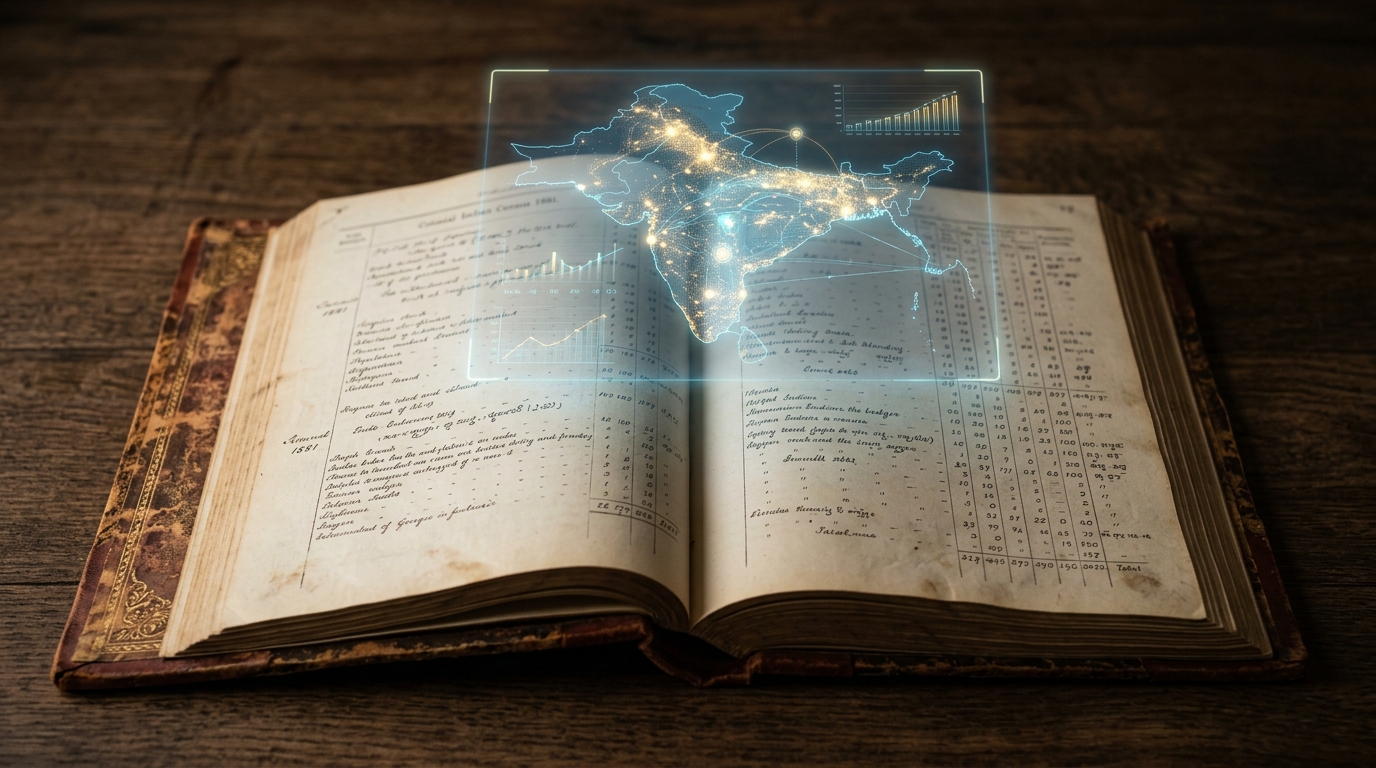
An Indian census history timeline tracks the evolution of the nation's demographic counting from the first synchronous national census in 1881 to the upcoming digital exercise. This process has shifted from colonial paper records to a massive digital operation capturing data for over 1.4 billion citizens across thousands of municipalities.
Key Takeaways
- The upcoming 2027 census represents India's first fully digital demographic count using self-enumeration portals.
- W.C. Plowden directed the first synchronous national census in 1881, establishing the ten-year cycle.
- The five-year delay from 2021 forced policymakers to rely on outdated 2011 welfare targeting data.
- The census will resume counting all caste groups for the first time in nearly a century.
- Over 3 million field functionaries will deploy to execute the multi-phase counting process.
Over 3 million field functionaries and government teachers will deploy across the country to conduct the upcoming census, an operation estimated to cost $1.24 billion [Al Jazeera, 2026]. Counting a population projected at over 1.4 billion requires immense logistical coordination. Understanding how this administrative machinery developed requires looking back at the Indian census history timeline. The methods used to count the population dictate how resources are allocated, electoral boundaries are drawn, and welfare programs are targeted. This timeline reveals a steady progression from rudimentary colonial headcounts to a sophisticated digital data collection apparatus.
The Origins of the Indian Census History Timeline
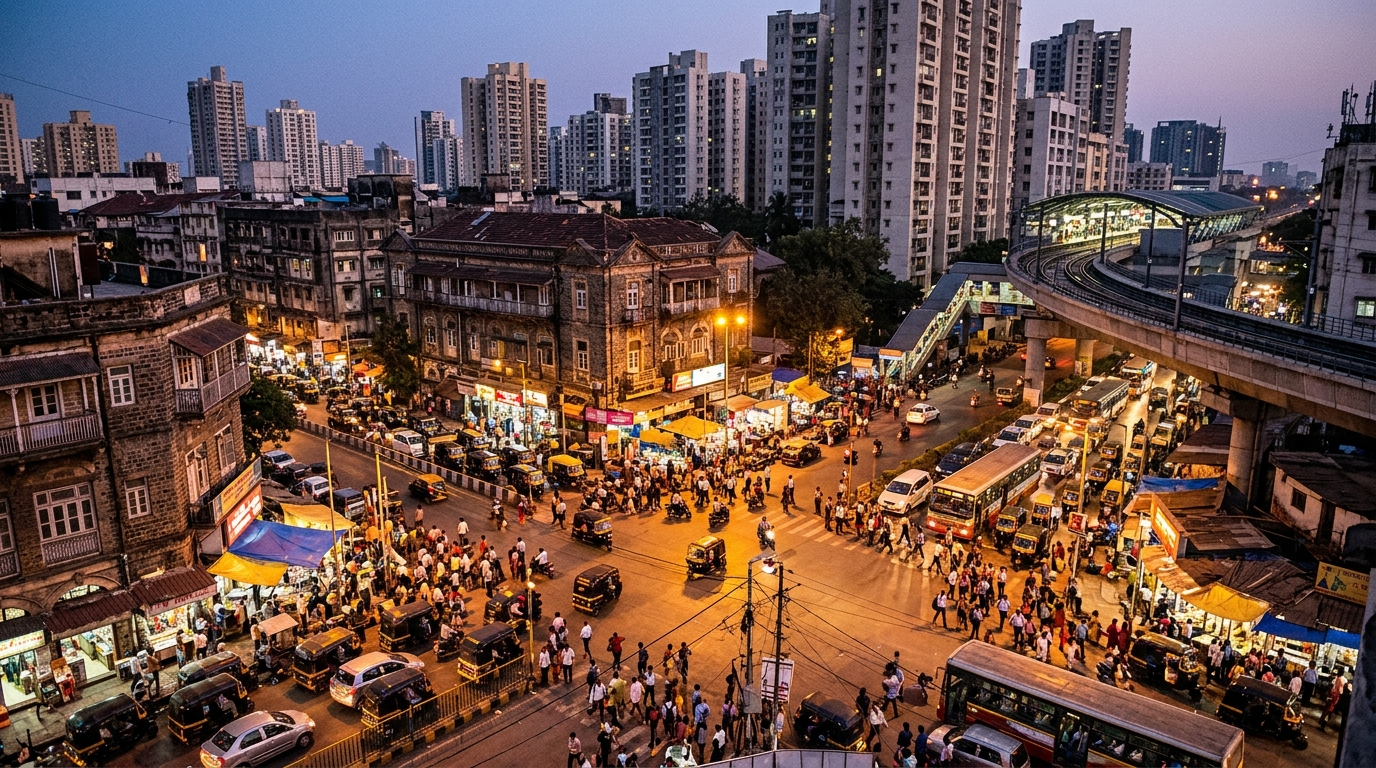
The Indian census history timeline begins formally in the late 19th century under British rule. Initial efforts were fragmented and localized, gradually leading to a unified, nationwide count. This era established the foundational methodology for demographic data collection that the independent republic would later adopt and refine.
The Non-Synchronous Beginnings (1865–1872)
Before a unified system existed, colonial administrators conducted regional counts to understand their subjects for taxation and resource extraction. Between 1865 and 1872, Henry Walter oversaw a series of non-synchronous censuses across different provinces. These early efforts lacked a uniform schedule. Different regions collected data in different years, making a true national demographic snapshot impossible. The 1872 census is often cited as the first attempt at a nationwide count, but its staggered nature limited its statistical value. Administrators realized they needed a coordinated approach to gather reliable baseline data.
The First Synchronous Census of 1881
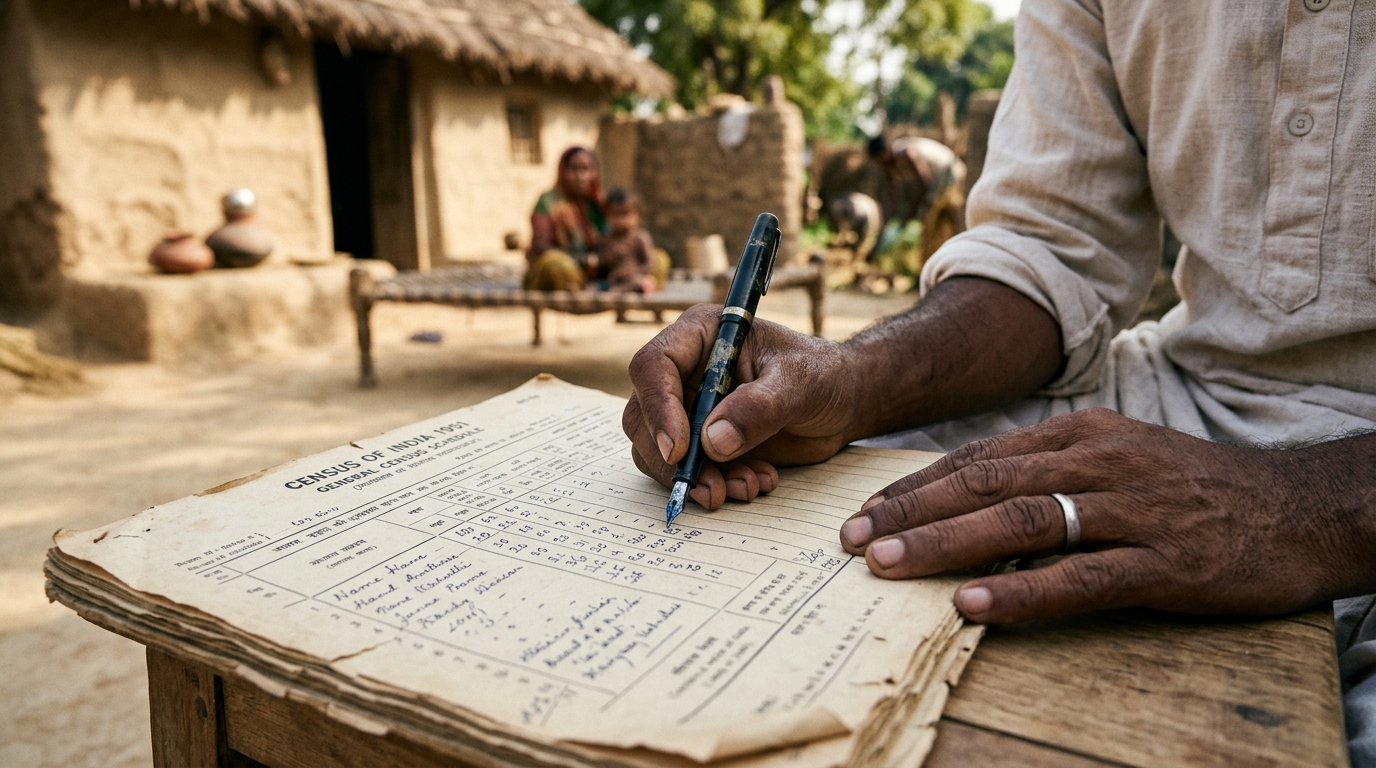
The true anchor point of the Indian census history timeline is 1881. W.C. Plowden, the Census Commissioner of India, directed the first synchronous nationwide census. Enumerators across the subcontinent collected demographic data on the exact same day. This massive undertaking standardized the questionnaire and established the decennial (ten-year) cycle that remained unbroken until 2021. The 1881 census recorded a population of 253 million. It also introduced systematic classifications for religion, caste, and occupation. These categories cemented administrative definitions that shaped social policy for decades.
Resistance and Civil Disobedience
Early census operations often faced suspicion from the public. During the 1931 census, enumerators faced widespread boycotts. The Indian National Congress urged citizens to refuse participation as part of broader civil disobedience against British rule. This resistance mirrored other coordinated protests of the era. The Dandi March Day-by-Day: A Timeline of the 1930 Salt Satyagraha shows how civil non-cooperation disrupted colonial administration across multiple fronts. Despite these boycotts, the colonial government managed to complete the enumeration, though the data quality in heavily protested regions suffered.
How Did Independence Change the Counting Process?
Following independence in 1947, the census transitioned from a tool of colonial administration to a mechanism for national development. The newly formed Indian government institutionalized the counting process through specific legislation. This shift ensured demographic data directly informed democratic representation and the allocation of state resources.
The Census Act of 1948
To provide a legal framework for future demographic surveys, the government passed the Census Act of 1948. This legislation made it mandatory for citizens to answer census questions truthfully. It also guaranteed the confidentiality of individual data, a crucial step in building public trust. The Act established the permanent office of the Registrar General and Census Commissioner under the Ministry of Home Affairs. This formalized structure replaced the ad-hoc committees that previously managed the decennial counts. The legal mandate ensured that the massive logistical exercise had the backing of parliamentary authority.
Transitioning to a Republic's Demographics (1951)
The 1951 census was the first conducted by independent India. It recorded a population of 361 million. This exercise faced unprecedented logistical hurdles following the partition of the subcontinent. Enumerators had to account for massive population transfers and millions of displaced refugees. The data collected in 1951 became the baseline for India's first Five-Year Plan. This directly linked demographic statistics to economic planning. Economic Milestones in Indian History: From 1947 to Present rely heavily on these early demographic baselines to track national growth. The 1951 questionnaire also dropped the detailed caste enumeration that characterized British censuses, retaining only counts for Scheduled Castes and Scheduled Tribes.
Redrawing Electoral Boundaries
The newly independent republic needed accurate data to build its democratic institutions. The 1951 census data informed the first Delimitation Commission. This commission used the population figures to draw the boundaries of Lok Sabha and state assembly constituencies. Accurate demographic counting ensured that each elected representative spoke for roughly the same number of citizens. This principle of proportional representation made the census an intensely political exercise. Any undercount in a specific region could result in lost political power for that state.
Milestones and Methodological Shifts in the Late 20th Century
Between 1970 and 2000, the census underwent significant technological and methodological upgrades. Manual tallying gave way to computerized data processing, reducing publication delays. The questionnaire expanded to capture complex socio-economic indicators, transforming the census from a simple headcount into a broader socio-economic profile.
Computerization and Data Processing (1970s-1990s)
The sheer volume of paper generated by hundreds of millions of citizens made manual tabulation unsustainable. The 1971 census marked the initial introduction of electronic data processing for limited tables. By the 1981 and 1991 censuses, mainframes handled larger portions of the data. The 2001 census represented a major leap, utilizing Intelligent Character Recognition (ICR) technology. Scanners read hand-written numerical data directly from the census forms. The software converted these images into digital text. This innovation drastically cut down the time required to release provisional population totals.
Expanding the Questionnaire
As the nation developed, policymakers required more granular data. The questions asked during the house-listing phase expanded beyond basic structural details. Enumerators began recording household amenities, access to drinking water, and the availability of electricity. The 1991 census refined the definition of a "literate" person to someone aged seven and above who can read and write with understanding. Milestones in Indian Women's History: A Chronological Guide highlights how tracking female literacy rates through these decades provided crucial data points for understanding social progress. The expanded questionnaire turned the census into a massive socio-economic survey.
Tracking Urbanization and Migration
The late 20th century saw massive shifts in where Indians lived. The census data captured the accelerating pace of rural-to-urban migration. The 1901 census recorded a heavily agrarian society with minimal urban concentration. By the 2011 census, the urban population had surged to 31.16%. Tracking this shift is vital for city planners managing water, housing, and transit. December 1984: A Historical Timeline of the Bhopal Gas Tragedy details how rapid industrial growth drew millions to urban centers. This increased density complicated disaster management protocols in major cities, a reality the census data clearly illustrated.
What Caused the Historic Delay of the 2021 Census?
The unbroken 130-year cycle of the decennial census halted in 2021 due to the global COVID-19 pandemic. This unprecedented delay created significant gaps in administrative data. The postponement affected everything from welfare program targeting to the scheduled delimitation of electoral constituencies.
Pandemic Postponement and Policy Fallout
The government originally scheduled the 16th Indian census for 2021. Lockdowns and social distancing mandates made door-to-door enumeration impossible. The resulting five-year gap forced policymakers to rely on outdated 2011 data for critical decisions. Pronab Sen, former Chief Statistician of India, warned that sample surveys and administrative data cannot replace a full census [The Economic Times, 2023]. He noted that the absence of updated demographic data severely undermines the quality and credibility of all other government statistical surveys. For example, administrative data previously claimed India was 100% open-defecation free. Experts point out that only a rigorous census can verify actual household amenities and sanitation access [The Indian Express, 2023].
The NPR Controversy
The delay also postponed contentious political processes. The census house-listing phase is linked to the National Population Register (NPR). The NPR is a register of usual residents, defined as people who have resided in a local area for the past six months or more. This link caused friction. Citizens feared NPR data would feed into a National Register of Citizens (NRC). This fear led to safety concerns for enumerators in certain districts. The delay allowed the government to pause the rollout of the NPR alongside the census operations, temporarily cooling the political temperature.
Delimitation Impacts
The census delay pushes the freezing of administrative boundaries further into the future. The subsequent delimitation of Lok Sabha electoral constituencies was originally expected to rely on the 2021 census. This process is now effectively pushed to 2028 or later. Southern states, which have successfully curbed population growth, fear losing political representation to northern states with higher growth rates. The delay in collecting fresh demographic data leaves this major constitutional issue unresolved.
The Digital Leap of Census 2027
The rescheduled Census 2027 marks a fundamental shift in data collection methodology. Moving away from paper schedules, the government is deploying a fully digital ecosystem. This includes mobile applications for enumerators and a self-enumeration portal for citizens, promising faster data processing and reduced errors.
India's First Digital Census
After the five-year delay, the government officially notified "Census 2027." Phase 1 (house listing) begins in April 2026, and Phase 2 (population enumeration) in February 2027 [PIB, 2025; PMF IAS, 2025]. The estimated $1.24 billion cost reflects the massive scale of the digital infrastructure required [Al Jazeera, 2026]. The government must provision secure servers, develop multi-language apps, and train millions of workers. Enumerators will use customized mobile applications on their smartphones to input data directly from the field. This eliminates the massive logistical burden of printing, transporting, and scanning millions of paper forms.
The Self-Enumeration Portal
In April 2026, the government launched a self-enumeration portal available in 16 regional languages [ABP Live, 2026; The Hindu, 2026]. Citizens can log in via mobile, drop a pin on a map to mark their exact location, and fill out the census schedule. The system generates a unique ID upon completion. Residents simply hand this ID to the enumerator during the door-to-door phase. Around 55,000 households utilized this new digital self-enumeration portal on its launch day [The Hindu, 2026]. This hybrid approach speeds up the field work and reduces data entry errors.
| Feature | 2011 Census | 2027 Census |
|---|---|---|
| Primary Medium | Paper schedules | Mobile app / Web portal |
| Data Processing | ICR Scanning (Months) | Real-time digital sync (Days) |
| Self-Enumeration | None | Available via web portal |
| Location Tracking | Manual address entry | GPS pin-drop on digital map |
The Return of Nationwide Caste Data
Census 2027 will also reintroduce a major demographic category. The Cabinet Committee on Political Affairs decided to mandate caste enumeration for all communities [Al Jazeera, 2026; The Indian Express, 2025]. This marks the first time such data is being collected at a national scale in nearly a century. Policymakers argue this data is necessary to accurately map social inequalities and reform affirmative action policies. Adding this granular social data back into the Indian census history timeline provides a clearer picture of wealth distribution and educational access across different communities.
Related Reading
- Indian History Timeline Chart: Key Milestones (Digital Reference)
- Indian History Milestones: The Maurya and Gupta Empires
- Milestones in Indian Women's History: A Chronological Guide
- 1,000 Years of Indian Medical History: A Chronological Guide
FAQ
Q: When did the first synchronous Indian census take place? The first synchronous nationwide census occurred in 1881 under W.C. Plowden. This event established the ten-year cycle for demographic counting in the country.
Q: Why was the 2021 census delayed? The government delayed the 2021 census due to the COVID-19 pandemic. Social distancing mandates made the traditional door-to-door enumeration process impossible to execute safely.
Q: What makes the 2027 census different from previous ones? The 2027 census is India's first fully digital counting exercise. It introduces a self-enumeration portal and mobile apps for field workers, replacing the traditional paper schedules.
Q: Will the new census include caste data? Yes, the upcoming census will count and categorize caste data for all communities. This marks the first time such detailed social data is collected nationally in nearly a century.
Q: How many people work on the census? Over 3 million field functionaries and government teachers are trained and deployed as enumerators. They visit every household in the country across two distinct phases.
Further reading
- The Census of India Official Portal: The primary government source for historical demographic tables and upcoming 2027 schedules.
- Economic Milestones in Indian History: From 1947 to Present: Explores how early demographic data shaped the Five-Year Plans.
- 1,000 Years of Indian Medical History: A Chronological Guide: Contextualizes how public health metrics tracked in the census evolved over time.
Sources
- 2027 census of India — Wikipedia, 2026. Supports: The upcoming 2027 census represents India's first fully digital demographic count using self-enumeration portals, will resume counting all caste groups for the first time in nearly a century, and will deploy over 3 million field functionaries at an estimated cost of $1.24 billion.
- Census in British India — Wikipedia, 2026. Supports: W.C. Plowden directed the first synchronous national census in 1881.
- 1951 census of India — Wikipedia, 2026. Supports: The 1951 census was the first conducted by independent India, recording a population of 361 million.
- Census — ClearIAS, 2026. Supports: The Census Act of 1948 provides the legal framework for the census, making it mandatory for citizens to answer truthfully while guaranteeing the confidentiality of individual data.
- What is a Census? Know about the first and the last Censuses of India — India Today, 2018. Supports: The 2001 census utilized Intelligent Character Recognition (ICR) technology to scan hand-written numerical data.