A Historical Timeline of Major Peace Treaties in Modern India
In Short
The historic treaties of India define the subcontinent's modern borders, resource sharing, and diplomatic posture. From the 1950 Nehru-Liaquat Pact protecting minority rights to the 1972 Simla Agreement establishing the Line of Control, these bilateral accords map out India’s post-independence efforts to secure regional stability and resolve conflicts through negotiation.
Key Takeaways
- The 1972 Simla Agreement permanently shifted India-Pakistan dispute resolution to a strictly bilateral framework.
- The 1960 Indus Water Treaty remains one of the world's most durable and successful resource-sharing accords.
- International mediation played a crucial role in early Indian treaties before New Delhi pivoted away from third-party intervention.
- Peace accords frequently faced immediate security challenges, such as the Kargil conflict following the Lahore Declaration.
- Concrete technical constraints have proven more effective at maintaining peace than broad diplomatic promises.
On a freezing January night in 1966, Prime Minister Lal Bahadur Shastri and Pakistani President Ayub Khan sat across a table in Tashkent, Uzbekistan. They had just signed an agreement to pull their armies back from the brink of total war. Hours later, Shastri would be dead, but the ink on the paper permanently altered the geopolitical map of South Asia.
Modern India’s borders, rivers, and diplomatic relationships are bound by the fine print of these agreements. Treaties are not just pieces of paper. They are the codified outcomes of wars fought, resources contested, and compromises forged. Studying the historic treaties of India reveals how a newly independent nation navigated a volatile neighborhood. We see the shift from accepting third-party mediation to insisting on strict bilateralism. We see water divided, populations protected, and nuclear postures defined. Let's walk through the chronological milestones that shaped the subcontinent's peace and security framework.
The Nehru-Liaquat Pact Addressed Minority Rights (1950)
The 1950 Delhi Agreement, signed by Prime Ministers Jawaharlal Nehru and Liaquat Ali Khan, established a framework to protect religious minorities in both India and Pakistan following the violent partition. This historic treaty aimed to halt mass migrations, guarantee equal civic rights, and restore looted property across newly drawn borders.
The Delhi Agreement Context
By early 1950, communal violence in East Pakistan and West Bengal threatened to trigger another massive refugee crisis. The wounds of the 1947 partition were still fresh. Millions of people remained trapped on the wrong side of the borders, facing severe persecution and economic ruin. Prime Minister Jawaharlal Nehru invited his Pakistani counterpart, Liaquat Ali Khan, to New Delhi for urgent talks. They needed a diplomatic mechanism to restore confidence among minority populations before the situation devolved into another full-scale war. Both leaders recognized that their newly formed governments could not financially or logistically survive another population exchange.

Key Provisions for Displaced Populations
The pact established minority commissions in both nations. These bodies were tasked with ensuring that minorities received complete equality of citizenship, irrespective of their religion. The agreement guaranteed freedom of movement, speech, and worship.
It also set specific rules for migrants. Refugees could return to dispose of their property safely. Forced conversions were derecognized. Women abducted during the riots were to be recovered and returned to their families. This was one of the first historic treaties of India to focus entirely on human rights and civilian protection rather than territorial boundaries. The text mandated that both governments punish those who incited communal violence and prevent the dissemination of hostile propaganda.
Immediate Aftermath and Long-term Impact
The immediate effect was positive. The mass exodus of refugees slowed significantly in the months following the signing on April 8, 1950. However, the pact faced severe political backlash in New Delhi. Two Indian cabinet ministers, Syama Prasad Mukherjee and K.C. Neogy, resigned in protest. They argued the treaty was too lenient and trusted Pakistan prematurely. Over the decades, the enforcement of these minority rights diverged sharply between the two nations. Yet, the Nehru-Liaquat Pact stands as a foundational attempt to manage the human fallout of partition through bilateral diplomacy.
The Indus Water Treaty Settled River Resource Disputes (1960)
Brokered by the World Bank in 1960, the Indus Water Treaty divided the vital river systems of the Punjab region between India and Pakistan. This agreement gave India control over the three eastern rivers while allocating the three western rivers to Pakistan, ensuring agricultural survival for both nations.
The Role of the World Bank
Water is the lifeblood of the agrarian subcontinent. When the British drew the borders in 1947, they severed the Indus basin. The headworks remained in India, but the major canals flowed into Pakistan. This geographical reality created immediate friction. Eugene Black, the president of the World Bank, stepped in to mediate in 1951.
Negotiations took nearly a decade. The World Bank provided diplomatic mediation and financial backing to build new dams. This funding was crucial. It allowed Pakistan to construct replacement infrastructure, reducing its dependence on water flowing from Indian territory. India also agreed to contribute £62 million toward the construction of these replacement works in Pakistan over a ten-year transition period.
Division of the Six Rivers
Signed on September 19, 1960, the treaty is a masterclass in pragmatic resource division. India received unrestricted use of the eastern rivers: the Ravi, Beas, and Sutlej. Pakistan received the waters of the western rivers: the Indus, Jhelum, and Chenab.
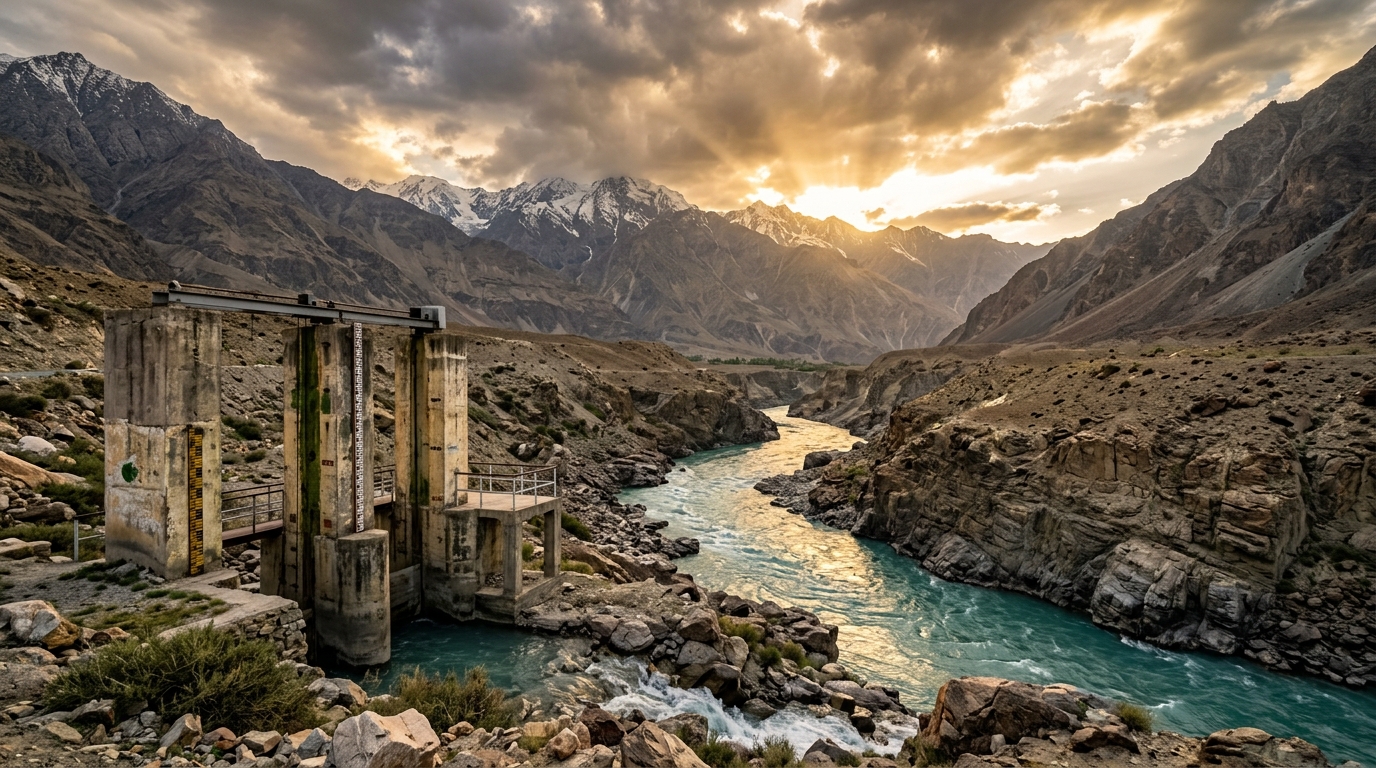
India was permitted limited use of the western rivers for domestic, non-consumptive, and agricultural purposes. Crucially, India was allowed to build run-of-the-river hydroelectric projects on the western rivers, subject to specific design criteria. This technical specificity has allowed the treaty to survive multiple wars. Engineers, rather than politicians, handle the day-to-day enforcement of the text.
Decades of Functional Water Diplomacy
The Indus Water Treaty is frequently cited by international relations scholars as one of the most successful water-sharing agreements in history. Despite three major wars and constant border skirmishes, the treaty has held. The Permanent Indus Commission, established by the treaty, meets regularly to share data and resolve technical disputes. While modern tensions over Indian dam projects like Kishanganga occasionally strain the agreement, it remains a cornerstone among the historic treaties of India. It proves that mutual survival can override deep political hostility.
The Tashkent Declaration Halted the 1965 War (1966)
The Tashkent Declaration formally ended the Indo-Pakistani War of 1965. Mediated by the Soviet Union, this agreement required both nations to withdraw their armed forces to pre-war positions, restore diplomatic relations, and pledge to resolve future disputes through peaceful means without resorting to force.
Soviet Mediation in Uzbekistan
The 1965 war ended in a UN-mandated ceasefire, but troops remained engaged along the border. The United States and the United Kingdom stepped back, distracted by the Cold War and Vietnam. Soviet Premier Alexei Kosygin saw an opportunity to expand Soviet influence in South Asia. He invited Indian Prime Minister Lal Bahadur Shastri and Pakistani President Ayub Khan to Tashkent.
The negotiations were grueling. The Soviets engaged in intense shuttle diplomacy between the two camps. India wanted a strict no-war pact. Pakistan wanted a mechanism to resolve the Kashmir dispute. The final declaration was a compromise that heavily favored a return to the status quo. Both leaders faced immense pressure from Kosygin to sign a document before leaving the summit.
Restoration of the Status Quo Ante
Signed on January 10, 1966, the declaration mandated that both armies pull back to the positions they held prior to August 5, 1965. This meant India had to give up the strategic Haji Pir Pass, which its forces had captured at great cost during the fighting.
The treaty also called for the repatriation of prisoners of war and the restoration of economic relations. Look back at Economic Milestones in Indian History: From 1947 to Present to see how the financial drain of the 1965 war forced India to prioritize a quick peace. The text explicitly stated that relations between India and Pakistan should be based on the principle of non-interference in each other's internal affairs.
The Sudden Death of Lal Bahadur Shastri
The triumph of peace was immediately overshadowed by tragedy. Just hours after signing the declaration, Prime Minister Shastri died of a heart attack in his Tashkent dacha. His sudden death fueled conspiracy theories that persist today, but it also cemented his legacy as a leader who won the war and secured the peace. The Tashkent Declaration proved fragile. Within five years, the two nations would be at war again. This failure highlighted the limits of third-party mediation in historic treaties of India and set the stage for a new diplomatic doctrine.
The Simla Agreement Redefined Bilateral Borders (1972)
Following the 1971 war that resulted in the creation of Bangladesh, the Simla Agreement established new ground rules for India-Pakistan relations. Signed by Indira Gandhi and Zulfikar Ali Bhutto, it converted the ceasefire line in Kashmir into the Line of Control (LoC) and mandated strict bilateralism for future disputes.
Post-1971 War Negotiations
India held all the cards in the summer of 1972. The Indian military had decisively won the 1971 war. They held over 90,000 Pakistani prisoners of war and occupied significant territory in the west. Prime Minister Indira Gandhi hosted Pakistani President Zulfikar Ali Bhutto in the hill station of Simla to negotiate the peace.
Gandhi faced domestic pressure to extract a permanent solution to the Kashmir issue. Bhutto needed his prisoners back and his territory restored to survive politically at home. He led a fractured nation reeling from the loss of East Pakistan. The resulting negotiations were a tense geopolitical chess match. The final text was drafted late at night after talks had nearly collapsed multiple times.
Establishing the Line of Control (LoC)
The most significant physical outcome of the Simla Agreement was the redesignation of the 1949 UN Ceasefire Line. It became the Line of Control (LoC). Both sides agreed to respect this line "without prejudice to the recognized position of either side."
This subtle shift in language was profound. It implicitly rejected UN military observers and turned a temporary ceasefire boundary into a de facto border. Neither side was allowed to alter the LoC unilaterally, irrespective of mutual differences and legal interpretations. For a deeper look at specific dates that shaped this era, review the 10 Most Searched Dates in Indian History and Why They Matter.
The Shift to Bilateral Dispute Resolution
The Simla Agreement fundamentally changed India's diplomatic posture. Clause 1(ii) stated that the two countries would settle their differences "by peaceful means through bilateral negotiations or by any other peaceful means mutually agreed upon."
India has used this exact clause ever since to reject third-party mediation in Kashmir. Whether the offer comes from the United Nations or a foreign president, New Delhi points to Simla. Among all the historic treaties of India, the Simla Agreement is the bedrock of modern Indian diplomatic doctrine. It effectively locked foreign interference out of bilateral disputes and forced Pakistan to deal directly with New Delhi.
The India-Sri Lanka Peace Accord Aimed at Island Stability (1987)
The 1987 India-Sri Lanka Peace Accord attempted to resolve the Sri Lankan Civil War. Signed by Rajiv Gandhi and J.R. Jayewardene, it proposed devolving power to Tamil provinces and deployed the Indian Peace Keeping Force (IPKF) to disarm militant groups, fundamentally altering India's regional security role.
The Ethnic Conflict Context
By the mid-1980s, the ethnic conflict between the Sinhalese-dominated Sri Lankan government and Tamil separatist groups had escalated into a brutal civil war. The violence triggered a massive influx of Tamil refugees into the Indian state of Tamil Nadu.
Prime Minister Rajiv Gandhi faced immense domestic pressure to intervene. India initially provided covert support to Tamil militants but later shifted to a mediation role. New Delhi feared that prolonged instability in Sri Lanka would invite foreign powers into India's strategic backyard. They wanted a political solution that kept external forces out of the Indian Ocean region.
Deployment of the Indian Peace Keeping Force (IPKF)
Signed in Colombo on July 29, 1987, the accord required the Sri Lankan government to merge the Northern and Eastern provinces and grant them limited autonomy. This led to the 13th Amendment to the Sri Lankan Constitution. In return, Tamil militant groups were required to surrender their weapons.
To enforce the disarmament, India deployed the Indian Peace Keeping Force (IPKF) to northern Sri Lanka. This was a massive projection of Indian military power outside its borders. The treaty was ambitious. It attempted to engineer a constitutional settlement in a neighboring sovereign state while simultaneously acting as a police force.
Tragic Outcomes and Diplomatic Lessons
The accord unraveled quickly. The Liberation Tigers of Tamil Eelam (LTTE) refused to disarm and turned their weapons on the IPKF. Indian soldiers found themselves bogged down in a grueling guerrilla war in unfamiliar jungle terrain.
By 1990, the IPKF was withdrawn. India had suffered over 1,200 military casualties. The intervention ultimately led to the tragic assassination of Rajiv Gandhi by an LTTE suicide bomber in 1991. The accord stands as a stark lesson in the limits of regional hegemony. It reshaped how India approaches neighborhood diplomacy today, creating a strong institutional reluctance to put boots on the ground in foreign civil conflicts.
The Lahore Declaration Pushed for Nuclear Restraint (1999)
Signed by Prime Ministers Atal Bihari Vajpayee and Nawaz Sharif, the 1999 Lahore Declaration was a bilateral agreement focused on nuclear risk reduction. Following the 1998 nuclear tests by both nations, this treaty established confidence-building measures to prevent accidental nuclear war and normalize diplomatic relations.
The Bus Diplomacy Initiative
In February 1999, Prime Minister Atal Bihari Vajpayee took an inaugural bus ride from New Delhi to Lahore. This highly symbolic gesture was designed to break the diplomatic freeze that followed the tit-for-tat nuclear tests of May 1998.
The world was deeply anxious. Two hostile neighbors had just acquired nuclear weapons. The international community pressured both capitals to establish guardrails. Vajpayee's journey was a bold step toward lasting peace. He visited the Minar-e-Pakistan, signaling a clear acceptance of Pakistan's existence. This was a powerful message aimed at silencing hardliners on both sides of the border who opposed normalization.
Confidence-Building in the Nuclear Age
The Lahore Declaration, signed on February 21, 1999, was accompanied by a crucial Memorandum of Understanding. This MoU detailed specific nuclear confidence-building measures (CBMs).
Both nations agreed to provide advance notification of ballistic missile flight tests. They established communication hotlines to prevent misunderstandings that could trigger a nuclear exchange. They committed to abiding by their respective unilateral moratoriums on further nuclear test explosions. This historic treaty of India proved to the world that New Delhi and Islamabad could behave as responsible nuclear weapon states.
The Kargil Conflict Betrayal
The optimism of Lahore was shattered within months. Even as Vajpayee and Sharif embraced, Pakistani military forces under General Pervez Musharraf were secretly infiltrating across the Line of Control into the Kargil sector of Jammu and Kashmir.
The resulting Kargil War in the summer of 1999 severely damaged bilateral trust. The betrayal of the Lahore Declaration reinforced a deep skepticism within the Indian foreign policy establishment regarding peace initiatives. Yet, the nuclear CBMs established at Lahore survived the conflict. Both sides continued to notify each other of missile tests even as their soldiers fought on the glacial peaks. This proved the enduring value of the treaty's technical safeguards over its political promises.
Summary of Major Indian Peace Accords
To understand the evolution of Indian diplomacy, we must look at the timeline of these agreements. The table below outlines the primary historic treaties of India, detailing the year, the signing parties, and the core geopolitical issue resolved by each accord.
| Year | Treaty Name | Signing Parties | Core Issue Addressed |
|---|---|---|---|
| 1950 | Nehru-Liaquat Pact | India & Pakistan | Minority rights and refugee protection |
| 1960 | Indus Water Treaty | India, Pakistan, World Bank | Division of the Punjab river system |
| 1966 | Tashkent Declaration | India & Pakistan | Ending the 1965 War; returning to status quo |
| 1972 | Simla Agreement | India & Pakistan | Establishing the LoC; enforcing bilateralism |
| 1987 | India-Sri Lanka Accord | India & Sri Lanka | Devolving power; deploying the IPKF |
| 1999 | Lahore Declaration | India & Pakistan | Nuclear confidence-building measures |
Related Reading
- Historic Dates in Modern India: From Independence to the 21st Century
- India at the Olympics: A Timeline of Historic Sporting Milestones
- The 1971 India-Pakistan War: Key Dates and Historical Summary
- Timeline of Mahatma Gandhi's Nonviolent Movements in India
FAQ
Q: What is the most successful historic treaty of India? The Indus Water Treaty of 1960 is widely considered the most successful. Despite three major wars and ongoing geopolitical tensions, the framework for sharing the region's river waters has remained intact and functional for over six decades.
Q: How did the Simla Agreement change India's foreign policy? The Simla Agreement established the principle of strict bilateralism. India uses this treaty to reject any third-party mediation, including from the UN or foreign governments, in its disputes with Pakistan, particularly regarding Kashmir.
Q: Why was the Tashkent Declaration controversial in India? The Tashkent Declaration required India to return strategically important captured territories, like the Haji Pir Pass, to Pakistan. The sudden and unexplained death of Prime Minister Lal Bahadur Shastri hours after signing the document also fueled long-lasting public controversy.
Q: Did the Lahore Declaration prevent future conflicts? No, it did not prevent conventional conflict. Just months after signing the declaration in 1999, Pakistani forces infiltrated the Kargil sector, sparking a localized war. However, the nuclear confidence-building measures established in the treaty did prevent nuclear escalation during the conflict.
Look up the specific provisions of the Indus Water Treaty on the Ministry of External Affairs website to understand exactly how water is allocated today. Read the technical annexures. You will see firsthand how precise engineering constraints, rather than vague diplomatic promises, are what actually keep a peace treaty alive through decades of conflict.