A Historical Timeline of Indian Tourism and Travel Milestones
What is the TL;DR of Indian tourism history?
The TL;DR of Indian tourism history is the evolution from fragmented 1853 colonial railway journeys into a structured ₹15.73 lakh crore economic engine. Key milestones include the 1945 Sargent Committee, the 1966 Indian Tourism Development Corporation formation, and the 2002 Incredible India campaign. Today, digital infrastructure drives 2.51 billion domestic visits.
Key Takeaways
- The 1945 Sargent Committee laid the first official blueprint for promoting travel across India.
- The Indian Tourism Development Corporation standardized hospitality infrastructure starting in 1966.
- Strict regulations during the 1980s License Raj temporarily stifled inbound foreign travel growth.
- The 2002 Incredible India campaign successfully rebranded the nation for international leisure tourists.
- Domestic travel now drives the sector with 2.51 billion domestic visits recorded in 2023.
The tourism sector contributed exactly ₹15.73 lakh crore to India's GDP in 2023-24, accounting for 5.22% of the total economy according to the National Accounts Statistics (2025). This massive financial footprint did not happen overnight. The foundation of Indian tourism history rests on centuries of pilgrimage routes, colonial railway expansions, and deliberate policy shifts. Modern travelers book flights on their phones and use e-visas. Early travelers relied on printed railway timetables and government guest houses.
Tracing this timeline reveals how India transformed from a difficult subcontinent to navigate into a global travel destination. Understanding these shifts helps us see where the industry is heading next. We can track the progression from early physical infrastructure to the digital campaigns that define modern travel.
The government played a heavy hand in early development. Private capital only entered the market at scale after basic roads and airports were built. We will examine the specific dates, policies, and campaigns that built the modern Indian travel economy. You can view the broader financial context of these shifts in our guide to Economic Milestones in Indian History: From 1947 to Present.
How did early railways shape Indian tourism history?
Early railways transformed Indian tourism history by connecting distant pilgrimage sites and commercial hubs. The introduction of passenger trains allowed middle-class citizens to travel for leisure rather than just necessity. This physical network created the first real demand for organized hospitality and regional travel guides.
The 1853 Passenger Train Milestone
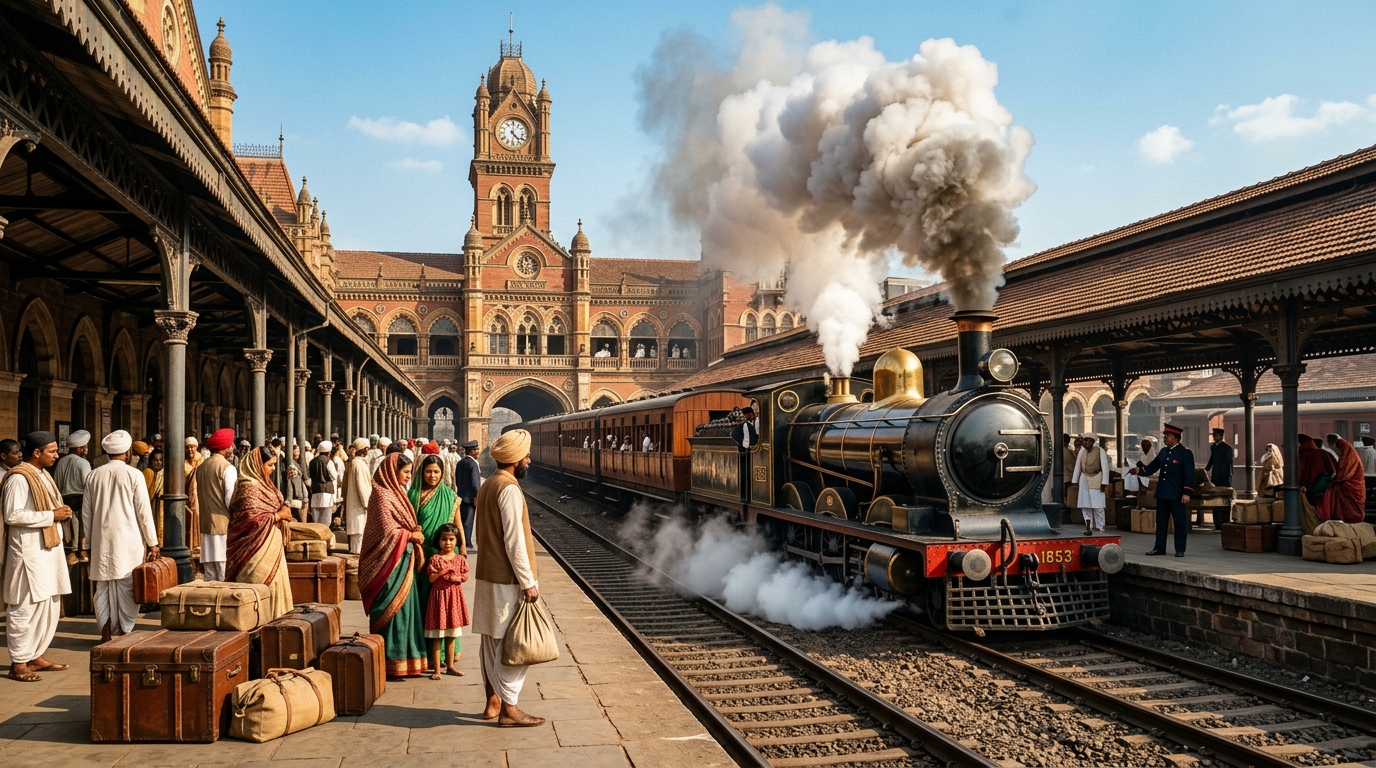
On April 16, 1853, the first passenger train ran from Bori Bunder in Bombay to Thane. This 34-kilometer journey marked the beginning of a transportation network that would redefine domestic travel. Before the railways, travel across India was slow and mostly restricted to trade or religious pilgrimage. The expanding rail network introduced the concept of leisure travel to the Indian middle class.
British administrators built railway hotels and retiring rooms at major junctions. These early structures served as the first standardized tourist accommodations in the country. Travelers could now plan journeys across multiple states using reliable timetables.
This shift required new infrastructure. Stations needed local transport options and printed guidebooks. The railways essentially created the first organized tourist circuits in the country. Before these rail networks, early coastal infrastructure was shaped by European trade. You can trace these earlier maritime travel hubs through the Portuguese Era in Goa: Key Dates and Architectural Milestones.
The Sargent Committee of 1945
Before independence, the British Indian government recognized the need to organize travel systematically. In 1945, they formed the Sargent Committee under Sir John Sargent. This committee was tasked with surveying the potential for developing tourism in India. Sir John Sargent, an influential education and administrative official, directed the committee to look beyond basic transport.
The resulting report became the first official blueprint for Indian tourism. It recommended creating a separate tourist organization at the center. It also advised opening regional tourist offices and publishing promotional materials. The committee suggested coordinating with railways and airlines to facilitate smoother journeys.
This structural approach proved vital. It shifted the focus from merely transporting people to actively encouraging them to explore. The findings laid the groundwork for the post-independence Ministry of Tourism.
How did aviation milestones accelerate Indian travel?
Aviation milestones accelerated Indian travel by shrinking a vast subcontinent into manageable flight paths. The nationalization of airlines and the later privatization of the airspace dictated how quickly domestic and international travelers could reach remote destinations.
What was the first commercial flight in India (1932)?
The first commercial flight in India is the 1932 journey piloted by J.R.D. Tata for Tata Airlines. J.R.D. Tata flew a Puss Moth aircraft from Karachi to Bombay, laying the groundwork for Indian civil aviation. While air travel remained an exclusive luxury for decades, the 1932 flight established crucial air corridors.
Tata Airlines eventually became Air India. Air India served as the primary conduit for foreign tourists entering India for decades.
What was aviation nationalization in 1953?
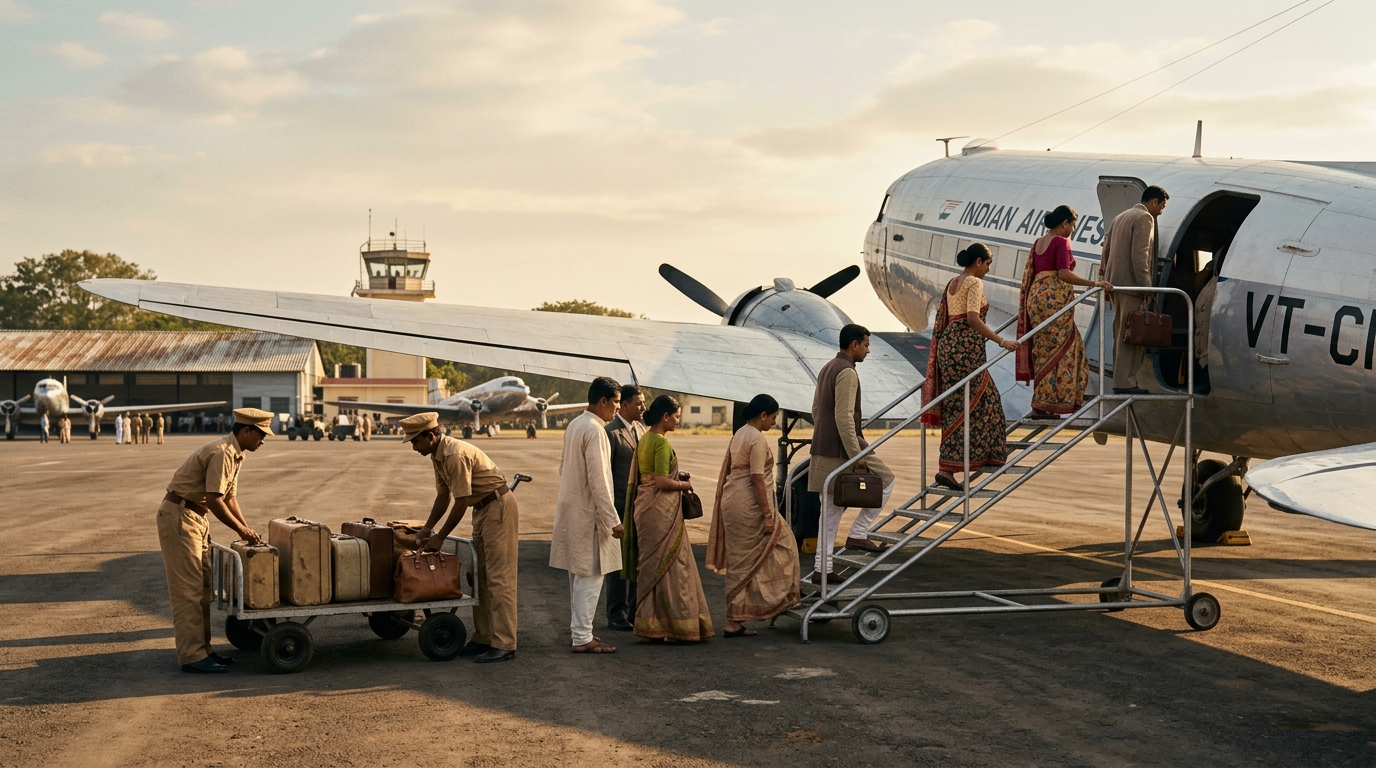
Aviation nationalization in 1953 is the process initiated by the Air Corporations Act, which merged all existing private Indian airlines into two government-owned entities. Indian Airlines handled domestic routes, while Air India International managed global routes. The 1953 nationalization aimed to standardize aviation safety and expand flight reach across India.
The Indian government wanted to ensure flights reached politically important but economically unviable regions. The Air Corporations Act built a national network. However, the lack of competition eventually led to inefficiencies. Domestic tourists had few options and faced high ticket prices.
What is the Open Skies Policy (1994)?
The Open Skies Policy of 1994 is a landmark deregulation in Indian tourism history where the Indian government repealed the Air Corporations Act. Repealing the Air Corporations Act ended the state monopoly on scheduled air transport, allowing private airlines like Jet Airways and Sahara Airlines to enter the Indian aviation market.
The 1994 deregulation sparked a massive increase in domestic flight options, and ticket prices dropped significantly. Middle-class families who previously relied entirely on trains could now afford to fly. The Open Skies Policy directly fueled the boom in domestic weekend getaways.
What role did the government play in organizing Indian tourism?
The Indian government formalized the travel sector by establishing dedicated agencies and policies. They built state-run hotels, created regional tourist offices, and drafted national guidelines. This centralized approach ensured basic infrastructure existed in remote areas before private developers were willing to invest.
What is the ITDC formation in 1966?
The ITDC formation in 1966 is the establishment of the Indian Tourism Development Corporation to build hotels, provide transport services, and produce tourist publicity materials. Because private hospitality chains were rare outside Bombay and Calcutta in October 1966, the Indian Tourism Development Corporation stepped in to fill the accommodation gap.
The Indian Tourism Development Corporation built the Ashok Group of hotels. The Ashok Group created reliable accommodation in emerging tourist destinations. Government intervention was necessary to kickstart the industry because foreign tourists needed assured quality and safety standards. By operating transport fleets and duty-free shops, the Indian Tourism Development Corporation created an end-to-end service for visitors. The 1966 formation defined the early decades of organized travel in India.
The License Raj Era (1980 to 1991)
Most historical timelines skip the 1980s, but this decade heavily influenced the sector's trajectory. During the License Raj, strict government regulations controlled foreign exchange and foreign direct investment. These policies severely limited inbound tourism.
Building a new hotel required dozens of permits from different ministries. Importing luxury goods for foreign guests was heavily taxed or banned outright. This created a massive bottleneck. While global travel boomed in the 1980s, India struggled to build enough high-quality rooms to meet potential demand.
Historical data from this era often lumps Non-Resident Indians visiting family with actual foreign leisure tourists. This reporting quirk skewed the perception of international market penetration. The regulatory environment only began to relax after the 1991 economic liberalization.
The First National Tourism Policy (1982)
In 1982, the government introduced the first National Tourism Policy. This document officially recognized tourism as an industry capable of generating foreign exchange and creating jobs. It aimed to preserve national heritage while promoting international travel.
The policy outlined the need for coordinated efforts between the central government, state governments, and the private sector. It also emphasized the importance of domestic tourism in fostering national integration.
While the License Raj restricted rapid growth, this 1982 policy provided a necessary administrative framework. It set the stage for the more aggressive marketing and privatization efforts that would follow in the late 1990s.
| Era | Policy or Milestone | Primary Focus | Impact on Indian Tourism History |
|---|---|---|---|
| 1945 | Sargent Committee Report | Surveying potential for travel | Created the first official blueprint for tourism infrastructure. |
| 1966 | ITDC Formation | Building state-run hotels | Delivered reliable accommodation for early foreign visitors. |
| 1982 | First National Tourism Policy | Recognizing the travel industry | Established a coordinated administrative framework. |
| 1994 | Open Skies Policy | Deregulating civil aviation | Lowered ticket prices and boosted domestic flight options. |
| 2002 | Incredible India Campaign | Global brand marketing | Rebranded the nation and boosted foreign tourist arrivals. |
When did India start marketing itself to foreign tourists?
India launched its first major global marketing push in 2002. The government realized that passive promotion was no longer enough to attract international leisure travelers. They funded high-quality, targeted advertising campaigns to rebrand the country as a premium, diverse, and accessible destination.
The 2002 Incredible India Campaign
The Incredible India campaign launched in 2002 as a joint effort between the Ministry of Tourism and private advertising agencies. Before this, government tourism promotions were largely informational and dry. Incredible India changed the visual language of Indian tourism history.
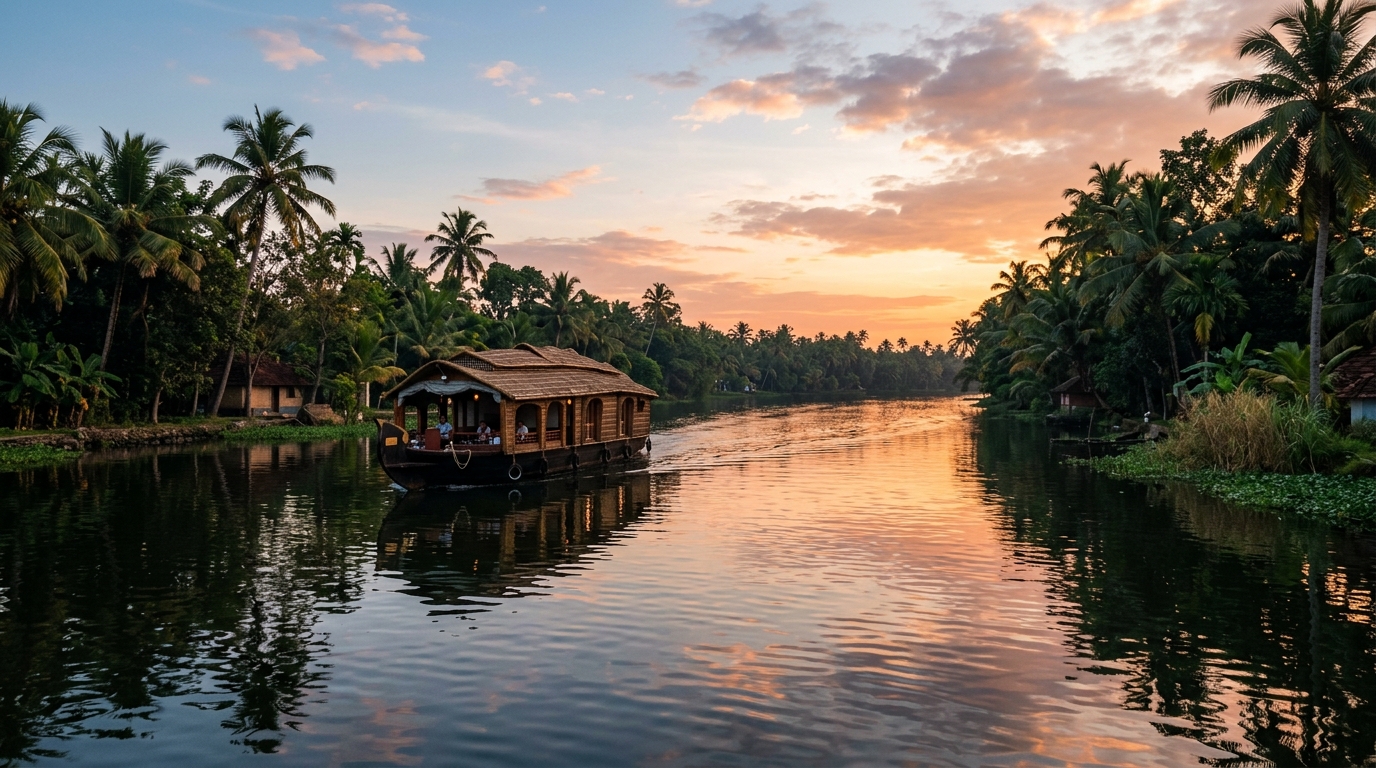
It used high-end photography, emotional storytelling, and clear branding to target specific global markets. The campaign highlighted diverse experiences. Advertisements showcased Himalayan treks and Kerala backwaters equally.
This organized push successfully rebranded the country on the global stage. It shifted the perception of India from a difficult backpacker destination to a premium cultural experience. Foreign Tourist Arrivals saw a noticeable bump in the years following the launch.
E-Visa Expansion and Infrastructure
Marketing requires logistical support to actually convert interest into visits. India introduced the e-Tourist Visa scheme in 2014. This fundamentally changed the arrival process. Before this, securing an Indian tourist visa often required physical visits to embassies and weeks of waiting.
The digital system allowed travelers from eligible countries to apply online and receive authorization within days. This removed a massive friction point. The government has continued to refine this system.
Between August 2025 and February 2026, India expanded its E-Visa coverage by adding 3 new nationalities, 6 additional airports, 10 seaports, and 2 land ports according to NITI Aayog (2026). This ongoing expansion directly supports the recovery of inbound travel. Foreign Tourist Arrivals recovered to 9.95 million in 2024, nearing the pre-pandemic peak of 10.9 million, as reported by the Ministry of Tourism to the Lok Sabha (2026).
How did regional cinema influence Indian travel habits?
Cinema influenced Indian travel habits by showcasing unexplored domestic and international locations on the big screen. Hit films act as visual travel brochures. They drive massive spikes in visitation to specific forts, hill stations, and beaches immediately following a release.
The Cinematic Effect on Kashmir and Goa
During the 1960s and 1970s, Hindi cinema frequently used Kashmir as a backdrop for romance and drama. Films established the region as the ultimate aspirational travel destination for Indian families. When geopolitical tensions restricted travel to the northern valleys in the late 1980s, filmmakers shifted their cameras south.
Goa and Ooty became the new default scenic locations. This shift in cinematic focus directly influenced where domestic tourists chose to spend their holidays. The visual exposure validated these locations as safe and desirable.
Regional Cinema and Heritage Sites
Regional cinema also plays a massive role in driving local foot traffic. Epic historical films often feature real forts and palaces. After a major release, state tourism boards frequently report a surge in ticket sales at these specific heritage sites.
To understand how specific film releases align with historical timelines, you can review our guide on Record-Breaking Runs: Historic Dates in Indian Regional Cinema.
The visual search trend is clear. Historical sites thrive on imagery. Adding relevant photos with descriptive alt text helps tourism boards drive significant traffic from image search and artificial intelligence overview panels.
How are modern schemes changing domestic travel in India?
Modern government schemes are shifting focus from isolated monuments to fully integrated regional circuits. Instead of just funding a single temple or fort, these programs develop the surrounding roads, digital infrastructure, and local hospitality training to create complete tourist destinations.
Swadesh Darshan and PRASHAD
Domestic travel is the true engine of the industry. Domestic Tourist Visits reached a massive milestone of 2.51 billion in 2023, solidifying local travel as the backbone of the economy, according to the Ministry of Tourism (2026). To support this volume, the government launched Swadesh Darshan and the PRASHAD scheme.
Swadesh Darshan 2.0 focuses on developing sustainable and responsible destinations. It moves away from the older model of fragmented, project-based funding. Instead, it funds integrated, destination-based tourist circuits.
The PRASHAD scheme focuses specifically on pilgrimage rejuvenation and spiritual heritage augmentation. These initiatives ensure that popular sites have the necessary parking, sanitation, and crowd management facilities.
The Digital Infrastructure Shift
Physical roads and hotels are only part of the modern travel equation. Digital infrastructure milestones are now just as critical. The government recently launched the Incredible India Content Hub. This digital repository provides global tour operators, journalists, and filmmakers with high-quality assets to promote Indian tourism, as noted by the Press Information Bureau (2025).
Digital tools also improve the on-ground experience. E-Arrival cards and multilingual helplines help visitors navigate complex environments safely. Gajendra Singh Shekhawat, Union Minister of Tourism, recently stated that the government is actively working with state administrations to establish dedicated Tourism Police and multilingual helplines to ensure India is a safe, globally competitive destination (Ministry of Tourism, 2026).
Culinary Tourism and Specialized Training
Travelers increasingly choose destinations based on food. To capitalize on this, India is investing in specialized hospitality education. The Indian Culinary Institute was commissioned in Tirupati and Noida to specifically promote culinary tourism.
These campuses feature dedicated microbiology labs and culinary studios to train specialized talent, according to the India Tourism Data Compendium (2025). This institutional support elevates regional Indian cuisines. It trains chefs to present local dishes to international standards. This focus on niche tourism sectors helps diversify the reasons people choose to travel within India.
Why does infrastructure status matter for the future of Indian travel?
Classifying tourism as an infrastructure sector allows hotels and travel companies to access cheaper, long-term bank loans. This financial shift is necessary to build the massive number of hotel rooms required to support projected visitor growth over the next decade.
Employment and GDP Impact
The sheer scale of the travel sector demands serious financial backing. The industry generated 84.63 million direct and indirect jobs during 2023–24, according to the Periodic Labour Force Survey (2026). A sector this large requires constant investment in physical assets.
Building a 200-room hotel requires significant capital. Without infrastructure status, developers face high commercial interest rates and short repayment windows. This financial pressure slows down new construction. It also forces hotels to charge higher room rates to cover debt. This makes the destination less competitive globally.
FAITH's Tourism Growth Charter
Industry leaders are actively pushing for systemic financial changes. In July 2026, the Federation of Associations in Indian Tourism & Hospitality unveiled a charter demanding infrastructure status for the tourism industry. They argue this status will unlock competitive credit rates.
Puneet Chhatwal, Chairman of FAITH, noted that India's current 10 million foreign visitors do not reflect the country's true potential. He stated that granting infrastructure status to the sector is essential to access better credit and accelerate inbound growth (TTG Asia, 2026).
The Push for Global Competitiveness
The 2025-26 government budget aligns with this push for quality. The government launched the National Mission for the Development of 50 Globally Competitive Tourist Destinations (Plutus IAS, 2026). This initiative aims to elevate local sites to international standards.
By focusing on 50 specific locations, the government can concentrate funds. They can build world-class visitor centers, improve local transport, and ensure high safety standards. This targeted approach represents the next phase of Indian tourism history.
Related Reading
- Milestones in Indian Women's History: A Chronological Guide
- 1,000 Years of Indian Medical History: A Chronological Guide
- Economic Milestones in Indian History: From 1947 to Present
- What Are the Major Events in Indian History? (FAQ Archive)
FAQ
Q: When was the Indian Tourism Development Corporation founded? The ITDC was established in October 1966. Its primary goal was to build state-run hotels and manage transport services for early tourists.
Q: What was the Sargent Committee? The Sargent Committee was formed in 1945 to survey the potential for travel in India. It produced the first official blueprint for organizing regional tourist offices.
Q: How many foreign tourists visit India annually? Foreign Tourist Arrivals recovered to 9.95 million in 2024. This number is nearing the pre-pandemic peak of 10.9 million visitors.
Q: What is the Incredible India campaign? Launched in 2002, Incredible India is a global marketing campaign. It uses targeted advertising to rebrand the country as a premium leisure destination.
Q: What is the PRASHAD scheme? The PRASHAD scheme is a government initiative focused on pilgrimage rejuvenation. It funds infrastructure improvements like sanitation and crowd management at major spiritual heritage sites.
Review your upcoming travel itineraries and identify one heritage site you plan to visit. Search for the official state tourism website to see if they offer an integrated digital pass or e-ticket for that specific location. Booking directly through state portals often grants access to newly developed PRASHAD scheme facilities and helps fund local infrastructure maintenance.
Sources
- History of rail transport in India — Wikipedia, 2026. Supports: The claim that the first passenger train ran on April 16, 1853, from Bori Bunder to Thane covering 34 kilometers.
- Air India — Wikipedia, 2026. Supports: The claim that J.R.D. Tata flew a Puss Moth aircraft from Karachi to Bombay in 1932, marking India's first commercial flight.
- Air Corporations Act, 1953 — Wikipedia, 2026. Supports: The claim that the 1953 Air Corporations Act nationalized airlines into Indian Airlines and Air India International.
- India Tourism Development Corporation — Wikipedia, 2026. Supports: The claim that the Indian Tourism Development Corporation (ITDC) was established in October 1966 to build hospitality infrastructure.
- Ministry of Tourism (India) — Wikipedia, 2026. Supports: The claim that the Sargent Committee was formed in 1945 to survey and promote tourism in India.
- Press Information Bureau — Government of India, 2026. Supports: The government data recording 2.51 billion domestic tourist visits in 2023.