A Chronological Guide to Ancient Indian Culinary History
Bottom Line
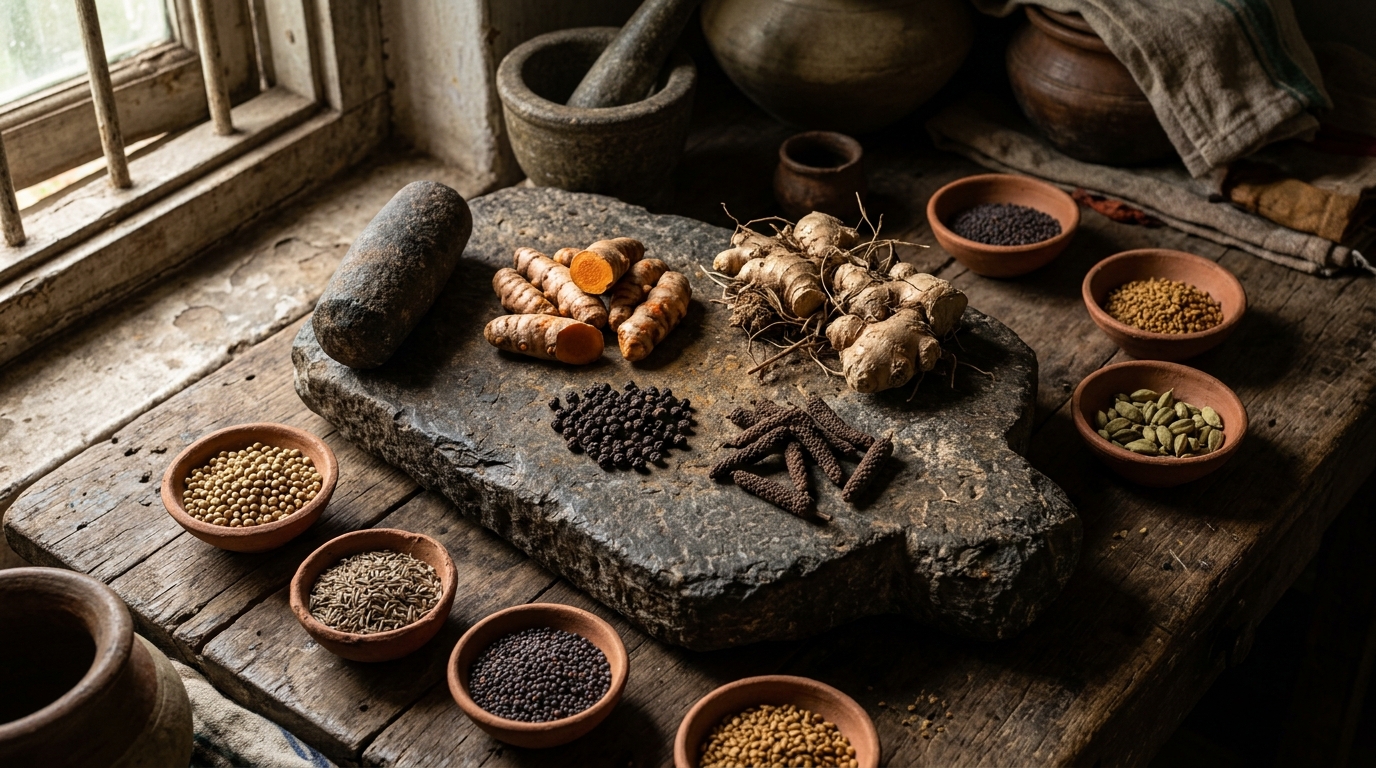
This Indian culinary history timeline traces the evolution of subcontinent diets from the Indus Valley Civilization to the early medieval period. It highlights the indigenous origins of staple spices like turmeric and black pepper, the development of Ayurvedic dietary principles, and the elaborate royal banquet menus of early Indian empires.
Key Takeaways
- The Indus Valley Civilization pioneered the cultivation of sesame, eggplant, and early indigenous spices.
- Ayurvedic texts established the foundation of Indian cooking by linking digestion directly to physical health.
- Chilies, potatoes, and tomatoes are foreign introductions; ancient Indians used long pepper for heat.
- Royal banquets in the Mauryan era featured complex meats, fermented beverages, and elaborate rice dishes.
Most people assume ancient Indian food was always packed with red chilies, potatoes, and tomatoes. In reality, these ingredients arrived centuries later with European traders. Ancient cooks built deep, complex flavors using indigenous ingredients like long pepper, ginger, and turmeric.
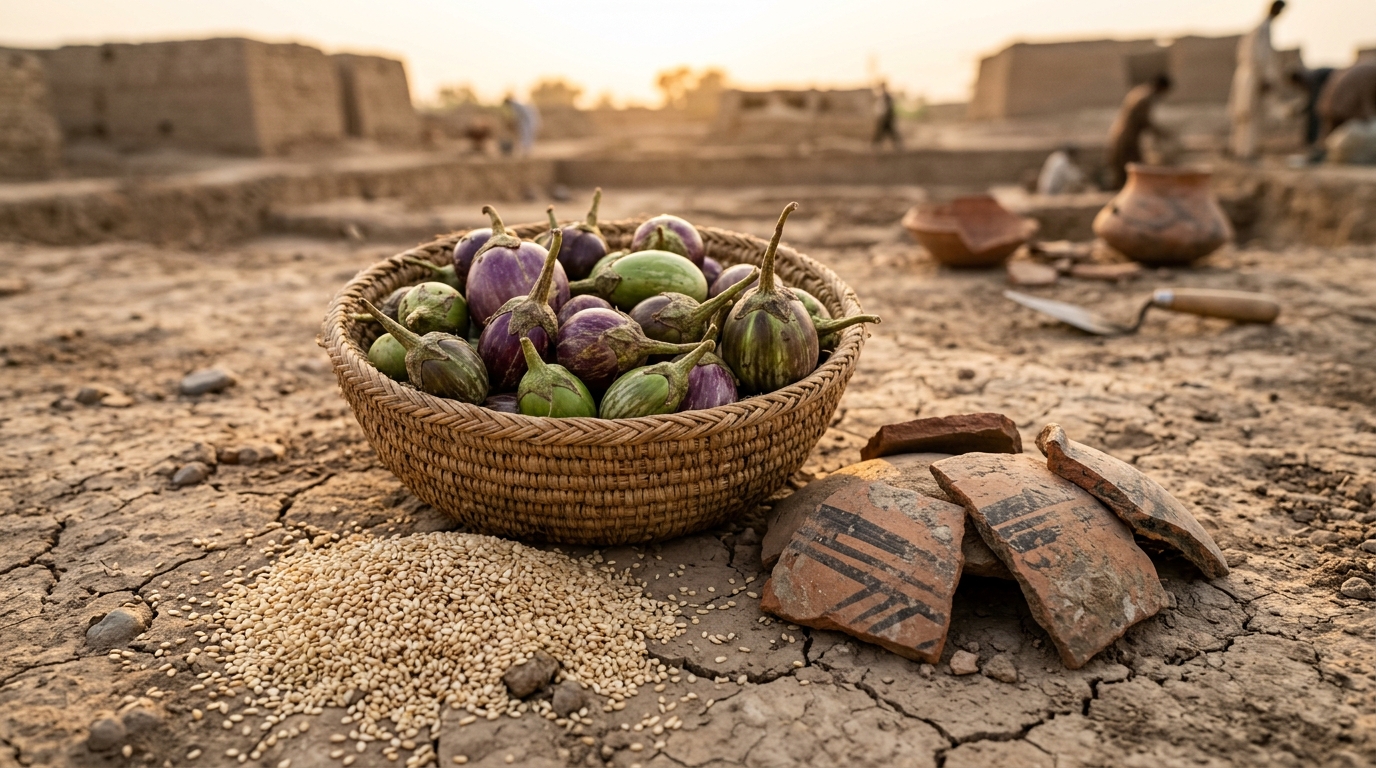
Understanding how the subcontinent ate requires looking past modern restaurant menus. We have to examine archaeological potsherds, ancient Sanskrit texts, and early trade manifests. Building an accurate Indian culinary history timeline reveals how climate, religion, and early global trade shaped the nation's plate.
Food history is not just about what people ate. It shows us how they lived, traded, and survived. Historical sites thrive on imagery, and viewing the remnants of ancient granaries or early grinding stones helps visualize this era. By tracing the documented origins of staple spices and regional diets, we uncover the true roots of one of the world's most complex food cultures.
The Origins of Flavor in the Indus Valley (3300–1300 BCE)
The Indus Valley Civilization provides our earliest archaeological evidence of Indian food systems. Excavations reveal advanced agricultural practices where farmers grew barley, wheat, and early spices. These communities laid the groundwork for subcontinent agriculture long before the arrival of foreign culinary influences.
Early Grains and Legumes
Harappan cities like Mohenjo-Daro and Harappa featured massive, centralized granaries. These structures point to a highly organized agricultural society. Farmers primarily grew winter crops. Wheat and barley formed the bulk of their daily caloric intake. They ground these grains into flour using flat stone querns, baking early versions of flatbreads on hot stones.
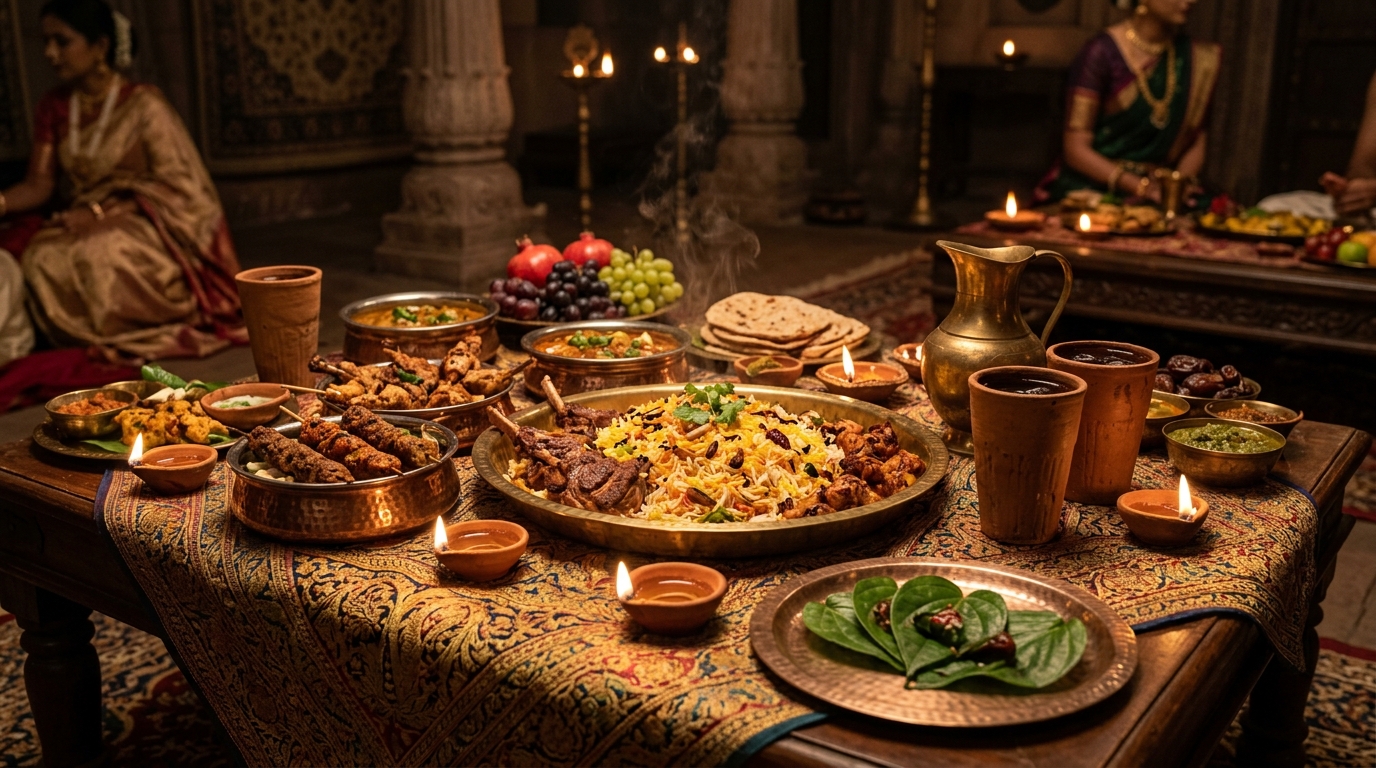
Legumes also played a crucial role in the Harappan diet. Archaeologists have found traces of lentils, chickpeas, and green gram in ancient settlements. These protein-rich pulses were likely boiled into early forms of dal. The combination of lentils and wheat established a nutritional baseline that remains standard in North Indian diets today.
The First Spices and Cooking Methods
Ancient Indians did not eat bland food. Starch grain analysis conducted by archaeologists Arunima Kashyap and Steven Weber on Harappan cooking pots revealed residues of turmeric, ginger, and garlic. This proves that the fundamental flavor profile of Indian cooking is at least 4,000 years old.
Harappans also mastered early cooking technologies. Excavations at Kalibangan uncovered cylindrical clay ovens. These structures are the direct ancestors of the modern tandoor. Cooks used them to bake bread and roast meats. They also cultivated sesame for oil, providing a cooking fat that defined early regional cuisine.
How Did the Vedic Period Shape Dietary Rules? (1500–500 BCE)
The Vedic period introduced structured dietary philosophies, transitioning from pure sustenance to food as a spiritual and medical tool. The Vedas document a growing reliance on dairy products, the ritual importance of ghee, and the early codification of Ayurvedic principles that still influence modern Indian kitchens.
The Rise of Dairy and Ghee
Pastoralism defined the early Vedic era. Cattle held immense economic and spiritual value, shifting the dietary focus heavily toward dairy. Milk, curds, and butter became daily staples.
Ghee emerged as the most important culinary and ritual ingredient of this era. Cooks clarified butter to preserve it in the hot Indian climate. Priests used it as a primary offering in sacred fires (yajnas). The Rigveda contains numerous hymns praising food, specifically highlighting the purity of ghee and milk. This period cemented dairy's central role in the subcontinent's vegetarian traditions.
Ayurvedic Classifications of Food
As the Vedic period progressed, early physicians began categorizing food based on its effect on the human body. Texts like the Charaka Samhita laid the groundwork for Ayurvedic medicine. They explicitly defined historical figures like the physician Charaka as early pioneers of dietary science.
Ayurveda classified food into three categories: Sattvic (pure, promoting clarity), Rajasic (stimulating, promoting action), and Tamasic (heavy, promoting lethargy).
This system dictated what people should eat based on their occupation, health, and the changing seasons. Digestion became a central focus. Cooks started using spices not just for flavor, but to balance the medicinal properties of a meal. You can explore more about this medical evolution in our 1,000 Years of Indian Medical History: A Chronological Guide.
Royal Menus of the Mauryan and Gupta Empires (322 BCE–550 CE)
The Mauryan and Gupta empires elevated Indian cuisine to an art form, featuring elaborate royal banquets and highly organized state agriculture. Historical texts like the Arthashastra detail strict regulations for royal kitchens, complex meat preparations, and the extensive use of fermented beverages among the elite.
Dining in the Mauryan Court
Chandragupta Maurya established a vast empire that required complex administration, even in the kitchen. Chanakya's Arthashastra provides a detailed look at state-controlled food production. The text describes specific government roles, including the Superintendent of Agriculture and the Superintendent of the Slaughterhouse.
Royal banquets were lavish affairs. The Mauryan court consumed a wide variety of meats, including venison, wild fowl, and fish. Cooks roasted these meats on spits or cooked them in complex gravies thickened with fruit pastes and ground spices. The state also heavily regulated the production of alcohol. Taverns sold fermented beverages made from rice, sugarcane, and honey under strict government oversight.
To understand how these early state systems evolved into broader economic policies, read our ancient indian agriculture techniques.
The Golden Age of Gupta Feasts
The Gupta period is often called the Golden Age of India, and its food reflected this prosperity. Sanskrit literature from this era, including the works of Kalidasa, describes wealthy citizens dining on refined white rice, sweet milk puddings, and exotic fruits.
Sugar production became highly sophisticated. Cooks processed sugarcane juice into various forms of unrefined sugar (jaggery) and crystallized sugar (khanda). This led to a boom in ancient Indian sweets. The elite enjoyed complex desserts flavored with cardamom and saffron. While the lower classes relied on coarse grains like millet, the wealthy established a distinct, highly refined culinary tradition.
What Did Early Regional Diets Look Like?
Regional diets diverged sharply as populations adapted to local climates and geographies across the subcontinent. Southern coastal regions developed heavy reliance on coconut, tamarind, and black pepper, while northern plains focused on wheat, dairy, and mustard oil, establishing the culinary borders we recognize today.
The Spice Trade of the South
South India's tropical climate supported a completely different pantry than the northern plains. Ancient Tamil Sangam literature describes a diet centered on rice, fish, and souring agents like tamarind. Coconut became a foundational ingredient, used for its water, milk, and oil.
The southern coast also controlled the global spice trade. Black pepper grew wild in the Western Ghats. It became so valuable that Roman traders called it "black gold." Pliny the Elder famously complained about the drain of Roman gold into India to pay for pepper. This spice trade defined the southern economy and heavily influenced local cooking. Cooks used black pepper to add sharp heat to broths and meat dishes long before chilies existed.
Wheat and Mustard in the North
While the south traded pepper, the northern plains solidified their reliance on wheat and mustard. The cooler winters allowed for robust wheat harvests. Flatbreads became the undisputed staple.
Mustard oil provided the primary cooking fat in the eastern and northern regions. Its pungent flavor defined the local palate. Cooks used it to fry vegetables and preserve pickles. The geographic divide between mustard oil in the north, sesame oil in the central regions, and coconut oil in the south created distinct culinary zones that persist today.
| Region | Primary Grain | Primary Cooking Fat | Key Flavor Agents |
|---|---|---|---|
| North | Wheat, Barley | Ghee, Mustard Oil | Cumin, Garlic, Long Pepper |
| South | Rice, Millets | Coconut Oil, Sesame Oil | Tamarind, Black Pepper, Curry Leaves |
| East | Rice | Mustard Oil | Mustard Seeds, Turmeric, Fish |
Foreign Influences Before the European Arrival
Long before European galleons arrived, overland trade routes and early invasions introduced new ingredients to the Indian culinary history timeline. Central Asian and Middle Eastern merchants brought saffron, specific dried fruits, and new cooking techniques like grilling and early forms of layered rice dishes.
The Silk Road Pantry
India was never culturally isolated. The Silk Road connected the subcontinent to Central Asia and the Mediterranean. Traders moving through the Khyber Pass brought new ingredients that slowly integrated into the northern Indian diet.
Saffron, native to the Mediterranean and Central Asia, found a new home in the Kashmir valley. It became the ultimate luxury spice. Traders also brought asafoetida (hing) from Afghanistan. Indian cooks quickly adopted asafoetida as a substitute for onions and garlic, especially within strict vegetarian communities. Almonds, pistachios, and raisins also arrived via these routes, eventually becoming standard ingredients in royal Indian desserts.
Pre-Mughal Sultanate Shifts
The arrival of Turkic and Afghan rulers in the early medieval period brought significant culinary shifts. These Central Asian cultures introduced specialized baking techniques. They brought the concept of stuffed breads and savory pastries, which evolved into the modern samosa.
They also introduced pilaf—rice cooked in seasoned broth with meats. Indian cooks adapted this technique using local spices, creating the earliest versions of biryani. This era set the stage for the massive culinary transformations that would occur later. You can trace the political shifts of this era in our timeline of April 21, 1526: A Historical Timeline of the First Battle of Panipat.
The true global shift, however, happened later. The introduction of New World crops like chilies and potatoes fundamentally changed Indian food. To see when those ingredients arrived, review our guide to the Portuguese Era in Goa: Key Dates and Architectural Milestones.
Related Reading
- Indian History Timeline Chart: Key Milestones (Digital Reference)
- Indian History Milestones: The Maurya and Gupta Empires
- Milestones in Indian Women's History: A Chronological Guide
- 1,000 Years of Indian Medical History: A Chronological Guide
FAQ
Q: When did chilies arrive in India? Portuguese traders brought chilies to India from South America in the early 16th century. Before this, Indian cooks used black pepper and long pepper (pippali) to add heat to their dishes.
Q: What did ancient Indians use instead of sugar? Ancient Indians were pioneers in sugar production, extracting and boiling sugarcane juice to make jaggery (gur) and early crystallized sugar. They also used honey and various fruit pastes to sweeten their food.
Q: Was ancient Indian food strictly vegetarian? No. While vegetarianism grew in prominence due to Buddhist, Jain, and later Hindu philosophies, archaeological evidence and texts like the Arthashastra show that ancient Indians consumed a variety of meats, including fish, fowl, and venison.
Q: What is the oldest documented Indian spice? Residue analysis from Indus Valley cooking pots identifies turmeric, ginger, and garlic as some of the oldest documented flavorings, dating back over 4,000 years.
Further reading
- Indian Food: A Historical Companion by K.T. Achaya — The definitive academic text mapping the complete history of Indian ingredients and cooking methods.
- Feasts and Fasts: A History of Food in India by Colleen Taylor Sen — A comprehensive look at how religion, climate, and foreign trade shaped the subcontinent's diet.
- Charaka Samhita (Translations) — Explore the primary ancient Ayurvedic text to understand how early Indians linked digestion, spices, and physical health.
- Historical Food Recreations on YouTube — Search for channels recreating Harappan or Vedic recipes to visualize the cooking techniques mentioned in this Indian culinary history timeline.